












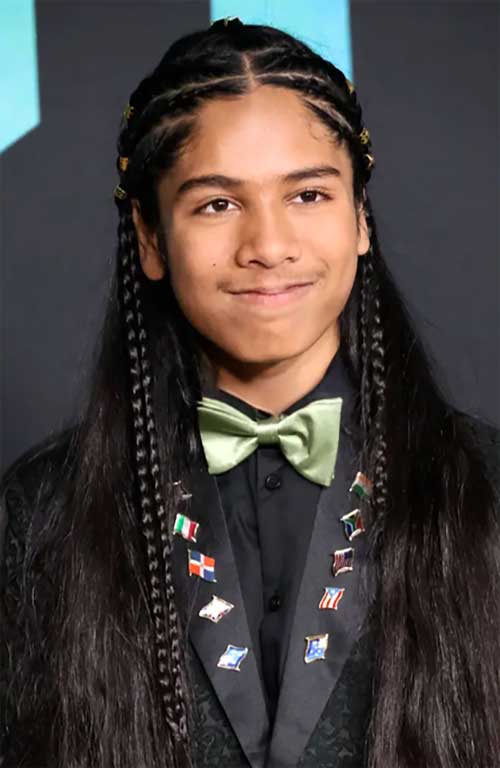
Action movies demand intense stamina, precise choreography and physical resilience. For most actors, the grueling reality of a major Hollywood production is a test of endurance. For Vedanten Naidoo, dodging pirates and exploring caves on the set of an international action film is an immersive, highly demanding and welcome form of physical therapy.
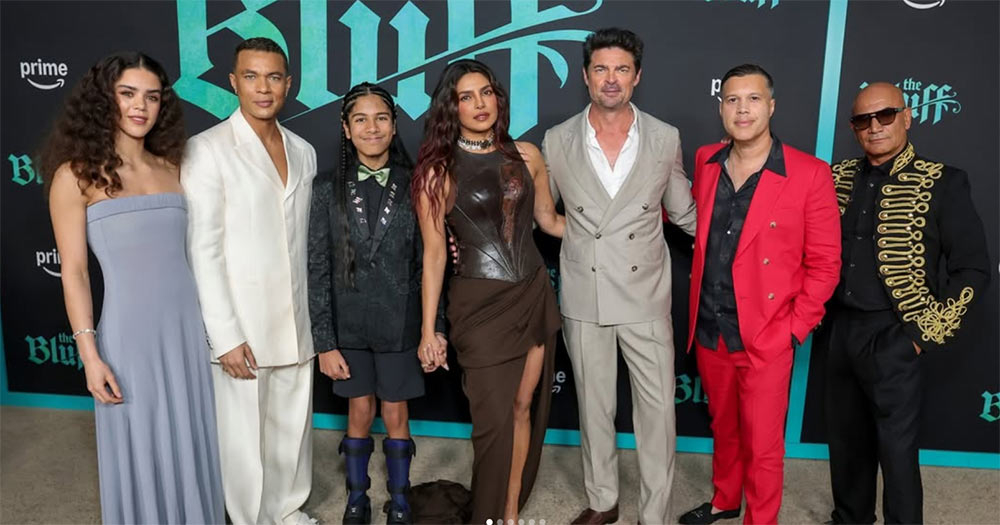
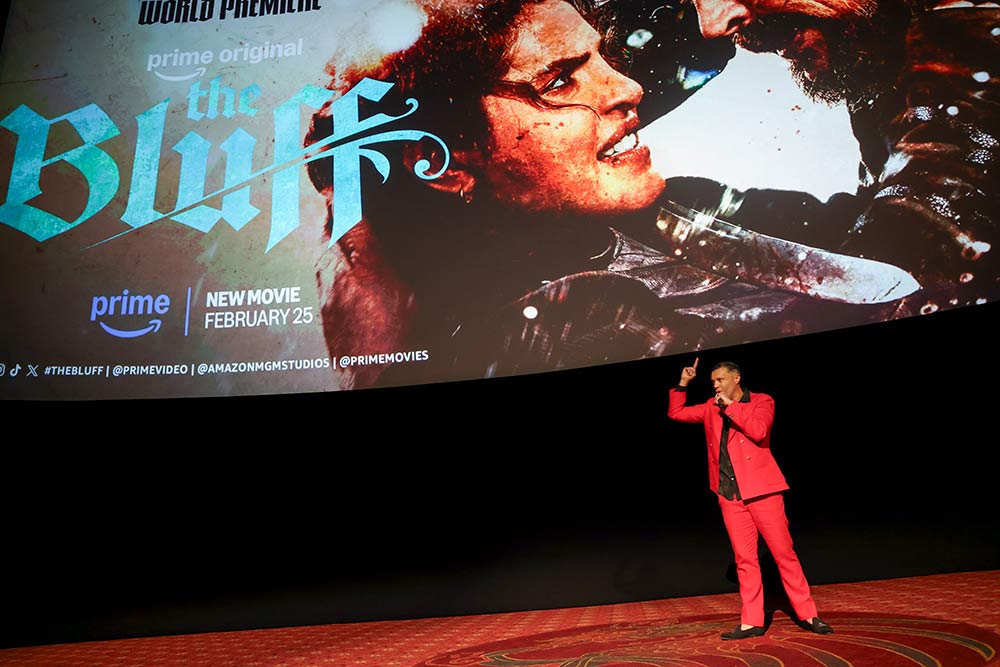
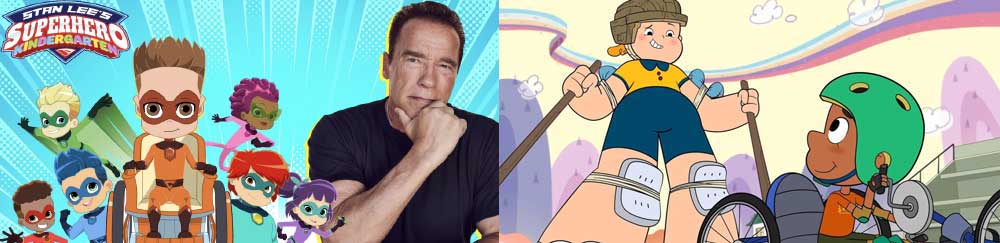
Vedanten is an actor as well as an experimental musician and a Paralympic hopeful actively training for the 2028 games in Los Angeles. He has built a unique and extensive resume in the entertainment industry, originating roles for disabled characters in major animated series like Morphle and the Magic Pets (DisneyJr), Stan Lee’s Superhero Kindergarten with Arnold Schwarzenegger (Kartoon Channel) and Emmy-nominated series Goldie (AppleTV). Recently, he starred in the live-action feature film The Bluff (AmazonPrime), a project that tested his physical limits and showcased his developing talent. A career in entertainment was not his initial goal. For Vedanten, who lives with cerebral palsy, acting and music began simply as tools for mobility and physical development.
“I never really wanted to be an actor, and I didn’t really consider that there was a process behind film and TV until I started auditioning,” Vedanten says. “It started when I was two years old. My mom realized that I wasn’t hitting the same regular milestones as other toddlers. My left hand was stuck up and my legs weren’t open.”
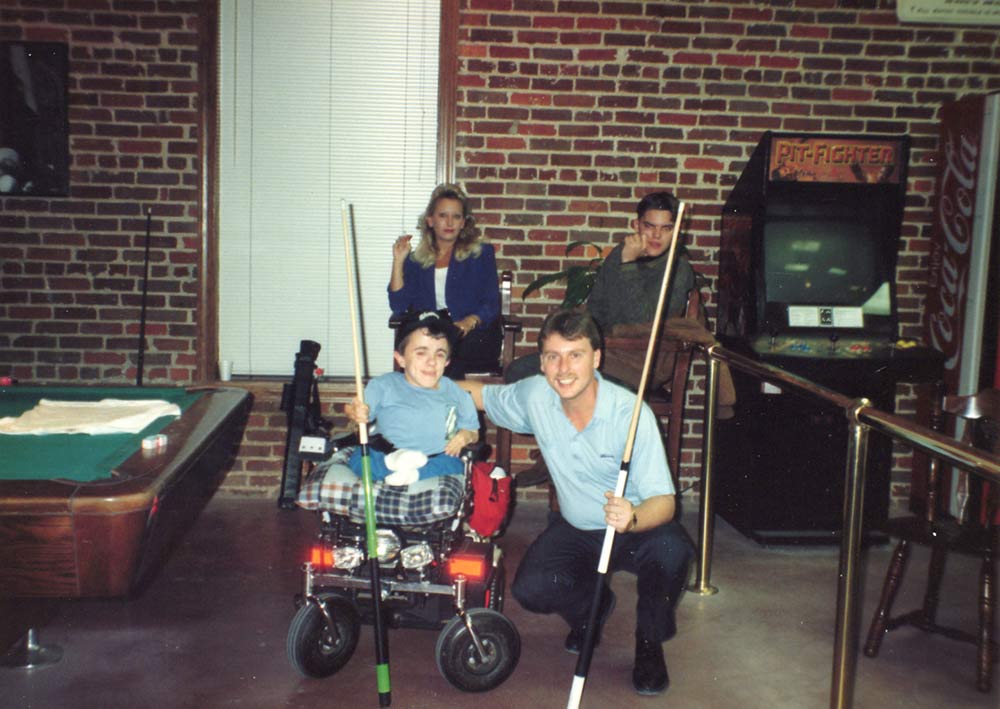
To help open his contracted hands, Vedanten and his mother, Nadine Naidoo, turned to the arts. Nadine drew upon her own background to introduce him to music as a developmental tool.
Nadine recalls: “It’s earth-shattering to receive a diagnosis that your child has a chronic health condition and may not be able to walk or use their hands. As able-bodied parents we learned that CP is the most common cause of motor dysfunction in children globally. It can also cause other challenges: 50% of affected children also have intellectual, speech, or communication delays, and 23-56% have learning disabilities. All Vedanten’s medical records showed that while he was behind the curve on his physical mobility, his Speech and Cognition were ahead of the curve. Doctors were telling us his greatest assets were the healthy part of his brain and his incredible spirit. He was this ball of positive energy—always smiling, curious, and fully engaged—no matter what he could or could not do. Orthopedic doctor has prescribed physical therapy (PT) and occupational therapy (OT)—once per week and we were given a script for medication to relax the muscles if we wanted to go that route. Making the right choices at that early stage could support him in re-wiring his brain without medication or surgery. The pressure was on us to make every moment of every day count. If we lost that time, we could never give it back to him.
From birth, life was like being on the magic school bus. Every moment was a teachable one and every setting had a lesson. I used to play music close to him while he was in utero and in the NICU amidst the loud noises of the machines. When we came home from the NICU, I would use music as a soundtrack to our day. No screens – just the sounds of nature, music and the human voice. As he grew, I played him the music my parents played during my childhood and the music I listened to as a teen—everything from Musicals to the American Top 40 to Indian classical and folk music and 80s-90’s protest music including Paul Simon and Ladysmith Black Mambazo. And even though he could not get up and dance to the rhythm—you could see he was absorbing it and over time we noticed he would play his own rhythms. When driving, he tapped the sides of his car seat, in the house he drummed on the table, if we were out he’d make music on the railings—he was always tapping, listening for the sounds, and creating beats.
Vedanten adds: “Mom says one day she was kneeling down to help put on my shoes and I started drumming on her head!“
Nadine continues, “Yes! And we joked that my head was a bad drum because it was not hollow! But on a serious note, that funny moment showed me how absorbed Vedanten became while drumming. How could he tap into his own brain to move? During my Master’s research at Duke University, just before Vedanten was born, I had conducted an intense global study mapping and creating solutions for online child protection. When we received his diagnosis, I immediately looked to the research only to find that the protocol for treatment in CP had not changed for decades. Evidence showed the positive effects of rhythm- and music-based interventions on adults for motor rehabilitation in Parkinson’s Disease and stroke, but research in pediatric populations affected by cerebral palsy, traumatic brain injury or multiple sclerosis was scant. I drove down to the neighborhood music school to see if they would enroll a 2.5-year-old! Maybe our music journey could contribute to CP research somewhere down the line.
Finding the right instrument required trial and error. Melodic instruments like the piano proved too difficult because he could not press the keys or use both hands simultaneously. The guitar posed similar challenges because he could not generate the necessary finger pressure nor could he hold his body in the right posture due to his weaker core. The breakthrough came with percussion.
I explained to the teacher that he tried playing my brother’s Mrdangum. It required him to sit criss-cross to play and that was a great stretch for his adductors. However, it was a long Indian drum as tall as Vedanten so it would be a long time before he could reach both sides with his hands. That first day when he sat on the stool in front of the drum kit, he was so tiny that his legs could not touch the floor. His core was so weak he could easily have fallen off so we stayed close to spot him. But throughout that lesson he surprised us by keeping his body upright, following his teacher’s instructions and working with the sticks in his hands. To create the big bang on the kick-drum he had to stand to press the drum pedal—which forced him to balance on his left leg while pressing down with his right foot. And he kept repeating it, not for the therapy, but for the sound! Then back up on the stool to play with the sticks again. Then to the next room to play the djembe. It was hard to leave that first lesson—he was totally immersed.
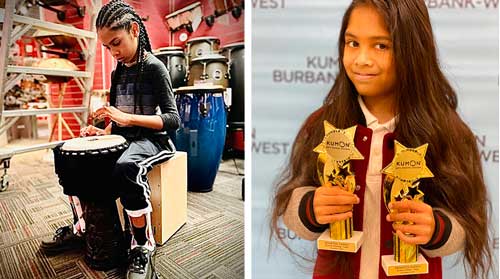
Right: Music revealed a hidden Math ability
Within a few sessions his music teacher shared his surprise: Vedanten was playing complex polyrhythms taught much later in the curriculum. His lack of prior training, combined with the contractions in his right hand, made this a significant milestone.
As a composer for voice, I was out of my depth with percussion. So back to the drawing board I went: was there a link between Polyrhythms and CP? The research at that stage was not as robust as it is today, but what we did learn two things about his brain:
1) We knew that regular muscles receive brain signals to relax and tighten. But with CP the muscles remain tense as the brain cannot send the “relax / off ” signal. To play a polyrhythm, Vedanten’s brain had to send signals to opposing muscle groups, prompting them to alternate contracting and relaxing. Over time this could interrupt the muscle contracture and force the muscle to relax. At the same time, his brain was reorganizing so that a stronger part could take on the motor function from the hurt motor cortex. This was neuroplasticity—drumming unleashing walking!
2) The second pointer he gave us was that his brain was wired for advanced mental Math because unlike simple beat counts, Polyrhythms rely on integrating pattern recognition, fractions, multiplication and division. We were not thinking of advanced math when we enrolled for music—but we realized we need to support Math as a strength. We didn’t anticipate that enrolling him in a math class would reveal the extent to which CP affected his hands and fingers. Until then, his clinic-based OT sessions focused on activities of daily life like buttons and shoes not classroom-based activities. So, thanks to Music and Math, we were able to identify and address the contractions in his hands, long before he stepped into the classroom. That was completely unexpected: Music and math practice revealed what medical assessments did not. From that point we knew we were managing spastic triplegia—not diplegia as was originally thought. And had it not been for Vedanten drumming on my head, we may not have tapped his own brain to unleash his mobility (pun intended).”
Products & Services


As Vedanten grew, his physical therapy needs evolved. The focus shifted to building balance, spatial awareness and full-body coordination. Theater became a practical and engaging way to address these challenges. Participating in local stage productions, such as playing the villainous Rooster in Annie, served as a dynamic, real-world environment for his physical development. The stage presented a unique set of obstacles that forced him to adapt and move with intention.
“I had to find my way in the dark because lights were purple,” Vedanten says. “There were cords, things that were very trippable. And I can and still trip over my own feet. I don’t have great balance at all. So, that was really practice because it moved my whole body. This was like the penultimate for physical therapy because it did everything in a therapy unit and more. And the thing is, I was having fun too.”
Even when he stumbled, the nature of his character allowed him to incorporate the physical missteps into his performance, getting angry at a door-frame rather than breaking character. This seamless blending of physical effort and creative expression laid the groundwork for his future on camera.
While theater provided excellent full-body conditioning, the physical realities of cerebral palsy during his growth spurts presented challenges. By the time Vedanten was transitioning from second into third grade, he was undergoing extended serial casting on both legs at Shriners Hospital. The intensive process took place during the COVID-19 pandemic. While his left leg responded well to the treatment, the right Achilles tendon reached a stubborn plateau. Doctors informed the family that they could not continue the serial casting on the right leg and suggested it was time to consider surgery.
Faced with the prospect of a scalpel, Vedanten experienced a visceral reaction that he describes as “both fight and flight at the same time.” Nadine recalls how he made her promise never to let them put a knife on him before he turned his attention directly to his doctor to negotiate his own treatment plan.
“Doctor, can you tell me if you were to do the surgery, what range of motion would you get on my leg?” he asked.
After hearing the medical projection, the young Vadanten proposed an alternative, highly ambitious path.
“Can you let me go back, and I’m going to go back and train really, really hard with my mom? And if you can give us some time.”
Products & Services

Granted a strict three-month window to prove his alternative method could work, the family mobilized. Nadine contacted the Olympics Committee to find a para-taekwondo coach. The martial art was strategically chosen because it required Vedanten to experience shifting his body weight from left to right, utilizing his hands and legs simultaneously—a challenging task for children with cerebral palsy. He began training locally in Los Angeles with a former Olympic-level dojo head.
Vedanten dedicated himself entirely to the practice. He came alive during his training, demonstrating such intense focus and rapid improvement that his coaches decided he should enter the national championships. The family drove from Los Angeles to Salt Lake City, Utah, where Vedanten competed in the para-taekwondo category. He secured a first-place finish, winning a gold medal.
Returning to the hospital slightly ahead of the three-month deadline, the medical team measured his progress. His increased range of motion in both legs, his improved balance, his core strength, and his kicking ability astounded the doctor.
“She was like, so what did you do? What did you do?” Nadine recalls. “And he pulls out the gold medal.”
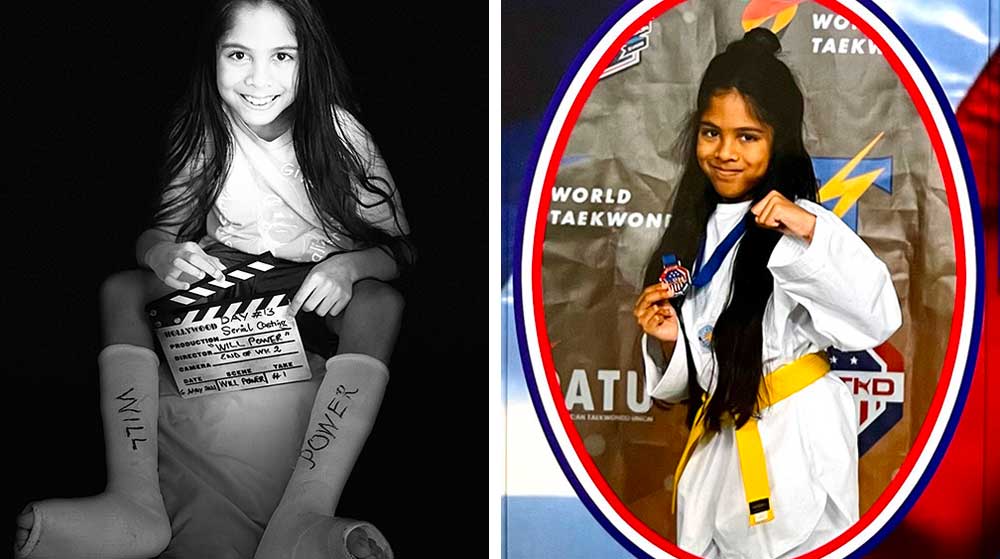
Through sheer willpower and intense athletic conditioning, Vedanten successfully delayed the surgery. However, cerebral palsy presents ongoing challenges as a child’s bones grow. By the time Vedanten reached fifth grade, the contractions in his legs had increased to a point where a surgical route was unavoidable.
Following the necessary procedure, Vedanten faced a critical, ticking clock: a strict two-year window to maximize his range of motion and prevent regression. During this pivotal recovery period, the opportunity to play Isaac in The Bluff emerged.
The Bluff was not a simple studio shoot. The role of Isaac required Vedanten to be on his feet for three months. The script called for rigorous occupational and physical demands. He would have to perform rope work, handle a knife, run through forests, escape from a cave, and execute underwater stunt training to escape a capsized boat. When Nadine presented the daunting physical demands of the script to his doctor, the response was unexpectedly enthusiastic. The doctor happily agreed that the relentless, daily physical demands of a filming schedule were exactly the type of intensive physical therapy Vedanten needed to maximize his surgical recovery.
Vedanten embraced the grueling work with the enthusiasm of a dedicated actor and a determined athlete.
“I loved that Frankie and Joe wrote such a strong arc for Isaac and that none of the characters treat him with pity. I also loved the action sequences in the caves and forest and on Isaac’s boat escaping underwater. But I was honestly worried about whether my body would recover in time for the shoot. What kept me going was a vision of Isaac: I saw him as playful but physically strong and protective of his family. So, when the doctor told us he wanted me to try to get on my feet as soon as possible after the surgery, I made sure I woke up the next morning even before my parents. My mom looked around, couldn’t see me and for a moment she thought I had fallen off the bed. But I was busy doing my homework in the next room! The movie and my character made me want to train to be the strongest I could be off screen—so Isaac could be the strongest on-screen. I could not let Frankie and Joe down. They created this amazing character and gave me the chance to bring him to life. I don’t know if I would have felt as motivated after surgery without that huge opportunity – and responsibility—to change how audiences treat disabled children within their own families and communities.”
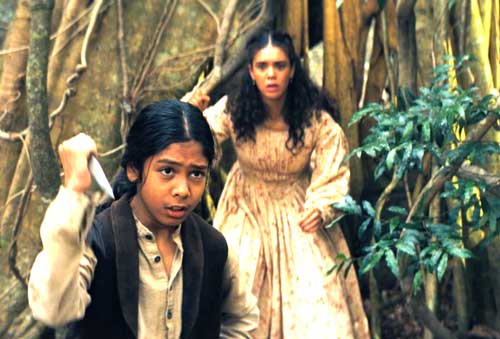
He was the one waking up to 4:00 a.m. alarms, eager to get to the set. The daily, constant movement yielded significant physical results. Returning from the shoot in Australia, Vedanten’s range of motion exceeded the projected recovery rates because the frequency and intensity of the set work far surpassed what a standard clinical routine could offer.
“I love doing my job,” he says. “That’s 90% of what was in my head.”
Navigating the world and the entertainment industry with a visible disability has profoundly shaped Vedanten’s perspective and fueled his ongoing advocacy. In a media landscape where, as Vedanten explained, “Less than one percent of child characters are depicted with disabilities”, his presence on screen is a vital step forward. Rather than hiding his cerebral palsy or trying to minimize its impact, he actively incorporates his lived experiences into his roles, working with his characters as a cohesive unit.
“Disability isn’t supposed to be a label,” Vedanten says. “Anything that is a part of you shouldn’t really be a label. And there’s not supposed to be a specific use space for it, it is you. You should be able to own that and have it there as a part of who you are.”
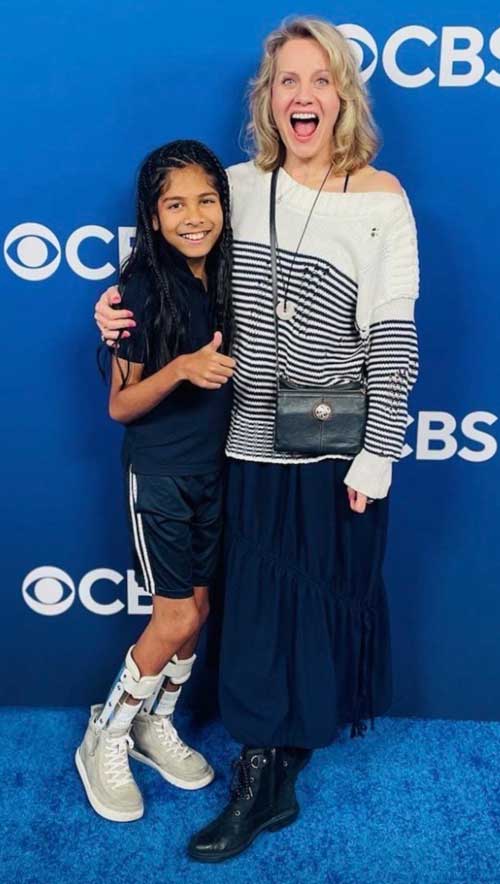
This deep-seated confidence extends far beyond the film set and into his daily life, where he confronts societal misconceptions with sharp clarity.
“Just because I need help to walk doesn’t mean I need help to think,” he says. “When I get bullied in school—and this did happen—my usual comeback is, ‘Yeah, I can’t run fast, but I can think faster.'”
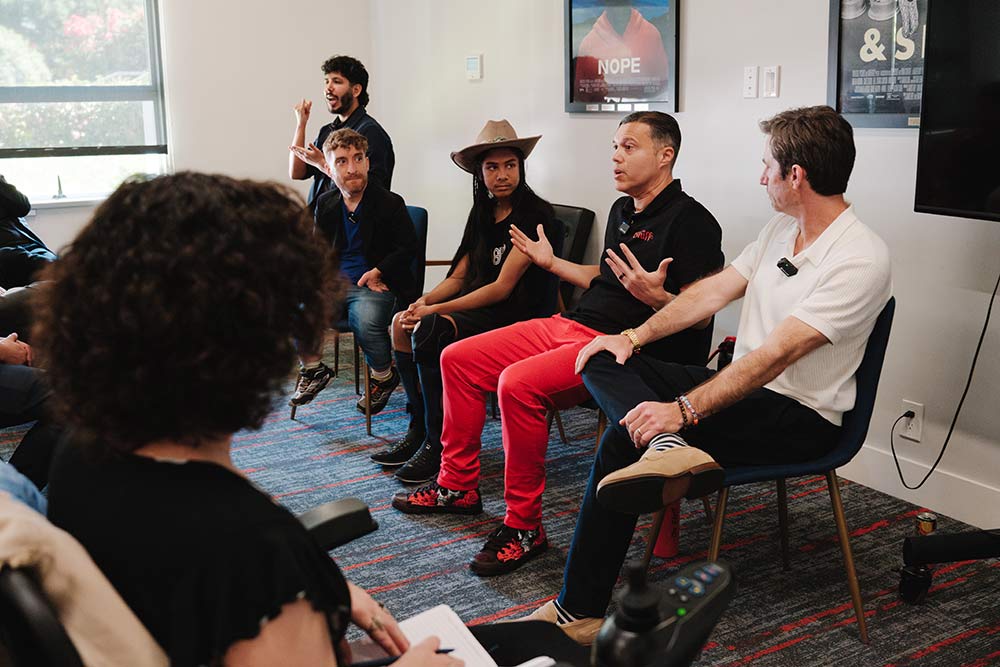
Guided by Nadine, who is an Ashoka Fellow and experienced actor, director and activist, Vedanten uses his growing platform to represent his community authentically and push for broader inclusion.
“I’m more than happy being an actor or an activist, really, but I’m more than happy to follow this path because it gives it a lot more of a meaningful turn to it,” he says.
Beyond acting, Vedanten continues to expand his creative and athletic pursuits. He remains deeply invested in music, studying Indian, African, and Western styles simultaneously. He can play the tabla, is learning the djembe, and uses a Western drum kit where the pedals help strengthen his leg mobility. He is currently preparing to release a multi-genre album, specifically designed to match the varying intensities of his daily two-hour physical conditioning workouts.
He is also channeling his experiences into literature, actively writing two middle-grade novels. Drawing on his love for authors like Roald Dahl, Dav Pilkey and the creators behind The Hardy Boys, he aims to craft relatable, funny, and action-packed stories. One of his current manuscripts features a disabled character aiming for the Olympics, directly mirroring his own dedicated path toward competing in para-taekwondo at the 2028 games.
His advocacy work continues to gain momentum, fueled by a stark reality regarding industry representation. Highlighting statistics from the USC Annenberg Inclusion Initiative, Vedanten notes the severe lack of visibility for the disabled community.
“In the USA, disability is one in four. It’s a quarter of the population,” Vedanten says. “For children’s media, less than 1% of child characters are depicted with disabilities. And that’s terrible.”
To combat this disparity, he remains heavily involved with the Easterseals Disability Film Challenge. Working alongside the challenge’s founder, Nic Novicki, Vedanten previously co-wrote and starred in a short film that adapted one of his original songs and raps. The project was based directly on his real-life experiences dealing with an unaccommodating physical education teacher. He credits the organization for providing the platform that led to his current success.
“The work that he’s been doing was able to get me to the point where I was cast in this amazing film,” Vedanten says. “It’s a big step forward in terms of representation, and I’m beyond excited.”
“The film I did represented children with disabilities,” Vedanten adds. “And the courage and the representation that they should have and how they should be portrayed as capable people.”
From the time he started school, Vedanten’s Mom has made sure he experiences the gift of speech by using his voice for good, supporting causes that affect his generation.
In grade 1 he joined students around the world by marching downtown in LA for Climate Change. During the COVID lockdown he urged parents to contact the CyberTipline in a PSA his Mom directed to strengthen parents and support the work of the National Center for Missing and Exploited Children (NCMEC). During the SAG strike he picketed with Eileen Grubba and his Mom for Performers with Disabilities. When he entered middle school, he composed a rap track for Students Demand Action, to help stop gun violence across US schools.
Moving forward, he plans to serve as an ambassador for Cerebral Palsy Foundations globally to help promote and fund research as CP is the leading cause of mobility dysfunction in children worldwide.
With a clear vision for authentic representation and a refusal to be sidelined by physical expectations, Vedanten is carving a unique and powerful space in the entertainment industry. His journey from using drumsticks to open his hands to performing demanding physical stunts on global film sets demonstrates a profound commitment to his craft, his community, and his own continuous growth.