
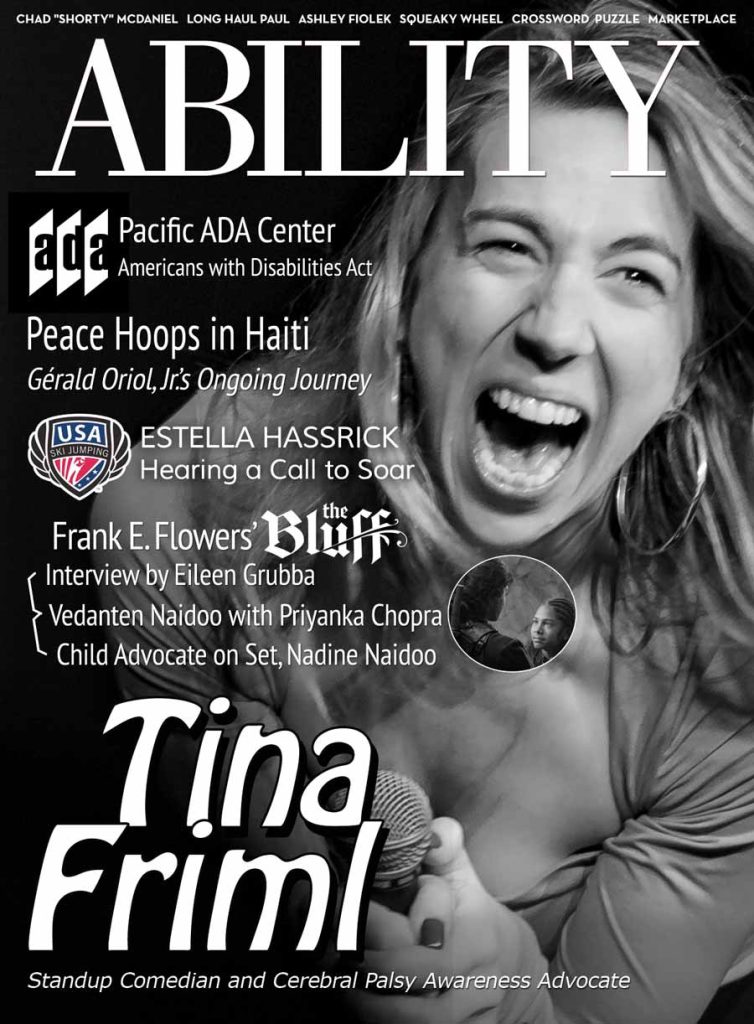















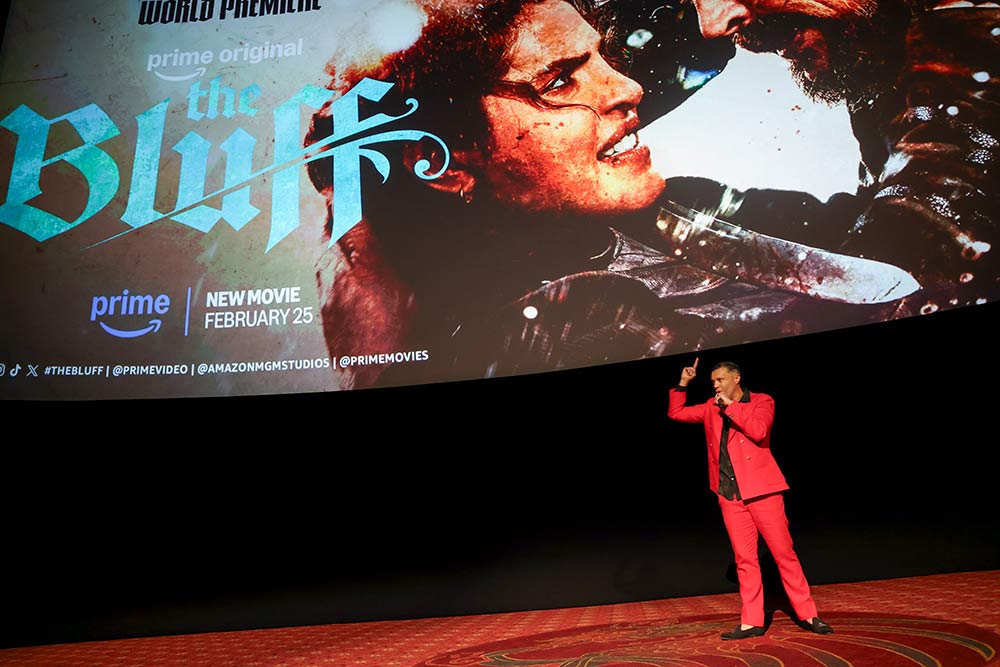
Filmmaker Frank E. Flowers grew up in the Cayman Islands, where storytelling was part of everyday life—an influence that later shaped the voice behind films like Haven and his more recent work on Bob Marley: One Love. That foundation fueled his latest film, The Bluff, an action-driven story rooted in Caribbean history and resilience. In this film, Flowers portrayed strong, multidimensional characters, including Isaac, a young man with palsy played by Vedanten Naidoo.
ABILITY Magazine’s Jennifer Woodall and actress Eileen Grubba spoke with Flowers about the cultural forces that shaped him, the creative process behind The Bluff and the inclusive design choices woven into the film’s production. As a film maker, Flowers revealed his commitments to accuracy, representation and stories that reflect the world as it truly is.
Jennifer Woodall: Frank, can you share a little bit of your background on how you got into filmmaking?
Frank E. Flowers: I’m from the Cayman Islands, and Caymanian people are storytellers. I mean, in the Caribbean, in general, we love to sit at the domino table or even just family functions, barbecues, etc. We rehash stories. That’s always been in my DNA. I graduated from high school in Cayman, and then I went to USC (University of Southern California). I thought I wanted to be an actor because I used to work in the theater on the island, and I worked as a news cameraman and a radio DJ. I had that very eclectic upbringing. Then as I got to university, I started to realize that my talents lay elsewhere. Anything you do in this business is hard, but it takes a lot of commitment. You’ve also got to make sure that it’s what you’re called to do. So, I found that writing and storytelling was more what I was equipped for and that became the path that I went on.
Products & Services


Woodall: As a filmmaker, do you have a favorite type of story to tell?
Flowers: Definitely. I look for things that I can bring that unique cultural tone to, that I can relate to. I had a very unique upbringing, as I said, growing up in the islands. While that doesn’t mean you can’t tell universal stories, it does inform point of view. I look for that angle for things that I can relate to, things that sometimes elevate that experience. Things that are personal, but also, I love to entertain. We didn’t have all the fancy movies growing up. We had one movie theater that played two movies. They were usually the biggest action movies like Predator, Die Hard, that sort of thing and they played for six months.
So literally, people would go to the theater—and it wasn’t even to watch the movie. It was to talk and hook up and fight and do whatever they were doing in the aisles. You knew every word by the end, right? So, when I went to film school, it was eye-opening. We start to watch (François) Truffaut and so on. So, having that perspective, I do love the entertainment side of it. And I love stories that can touch a global audience and that reflect the world that we live in because we live in an awesome, interesting, diverse world. Why shouldn’t our stories reflect that? I look for that in the movies that I make but also in the movies that I consume as an audience member as well.
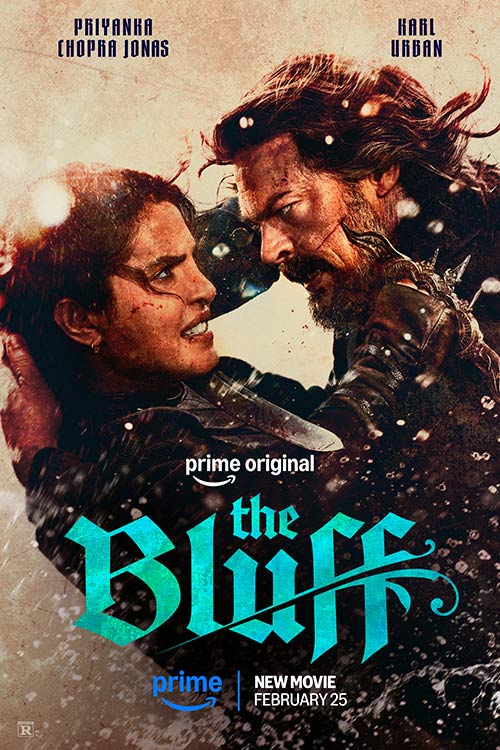
Woodall: Can you give a little synopsis of your most recent film The Bluff?
Flowers: The Bluff is the story of Ercell, played by the incredibly talented and special Priyanka Chopra Jonas, living as a fishwife in the 1840s Cayman Islands. Her home is invaded by pirates from her past, and she has to defend her family and survive the night while secrets are revealed. Some blood and some conch shells get broken as we go through it.
Woodall: What made you decide to film at Cayman Brac?
Flowers: We have three islands: Grand Cayman, Cayman Brac, Little Cayman. And broadly, a lot of people in Grand Cayman, they don’t go to Cayman Brac a lot. During the pandemic, we had this bubble. It was very blessed. It was like a miracle from God where the country shut down and then we opened up. We couldn’t leave the country, but we could walk freely. They had carnival. People were sharing dessert spoons. It was like “Twilight Zone.” So, the only place you could go was in those three islands. Even though I’ve been to Cayman Brac as a child, I rediscovered the love for it. When you look at that bluff—I still get chills whenever I bring people there—the unique, the Majesty of it. Actually, it reflects more the Cayman that I grew up in because now it’s so much modernization and change on Grand Cayman. You go to Cayman Brac, it feels like ’80s and ’90s Grand Cayman. I really just fell in love with it again. When my writing partner, Joe Ballarini, pitched this idea about this home invasion movie with pirates, it just felt just so ripe and interesting to be able to do it there.
Eileen Grubba: You shot some of it there and a lot of it in Australia, right?
Flowers: Yes. The majority was filmed in Australia.
Grubba: Why?
Flowers: When we designed the movie, it was like “Oh, shooting in pandemic. One location. We’re going to be small.” The whole movie was going to take place at the house. Then as we started to explore the character and her as a mother and what it would take to defend the family, it started growing. The first producers who were on the movie where Zoe Saldaña and Mariel and Cisely–her sisters at Cinestar. They really helped infuse the heart of the Caribbean woman and motherhood and that mama bear angle of it and the nuance. Then they introduced us to the Russo siblings, Joe, Anthony and Angela Russo. What’s so beautiful is they saw the value in the authenticity in the culture and what we were trying to do.
They were like, “Why are we going to paint it small? Let’s paint it big.” The movie just grew on the canvas to the size that it is now and to be a proper action movie. Cayman is a very small island with limited resources. You can do some stuff there, but we really needed a big scale studio to build sets. We needed hundreds of professionals and experienced people in front of and behind the camera. Australia just gave us that freedom to be able to do that. They have incredible crews. Also, the topography is very similar to the Caribbean so we’re able to double a lot there. We had an incredible production designer, Phil Ivey, who was so meticulous. We’d look at the frame, and if there was a piece of vegetation that wasn’t right. He would bring in Caribbean vegetation. The color of the sand. Everything was so thoughtfully and meticulously done that even people on the island were like, “Wait, did they shoot that in Brac or they shot that in Australia?” It was really nice that we were able to blend the two and we shot some in both.
Products & Services


Grubba: What you did with the home set, making it accessible for the son, was really impressive to me. Was that the set designer’s plan?
Flowers: Everything we do comes from character, in a perfect world. So, when we wrote the character of Ercell and the character of Isaac, which Vedanten Naidoo plays having a disability, it was inspired by the lore of a real female pirate named Jacquotte Delahey. Historians debate whether she exists—the normal stuff that comes with the lore of pirates, especially female pirates—but a part of the story was that she had a baby brother who was born with a disability, and she took care of him for a lot of her life. And that really inspired us. If you’re thinking about what it would take for a woman to rise the ranks back then—because there were real female pirates—they would have to be the most brutal, the most vicious, the most cunning, all the things to raise to the level of a captain. And yet, here’s this extremely tender, vulnerable side of this woman who’s raising her baby brother, who with the gap in age, made it like a son. That was in the DNA from the very beginning of the movie.
So, as we started to explore production design, we talked about how can we show her ingenuity that it pays off later. For example, the machete that she uses to chop the coconuts will become the machete that she uses to fight. The film takes place at a time in history where there’s no advocacy. People aren’t thinking about the larger society. There’s ropes, there’s gangplanks for boats, but there’d be no accessibility ramps for human beings. But her as a mother, she would use her ingenuity as a ship’s captain. She would have machined that. She would have the ropes—Phil and I talked about the idea that she could make ropes and she’d put the ropes inside the house so that he could be as independent as possible. This would all be things that she would learn from the ship. When you watch the movie a second time, you’re like, “Oh, I can see. When she starts building traps, she was using that in her pedestrian life just as much as her tactical life.”
Phil is incredible. Everything from the architecture, the wattle and daub, the outdoor caboose kitchen, everything was very well-researched. We had physical sets, which was amazing because it’s like you stepped back in time, you walk on set, and you’re in the middle of a cane field, and there’s no planes or skyscrapers or even electrical poles. You really do feel like you’re back in time.
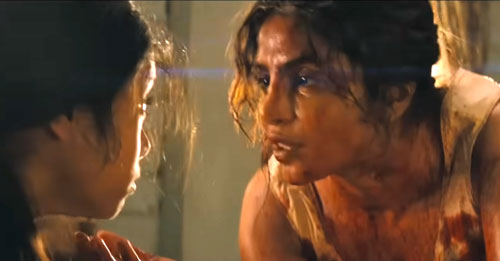
It was a fun challenge because even like Vedanten’s braces, for example, was a collaboration between our costume designer, Antoinette Messam, and Phil, and props. Everybody wanted to come together to go like, “We want it to be as real as possible, but it also has to be functional.” There was a really fun balance of even just designing that and for Vedanten to get into character because he’s such a thoughtful actor and he’s very prepared. And he really dove into this role. He was carrying a lot in terms of the emotional burden of Prianka’s character. He has his own arc as he rises up and fights back against the pirates. We really wanted to also give him the tools to be able to get into that role and make it as authentic as possible.
Grubba: I’ve known Vedanten since he’s a kid, and we wear the same AFOs (Ankle-Foot Orthoses). I wear them whenever I have to do much walking. It brought me to tears that your production built this functional brace to go over his real braces so that he could move well because that’s so important for us. So much of my career has been about hiding that brace or walking without it so no one has to see it. So, it was very touching and moving to see that the production cared enough to make sure it worked so that he could move well and with less pain.
Flowers; Thank you. At the same time, a message that I have been talking about in the last few days with the community is also for directors when working with performers, whether in front of or behind the camera, crew members, etc. with a disability, is really just about the conversation and the general philosophy of you want to give your team whatever they need to do their job best. If Priyanka told me, “Hey, I need a cooler with electrolytes and caffeine by the monitor.” You wouldn’t even hesitate. You would go like, “Whatever you need to get on and do your job and do it well, we accommodate.”
By the way, that goes for production design. That goes for lighting. We have these meetings and you talk ad nauseam. This is the shot we want to do. I say, “If we can make dinosaurs talk and fly, we can figure most things out.” It was the same with Vedanten. What was really lovely, his mom and dad, they’re incredible advocates for him, but they’re also just really great communicators. They understand production. He’s been working for a long time in the business, so we gave them a seat at the table as we’re going through ideas. We had a great accessibility coordinator from Amazon—they really gave us what we needed. In the same way I’ll ask my cinematographer, we’ll sit down and go like, “All right, this is the design for the idea. This is what we want to do. What do we need?” Most of the time, it wasn’t anything extra than what we were doing, but it was just Vedanten knowing that, “Hey, we want you to have whatever you need to do your job.” And he did it incredibly.
Grubba: This is a really important part of this conversation. What we’ve been fighting for decades in our business is for people to simply understand that—including those of us who have walking challenges or disabilities of any kind—we just need different things to allow us to do our job to the best of our ability. Just like any celebrity or any director, whatever they need, you give them what they need so they can do their best work. That’s what we’ve been trying to convince this industry of for many years. It’s really wonderful to hear this and to see it in action on such a big action film. I hope this continues to be in your conversations going forward.
Flowers: Absolutely. It really made for a better film, by the way. That doesn’t even get into the gear. I remember this one time we were in this jungle set. We were sitting there and the accessibility coach was there and we’re like, “Okay, so what’s the safest way to get him here?” I’m like, “How are we going to get the techno crane and the 600-pound lights here?” Same way, by the way, with Ercell. How did she get barrels of rum and gunpowder onto her ship? Same way she’s going to move her son around. Sometimes it’s as simple as that. We were talking at the beginning about having movies that reflect the real world and include our audience. It’s not a charitable thing. It’s actually good business. You want to appeal to everyone. You want the people to make this. Also, as a filmmaker and a storyteller, you need the feedback of as many types of people that you can get because that also makes for a better movie.
If you surround yourself with people who are just like you in terms of your age, race, gender, ability, all the things that make you you, all the boxes that society puts up, then you create this echo chamber. If you surround yourself with people who have different experiences, all of a sudden, your story can flourish in a way that will be unique, that will be more interesting. The Russo’s had this great saying at AGBO (studio), that “best idea wins.” It’s a very simple concept. But we go in a room and everyone had a voice at the table. I know what I think. And by the way, I can listen to 20 people and still go back and do what I wanted to do, but sometimes hearing those 20 people, you go, “All right, let’s take that idea. Let’s add it on top of this one.” And you start to then get something that even if it’s 10% better, it’s that much more.
Products & Services

Grubba: Yeah. It makes it more universal, too, for your audiences. The more you get specific and the more you include, the broader audience you reach.
Flowers: Vedanten really just brought an incredible performance. It was such a pleasure to work with him every day. He’s so disciplined and mature and giving to his other actors, which is something else that I think for children in general can be hard. But he was just so gracious and so giving to them. It just makes for a very special soup as you’re putting your movie together. It’s a beautiful thing. Every day he came to set, he had a different joke or he drew this or did that. It was nice to see that excitement.
My very first movie Haven, Bill Paxton was in it—rest his soul. I remember I started pitching. I was like, “Oh, you’re playing this character…”—I was 23 years old and never made a feature before—and like, halfway through the pitch, he goes, “Listen, kid, relax. I’m going to do your movie.” I was like, “Okay, Bill.” And so, we had a great two-hour chat.
A little while later, we were in Cayman Islands on set, and I was like, “Can I ask you? It was very cool of you. Why did you do this movie?” He said, “For a lot of us in the industry, that excitement, that passion keeps us going. We’ve done it 50 times. You’ve done it once. You’ve done it twice. And that excitement is cool.” I felt like Vedanten was that. I mean, he obviously has an extensive resume, but he came to set every day excited to be there. That’s infectious. It’s a beautiful thing. I’m psyched to be there because, oh, my gosh, I’m going to make a pirate movie. But it’s hard work, as you guys know. It’s grueling work, any film production. But having that little spark of like, “Yo, I’m so hyped to be here!” was really infectious. And we were really grateful for that as well.
Grubba: I find that a lot in the disabled community, especially the people who’ve been fighting hard for opportunity for years. They’re so excited to work that they give 100% always. Endless hours. I find the harder they’ve worked to get there, the less they ever complain, and they always add. That’s what I find. So, I’m always rooting for our gang because they’re great.
Woodall: Talking a bit about the Cayman Island culture represented in film, I noticed that in both Haven and The Bluff, there is this overarching theme with conch shells. For instance, in Haven, they say it’s bad luck to bring a conch shell inside. Where does that originate from?
Flowers: That’s a good question. Well, there’s a couple of things. So, the conch shell inside thing is some lore that I’ve always heard. I’m not sure of the origin of it, maybe from a practical point of view, they smell bad when they come out of the sea, but I’m not 100% sure, to be honest. What’s interesting about the conch shell, for me, is there are so many uses, not just the decorative, but people used it as a horn to blow.
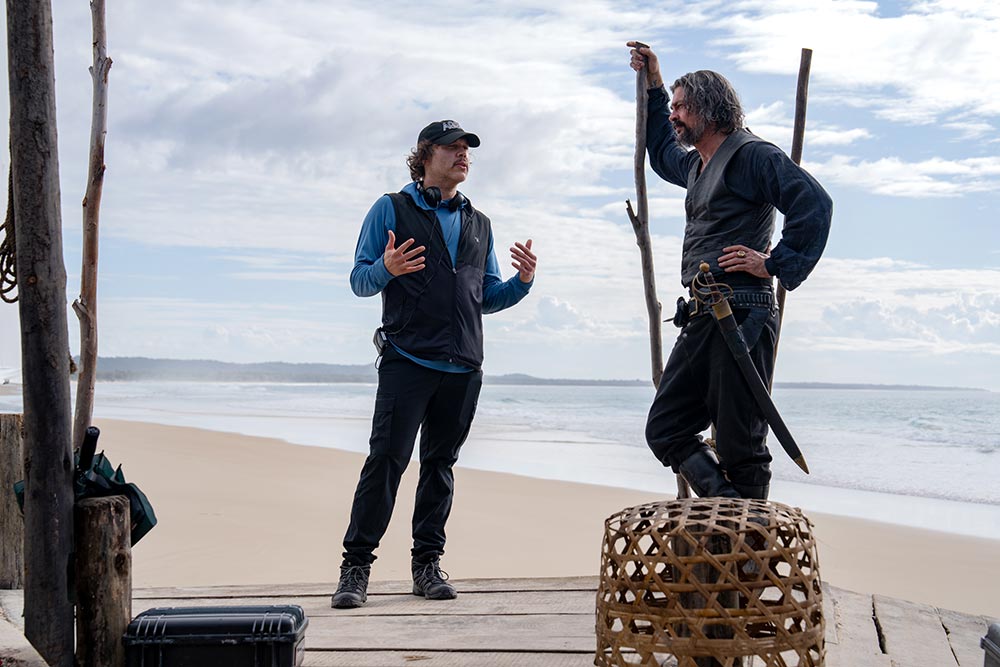
When you think of the culture versus heritage, and history being heritage in the old school, and culture being the right now, there are very few things that make the bridge. Even a flag, for example, changes over time. But things in nature that sustain are always interesting to me. A conch shell looks the same today as it did 100, 200, 300, 400 years ago. The fact that it’s still relevant, that it’s still sold in a tourist shop but also used for decorative purposes on the island to this day.
People in the old days would do something called backing sand where you would take fresh white beach sand and beautify your yard, and then you put the conch shells as a lining there. We eat conch, so it’s also something where you eat it, and then you also can repurpose the shell from it. People still dive conch and we have a season for it. You can only do it for a few months a year for conservation purposes, but kids, to this day, dive conch.
The conch punching scene from The Bluff was based on a kid outside a nightclub that was looking for a weapon. He just grabbed a conch and he punched a guy. I was like, “Oh, that’s going in a movie, right?” I think the fascination, especially in those two instances, are that there’s something uniquely Caribbean, or at least for me, a Caymanian iconic thing that has stood the test of time and repurposed itself and its relevance. We were great shipbuilders. We were great rope makers. We made thatch hats. A lot of that stuff is a little novel now, but the conch shell, you’ll see it all over the place.
Woodall: In talking about authentic representation, specifically in Hollywood, we talked about great things that are happening now, but there’s always room for improvement. So, from your perspective, where do you think that Hollywood could improve when it comes to authentic representation, both within the disability community and with authentic culture representation as well?
Flowers: I’m always hesitant to speak for the larger industry because I feel really blessed to be here, but I believe that authenticity and representation makes for better storytelling for all the reasons that we spoke about, for reflecting the audience and also for expanding your POV. In the case of The Bluff, being meticulous about the cultural aspect, for example, the weapons, the design of the homes, led to unique visuals that we haven’t seen on screen before.
As I was leaning into a pirate genre—I love the big Pirates of the Caribbean films—I’m not going to be able to top that. I’m like, “What am I bringing? What actually can I add to this genre?” The good news of old Hollywood not being as authentic and representative in certain areas, means that, for us, as this new generation of filmmakers, that’s something we can bring to whatever genre we’re working on. I encourage filmmakers, and I think, for the industry, pushing the boundaries will give us more interesting stories, stories that reflect the time in the same way movies from the ’60s, ’70s, etc. might not reflect the accuracy of the time, but they reflect a certain mentality. Some of that hasn’t aged as well, and some of it is fine. ’80s movies were a white, rich, greed, alpha, toxic male thing. That might not age as well, but it is actually a nice time capsule and snapshot of where our priorities were. It was an era of get rich.
Products & Services


Grubba: I’m just thinking about how much that’s true. People look back on those movies and they’re missing the point that that’s how society was, and it’s important to document that at whatever stage. You’re right. It gives us so much space to open up now. There are so many things that need to be in the films that haven’t been in, that got missed.
Flowers: Right. And not to be provocative, but some of that’s okay. Sometimes you need a time capsule even if it’s for a bad example. It’s okay to recognize that the films of that era represent some of the mentality of filmmaking, of mass culture. So now you go “Okay, we’re here 30, 40, 50 years later, what are we going to do?” I’m not saying everything has to be super progressive etc., but it’s like, why wouldn’t you want to make films or stories or TV that 20 years from now, 30 years from now, people look back and go like, “Oh, that’s a cool snapshot of 2025.” I guess for me, for us as filmmakers, it’s our responsibility in a way. But also, it’s a fun part of what we’re doing because it’s something that we can add to the conversation.
I have a 13-year-old daughter, and I love to watch films through her eyes. We were watching one of the “Indiana Jones” movies, and they introduced the lead girl, and she’s smoking a cigarette in the bar with the tequila. I remember she drinks them under the table, and my daughter whispers, “Oh, so that’s the villain.” And we’re like, “No, no, no, that’s the… Oh, because she’s smoking and shooting tequila, right?” It’s so fascinating. It’s fun because we all are going to pay homage and borrow from those films because many of them are great, but then we go, “Okay, but our audience has changed.” Forget any politics, culture. Your audience has changed. If our job is to entertain and reflect and play the harpsichord that is an audience, we have to be aware.
Grubba: When you look back on action movies through the years, they didn’t include disability. If they did, it was the star acting like or adding disability to their character. The Bluff is an action thriller in my mind. Is this a genre you want to stay in? Do you think about those things moving forward? For what you can do that wasn’t possible in the past or wasn’t considered in the past?
Flowers: Certainly. Again, you want to stick to the character and you want to let the character decide what is needed. This experience with Vedanten was also incredible just from the technical, practical point of view to not limit yourself. You’re told so much throughout your career, “Ugh, kid actors.” or to your point, “Hey, listen, be careful. Don’t put in a person with a disability. That’s going to mess your thing up.” Whatever it is that people are hearing, it’s just not true. It’s just not the case. It’s definitely something that I feel like I’ll carry with me.
I would like to keep making action films. The next thing I want to do is actually a small faith-based story about a gangster from Puerto Rico who became an evangelist. It’s a really inspiring and cool story. I guess my tastes oscillate. But I did love making an action movie, and I had incredible partners with AGBO and Cinestar and Amazon. If I can continue to work with those folks and folks like them, then it really was an incredible experience.
I’ve got to say, as a director, you have certain power, but when you get to action movies and studios and all that, you’re part of a corporation, whether you like it or not. You’re maybe the CEO of a startup company is one way of looking at it. Also, it’s incredible to have partners who see the value of that.
To bring it back to a previous question, if you think about what we can do for Hollywood, it’s getting that message out there and knowing who those people are, who recognize this. Because, again, I was very blessed to have a studio and producers who really supported what we were trying to do and saw the value of it for a great story and for a cool action movie. I can’t say cavalierly that if I didn’t have that, that if people were like, “Hey, you got to change this.” or “You got to do that.” It’s so hard to get these things done that I also can’t judge someone who maybe have had to compromise those things. It happens.
Grubba: We hear it all the time. I believe that if our industry puts characters into movies, like you just did, and you show the world how these kids can be not only valued but included and cool, then we will change the literal world for kids with disabilities that are coming up. Because when I was a kid, there was none of that. And I was in and out of wheelchairs as a kid and growing up with a walking challenge and faced all the horrors that anyone has ever talked about, and yet I sat there my whole life going, “It doesn’t need to be this way.” Because if they were just put in a different light, if they saw the strengths, if they saw what kids who come through these things are actually made of, they would honor them.
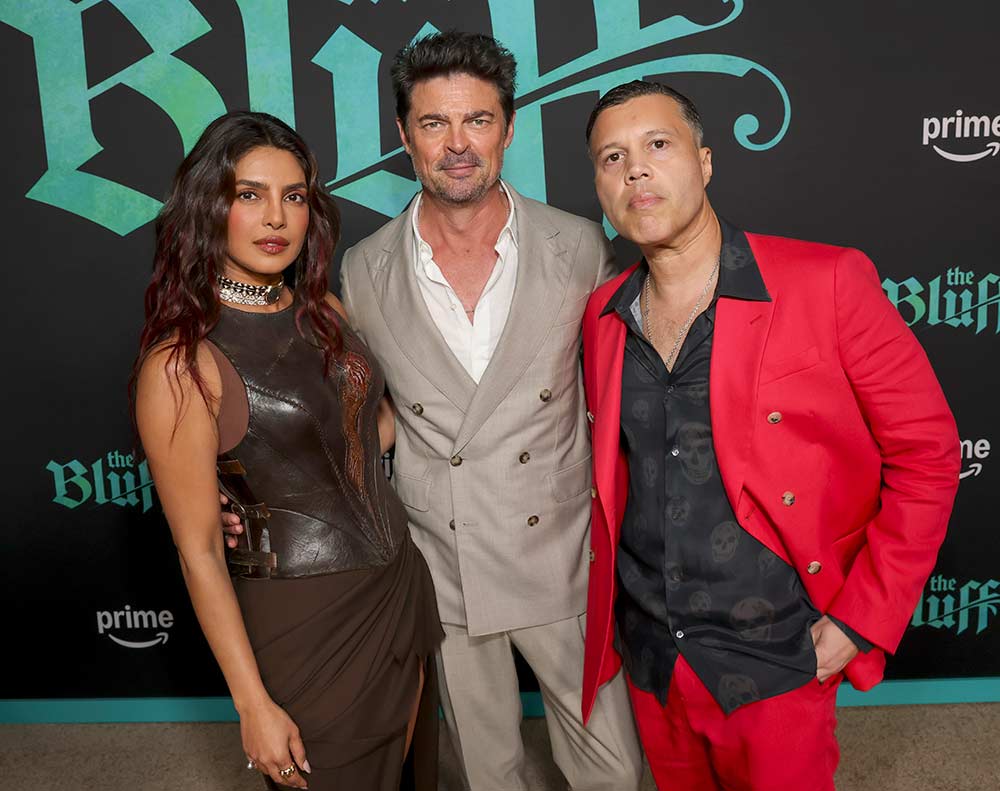
One of the beautiful things I feel you accomplished with this film without perhaps even knowing you were doing it was exactly that. Putting this kid in a light where the world will see this child with a disability having a full character, a full life. He fights for things. He’s not a victim. And it was just so beautifully portrayed that it is exactly the goal that I’ve been fighting for decades so that the kids that come up with disabilities can see a different path forward than we saw when we were kids.
Flowers: I remember there was a lovely moment where we were going over a scene in water—that ended up getting cut—and I asked Vedanten’s mother Nadine, “Can he do this? Is that comfortable for him?” And she goes, “He can do things in water that he cannot do in land.” That was so cool. I was like, “Oh, that’s a superpower.” I’m a swimmer. My family’s a swimmer. That inspired the line from the movie where Priyanka goes, “You could swim before you could stand.” We wrote that during production.
Grubba: That hit me in the heart when she said that line in the movie because I could swim before I could stand. I could swim before I could walk. So, I understand that. I’m more comfortable still in the ocean than I am on land. I knew somebody knew that who wrote it. All the nuances, all those little things that get added that people don’t know because they didn’t live that life or they didn’t experience it.
Flowers: It’s so true. And it’s so great at the moment because it actually takes what could have been a monolog to try and explain—you don’t have time for that in an action movie. You have to get to it. Just the crystallization of that line, then he gives that resolute nod of like, “Okay, got you.” That’s him becoming a man right there. That’s him growing up and going like, “Okay, all right, I’m in it.” And every parent wishes for that moment where they can have the right word to tell their kid in a terrible moment of struggle.
Products & Services
Grubba: There were so many things about the way you guys put this film together that didn’t fall on any of the old stuff that we’re trying to get away from as people with disabilities. You didn’t make the kid weak. The way you portrayed this whole character made him fit into the world and normalized it. I dealt with my challenges, but as a kid, I was like, “I’m like everybody else. I can do what everybody else can do or more.” I’ve always believed that. Really, the word, the label, the box didn’t really hit my world until Hollywood.
Flowers: I worked with a cinematographer who had palsy, and I didn’t know. He was younger than me and he came to my class and we were talking. He said “I had a little trouble because people make fun of me because of the palsy.” And I was like, “Wait, what?” We had that conversation once. It’s not like every time I saw him after, I was like, “So, bro, I know with the palsy, you can’t…” It’s just not realistic. So, when you see it portrayed in movies where all people want to obsess about is the thing, you go “This is your kid. You’ve seen him every day of his life for the last 12 years. This is not day to day conversation. You’ve moved on from that.”
Grubba: In any part of the world, in any story, anywhere. We don’t talk about it. When we go into Walmart and there’s a kid at the door who’s got a disability, I don’t stop and say, “Wait, I need to know why you’re walking funny.” We don’t do that. I’m one of eight kids, and I was treated like every other kid. I mean, there were different needs, of course, and different challenges, but my parents treated us all equally. So, you go into the world thinking that’s how it needs to be. Everybody’s equal. We’re all just different. That’s all. We’re just different.