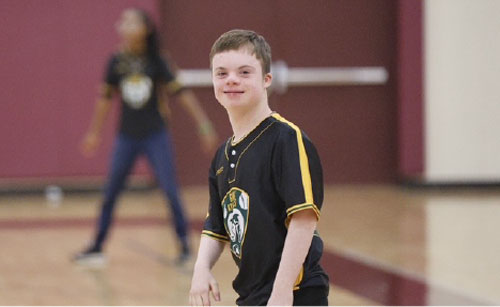








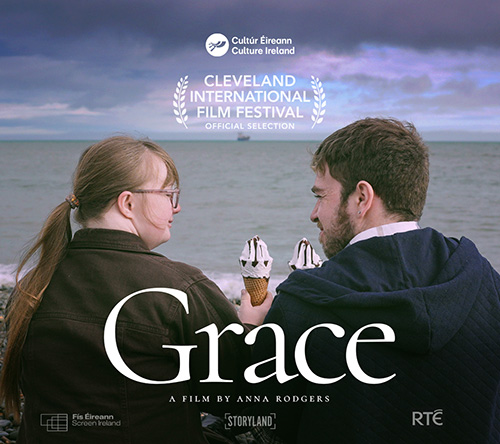
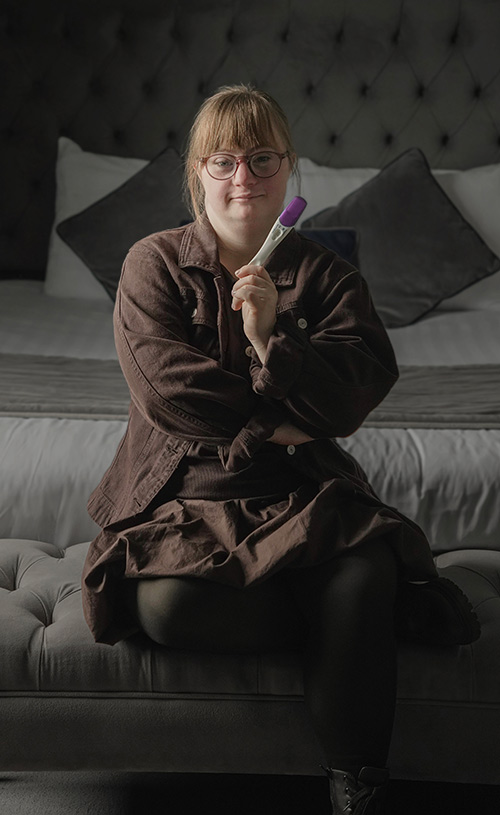
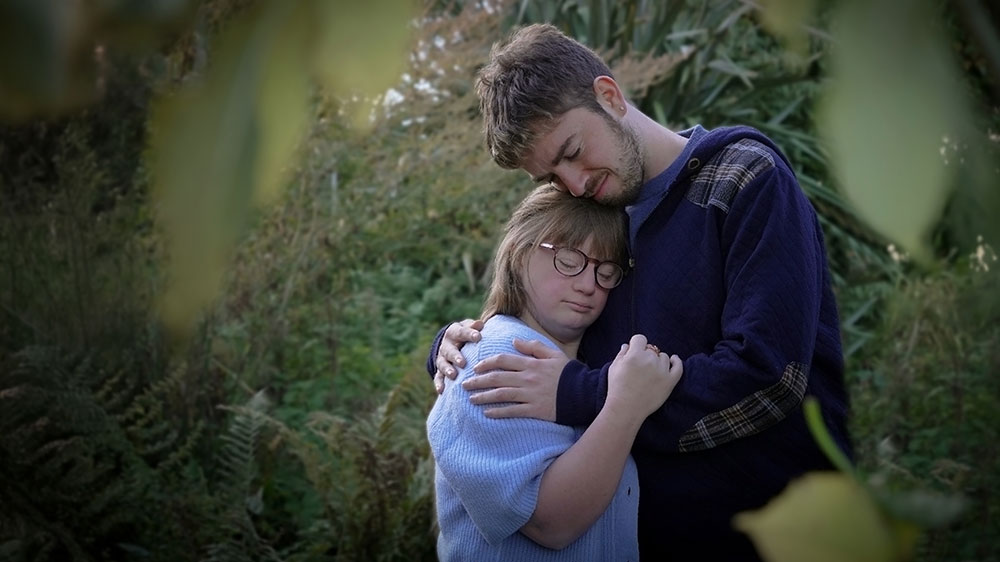
The award-winning short film, Grace, is a coming-of-age drama about the pursuit of independence and the complexities of young love. The film, starring Fiadhnait Canning and Luca Malocco Mulville, captures the delicate balance of navigating the need for autonomy while managing the expectations of those around them. Following its recent success at the RTS (Royal Television Society) Awards, Grace has garnered acclaim for its authentic portrayal of characters with intellectual disabilities, offering a perspective that is thought-provoking and emotionally relatable.
Products & Services


ABILITY Magazine’s Olivia Austin met via Zoom with the two lead actors and Luca’s father, Tony Mulville, to go behind the scenes of the production of Grace. The group explored the actors’ preparation process, technical challenges and the importance of self-advocacy. Fiadhnait and Luca provided an intimate look at the dedication required to bring this story to life, while sharing how they managed the similarities and stark differences between their characters’ journeys and their own lives.
Olivia Austin: In the film Grace, you both had this beautiful dynamic on screen. Did you do a lot of work ahead of time for that?
Luca Malocco Mulville: Well, we did a lot of rehearsals, and a lot of role plays. We had an intimacy coordinator on set to help us feel at ease. The first day when we were filming, it was absolutely so funny because it was the 10th take, and the blinds kept falling down.
Fiadhnait Canning: It’s like there was a ghost in the room or something.
Luca: I was scratching my plays, and then Anna looks at me and goes, “Luca, can you please stop? This isn’t a horror film.”
Olivia: (laughs) So, it sounds like you had a really comfortable environment.
Tony Mulville: I think overall there was a lot of great support within the production team to make Fiadhnait and Luca very comfortable because there were some difficult scenes, obviously. They never wanted them to do a scene that they weren’t comfortable with or put them out of their comfort zone. So, they did a lot of work around making sure that Fiadhnait and Luca were comfortable doing each scene.
Luca: Well, Fiadhnait was very lucky because as soon as we finished at the kissing scene, we were absolutely so tired and then somehow my elbow slipped and hit a glass of wine and the glass just barely missed Fiadhnait by that much and I was like, “Sorry!”
Olivia: What kept you motivated through the moments of being tired and the parts of the story that felt especially moving and emotionally heavy to perform?
Luca: When we were waiting to be called in the waiting room, sometimes I might go for a sleep. I actually found a beanbag one day and it took my mom ages to find me. We had like a few snacks. Sometimes, if I was nervous before a shoot, I would go outside for a bit of fresh air.
Olivia: Did you know each other at all before? How was the casting process?
Fiadhnait: Well, we did know each other really, really well. We were in this group together a long, long time ago. We hadn’t seen each other since then, and we were there in the casting room and we had to do a double take when we saw each other. I hadn’t seen Luca in I don’t know how long, until we did the auditioning and the work ourselves and all that. That is one of the reasons why we feel comfortable with one another because we knew each other.
Luca: A few weeks ago, Grace won an award.
Olivia: Best film?
Luca: Yeah, for a short film at the RTS (Royal Television Society) Awards. It’s like the Oscars and the BAFTAs. It was an amazing night.
Olivia: Congratulations. What was your favorite part about shooting this film and the process?
Luca: Well, for me, I just liked the whole journey and I liked getting up early and kind of going “Yay, I’m making a movie.” And when I would get home, just feeling really proud. For the train scene, we actually went to a place in Ireland called Galway. So, we filmed the whole morning going down to Galway. It was quite funny when we got off the train because we only just got to Galway just to turn around and we were like, “Is this it? Is this Galway?”
Fiadhnait: They just said “Okay, now back on.” We’re like, “Wait, what? We don’t get to have a little scene?”
Olivia: Had you been there before?
Luca: I was there once. There was a nightclub kind of festival for people with intellectual disabilities. I was there for my birthday.
Olivia: How long did the film take to shoot?
Luca: It took about nine days to shoot.
Olivia: Only nine?
Luca: Yeah, we started filming on the 29th of October, and we had a day off because the Dublin Marathon was on. We had couches and we would have lovely food like breakfast rolls.
Tony: Nine days doesn’t seem a long time, I suppose, but there was so much planning beforehand. Obviously, it’s expensive to make these movies, and they had to take the rehearsals as well. So, there was a lot of planning before they even started to make it.
Olivia: What are your plans coming up? Do you have projects lined up after this?
Luca: Well, I’m going to the Fastnet Film Festival in Cork, and Grace is going to be shown in that. It’s a 4-hour drive, but I’ll probably listen to music. And then, on the way down, I’ll watch Grace.
Fiadhnait: And see your name on the credits!
Products & Services


Olivia: How does it feel when you go back and watch the film?
Fiadhnait: I say incredible because you see your name up there, It was a good feeling. You’re making people proud and making yourself proud by looking at it. We can say we did that. And that’s the most awesome feeling.
Olivia: You’re telling a story that many people don’t get to hear.
Luca: When I look back on the film, sometimes I kind of go, “Did this actually really happen?” We watched it in my training center–It’s a center where you would go in for the day and do courses–and was very funny because sometimes I’m known as Tommy in my center. When I come in the morning, my friends will be like, “’Morning Tommy,” “Excuse me, Tommy.” And then I’m like, “All right.”
We have a relationship class, and we actually watched it and we paused scenes and looked at me and Fiadhnait’s facial expressions. In the scene where Grace asked Tommy, “Are you a man or a mouse?” and then Tommy says, “I’m a man.” Inside, Tommy is like, “What have I done? Why is Grace against me?”
Olivia: I see you had to do a lot of inner character work. What is this training program?
Luca: It’s called St. Michael’s House. There’s a lot of like training centers around there, there’s schools, and it’s for people with intellectual disabilities. It’s pretty fun.
Tony: It’s one of the largest clinical services in Ireland, and they provide whole body and support services clinical medical training. So, Luca attends one of the training centers based in Dublin. They provide almost like a wraparound group of services. They also have schools for the younger children. And then as you move through into adulthood, they morph and merge into more adult services. So, Luca would attend St. Michael’s House. From there, Luca attends what we call a hub center. Then Luca would work two days a week out in the community, but he will also check in with the hub as well.
Olivia: I wasn’t sure if you were referring to an acting-specific training work.
Tony: No, it’s all kinds of training and very much geared towards independent living and the next— ironing, cleaning, washing. Doesn’t always work though. (laughs)
Olivia: What projects have you done before that prepared you for Grace?
Luca: Well, I was in the Blue Diamond Drama Academy. Which was a drama program for people with intellectual disabilities. That’s how I got into acting. Also, when I was younger, I did a lot of shows. I did “Oliver” in school, which we did in our local theater. And our first night was a little bit of a disaster because the bench fell on stage. Then, in my school we did “The Wizard of Oz.” Also, at the Blue Diamond, we did “A Midsummer Night’s Dream,” the Shakespeare play, and I played Lysander. We also did “The Curious Incident of the Dog in the Night-Time.” I played Christopher, which is probably the hardest character because Christopher has autism, so I had to play someone who was autistic and thought, “This is so hard,” but I still managed.
Olivia: I can see how that would really prepare you for the role of Tommy. It’s so emotionally demanding, right?
Luca: Yeah, and during COVID we had written a play about COVID called “A Stranger’s Time.” I don’t know if you know “Doctor Who,” but in the play, we had Doctor Who as a character, which was me, and then we had another character which we made up called Professor Wasp. There was a very funny line in the play. I was trying to be very serious and the main character’s mom rang the hospital and was like, “Oh, um, I’m sorry, who am I speaking to?” And then I’m like, “Doctor Who.” And she’s like, “Dr. What?” (laughs)
Olivia: So, you’ve done a lot of acting before this. What about you Fiadhnait?
Fiadhnait: Well, this is actually my first acting role, believe it or not. I am with the Morgan agency, and I don’t get roles that come in very often, but of course I audition for them. I was in a cooking show a while back, and it turned out to be somewhat of a documentary food thing, and it’s really good.
Olivia: So, there’s a little bit of a cooking theme at one point in Grace too, right?
Fiadhnait: Yeah, it’s kind of funny.
Luca: That was kind of fun because I think you were cutting carrots, and I was just washing the potatoes, but there was one bit which we had to leave out due to time where my character Tommy would look at the cooker at the chicken and then he was like, “Oh, it’s done.” But then Grace would be like, “No, Tommy, just put it back in.”
Fiadhnait: It’s like, “It’s done.” “No, it’s not. Look at the pink.”
Luca: After the first scene, Fiadhnait’s character says “I’m making chicken for Tommy.” Margaret, one of the support workers in Grace’s house, just turns around, and is like, “Oh, we’ll be lucky if he cooks through.” And Tommy is kind of looking at Margaret like, “Really, Margaret?”
Products & Services


Olivia: What were your favorite parts of the film?
Luca: I liked every scene, but the scene that I probably found the most tiring was when we were shooting the hotel scene because of the amount of times going up and down those stairs The stairs were creaky and they’re also very steep, so you would have to be like really, really quiet.
Fiadhnait: We had to be soft with our feet, but also, we had to get to our marks faster so no sound would be made. Since the floorboards were creaky, we had to keep doing it multiple times. Once we got to our spots, we had to be rooted to the ground like a tree so we didn’t make any sound on the floor.
Olivia: That sounds exhausting.
Fiadhnait: Even for your legs because you have to stay stiff because you don’t want to make any more sounds. We all want to get through the scene as perfectly and great as we can, but the creakiness really was a small obstacle at that point. We got through eventually.
Olivia: Did it take a lot longer than expected?
Fiadhnait: Definitely.
Luca: And especially when we’re filming on the bus because a bus is so rocky.
Fiadhnait: It was cold on the bus too; they didn’t have the heater.
Luca: And the train was roasting. I had a shirt and a hoodie on, and I had to leave it on for the scene for continuity. Or when we were outside for the garden scene we were freezing. I had these hand warmers in my costume jacket. But probably the hardest scenes were when we had to laugh in character. I would read on the script where it said ‘collapse in laughter’ and I would do that, but then we would have to do that scene again.
Fiadhnait: But with different lenses every time. Like you get the widescreen and the full and everything else. Every time we stopped, I asked “Did I do something wrong?” and they were like “No, it’s a technical thing.” It was kind of a breath of relief, but not really because we’re trying to do this scene. But also each time that happened, you know it’s a technical thing. You had to do that a few times.
Olivia: What did making this film mean to each of you?
Luca: Well, for me, it was quite emotional and also quite moving. My character Tommy found it hard to stand up for himself, and sometimes in real life, even I find it hard to stand up for myself. Sometimes I’m afraid of saying no. So, when I played Tommy, I thought, “Okay, this is like me.”
Olivia: It really resonated with you, it sounds like.
Luca: Yeah, and it was very tiring, but it was fun though.
Olivia: What about you, Fiadhnait?
Fiadhnait: Well, the short film that we did is really emotional, but I do say it’s also thought-provoking for some because everybody has sides and reasons for being on either side of the whole thing surrounding Grace–that’s my character I played–And it turned out that all she wanted is to be her own individual, being in a relationship and having that space in the whole thing and enjoying it. So, it’s mainly like her trying to get her greater independence, but it does involve people around her.
Products & Services


Olivia: How did it feel to portray this character who strives for her independence?
Fiadhnait: I do think it was a bit emotional for her because it’s not hard for me to get independence, but for Grace, she has to do something to prove herself. She’s a learner by her voice, so she’s learning to attempt to grow. So, it’s a growth development that you see in her. And well, growing up is difficult for anyone, but for her, it’s her journey.
I’m quite independent-minded myself. So, I know what I want. I know what I’m looking for. If I’m doing something, I’m doing it. But with Grace, the way I resonated with her is that she takes it delicately as she can with everybody else around her, but part of her says, “Why am I being so delicate with everybody? Like, it should be like my decision.”
And it turns out it does affect everybody around her, but all she wanted is to get the last word. With me, I have great independence. I go to work. I take busses and there was just no fear at all. With Grace, she’s learning, but like it shouldn’t stop her from trying new things. She has the feel of an “Okay, if you guys are not going to do it, I’m doing it myself.” kind of thing. So, she has a chip on her shoulder.
Olivia: You mentioned this was an emotional role for you; can you talk about that?
Fiadhnait: Well, it really is because the most emotional part is her and her mother. And of course, her and Tommy. You see the emotional part there. It’s a lot of growing up on her side. Growing up at any age, it’s hard enough already. So, for Grace, you see how she’s trying to grow. She’s not being pulled back too heavily, but she has it in the back of her mind there are people around her, but she’s not really having that stop her.