







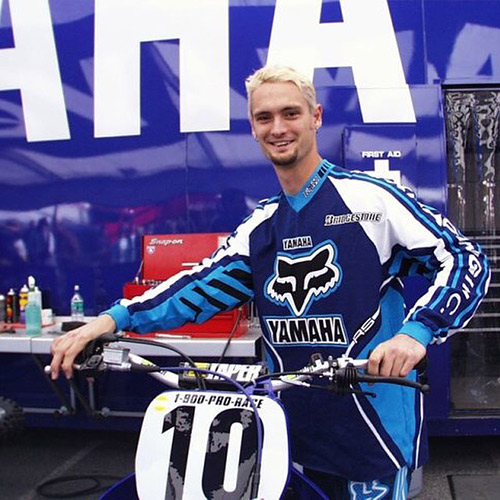
From his first wobbly laps on a dirt bike at just two years old to standing on podiums around the world, Jimmy Button’s story traces the adrenaline, triumph and brutal realities of professional motocross. By the time he turned pro in 1989, Button had already made history as one of the sport’s most decorated amateurs. His career carried him across continents and through factory rides with Honda and Yamaha. In 2000, everything changed in an instant. A crash at the San Diego Supercross left him with a spinal cord injury, forcing a sudden end to racing and the start of a new mission. What could have been a final chapter, instead, became the beginning of Road 2 Recovery, a foundation Button co-created to help injured athletes navigate the daunting financial, medical, and emotional aftermath of catastrophic injuries.
Now, as the sport faces one of its most injury-plagued seasons in decades, ABILITY Magazine’s Chet Cooper speaks with Button on his journey, the evolution of motocross, and why giving back has become his greatest race yet.
Chet Cooper: What got you in to riding?
Jimmy Button: I think it’s probably a stereotypical story of a dirt bike rider. I started riding when I was very, very young. I believe my first time on a motorcycle was around two, two and a half years old, just in a little field parking lot type of thing by my grandparents’ house. That just spurred along. I started racing when I was five. I had a factory ride with Honda when I was eight years old. I was getting paid to race by the time I was eight or nine years old and went through my whole amateur career up until I was 16. When I turned pro in 1989, at the time, I was the most successful amateur racer ever in terms of how many championships I had won. I turned pro at the end of ’89 and did a couple of races at the end of ’89, and then 1990 was my first full pro season.
Products & Services


Cooper: When you turned pro, did you have a factory ride at that point?
Button: I was a factory-supported rider as an amateur. When I turned professional, I didn’t turn pro into the full factory race team. Back then, I was riding for Honda, and Honda didn’t do that type of stuff then, so I had to earn my stripes my first year. My first year, I was actually considered a privateer. Then I ended up signing with Yamaha for the ’91 season. My second year pro, I was with factory Yamaha, which is where myself and Doug Henry became teammates for the first time. I had a relatively really good career, won a bunch of races, never won the big Supercross or Motorcross Championship, but got second place in those championships on a few occasions. You know, it is what it is. It’s hard to win championships. I was lucky enough to be able to win a lot of races, be on the podium for a bunch of races worldwide. Won a lot of international championships, but I never won the big American championships. That’s one of those things that happens in a pro career, but it was moving along pretty nicely.
Cooper: What led you to create Road 2 Recovery?
Button: Well, in January of 2000, I had my accident at the San Diego Supercross, just rolling through the whoops—Like you’ll see in the in the Pay Dirt movie, it shows it pretty well.—And I just had a weird, awkward little crash that had massive repercussions. I ended up breaking my neck and suffering a spinal cord injury. I’m a C3-C4, incomplete quad. The career was over in an instant. I was in the hospital for a long time with no real upside given to me. The doctors were pretty adamant about that. I was pretty adamant in the other direction.
Cooper: Where did you do your rehab?
Button: My inpatient rehab I did at Barrow’s Neurological Center here in Arizona. Once I graduated out of there, I was to a point where, I guess from a clinical standpoint, you could say I was walking because I could shuffle my feet and keep my body weight above ground. But I wasn’t really walking walking in the state that I am now. We ended up going out and we found a gentleman in Encinitas, California, by the name of Paul Chek. We met up with him through some advice from Danny Way, the professional skateboarder, who had also suffered a broken neck, no paralysis, but a broken neck. Chek had helped Danny relearn how to move and all these types of things, so I went and did outpatient rehab with Paul for a year. I’d lost 40 or 50 pounds of muscle by the time I saw him, so we went through the whole process with him, and he helped rebuild my body into what it is now.
Obviously, I was not going to be a professional athlete any longer, but I wanted to get to a point that I could move around and do things as well as I could in society. So, we did the rehab there. And going through that whole process,—what we were going through as a family, the pitfalls that are out there in the world for spinal cord injuries and all this stuff that we were dealing with—we decided that we needed to start a foundation because it was so difficult to navigate through all this.
I had everything at my disposal. I was very well known. People came from all over the world to give us good advice and good guidance on things to look at, things to do, rehab, to look at whatever it may be. I was financially in a good place, and it just got me thinking, “Okay, this is going to happen to somebody else again because dirt bikes are obviously very dangerous and we need to put something in place that can help the next person, that goes through this, navigate these waters as best as possible.” That was the start of what is today the Road 2 Recovery Foundation. We’ve been doing this now with the foundation for 25 years. We’ve donated more than $10 million to injured athletes and helped over, I think, well north of 200 athletes right now that have had spinal cord injuries or traumatic brain injuries that we’ve helped navigate the waters of this whole injury.
Cooper: There’s so much need that happens that people don’t understand when there’s an injury. How did you get connected with the film Pay Dirt: The Story of Supercross?
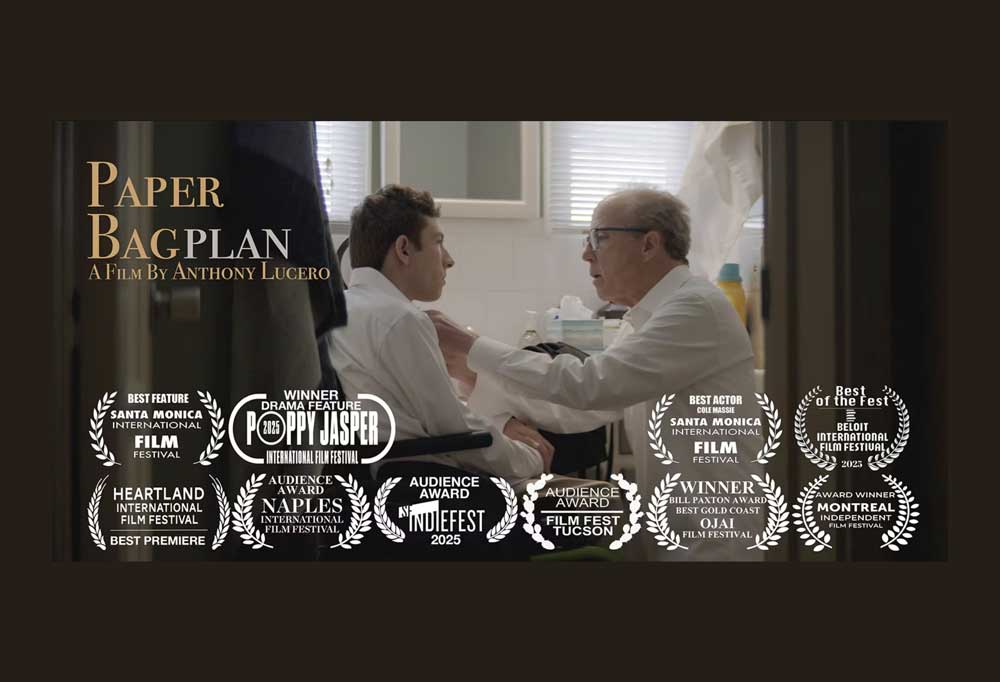
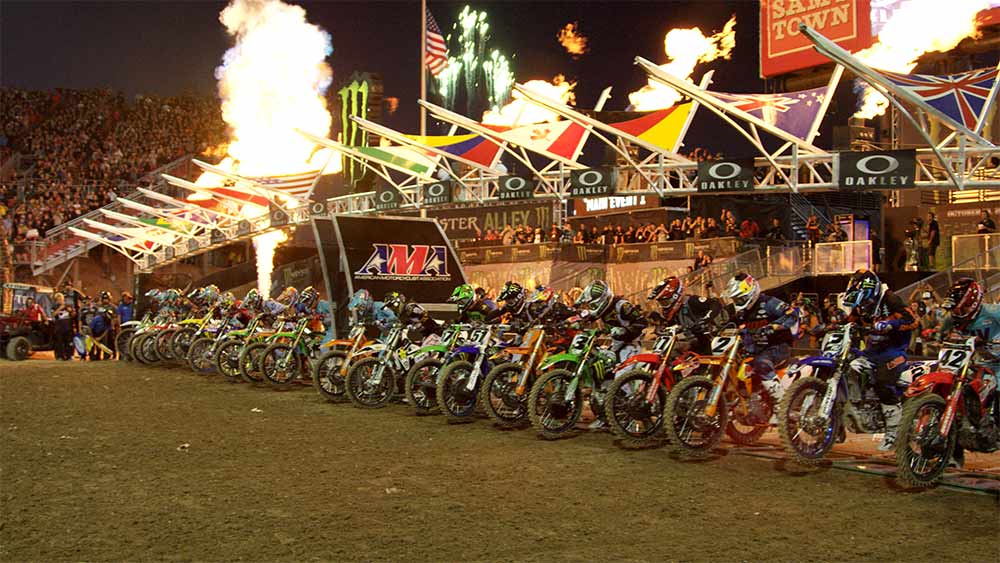
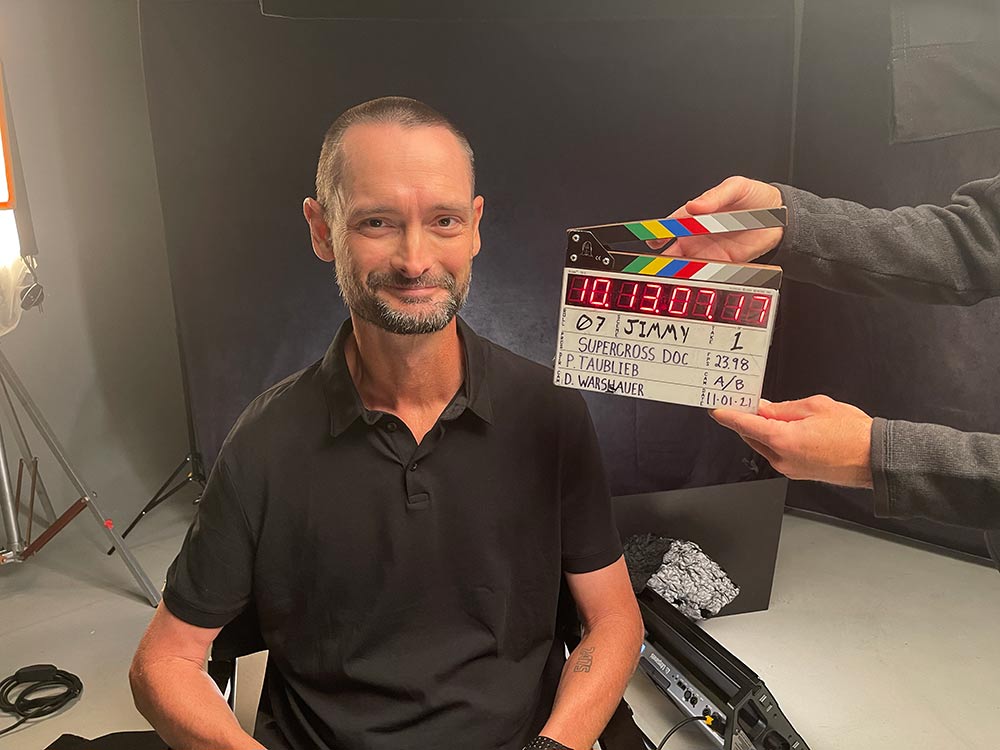
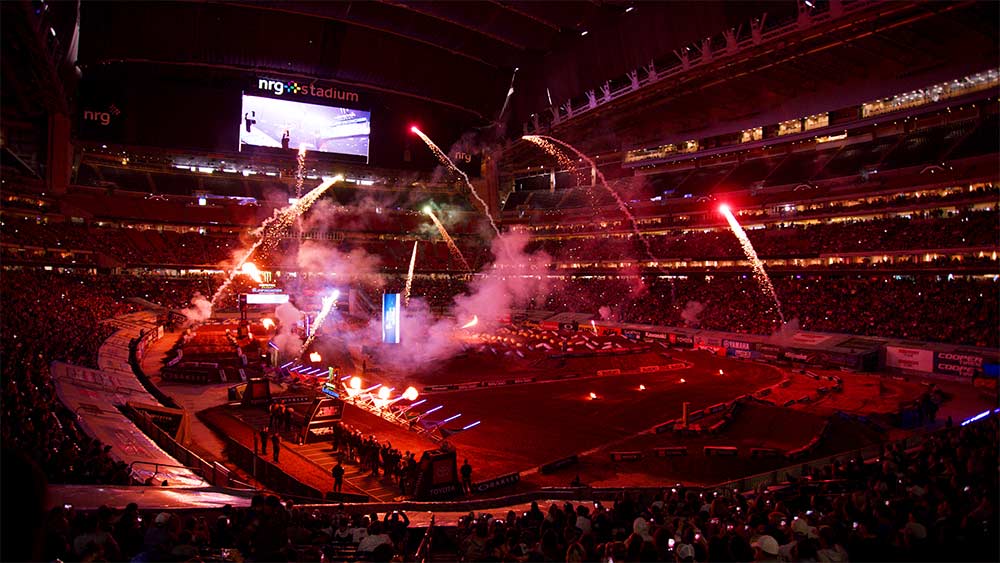
Button: The movie is a story of Supercross, and it weaves in and out of highs and lows of what’s happened over the past 50 years of the sport. My injury was pretty impactful amongst my peers. Then with us starting the foundation and what we do now, we’re woven through the thread of the sport. In addition to that, I have a great relationship with the guys over at Monster. And I’ve known Paul Taublieb—This movie is his child.—for a long, long time. When he came to me and asked me if I would be open to sitting down for a few hours and tell him my story, I gladly said yes and was happy to do so to get my story out there and get some more exposure for the foundation because the foundation lives on donations made by everyday people.
The more people I can get the foundation in front of, to create awareness about the foundation and to raise funding for it, will allow us to continue the work that we’re doing to help all these guys out that find themselves in the spot that they’re in. To give you an example, the 2025 season for us, as a foundation, has most definitely been the worst that we’ve seen in 25 years. We’ve had so many injuries this year. It’s unthinkable. I don’t think a week has gone by so far this year where we’ve not gotten a phone call with someone breaking their back or breaking their neck or whatever it is and are going through some pretty serious times. We’ve never experienced anything like this in this amount of time that we’ve been doing it.
Cooper: When you say you’re getting the phone calls, are they from individual weekend riders?
Button: No. So, the way our 501(c)(3) is set up is we cannot help the everyday amateur rider that’s out there racing. It’s very localized to professional riders so these are just professional riders that we’re dealing with. Usually we’ll see maybe four, five or six athletes a year that will get injured. But, I think right now, we’ve had north of 20 major injuries already this year, and we’re only in August 2025. It is a catastrophic year when it comes to injuries, that’s for sure.
Cooper: Do you think that it has something to do with the sport and how aggressive everyone is getting to get to the top and just taking that extra chance to make a pass?
Button: No, I honestly think what it comes down to is this. When I raced, I would say the bikes weren’t very good. To go really, really fast, you had to be extremely, extremely talented because the bikes just weren’t that great. Now, I look at the bikes that you can just go buy on a showroom floor—let alone the race bikes that the good guys are riding—and the bikes are so good. They’re so easy to ride. They’re so fast. The chassis and suspension is so much better than anything I ever witnessed. That allows a lesser count of rider to do things that before was only done by a higher caliber rider.
Products & Services

Cooper: So, you’re saying the equipment is so good that a lesser caliber rider can actually go beyond their capabilities?
Button: I’m not saying that the only people getting hurt are lesser caliber riders. That’s certainly not it. I just think it’s now so easy to go fast and the bikes are so forgiving, that you almost get lazy because the bikes are so good. You can do so much on them. When your mind is not optimized 100 % all the time, and you just have a very quick lapse of concentration, that’s when things are going to go wrong. At the speeds that these guys going now, when something goes wrong, it’s huge. It’s not something small. It’s a huge catastrophic event that goes on. Not that you see a lot of crashes all the time, but when you do see them, they seem to be bigger and more just more damaging than they have been in the past. At least that’s my own personal view, whether that’s actually what’s going on, there’s not really a bunch of data to look at to say one direction or the other, that’s what’s going on, but that’s my opinion on this current situation.
Cooper: What do you think about the neck brace Dr. Leatt invented?

Button: There are two or three brands of those that are all fairly similar. I personally look at the injury that I had back in 2000, and I believe had I had one of those braces on, that I would have just gotten right up because of the type of crash that I had. Now, do I think that those braces are going to work in every single situation? I don’t. I don’t think anything works in every situation.
I think some crashes or events that you’re going to go through, it doesn’t matter what you have on your body. You’re going to get hurt. I think that goes for helmets as well. I mean, people think so much about, “Oh, well, if you had a better helmet on, you wouldn’t get a concussion.” The fact of the matter is, if your head’s hitting the ground at 40 or 50 miles an hour and you get a concussion, you’re probably just going to get a concussion no matter if it’s a Shoei, Arai, a Fox, or whatever brand of helmet that you happen be wearing. I think that some injuries and some accidents, they’re just going to happen. It doesn’t matter what protection gear that you have on. Some things are just that big and damaging.
Cooper: Where can people go to find out more about Road 2 Recovery?
Button: I always encourage people that have questions about what we do or what the foundation does, to jump on our website at road2recovery.com and see what we do and read about us and understand more about us. We want people to donate to the foundation, to the cause, but we also want people to understand what it is that we’re doing and be comfortable with spending their money with the foundation and trusting us to do good work with the money that they give the foundation. I always encourage people to go look on it, understand what we do, and if you feel inclined, make a small or a large donation, whatever you’re comfortable with, and help us out because we’re basically here to help these guys out when they get injured and have nowhere to turn. Trying to just be a good helping hand in the industry.
Cooper: Do you do any fundraisers, events?
Products & Services
Button: We do a number of them during the year. We do two or three golf tournaments a year. We just had one actually on the Sunday after Washougal. We had one on Sunday after the Pala Race in Southern California, and then we’ll have another one. It’s looking like we’re going to do one in Florida near where all the guys ride and train just outside of Orlando sometime in early December. And then we do other events during the year as well.
We do events, like sweepstakes events, where you can enter to win prizes or motorcycles. We just gave away a brand new 2025 Triumph 250, as well as a 25 KTM 350 from two sweepstakes that we had been running for the duration of the Supercross season. We’ll be doing more things as the year carries on, so anybody that wants to learn about those programs, events, sweepstakes or live auctions can find out all the info on our website. The live auction that’s going on right now for August 2025 is actually quite cool. A bunch of the riders gave a lot of memorabilia items for Jerry Robin, who had gotten hurt during Supercross, and those proceeds will go to Jerry.
Cooper: Have you talked to Bob Parsons?
Button: I have not. My dad built his big dealership for him. My dad was Hunter & First Airborne in Vietnam, and so he and Bob hit it off pretty well. My dad had been retired for a while, and Bob came to my father and had my dad go build that huge dealership that he has up in Scottsdale. Then once the dealership was up and running, my dad basically just retired again for the second time. I don’t really know Bob, but my dad knows him.
Cooper: Well, he loves golf. He’s got a whole business around golf clubs and he sells motorcycles. He’s got money in a foundation that gives to good causes that he likes. I think you should ask your dad to connect you.
Button: He might want to end up sponsoring my son. My son’s top 50 in the world golfer.
Cooper: Oh, really?
Button: Yeah, he’s sponsored by Callaway already.
Cooper” We interviewed Bob a year or so ago dealing with post-traumatic stress disorder. He had written Fire in the Hole talking about his own issues.
Button: I know that a lot of people think he’s hard to deal with because he’s a pretty strong-willed guy, but he and my dad hit it right off and always got along quite well.