






The acclaimed independent film, “Paper Bag Plan,” has been earning awards at film festivals across the U.S. and abroad. The movie tells the heartfelt story of Oscar, a father facing serious health issues, who tries to prepare his son, Billy, for independence by training him for a job as a grocery bagger. The film’s authentic portrayal of disability, family dynamics and the everyday challenges of caregiving have resonated deeply with audiences.
ABILITY Magazine’s journalists, Lia Martirosyan, Olivia Austin, and Chet Cooper recently spoke with Anthony Lucero, the writer and director of the film, and Cole Massie, who plays the lead role of Billy. Cole’s mother, Michelle Massie, joined as a special guest, as she took on many roles during the movie’s production. In their conversation, they discussed character development, authentic casting and the film’s success. They described the significant struggles and obstacles they faced while making the “Paper Bag Plan.” Lucero also shared how his own family experience led him to write the screenplay.
Lia Martirosyan: How’s the festival journey going?
Anthony Lucero: It’s been great. We started last year, last fall. Heartland Film Festival premiered (the film), and we won the best premiere there. We’ve won 12 awards so far. We’ve won, I think, five jury awards and, maybe, three audience awards. Cole won best actor at Santa Monica Film Festival. And Lance Kinsey, who plays his father, won best actor as well at Montreal Independent Film Festival. And now we’re releasing this Friday in Oakland, the Bay Area. We’re coming out in various theaters around the country. So, about 26 theaters so far, and hopefully a few more. So, yeah, it’s been It’s a very tough, long journey. It’s tough because we don’t have much money for this. Got to wear a lot of hats. And Cole’s doing promotions for us. Cole’s mama, Michelle. Everybody’s pitching in, just doing everything and doing so much work to get this out there.
Lia: That’s when it means the most, when there’s so much support and love, even from the core people.
Anthony: Yeah, exactly. So, it’s been fantastic. We love it. It’s doing really well.
Chet Cooper: How did you get the seed money to start?
Anthony: Seed money. The brief story is we had funding, which is back when I spoke to Cole and we cast him. We had an investor. It didn’t work out. This was back in, I think, 2020. She wanted to be in the film, and I just felt there was a conflict of interest and the film was going to change because she wanted me to rewrite the film for her.
Chet: Was that Lia?
Anthony: (laughs) It was Lia. How did you guess? But the next one, we’ll have you in the next one for sure. —No, but it was like a compromise of the screenplay and of the story. I sadly walked away from the money. I felt like I had some integrity, and I had to make the film how I wanted to make it. So, my wife, who’s actually sitting behind me, watching every move I do, she actually funded the film. And she could see how depressed I was that I was not going to make this film, “Paper Bag Plan”, which was originally called “Between the Ailes.” And so, she said, “I’ll help pay for this.” With all of the decades of work that she’s done to save up money, she threw it at me. She said, “Here, go make your film. Go do it.” My wife funded, probably, 90% of the film. And that’s how we got it made.
Chet: When she threw it at you, was it in the form of metal coins?
Anthony: (laughs) It was a bag of coins! It hit me over the head really hard. And it was great. I took the coins and made the film.
Chet: (laughs) Well, that’s that was really wonderful of her. And you’re still married?
Anthony: Still married, yeah. We edited the film together. She hasn’t divorced me. But it was a lot of— At night, she’d be like, “Why did you spend 600 bucks on this lens?” I was like,”We needed a lens. We couldn’t finish shooting unless we had this lens.” Or stuff like that would come up every night. Like, oh my God, you spent this much money on what? So, it was a pressure cooker for sure. But no, she still loves me, which is amazing.
Chet: And then she saw the bill from Cole and said, you must be kidding.
Anthony: Well, Cole was so expensive. My gosh. He was like an A-lister. I could have had George Clooney in my film.
Cole Massie: (laughs) I mean, I can’t speak to what the cost was for me, but I’m glad I got to do it.
Chet: Tell me about the writing of this. What was it in your mind that you had to hold on to that script so tightly that you walked away from the first investor?
Anthony: I feel because it was a bit of a personal project. It was loosely inspired by my mother and my brother, Eddie. Eddie couldn’t speak. He couldn’t walk. He needed 24/7 care from my mother. So, it was a very personal film that I had written and didn’t want to modify it just based on that. It was loosely based on my mom and my brother. And then the other inspiration of the film was my sister Margie. She passed away in 2018 of cancer, and she left behind her daughter, Sarah, who has Angelman’s syndrome. So, yeah, my niece is, I think, 39 now. So, the story was inspired by these two amazing, strong, wonderful women and their children, and it just felt personal for me. I didn’t want to make too many changes that would affect the tone of the film.
Chet: I understand. How did you find Cole?
Anthony: Cole gave me a lot of money to be in the film. No.
Chet: (laughs) Next question.
Anthony: Yeah, exactly. Next question. No actually, Russell Boast was the one who put us in touch with Cole. He specializes in actors with disabilities. He sent me around 50 or so candidates, actors with disabilities. And what’s tricky about the screenplay is I didn’t specify what Billy’s, the character’s, disability was because I didn’t know what actor I was going to get, what their disability was, whether they’d have crutches or whether they’d use a wheelchair, whether they might— There were so many variants. So, I kept it somewhat vague. For whatever reason, the actors I was auditioning weren’t quite the right fit. And then Cole was the last one. The last one that Russell sent me was Cole. And I’m like, “Yeah, he’s great. He’s handsome. And let’s see if he can act.” And so, we had some Zoom auditions with him, and he was the right fit. He was it. I was like, yes, this is my Billy. He was the first person that we cast. And from that point on, everything else could fall into place.
We could find the rest of the actors at that point, but I would not make the film unless I found my Billy. And that was it. It was like, let’s just do this experiment, see if we could find him first. And thank God, Cole Massie sent the audition tape in, we met, and he was fantastic and just a star to work with—just amazing in every way. From that point, we decided to cast the father, Lance Kinsey. And on set, I was just mentioning this that somebody, one of the production assistants, had asked if we cast a real father-son for the film? I think we’ve cast the right pair for this film. But that’s how I found Cole.
Chet: Cole, how did you find Russell Boast?
Cole: I’ve been acting most of my life. I had gotten the audition from my manager. Russell was the casting director for Anthony.
I worked hard on the script. I went in, I auditioned, and I got it. That was pretty much it. Russell knew my manager. She specializes in people with disabilities as well.
Chet: Who is your agency?
Cole: It’s EP Talent. My manager was Keely Cat-Wells, but I believe has since left. Now Elle Potruch is my manager.
Lia: You’ve done these festivals, you’re winning awards, you’re in a some theaters. What’s the next step for getting mass distribution? How does that all work?
Anthony: It’s daunting. So, the Cinderella story, as you make the film, it premieres at a major festival, and then Netflix buys it for $20 million. That just doesn’t quite happen all the time. So, for us, and it just happened on my last feature, is that we put it on the festival circuit and we just see how it goes. And hopefully it gains an audience, and it did. “Paper Bag Plan,” it did. It started off small, and then as it grew, then more festivals hear about it, and they start programming us. I don’t know how many festivals. We played in quite a bit. At that point, you’re waiting to see what studio is going to pick up this film. It’s won a lot of awards. But generally, this is how it usually works—They always see who’s in the film. Okay, there’s nobody quite famous in the film. So, it’s a pass. Studios will pick up a film with a famous person but not a very good film, as opposed to a film that’s really good and nobody well known.
Chet: It’s the Catch 22, I guess.
Anthony: It is the Catch 22. Cole Massie is not a household name yet, but it will be.
Chet: Come on, Cole. Come on, Cole. Get going.
Anthony: (laughs) I know, right? It’s going to happen. It’s going to happen.
Products & Services


Cole: Well, thank you.
Anthony: Yeah, it will. But for now, it’s tough. Long story short, we hired a theater booker, and he pitches the film to theaters and gets us in. If the theater likes it, they’re like, “Do you think we could sell tickets?” They’ll book it. We’re in that stage now. We’re in 26 theaters around the country as we speak. And then after that, we go to streaming. And we don’t know quite when we’ll end up on some platform where you could watch it online. But we don’t know yet.
Chet: So streaming, hopefully, then brings in some revenue instead of you getting a divorce?
Anthony: (laughs) Oh, gosh. Yes, please. Buy this film when you see it, so my wife won’t leave me. Wife and kid won’t leave me. Fingers crossed, we do make our money back, and I think we will. Everybody who’s seen the film just loves it. They love Cole. Absolutely. And so, we just have to spread it, mostly by word of mouth. It’s got to get out there.
Olivia Austin: What impact do you think the film could have on people? For more people to see it, it seems like it could really garner a lot of growth. Was that the goal originally when creating the film?
Anthony: I think first and foremost is I have to entertain people because the script, itself, was lengthy and it got into a little bit more politics and aging out of the system at which Cole, you told me, is now 22. And in the end, you start to pull this stuff back because people want to watch a movie. They want to be entertained. They don’t want to watch films about politics. And it’s there on the screen. It’s just we pull some of it out just to pace it up.
There are a lot of goals with this film. One I mentioned earlier is Cole. We want to get you on the screen more, and we’ve got to get you some more parts. So, if you could be just a working actor, which is difficult for anybody. I’m not just saying just you. I’m just saying just actors in general. It’s hard to get those gigs. So, we watch you on every television across America.
Cole: Sorry, if I interrupt. Though, I will say that for actors with disabilities, it is about 10 times harder. That is changing a little bit, though. But we are often still on the outskirts of people’s imagination.
Anthony: Just jobs in general, not just acting jobs. Yeah. The film is about independence. It’s funny because I get a lot of parents that don’t have children with disabilities come up to me. And they often talk about have they done too little or too much for their child? So, it’s spanned across, most definitely, parents that have children with disabilities. It hits them hard. But even parents that just have children without disabilities, it still hits them like, “Oh, my God, I hope I’ve done enough for my child for when I leave this Earth.” So, it’s been very interesting, and I have to say heartbreaking at same time to listen to a lot of these stories.
Olivia: And how did you build the dynamic, the father-son dynamic of the characters? I feel like from an acting standpoint, there must have been more to that than we see. Was it chemistry that was built in the casting room?
Anthony: Yeah, I’m going to start, Cole. I’m going to hand this off to you because this is a testament to Cole as being a great actor because we didn’t have much time to rehearse. And what did we have, Cole? Two days or something like that?
Cole: If that, maybe a week.
Michelle Massie: I think it was two days.
Anthony: It was two days. It spanned over a week. But yeah, it’s a testament to the actors, to Cole and to Lance, making it look like they have this relationship that has been around for 25 years. Cole, you want to add to that? How are you working with Lance?
Cole: Yeah. Working with Lance Kinsey, who is— like I said, I’ve been acting most of my life.—And he’s one of the best actors I have ever worked with as far as skill and talent. Working with Lance is just an incredible master class in subtlety from an actor’s perspective because he just does one thing and it changes the entire scene, or it changes one little line. And all of a sudden, it’s this masterpiece of a scene. Getting to work with Lance was really extraordinary. He really did treat me like one of his own, one of his own children, when we were not filming. “Are you okay? Are you good?” So, he really not only stepped into that fatherly caregiving role on film, he really did care about me as a human being and me as an actor as well. So, our dynamic and our friendship grew even on set. I hope to work with him many more times because he’s just a joy and a pleasure to work with.
Anthony: Well, there are quite a few intimate scenes between father and son in the film. And yeah, it’s like they both pulled it off as though they’d been in this relationship for years. I know there’s a shower scene in the very opening of the film, which It was very intimate. We saved that, I think it was day three because I was like, this is a pretty intimate scene between these two characters. But you’re just like, “Just throw me in. Throw me in the shower. I don’t care.”
Cole: The only thing I asked for was to heat up the water because it was freezing.
Anthony: Oh, I know. I felt so bad for you.
Cole: We filmed it early, early in the morning.
Anthony: We tried to keep that shower scene short because I was like, oh, my God, poor Cole’s freezing in the shower. But you’re a pro. You did not complain once on this entire shoot.
Cole: I tried. I tried very hard. The magic of it is that the man who did the body doubling for Lance when he lifts me out of the chair is my actual dad.
Olivia: Oh, cool.
Cole: I ended up being both the actor and the disability consultant, I guess, technical director. I don’t know how you want me to word that, Anthony, but Yeah, you made sure that we were telling an accurate story, making sure it was authentic. And it really was because Anthony spent a lot of time at my home, and he really said, “Okay, take me through your life.”
Anthony: That’s right.
Cole: And I said, “Well, okay.” I did. And a lot of parts of me, Cole, got added to the script. But I don’t think they were far off from what Billy would have done at all. But I think they were exactly what Billy would have done because Billy, the way I see him, is he in this in between of (being) able-bodied enough to do certain things and not able-bodied enough to do others. I think in the disability space, you’re either chronically ill or severely disabled. But if you can do some things for yourself, then you are independent. No, that’s not necessarily true.
Olivia: People go to the extremes very quickly. Jump to judgments.
Cole: I think this character had a good balance—Anthony, and this is thanks to you—of being truly disabled, but not like he was living on a ventilator.
Anthony: Well, and he had a helicopter dad; and that’s part of what was holding Billy back. It’s like his dad just wouldn’t let him push out of the nest quite yet. And that’s just a reality that happens to a lot of parents. They’re just like, I have a five-year-old and I do it. I’m making those mistakes of doing too much for him. But that was also a part of it, just this independence, both from the father and from Billy. They both need to try their own independence. Yeah.
Olivia: I see how you were saying it can be an emotional journey to watch as a parent seeing the film, especially if you have a child who deals with a disability.
Michelle: There’s also the reality. I could just jump in for a second. There’s also the reality of—
Cole: This is my mother, by the way.
Michelle: …of day-to-day living, where it takes so much extra time to do everything for somebody when you have somebody with a physical disability, that you’re just trying to get out the door for daily life. You got to get yourself ready to go to work. You got to get the adult child ready to go to wherever it is they’re going to go. So, you just do and go because that’s the fastest, most efficient way to get it done.
You really don’t have time to sit around and wait for them to get in and out and take half an hour to put a sock on. You got to go. And so, there isn’t really this space and time to push them necessarily. To do that. If you’re on your own, because it just takes too much time and energy, and you’re just trying to keep your head low and go forward.
Anthony: I get it. Every morning, I’m putting my son’s shoes. He knows how to put his shoes on, but every morning, I’m putting his shoes on because it’s so much faster.
Cole: I just want to jump in. We’ve gotten compliments. We’ve gotten both compliments and comments from certain people. Most of the comments have been lovely, but some of the comments have been around the sentiment of, “See, if we just push them, they’ll be okay. We don’t need to pay for services like Social Security disability.”
Anthony: Well, did that come up, Cole, or is that just what we were thinking? I think that’s what Michelle-
Cole: No, that definitely came up.
Products & Services

Anthony: It came up?
Cole: Yeah. Not while you were around, but there was a gentleman in Ohio that said it. Yeah, I don’t know if he…
Anthony: Because that’s the last thing I want people to think is, oh, here we go. If we just push people with disabilities, then they’ll do it on their own. That’s the last thing I want.
Cole: Yeah, that’s not what this film is about at all. Right.
Michelle: And he’s not working a full shift. He’s working three to four hours. This isn’t, I’m going off to work eight hours a day and being there all by myself all the time and then coming home and being by myself. It’s just he’s expanding his universe, he’s getting better, and he’s starting to excel. But can he be completely independent?
Anthony: Yeah. That’s the thing with the movie. It’s like it’s a movie and you want to show the character have his independence. I don’t want to go back and be like, okay, these are all the technicalities, and this is the care that he still needs to have. But we could have gone that direction and showed all the minutiae.
Cole: I want to say in the original script, we did.
Anthony: A little bit. Yeah, it was more. It was more detail. For sure.
Cole: Yeah. Making this film was really a dream role for me. Very rarely do I get roles that are good, where the main character isn’t dead, dying, or sick. This was one where it was just a young man with a disability, and his life led him down a certain number of circumstances, and that was it.
Anthony: Were you like, ”Oh, my God, I didn’t die in this?”
Cole: Oh, I literally said that to you. I said that to you the first day of filming. I filmed it. I’m like, I don’t die in this. And I’m like, Okay, this is all.
Anthony: The next script, though, Cole, you’re dead.
Michelle: You’re out.
Anthony: I’m going to write a death scene in the next one. (laughs)
Cole: But no, what was so fabulous about working with Anthony is that we, as actors, are trained as character advocates. We are trained to advocate for the character, but a lot of directors think this is their baby and they are the be all end all. But Anthony was not like that. In fact, he wanted my input and thought that it was made it was a better film.
Anthony: And it did.
Cole: Yes, it did. So, thank you for that, Anthony. Thank you.
Chet: So, Cole, you’re also an artist, right?
Cole: Yes, I do paint and all that. Digitally. Digitally.
Chet: Oh, shoot, because my house needed painting. Darn it.
Michelle: So close.
Anthony: Actually, Cole, some of your paintings, we printed them and put them in your bedroom in the film.
Cole: In the film, yeah.
Chet: Oh, what’s that called? Is that Easter egg?
Anthony: It could be an Easter egg. Yeah, for sure.
Michelle: I am in the picture on the desk.
Anthony: That’s true.
Michelle: Yeah.
Chet: Oh, you mean like a frame to picture?
Michelle: Yeah. I am an alive mom in the movie.
Chet: You got your mother and your father lifting you at one point. Does he make the film or is he just a stunt person that’s not really seen?
Michelle: No, he’s in there. You can’t see his face.
Cole: He can’t see his face, but he is- See his arms and his body.
Anthony: Because originally, the screenplay had a lot of Billy’s lifted, Oscar lifts Billy in here. And I wanted more of that. I wanted to show this is what happens every day when you got to lift your child in and out of that chair. Because that’s what my mom did up until her late ’70s. She was lifting my brother in and out of that wheelchair, in and out of bed. And the reality was Lance had a bad back and he couldn’t do it.
Luckily, Cole’s dad, Nick, stepped in and they were both the same body type. So, Nick’s like, “Well, I’ll just do it. Put the shirt on me.” And so we had him lift Cole, which also kept it authentic as far as how he lifts you out of that chair and into the shower.
Chet: One thing that I saw in the movie that was just like a real pivoting, I mean, it just changed everything was the purchase of the power chair. Did you have a transition from a manual to a power and changed your life?
Cole: Yes, actually, the power chair that was used in the film is my power chair.
Chet: Cool.
Michelle: Anthony didn’t know about it. And that was one of the things he discovered when he came to our house, when he saw that it stands.
Cole: He was like, “Oh, my God, I got to use that in the film.”
Anthony: Oh, my God, that’s right.
Chet: It’s just how it sounded, too.
Anthony: It did. I sounded just like that.
Michelle: When he raises up to stir the spaghetti sauce for the first time. You can hear in most audiences— most of the ones that are parents with special needs.— You can hear the audible gasp because it’s such a huge difference to have a piece of equipment like that. It just expands your life. Because, instead of trying to get an apartment that’s completely adapted to you, now you can adapt to the counter and the stove top, the sink. And now all of a sudden, you can access things in the cupboard and stand at the counter and make a sandwich. It’s truly life-changing. So, we had Cole’s regular chair, the power chair. It was also our van in the film. So, it’s as authentic as it gets.
Cole: It’s as authentic as it gets.
Anthony: Yeah. That chair was, like what you were saying, that was a rewrite when you told me that this chair could stand up. Because I was thinking, how is Billy going to cook in the kitchen? And then one of you, either Cole or Michelle, was like, well, this chair could stand up. I’m like, what?
Cole: I think I remember I was in your kitchen and you said, how is it?
Michelle: You asked me- No, he was in our kitchen, and we- In your kitchen. Took him over to the sink counter.
Cole: Oh, that’s right. Yeah, yeah, yeah, yeah.
Michelle: I was like, well, watch this.
Anthony: It was such an Iron Man moment. Like, oh, my gosh. He transforms an Iron Man. It’s like, look at this. It’s so cool. It’s so cool.
Cole: I want to mention the chair. I think in the movie, they sell it for $500 or something. The actual cost of the chair, and this was a used chair.
Products & Services

Michelle: Seven-year-old chair.
Cole: It was seven grand.
Chet: When you say used chair, you mean the one you have. The power chair?
Cole: The power chair. We bought it used.
Chet: In the movie, it was used as well. But just in the sense of life and people that can’t have a chair, that they don’t have the affordability. Insurance won’t pick it up.
Cole: Insurance doesn’t give a hoot, really. I mean, honestly.
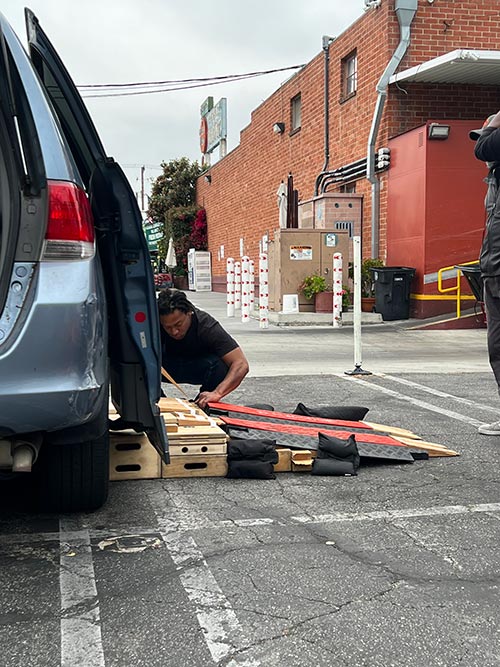
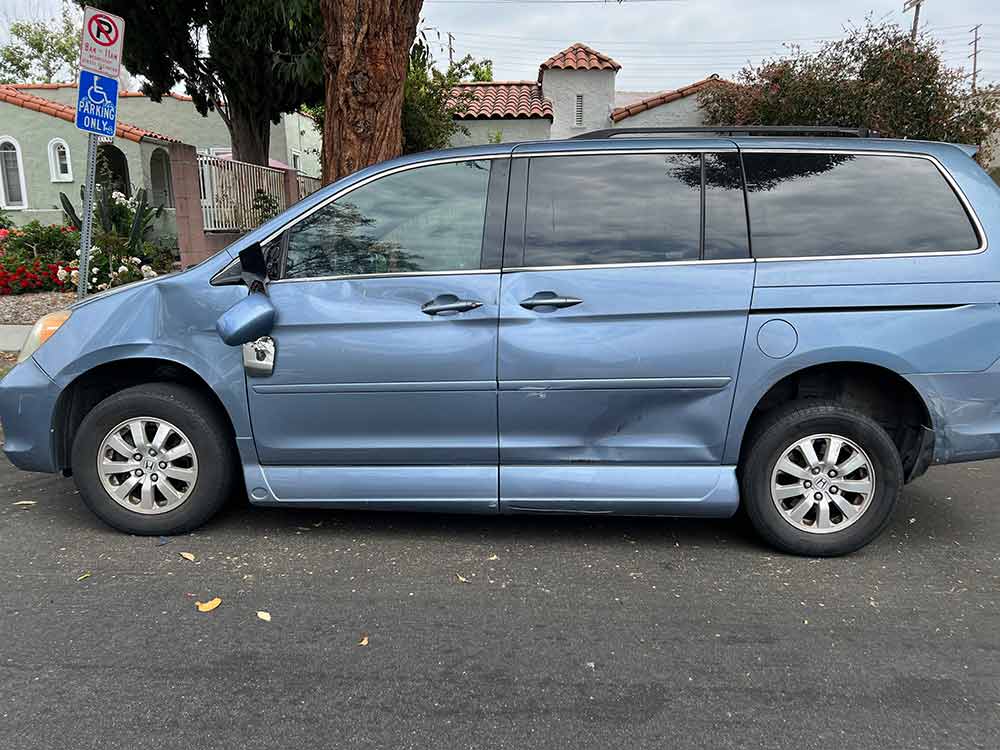
Michelle: Yeah. Everything is no. We have the van that we have now we won in 2009 from Honda. Somebody put our names in, and we won it. Otherwise, we wouldn’t have it. And this is the picture car for this movie, and it was hit. We were getting ready to go to set at the handy market, and there was a knock at the door. It had been wiped out, literally from stem to stern, from the front of the van to the back of the van. The whole side was wiped out. And I thought, initially, it was just cosmetic. It was not. The whole van was bricked.
Cole: We had to tow it to the location and shoot it only.
Anthony: I mean, it was like such a huge mess.
Michelle: Now, this is a 2009. We’re babying it, but in order to get another one, they start at $90,000. For the people who need it the most, it is the most expensive.
Cole: Yes.
Michelle: So, we’re hanging on to it as long as we can. And I’m like, hurry up and get a series so we can buy you a new van? Because we’re just crossing our fingers that it hangs in there.
Anthony: It’s a baby blue Honda 2000. It’s such a difficult car to replicate. I remember, I don’t know if you were there Michelle and Cole, but I saw a van just like that near the Handy Market, and I’m running after them. Wait a minute. I was like, hey, hold on. I was like, can I use your van for the film? The guy looked at me like I was insane, like I was going to carjack him. And then he just looked. He was like, what are you talking? I was like, I’m making a film, and I need your van. It’s the same one. And he didn’t contact me. So, yeah, I was stuck. But that van was a symbol of freedom for Oscar and for Billy. And to have it wiped out, I had to rewrite the script itself.
Michelle: But it was also a way to show how Oscar had adapted and done everything on a budget because in the story, he pulls the slide, the piece of wood out, the wheelchair in and out.
Chet: Oh, right. I saw the ramp.
Michelle: It’s just a van. It’s not a ramp van in the story. So, he’s just done everything down and dirty, rough and tumble. This will work. I’ll paste this together. I’ll by the skin of the teeth. Get a piece of press board and stick it in there. And Anthony was like, I’m just going to use a piece of it. I’m like, “I’m afraid that’ll flip,” but somehow it worked.
And it also just shows he just made it happen. Made it happen because he had to. He has no other choice. He doesn’t have very much money. And he has this kid with a pretty significant disability. And there is no help. There are no programs, there’s no grants, there’s no anything.
Cole: Well, Billy does go to a day program, but that’s paid for by the state. Yeah, even that.
Michelle: But for a ramp van, you’re on your own.
Cole: Yeah.
Michelle: And there are so many parents out there who are just lifting. It’s a double lift in and a double lift out. You have to lift the kid out of the chair and into the car, and then you put the chair in the back of the car. And then when you arrive at your destination, you have to take the chair out and put the kid in. It’s so much because I did that before.
Cole: It’s very real.
Michelle: It’s really hard.
Cole: Actually, we just recently, maybe five or six years ago, had our bathroom adapted.
Michelle: It’s about 10 years ago.
Cole: It was about 10 years.
Michelle: Yeah, because I was dragging him from under the arm.
Cole: She would literally have to pick me up under the arm pits, turn me around backwards, and drag me into the back.
Michelle: And the third time I almost dropped I was like, that’s it. We got to go. So, into debt we go. Our house was built in 1925 and not particularly wheelchair friendly. So, we had to to horn it in.
Cole: Well, I’ll tell you. At the time of my initial receipt of the script, my mother had been recently diagnosed with breast cancer. And originally, as you know, it was written for a woman with breast cancer.
Chet: I didn’t know the original was written for a woman with breast cancer.
Cole: Oh, yeah.
Anthony: Yeah. It was originally mother-son story. And we eventually changed it because, for one, I couldn’t find an actress who agreed to do it. I just got turned down. That was crazy.
Chet: And Cole’s mother wouldn’t do it?
Anthony: She wouldn’t do it. She was too expensive.
Michelle: (laughs) Too much of a diva.
Anthony: Too much of a diva. But like Russell Boast, he would send out the script and whatever. But I said, Russell, you need to specify that we will not have any trailers for actors to go hang out in between takes. They are just going to have to hang out wherever we’re filming on set. So, he did. And I think they just probably felt this was going to be a very low budget film, too low budget. And so, we got turned down quite a bit. But then my wife, Ke’alohi, she’s like, “Why don’t you make it a father-son?” She hadn’t seen very many father-son stories, compassionate father-son stories like this. And she’s like, “I think I’d like to see that. Probably a lot of fathers would like to see it, too.” So, I went back to rewriting and changed it.
Chet: Yeah, it works. On a lot of levels, I think it’s always interesting when you see the more emotional issues coming out of men.
Anthony: Totally. It’s funny. I had a comment from somebody saw it, and they said, after seeing the film, I realized how much of an asshole my dad really was. I was like, my dad would never do any of this for me. And We’re like, Hold on, it’s just a movie.
Cole: Hold on. It’s just a movie. Hold on. Making a making a movie like this that’s so authentic to me and to us on so many levels was really extraordinary. I would be remiss if I didn’t mention that I worked with my mother quite a lot to bring authenticity to this story. And it turned out okay, I think.
Products & Services

Chet: I see she’s got a gun to your head.
Michelle: (laughs and makes a fake gun with fingers) I don’t know what you’re talking about. Just one other very quick thing. I think another reason that he had such great chemistry with Lance is—So, I come from a long line of production people. And my stepmother was married to a man. He’s passed now, but his name is Jim Drake. And Jim was Lance’s director on Police Academy 4. So, our first day on set, I walked up to him and I said, “You know Jim Drake?” He goes, “I sure do.” “Do you know Briget?” I said, “Briget is my stepmother.” It was like this immediate family connection. And also, Lance is just like, he’s such a dad. He’s just…
Cole: He just gives off his dad energy.
Michelle: Yeah, such dad vibes. So, that was another really cool little tidbit.
Chet: Well, so you’re both in LA?
Cole: Yes. We are both in LA. Yes.
Chet: I was going to ask about the market. Is there a real Handy market?
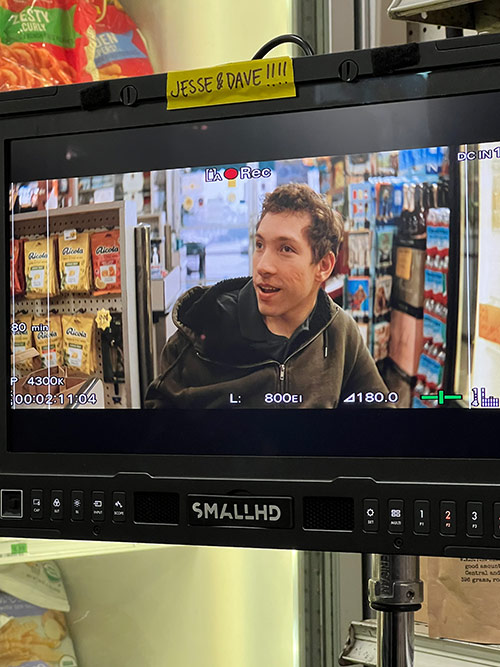
Anthony: Yes. In Burbank. The owner let us film there for free. We started at 8: 00 at night, and we finished at 4:00, 5:00 in the morning.
Chet: I thought it had closed.
Anthony: Do you know the Handy market?
Chet: No. The movie says it closed.
Michelle: In fact, they’re renowned. Right next to it, they have a little area where they do these smoked meat sandwiches. Oh, yeah. They have lines around the block. Yeah, they’re really very… It’s a very popular market, actually.
Cole: As a matter of fact, the crafty area for that set was right where the- In the smoked sandwich.
Michelle: He gave up their smoked sandwich area for a minute. Yeah.
Chet: You really were able to reduce your cost, Anthony, in production with all the things that you mentioned today.
Anthony: Oh, it’s tough. It’s like I was doing… It’s called DIT (digital imaging technician). It’s part of the camera department where they copy the hard drive from the camera to the other hard drive. I was doing that on set, just various. Then post-production here, Cole’s dad is Nick. He’s doing all of the digital cinema packages, sending those out to the theaters. It’s like when you cast somebody, you have to cast people that can help you later on the film and get it done for cheap. That’s smart..
Chet: So, when you talk to Russell, you will have all these caveats. They will also need to have family members.
Anthony: (Laughs) Well, I’ve honestly, I’ve said this because everybody wears my clothes. Lance, he wears my real clothes. I pulled all my clothes out of my closet. I’m like, here Lance, here’s your wardrobe. Here’s your uniform. So, you have to cast people that are also your size. It’s great.
Cole: The wardrobe person for a lot of it was Anthony.
Anthony: That was me too. I did a lot of the wardrobe.
Chet: Wardrobe, and then you run over there, sew something up.
Anthony: Exactly. I was steaming clothes.
Chet: Makeup?
Anthony: No.
Cole: Did you steam all the —
Anthony: I was steaming some of the clothes, the night before, I was washing some of the clothes, steaming them. It was just ridiculous.
Chet: That’s a whole movie in and of itself — a movie about making a movie.
Cole: Making a little independent film.
Anthony: And me crying most of the time.
Michelle: They won the Bill Paxton Award.
Chet: Oh, That’s great. Michelle did you work on the film?
Cole: She was the informal scripty?
Anthony: No, you were the script supervisor. Like I said, everybody wore a lot of hats. Michelle did a ton things, still doing a ton of things. Yeah, just so fortunate. So, fortunate people love the film enough to rally around it. It’s like, “I’ll help you.” Absolutely.
Michelle: Yeah. It was very much a little engine that could. Labor of love. Yeah, just pulling for it. The joke is the back of my head is prominently featured throughout the film.
Anthony: Yes. I know. It’s like, because we need a body. Yeah, I need a body. Michelle, get in there. You’re like, but I was an extra yesterday. Put a hat on.
Michelle: I had a mask on. I put a hat on. I had my hair up. You just plug the holes. You just jump in.
Chet: In the movie, Cole, are you aware that there are some filters that Anthony used?
Cole: Yes. It was in the screenplay.
Anthony: Yeah, that’s before I met Cole.
Chet: Well, it worked. It gave a bit more of an insight, not just on the physical issues of Cole bagging, but also the visual of what the character was able to see.
Anthony: Yeah, it just adds a little extra layer of difficulty. Cole has CP, but also visually impaired. Oh, my gosh. Autism. Yeah, it was like, let’s do it.
Cole: (laughs) Yeah. I had all the conditions, so…
Anthony: You’re hired!