











Circa 2009

About 66% of adults and 31% of children in the United States are either overweight or obese. This has led to a rise in obesity-related conditions such as type 2 diabetes among adults and, increasingly, among obese children. While being obese can change how we look and how we fit (or don’t fit) into our clothes, it can also lead to serious medical, psychological, and social problems. Obesity can impact our overall quality of life.
Simply defined, obesity is the result of an energy imbalance over an extended period of time. If we have a pattern of taking in more calories than we can burn off, our bodies store the extra calories as fat, increasing our risk of health problems.
Genetics also plays a role, since obesity tends to run in families. Our environment and the choices we make every day are additional factors–choosing unhealthy foods (fast food, sugary beverages, high-calorie/lownutrient snacks); eating large portions (super-size meals); and leading less active lifestyles (driving, TV, video games, and computers) can all contribute to obesity. Stress, depression, and boredom can often lead us to reach for “comfort foods” like potato chips or ice cream, resulting in intake of “empty” calories.

Your doctor uses a measure called body mass index (BMI) to determine if you are underweight, normal, overweight, or obese for your height and weight.

BMI percentiles are obtained by plotting a person’s BMI number on CDC’s (Centers for Disease Control) BMI growth chart, taking into account the person’s age and gender.
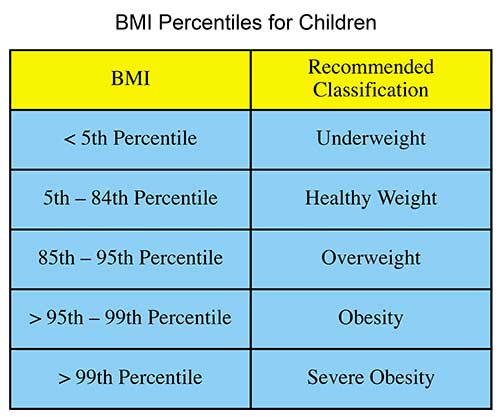
AMA Expert Committee Recommendations, 2007
If you or your child are overweight or obese, you may be at risk for certain health conditions and should consult your physician or pediatrician. It’s never too late to start making positive changes and to take simple steps towards a healthier you.
by Harvinder Sareen, PhD