






At the age of 17, Laura Pavlakovich took significant risk of education abroad, despite not knowing where or how she could get a re-supply of insulin and test equipment, which were life sustaining for her type 1 diabetes. Her experiences in developing nations motivated her to do something meaningful with her life and lead her to create the nonprofit, You’re Just My Type. Drawing from her own needs as a child growing up with type 1, Pavlakovich embarked on a mission to connect and support children, teens, adults and families with type 1 diabetes.
ABILITY Magazine’s Chet Cooper met with Pavlakovich over Zoom to talk about her life experience managing type 1 and what lead her to founding You’re Just My Type. Pavlakovich discussed the many events and activities for all age groups that her organization holds across the US and UK. She also described how her organization was a catalyst for a large scale, grass-roots diabetes supply and distribution event during the Los Angeles fires of 2024.
Products & Services


Cooper: When did you find out, or you did your parents find out, that you had type 1?
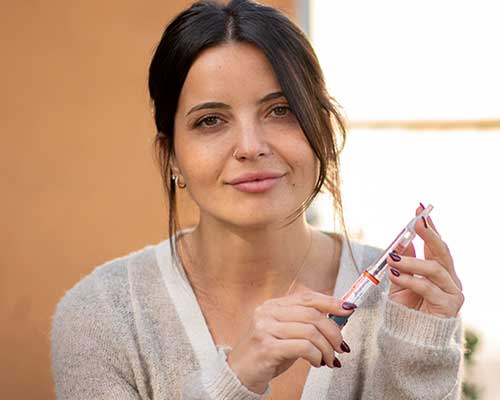
Pavlakovich: My parents found out I was type 1 when I was five years old in 1996. I would walk to school with my mom, and there was a slight hill that we would go up. Suddenly, she noticed that I was getting too weak to walk up this very small hill. And she thought that was very bizarre that I was having a hard time walking up this hill. That was one of the first symptoms that she noticed.
Cooper: Do you remember that?
Pavlakovich: No, I don’t remember any of it. So, my mom took me to the pediatrician when I showed the other symptoms. I was wetting the bed. I was very thirsty. She took me to my pediatrician. My pediatrician had her take me home and do a 12-hour fasting so I could come back and do a fasting glucose test the next day. My mom said I was screaming bloody murder for water because I was so thirsty because, as you and I both know, my blood sugar was so high, but we didn’t know that was the case then.
She took me back the next morning. They did the blood work, and my pediatrician came out and said, “Your daughter has type 1 diabetes. Take her straight to Children’s Hospital. There’s a team of specialists waiting for you”. I don’t remember that either, but I do remember being at Children’s Hospital once we got there and my mom calling my dad to tell him the news. She was just hysterical on the phone. I remember hearing her cry as I was playing with this little Hello Kitty toy. I remember thinking that this is not good. Whatever is happening is not good.
Cooper: So you weren’t necessarily in a fog that you remember. I mean, you were still playing, so you still had a decent attitude, except now you’re seeing something’s happening with the family and your mother.
Pavlakovich: Correct. That’s the only memory I have of that time of diagnosis. I don’t remember being in the hospital. I was just so young. Or maybe I blocked it out on purpose. I’m not sure.
Cooper: So, what’s your first memory of the whole routine as you start that process with the insulin that was required?
Products & Services
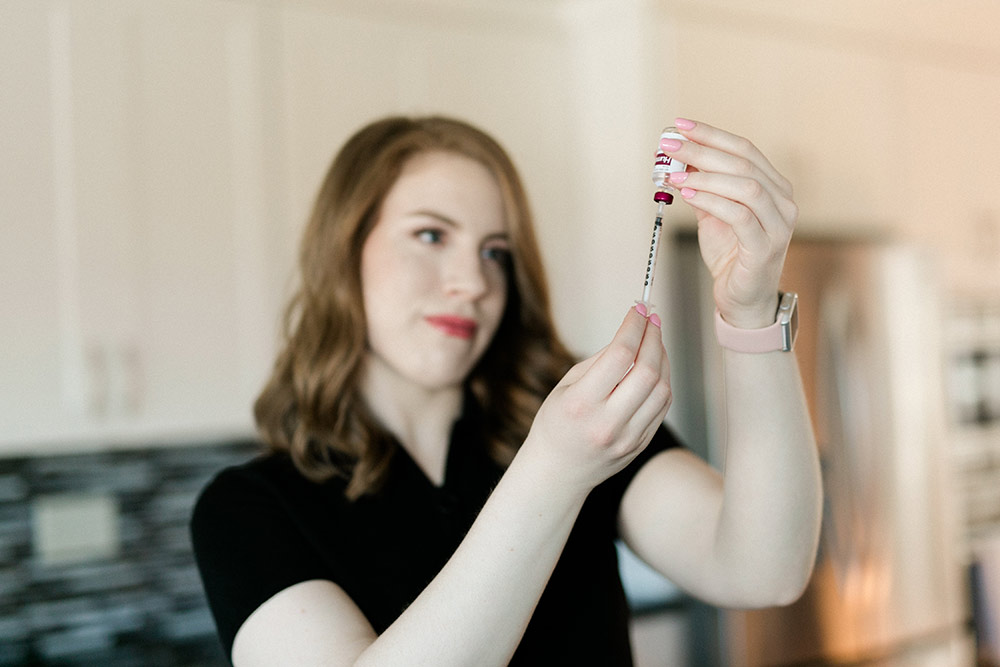
Pavlakovich: I have definite flashbacks of being back at the hospital, getting trained for things, and they brought out the orange to my mom to teach her how to give a shot. Life just became really normal with diabetes after that very quickly. I went to this very small private school. We did not have a school nurse there. My mom would pack my lunch, and she would put Post-it notes on everything I ate with the amount of carbs (carbohydrates). And I had to eat at very certain times during the day. I remember knowing that I was allowed to have a snack at this time and the other kids weren’t allowed to. My mom would come to school every day and test my blood sugar at lunch and give me insulin. I was very young, maybe six, when my mom had a feeling that I could probably start giving myself my own insulin and testing my own blood sugar. So, she called the school. She said, I’m going to be right around the corner, but I want you to try something. When Laura comes in to have me test her blood sugar, I want you to tell her that I’m not going to be able to make it today and just see what happens.
I walked to the front desk. I said, “I’m here to see my mom.” They said “She’s not coming.” I grabbed the poker and the meter and I tested my own blood sugar, and I gave myself my own shot. Ever since then, I’ve been doing things pretty independently with my diabetes.
Cooper: You basically watched your mom doing that day in and day out. You had the mechanism down. You understood what was going on. But did you understand what insulin was doing?
Pavlakovich: I don’t think so. That’s such a good question. No one’s ever asked me that before. I don’t think so. I don’t remember. I just knew I had something that made me different. I knew that when there were birthday parties at school, my mom would come and bring me Crystal Light sugar-free popsicles so I could have something sweet when the kids were eating cupcakes and cake. I knew I had to bring a bag with me everywhere I went with my diabetes supplies, and that made me different, too. But I don’t think I could grasp, like what, medically speaking, was happening to me.

Cooper: I don’t know where you were in terms of the technology and the insulin injections. Were you doing the testing? Each time you ate, you would calculate and then inject, and then one was the long-lasting? Is that the process you were doing?
Pavlakovich: When I was first diagnosed, it was when the pumps were barely coming out, and I was on shots at first. I was on the cloudy insulin and pH, and my mom would roll the insulin. How I started was I would take, I believe, one shot in the morning, and I would have to eat at certain times during the day to make sure everything was working. But then I got put on a pump. I was put on one of the first Medtronic pumps in about first grade. I was on a pump after that. I was on that for a while.
Cooper: You started with Medtronic, and then where did you go from there?
Pavlakovich: I started on the first Medtronic pump, and I stayed on it until high school. I went from this very small private school where everyone knew I was the diabetic kid to this huge public high school where suddenly it drew a lot of attention to me, and I hated it. One time someone grabbed my insulin pump—thinking it was a pager, I’m sure—And it ripped out of me. They didn’t know that’s what they were doing.
I hated people seeing it on me. And so, I asked my mom to get off of it, and she let me. So, I went back on pens in high school. I got back on a Medtronic pump in my early 20s and got on their first sensor. It was called the InLight, I think. Then I took another break from that. After a few years, I went back on pens. I tried Omnipod last year. I lasted six weeks before I went back on pens. I like getting my multiple daily injections rather than on a pump. Now I have a FreeStyle Libre 3 for my CGM (continuous glucose monitoring), and I’m on pens.
Cooper: Back in the day, you were monitoring your glucose by pricking your finger and using test strips?

Pavlakovich: Correct. Oh, yeah. I didn’t have a CGM until I was probably in my mid-20s for the first time.
Cooper: Oh, my gosh. That’s a lot—
Pavlakovich: Every parent I meet of a young type one, they asked, “How did your mom do it?” Things were way different then. She just had to trust. That’s when we had logbooks. I would just have to write down my blood sugar in this little logbook and bring it to my doctor. I mean, we could lie back then. I could write anything I wanted. Unless my doctor sat there with my meter and fact-checked every timestamp. But I’ve talked to a few people in the same boat as me where you could just write down a number, and that’s what your doctor would see.
Cooper: Where was that in your timeline where you realized you could use my phone app, or use a monitoring system that checks every five minutes, whatever the case may be?
Pavlakovich: The first CGM I tried was the Medtronic one, and I have to be honest, it was really painful. It was really inaccurate. I had a terrible experience with it. Technology then was not where it is now. So, it left a really bad taste in my mouth. I had already started You’re Just My Type when everyone started getting a Dexcom (CGM) for the first time. They would be shocked and would say, “What do you mean you’re not on a Dexcom? or “You’re not wearing a CGM?”
I was so resistant because I had such a bad experience that I thought,” I’m not putting that thing on me. I don’t trust it. I don’t want something else on my body.” And I finally gave in, “Okay, I’m going to try.” This is when Dexcom, even the inserter was almost barbaric. It was this long inserter. I had to call a friend to put the first one in because I was terrified. I was sitting there watching YouTube videos. I had my friend come and do it. I was so nervous. Once I saw how amazing it was, I was never going back. I was like, Oh, my God.
Cooper: Yeah, definitely game-changing. You had been missing out.
Pavlakovich: Oh, yeah.
Cooper: You have this life experience. What was the thought process of creating the nonprofit You’re Just My Type?
Pavlakovich: After high school, I went to a photojournalism program. I was always very into photography. This photojournalism program was very unique. It was this art school in Germany, and the focus was on injustice and poverty. We traveled to countries and took photos of very serious topics. We worked in the Red Light district in Thailand. I worked at a government orphanage in China. We were in Paris working with drug addicts. We were in Dubai.
I was 17 when I left (home), and I came from this very small private school for most of my life. I’m from the South Bay in Southern California. I lived a very, almost sheltered life. And then, suddenly, I was out in the real world at a very young age, and it was obviously a very shocking experience.
Cooper: What did you do in Dubai?
Pavlakovich: We just stayed there for a few weeks while we were traveling back from Egypt to Germany, so we were getting a little experience of the modern Middle East.
I was their only type 1 diabetic student they had ever had. They were very nervous to have me there. The school was this life experience program. It was just about a year long. Before I left, my doctor said, “Well, we can only give you three months at a time. We cannot give you more than that. And that’s already a vacation amount of supplies.” I was at this age when I wasn’t really going to take no for an answer, and there was nothing that was going to stop me from doing this program. So, I left for a year long trip with three months of diabetes supplies on me. And my poor mother, bless her heart, had to help me figure out how I would get the next three months after the first ended, and then the three months after that. We had students from all over the world at this school.
Products & Services

One of the students was from the United States, Colorado. That girl’s sister was going to come visit her. So, my mom sent my next three months of supplies to this girl’s sister who flew with the supplies to Germany to deliver me.
Cooper: Nice.
Pavlakovich: It was this long process; it was a scary process. By the end of it, I didn’t think I was going to get any of my supplies. I had to see a German endocrinologist. They weren’t going to give me anything. That alone was hard enough. Then they told us we’re going to Egypt, and I had this really low blood sugar. They sat me down and said, “We can’t bring you on these trips. This is too much of a liability for us.” And I begged and I pleaded. We came up with a compromise where I had to find a cooler that I would keep all of my insulin in before we went to Egypt. So, I found this little cooler that looked like a soccer ball, and I had to carry it with me in Egypt everywhere we went. I’ll never forget it.
I learned a lot. I mean, definitely, there were scary times. We were in places where I didn’t have everything accessible to me, and I made it work somehow. So, I come home back to Redondo Beach, California and I felt like I have this moral obligation to change the world now after seeing all of these things that I saw.
I wanted to do photography. And all the photographers in Redonna Beach were doing photos of the sunset and dolphins and the ocean, and they’re beautiful, but not exactly what I felt called to do. I felt really stuck and really lost. And I got into the service industry, and I was a waitress, and I was nannying. Then I went to a wedding.
I was talking to the photographer of that wedding, and she told me that she had a son who was four years old that was just diagnosed with this thing called type 1 diabetes—I don’t think she knew I also had it—She told me her son feels so alone and isolated and cries himself to sleep at night because he thinks he’s the only person on this planet with it. Then she said the sentence that really put everything in perspective for me and gave me the idea for the nonprofit. She said, “I can only show him statistics on a computer so many times of how many others are out there like him. He’s four years old. He’s not going to understand these numbers.” And I thought, “Oh, my God.” I had this idea. I wanted to photograph as many type 1 diabetics as I could, try to put a face to this invisible disease.
Back then we didn’t have our CGM showing, so it was actually invisible back then. And I decided to start photographing as many type 1s as I could. I created this blog. I called it “You’re Just My Type,” and I just wanted to create a resource for boys like her son and newly diagnosed people. I mean, anyone who had type 1 to see photos of how many others are out there instead of numbers. So, that was the beginning.
Cooper: The idea of showcasing these images was the first phase. In your mind, were you thinking of using a website or your social media? What were your thoughts at that point?
Pavlakovich: Yes. I created a website, a super simple blog; and I created an Instagram account. I called up some friends that I went to diabetes camp with and said, “I want to take your photo.” I talked to other type 1 organizations. I reached out and said, “I need type 1 kids to photograph. I need type 1 adults.” I started getting families signing up for this opportunity, and I would travel all over Orange County and Los Angeles and drive to people’s houses and take photos of them or their children and ask them a few questions. I started collecting all of these photos and information.
The only reason it became a nonprofit is because I was a waitress at this Irish pub. All my customers were like, “We want to help. You should be a nonprofit so we can donate to your cause. This is so cool.” So, I thought, “Okay. I’ll become a nonprofit.” And in 2017, we incorporated and officially became a nonprofit.
Products & Services

Cooper: So, is this your full-time work now? Or are you still serving Guinness?
Pavlakovich: It is now. It was just this passion project. We were a nonprofit, but it just stayed this passion project on the sideline while I was doing other work for a very long time.
It wasn’t until 2021 that I had this idea. We have all these kids. I’ve met all of these kids in LA now. And I thought about what I would have needed growing up with type 1. It was in the middle of COVID. People thought I was crazy because I had this idea to do an in-person event at a time when no one wanted to do anything in-person. But I just felt this need. I thought this was actually when we need something like this. We needed it now more than ever.
I had this idea to do a Type 1 Young Girls event. It was ages 8 to 17 and was basically a mini conference for these young girls with type 1. We had type 1 female volunteers. We had a social worker, a behavioral therapist, a yoga instructor that did a yoga class with the girls, a dietitian that did a carb counting and cooking class with the girls, a Type 1 artist that did arts and crafts with the girls. And it was so beautiful.
We had this amazing turnout. We had a nurse. We did the temperature checks, the COVID masks. It was such a good turnout that after that first event. Everyone was saying, Laura, the adults need this. The boys need this. The young kids need this. You can’t just do this for girls.
After that, we did 18 events during those first couple of years. That’s when I started running it full-time. We’re fully based on donations. We had our first big fundraiser last summer, and we’re planning our next one now. But yeah, I’m lucky enough to do this full-time now. And now we’re expanding to new cities. We did New York in September, and we go back to New York next month. We have a Miami event coming up in May. We do toddler events in San Diego. We’re just trying to do these events in every major city around the world, really. We did London in January as well.
Cooper: You mentioned to me earlier that, while you were in London, the fires were happening in the LA area.
Pavlakovich: Yes. I was in London for about five weeks during the holidays. When I was away, the LA wildfires started—the worst wildfires that we have ever had.
Because of how long we’ve been around and the beautiful in-person and virtual community we have built, our Instagram account has been used as a way for people in need to find diabetes supplies. That’s been going on for years. We get messages that say, “Hey, I live in Austin, Texas. Is there anyone nearby that has extra Humalog?” We know it’s not the way things should be done, but, unfortunately, because of our health care system and insurance companies and the price of having type 1, that’s what people have to turn to. That was already happening with our account.
I got a message from someone that said, “I just lost my house in the Eaton fire. I need to get diabetes supplies. Can you help me?” And I realized, after that first message, this is not going to be the only message like this that we get. So, I created a flyer that said, “If you’ve been affected by the fires, just comment below or send us a DM if you need anything, and comment below if you have extra of anything.” I was thinking that one little post would be able to handle this situation. And I was so wrong.
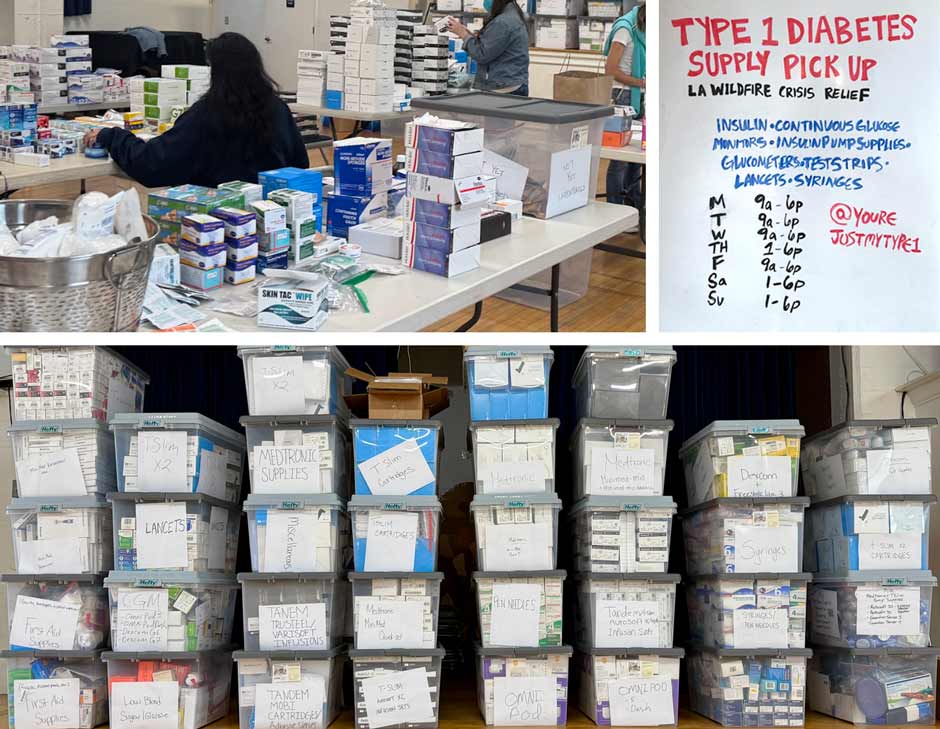
In one night, I woke up to over 100,000 shares of that post. And after one week, it had been shared 500,000 times on social media. And a type 1 diabetic who was in Los Angeles who was just visiting saw the post and messaged me, and she said, “Let me help you run this.” And she created this Google form. We were quickly listed on every government website as the Type 1 Diabetes Resource. We were the only type 1 organization that was doing things in this way. We had over 500 people donate supplies. We had to move from a house to a lot, this huge space with all of the supplies and insulin that had been donated. We had people from other countries trying to donate. We delivered to over 65 people who lost their homes in the fire. It’s a big story. I don’t know how specific you want me to be.
Cooper: I’d love you to keep going into the numbers because I remember seeing your slideshow.
Pavlakovich: In one week, we had over 35 on-site volunteers. We had 400 volunteers who were ready to process supplies, work at the pickup center and drive supplies for deliveries. We had a combination of individuals reaching out from all over Southern California, from other diabetes networks as well. We had over 50 in-person supply donations. Over 150 people just in Southern California responded to donate, over 235 people from across the country and the globe, including Australia, Canada, Germany. who donated supplies. We had over 500 vials of insulin, over 400 CGM supplies, over 1,500 boxes of pump supplies, almost 10,000 syringes, 13,000 pen needles, and almost 20,000 test strips.
Cooper: I’m just thinking of the logistics of all this. You have these different manufacturers and different needs for different individuals. This one person that contacted you and said, I’ll help you—she had that background to do the logistics?
Pavlakovich: She didn’t have a background in this type of disaster relief, but she had done big group management like this. She was the one that spearheaded this whole thing. So, she was the one that was vetting, reading all of the supply request and going through all of the supply donation forms. A bunch of people wanted to volunteer. So, she had people meeting at this house doing the deliveries. Like you said, it’s really specific. We couldn’t just take all of these supplies and drop them off at a shelter or take them to a church because every single type 1 diabetic has their own cocktail of medication and treatment and insulin therapy that they use. So, it’s not one size fits all, as you know. That was the hardest part, people needing very specific things. We even had volunteers going to Walmart and pharmacies and buying specific supplies that these people needed. We had a lot of Spanish speakers. We had a lot of Spanish speaking volunteers that were translating for us. But her name is Liz was the one that really did this. Then we had other volunteers that did have backgrounds in disaster relief and mutual aid that came in and used their expertise in this entire system as well.
Cooper: You had mentioned when you were out of the country, your mother had to figure out how to get supplies to you since you only had three-month supply. Did you think of that when you were starting to see this happen, about your own experience in Germany?

Pavlakovich: Well, now that I’ve traveled a lot more, honestly, it is actually very easy as an American traveling to countries, especially in Europe and Mexico, to just walk into a pharmacy and get to buy the supplies they need.
What this really amplified is how broken the system is in the United States. The system just isn’t set up for medical companies. Although I want to say that I’m hopeful they wanted to help, you can’t just send supplies to your patients without having your prescription. If your prescription isn’t due yet, there’s nothing in place for these natural disasters to override all of these rules and guidelines that the United States has in place for something like this.
Cooper: There’s a new pump coming out called Twister, I think it’s called. Do you know about that?
Pavlakovich: No.
Cooper: Apparently, when it comes out, it’s going to be sold at pharmacies. You just go in there, get it at the pharmacy. I don’t quite understand that whole thing about you have to have a special pharmacist even for the supplies. It’s complicated. Not all of them take certain insurance, so you need suppliers to get your supplies.
Pavlakovich: And nothing is fast enough. Even if your company says they’ll mail you your supplies. It’ll be 3-5 days. The thing about having type 1 diabetes is you don’t have 3-5 days without your supplies. You need them in the same day that you lost them. So, that’s the issue. And that’s what having this grassroots community effort of having immediate relief was so valuable and necessary for something like this. I’m sure there are a lot of conditions where it’s okay to go a couple of days without my meds, and I’ll take them when I get them. But that’s not the case with type 1 diabetes. We don’t have time to be without.
Cooper: Yeah. I think type 1 diabetes is still not quite understood by the general population.
Pavlakovich: A hundred per cent agree.
Cooper: So Where are you now? You are opening up new events. Tell us a little bit more about what the events are these days.
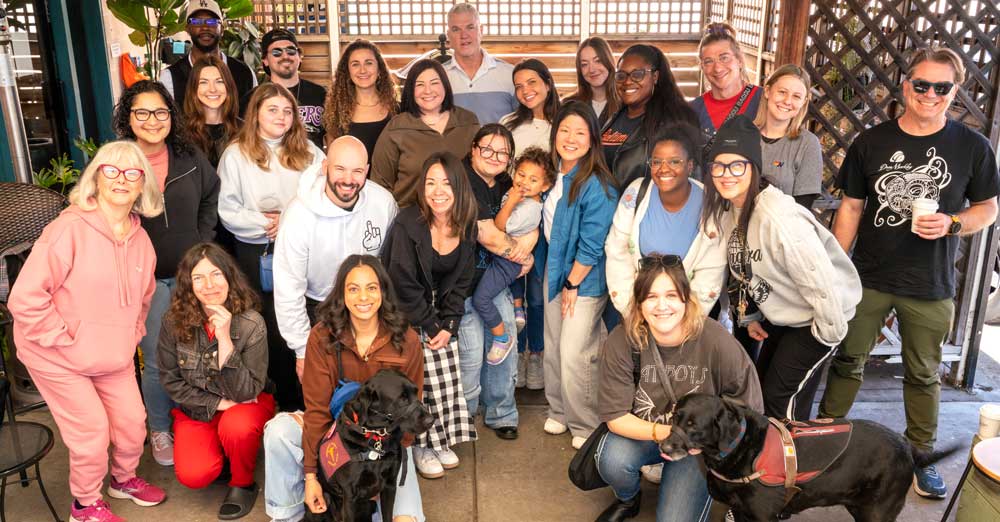
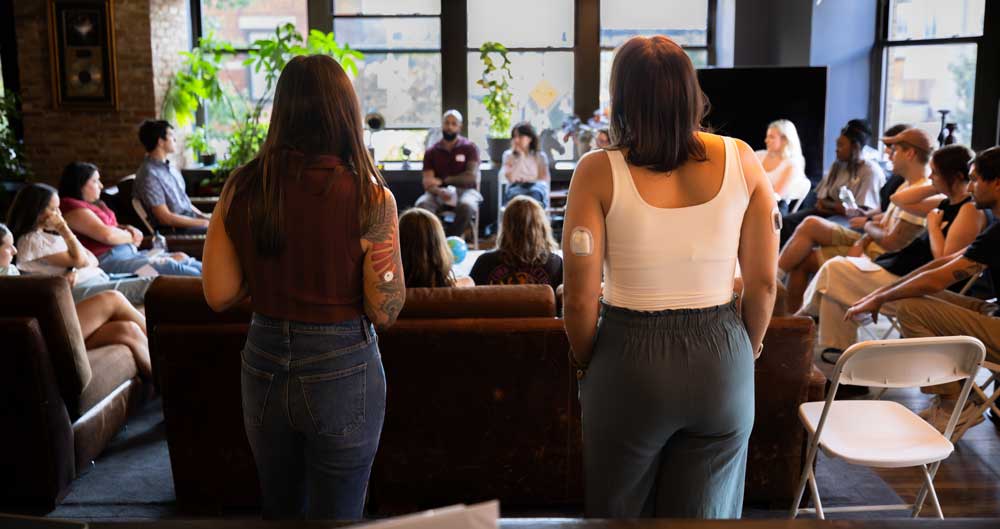
Pavlakovich: Every event we put on is a very mental health-forward type 1 diabetic meetup. We have events that are customized for toddlers, ages five and under. We do teenage boy, teenage girl, and adult events. What an adult event would look like is we typically bring in a type 1 licensed therapist or someone that wants to speak about their journey with type 1 diabetes. We do really cool mental health activities like vision boards, share circles, breakout groups. We have this really amazing activity where you write down something you’re feeling very vulnerable about or feel a lot of shame around. And I mix up all the papers and I pass them out and people read them out anonymously. So, nobody knows what anyone wrote. And it’s the most beautiful activity we’ve been doing at these events because it really shows how most of us are all feeling the same shame and the same burden that we don’t feel comfortable saying out loud, when it’s really the shared experience. And at the kids’ events, we do rock climbing, the boys do arcades and the girls do self-care days. We always have type 1 volunteers that lead them in guided discussions and chats.
And the toddler events are really for the parents, but the kids are getting old enough now to where they ask their parents, “When can I see my diabetic friends?” I grew up going to diabetes camp, and it was amazing. But it was only once a year, and it was hard to wait those 12 months in between. So, what I want to provide with You’re Just My Type is year-round support and events.
Our events are also 100% free to attend, which I think makes us stand out as well. So, our goal is to do events for every age group, every quarter so that if you miss one, you don’t have to worry. There’s another one in three months coming up. And we have them in different locations every single time. And look, I try to make them really cool and fun. These aren’t medical events. You don’t leave feeling sad or depressed. Our goal is to give you a really safe space to get to open up, share and vent, but also just make friends in your area who also have type 1, create new connections and just give you a place to feel like you belong because we live in a world where it’s easy to feel like it wasn’t meant for us, living with a chronic illness like this.
Products & Services

Cooper: So, the people in the audience just stood up and clapped?
Pavlakovich: Yeah. And I dropped my microphone.
Cooper: Laura has left the building.
(laughs)
Pavlakovich: We actually just came up with this new—not a mission statement—
But even me growing up, the social media space or, in general, just the human experience, there are a lot of times in this world where you don’t feel like you belong or you’re not welcome somewhere or you feel left out. I don’t want anyone to feel that when it comes to You’re Just My Type. Unfortunately, there are even diabetes orgs and other groups where it’s easy to feel like they’re very exclusive and that they don’t want other people joining. At You’re Just My Type, we just created this new branding of your diagnosis is your ticket in, and that’s all you need to be 100 % accepted at our events. We wrote this new thing. It says, “The Type 1 community should never feel like an exclusive club because we all know no one chooses this.”
But too often, spaces can feel unwelcoming or out of reach, and that’s not us. At You’re Just My Type, we’re all about community and creating safe spaces where Type 1’s can show up exactly as they are. No matter your age, race, gender, nationality, or walk of life, you belong here. No barriers, no gatekeeping, just connection, support, and understanding.