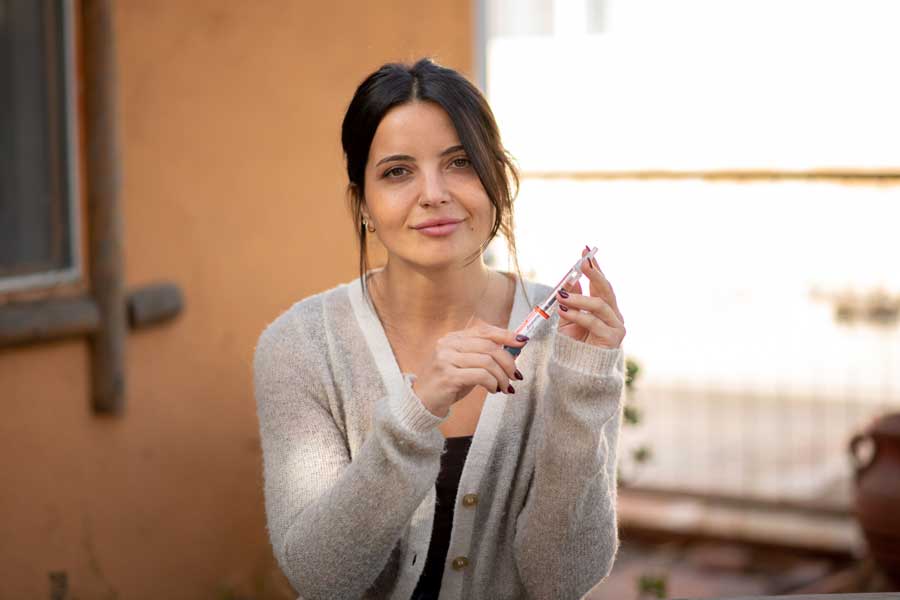








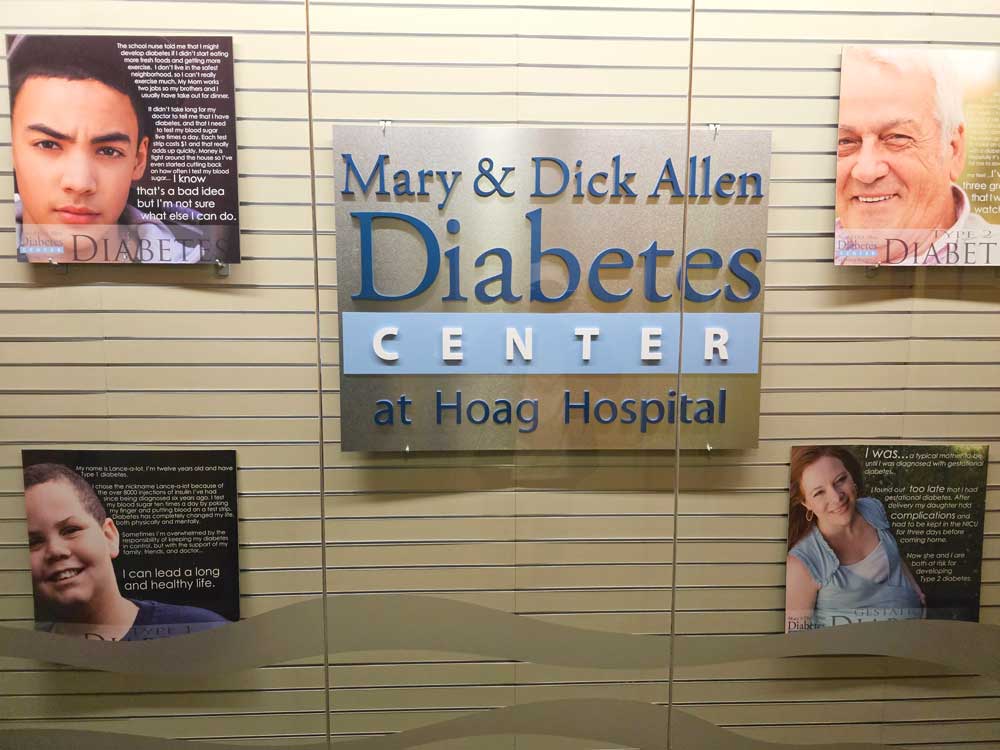
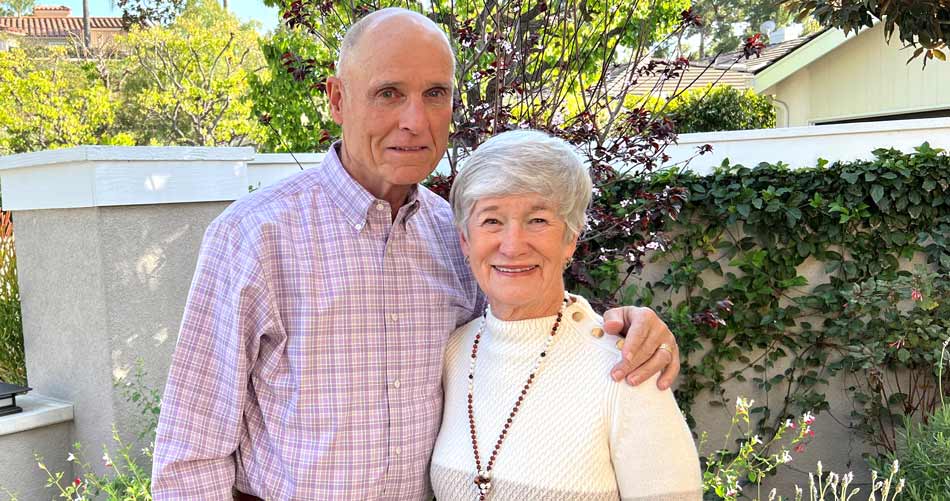
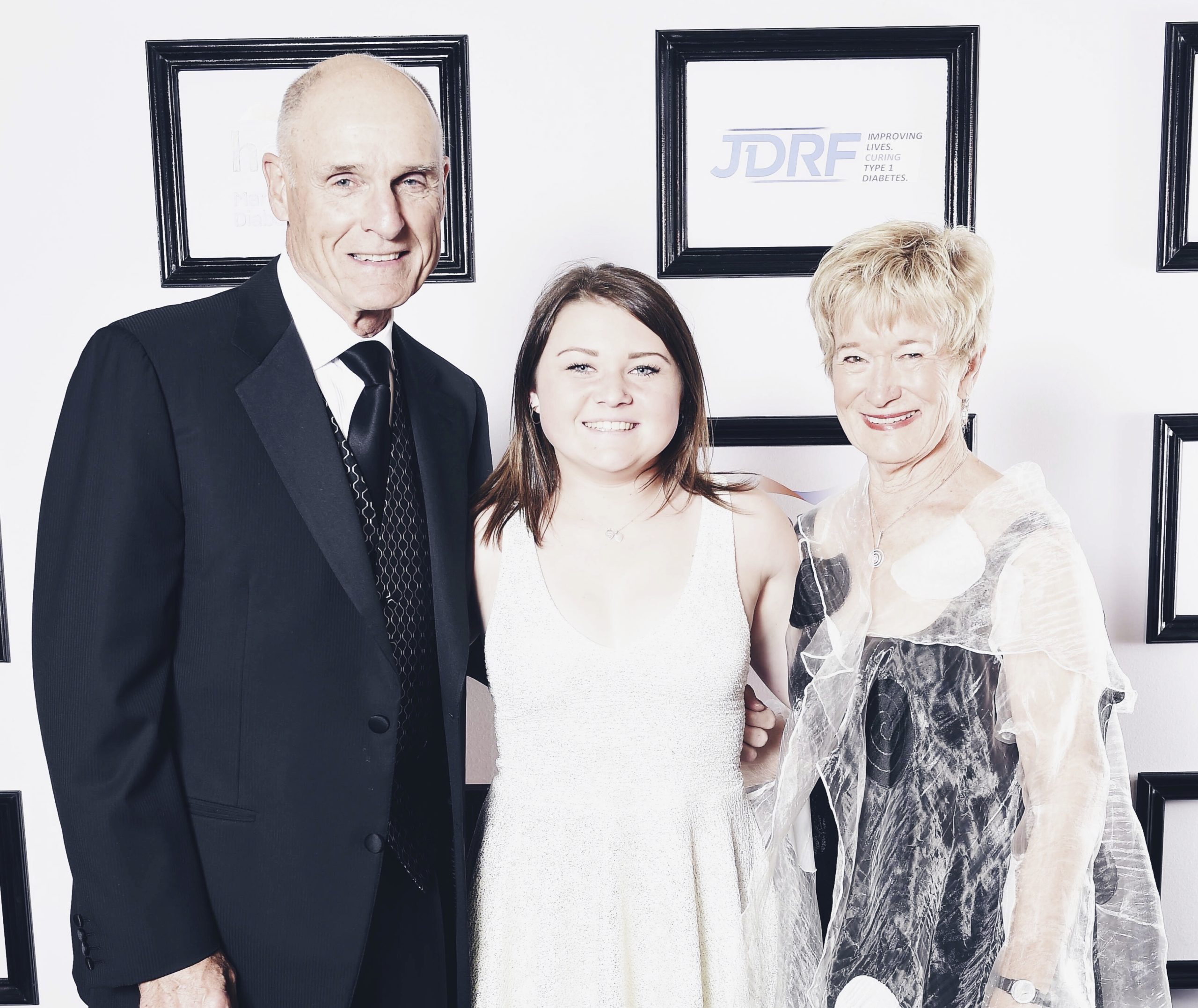
Mary and Dick Allen combined their professional expertise and personal commitment to make a difference in the diabetes community. Their journey into the world of diabetes work and advocacy began with a personal mission to support their young granddaughter, Hannah, who was diagnosed with Type 1 Diabetes. What started as an effort to help one individual has grown into an initiative that now positively impacts the lives of hundreds of thousands of people living with type 1 diabetes.
ABILITY Magazine’s Chet Cooper sat down with Mary and Dick Allen at their Newport Beach home to discuss their work with advancing diabetes care. They shared the mission of the Diabetes Center at Hoag and its many services as well as their vision for the future of diabetes care and advancements in diabetes treatments. Cooper also caught up with the Allens’ granddaughter, Hannah Gammon, who shared her experience.
Products & Services


Cooper: How did you get involved with the world of diabetes?
Dick Allen: When our granddaughter Hannah was diagnosed at age two and a half—They live up in the Bay Area, Marin County—I thought, “How can we best be of assistance to our daughter and son-in-law?”
Mary Allen: Because they also had a six-month-old.
Dick Allen: Right. As you know, not only does diabetes change the life of the person who’s diagnosed, but it changes the life of their family. It was clear to us that Jennifer, our daughter, was going to have some additional challenges, so we wanted to be of help. We decided, with Hoag resources, to learn how to care for a two and a half-year-old who had diabetes. That way, we could go up there and babysit from time to time and give our daughter and son-in-law an evening’s respite. Or eventually, once they had enough confidence, then it’s a weekend’s respite. We were trained how to count carbs.
In those days, it’s how to check their blood and how to give a shot. In fact, as part of the training, the nurse insisted that we give ourselves a shot, not of insulin, but a shot. Anyway, the bottom line is we learned how to do it. We would go up there and care for Hannah. Mary always counted the carbs. I checked her blood sugar. Probably, I would say 8, 9, 10 times a day.
Mary Allen: You’re good at that. (To Cooper) Did you ever have to do that with those little strips?
Cooper: It’s so frustrating, yes.
Dick Allen: Well, that’s what we did. Then I would give her shots three, four times a day as needed. So, all of that worked reasonably well. Then when Hannah turned eight or nine years old, her mother wanted her to go on a pump because it would give better control and make life easier for Hannah and easier for Jennifer.
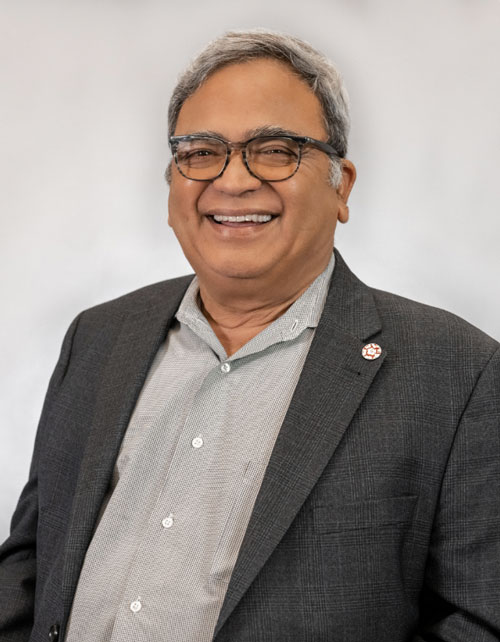
So, I decided I needed to learn how to run a pump so that we could continue to go up and babysit. Kris Iyer, who was the head endocrinologist at the time at Hoag, who has type 1 diabetes, as it turned out. At that time, I was the chairman of the board of Hoag, so we had a relationship. Kris said, “Hey, Dick, I’ll have the nurse for the pump company come in and train you how to use the pump, but only on the condition you agree to wear it.” I said, fine. I went in and had a couple hours of instructions from the nurse, how to do it, yada, yada.
Finally, she said, “Are you ready to insert the cannula?” I said, “Yeah.” She continued to give me some instructions. And after maybe 30 seconds, I said, “I better sit down.” And then another 30 seconds, I said, “I better lie down.” I was having a vasovagal reaction. Where a sudden drop in blood pressure leading to fainting. Anyway, the bottom line on that is I learned how to run and manage the pump.
Cooper: Do you think that was happening like people get dizzy because of the sight of blood?
Dick Allen: Some people have a reaction when they just get a shot.
Cooper: It’s a psychological reaction.
Dick Allen: Bingo. It’s just I had the reaction to it. Then I wore the pump for three days. For the weekend, pumping saline, and obviously, it wasn’t pumping insulin. But that process enabled me to learn how to manage the pump, how to manipulate the pump. That’s what happened. And we would continue to go up and babysit.
Cooper: What were you using?
Dick Allen: It was Medtronic. In those days, this was back in probably 2005. Our daughter looked on the internet to see what’s the most popular pump, and she picked a Medtronic. It was the latest model that existed at the time. So, that’s what I and Hannah wore. But every time we would go up there, it was almost a relearning process because it was not intuitive, it was not terribly user friendly. And, as I tell people, it was almost trial and error.
If you’re injecting insulin, you don’t want to be doing it on a trial and error basis. But that experience convinced me that, boy, there ought to be something better, easier to use. A better user interface, all those kinds of things. At about that point in time—This is now early 2007—Through a mutual friend, I happened to be introduced to a couple of engineers who were developing a new technology for an insulin pump. I met with them at Starbucks, had a cup of coffee and I liked what they were doing. It was the conceptual stage almost. But what they had in mind was a process that would be simpler, easier to use, a better user interface, smaller, just a whole number of benefits that would make it better for the patient. I spent a lot of time with them.
I would meet them two, three times a week and we’d strategize. The engineers would come up with some new ideas. Eventually, when they got the plan where they needed some money, I raised money from some friends, some former venture capital people. We put money in the company and recruited a CEO who had been on the board of Dexcom, and he was available.
Products & Services


Cooper: They’re competing with Dexcom?
Dick Allen: No, Dexcom is the CGM (Continuous Glucose Monitoring). We were developing another pump.
Cooper: Competing against Tandem?
Mary Allen: No, it is Tandem.
Cooper: Oh, it is Tandem.
Mary Allen: It is Tandem. So, competing with Insulet and Medtronic.
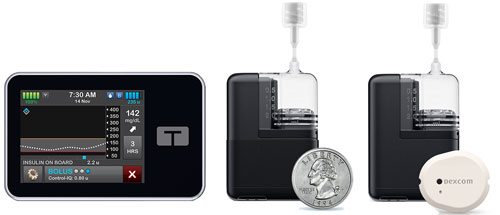
Dick Allen: T-slim and the newest pump is much smaller called Mobi. I’ll show you what it looks like.
Cooper: I’m still learning about the world of diabetes care, but I’ve heard of Mobi. I didn’t know it was a Tandem pump.
Dick Allen: Right. It’s the same company. As I said, I had met these engineers. They had an idea for a new technology, and Tandem ended up developing it. But the bottom line is we raised money. I recruited the CEO for Tandem. Then he moved the company from Laguna Niguel down to San Diego and made the company what it is, changed the name from what it had been with these two engineers to the name of Tandem. So, that became Tandem.
Cooper: Wow, I wasn’t aware. I was only aware of the Mary and Dick Allen Diabetes Center at Hoag. You have a great history both in your family and business.

Dick Allen: The whole notion with Tandem was we wanted it to be a better user interface, easier to use and more intuitive. I’ll just give you one example. With the Medtronic pump, if you need to enter in your carbs or if you did this and you wanted to enter in your blood sugar, you’d have to get on their pump and you would scroll. So, you push a little button and you scroll, scroll, scroll…
Cooper: I think the T-slim user interface on the app is really good.
Dick Allen: What you’re using is what came out of this original coffee I had with the guys that were developing a new technology.
Cooper: That’s a small world.
Dick Allen: Yeah, it’s a small world. That’s our history. Well, then our experience with people who had type 1 diabetes, —You might want to tell that piece of it, Mary. What caused us to get involved in the diabetes center?
Mary Allen: Actually, Dick was the chairman of the board of JDRF (Juvenile Diabetes Research Foundation).
Cooper: I interviewed Mary Tyler Moore who as you know was their spokesperson.
Mary Allen: Oh, really! She always seemed like a neat lady. I hope that was true.
Dick Allen: Her husband was on the board of JDRF with me at the same time. I never got a chance to meet her.
Mary Allen: They’ve changed their name now to Breakthrough T1D. One thing that we heard about was the little test strips.
Once, when we were visiting our daughter—They were still pricking Hannah’s fingers and toes and wherever—and there were test strips everywhere. There’d be some on the floor. There’d be some on the changing table. Finally, one day I said, “Jennifer, what do these test strips cost?”—Because they’re testing her like 10 or 12 times a day—And she said, “I think they’re about 90 cents a test strip.” Let’s round it up to a dollar just for easier math. If they’re using anywhere from 10 a day, think about the people who don’t have good insurance.When we were back here, we heard that there are kids who will cut their test strip in half.
Products & Services


Cooper: Clever on their part.
Mary Allen: Yeah, exactly. To save money, but it doesn’t give them an accurate reading. So, that’s what gave birth to the diabetes center. One of the things we felt so strongly about was that when you walk in, the first question is not “what is your insurance?” The question would be “What can we do to help?” Yeah, nobody’s going to be turned away.
Dick Allen: Yeah, that’s how we got started. Hoag was very willing, obviously, to work with us to set up this diabetes center. And so, with the help of a lot of people in the community and the help of Dr. Kris Iyer and administration, the center became a reality.
Cooper: I felt like it was unique. Am I right about that?
Mary Allen: I would say for the most part. There are a few other centers around. There’s a Barbara Davis Center in Denver. So, there are others.
Dick Allen: Thinking about your question of “Is it unique”? We think there are some unique features to it. I’ll just give you a couple of examples. People with type 1 diabetes or type 2 diabetes, adults and pediatrics, we have services for all those people. Services for women who have gestational diabetes.
Cooper: What is that?
Dick Allen: In some cases, unfortunately, too many cases, women who are pregnant—They don’t have diabetes but when they become pregnant, they develop type 2 diabetes. They call it gestational diabetes. They’re diabetic while they’re pregnant. Once they give birth, the diabetes goes away.
I think the statistics are that 50% of those ladies will eventually develop type 2 diabetes. But while they’re pregnant, you want to make sure their blood sugar is in their complete control. Do you know the name Ueberroth? Probably you do.
Cooper: He headed up the Olympic Games in LA and it made money, finally.
Mary Allen: Yeah, exactly.
Dick Allen: Ueberroth family made a significant contribution to the Diabetes Center to focus on gestational diabetes, women with diabetes. You know the Iacocca family?
Mary Iacocca had type 1 diabetes. And so, Lee Iacocca had set up a foundation to support research for type 1 diabetes. Their first non-research grant was to our diabetes center to focus on type 1 diabetes and innovation in type 1 diabetes care. So, they’ve endowed that particular program. Gavin Herbert’s daughter has endowed a program called the Herbert Program for Young Adults. And it is a—What’s the best way to describe that?
Mary Allen: Well, it’s the young adults, and it’s ages 18 to late ‘30s. And surveying that age group, they don’t want a support group. They don’t want anything called a support group. So, what they do is the first Friday of the month, they all meet. Oh, maybe be it a restaurant or bowling or something so that they can all become friends.
Cooper: It’s a mixer.
Mary Allen: It’s like a mixer. Exactly. Yeah.
Dick Allen: It’s funded by the diabetes center. Yeah.
Mary Allen: In a sense, it probably does become a support group, but they didn’t want it to be called that. So, yeah, there’s a lot of neat stuff going on there.
Dick Allen: I suspect some of that is unique. We have, as you know, we have a CHOC (Children’s Hospital of Orange County) Center in the diabetes center, so we make sure the pediatric patients are cared for. There are some unique aspects to it. Through Dr. Ahn, we participate in a lot of clinical trials. You won’t find many, maybe any non-academic centers, that are involved in clinical trials. Hoag, in general, has more clinical trials. I don’t know the number, but I’m going to say 250 clinical trials in all of it, in cancer, across the board that people don’t know about.
Products & Services


Cooper: And you brought CHOC in?
Mary Allen: Yes. Because of what we were hearing from parents of young kids, it’d be like an all day thing to go to CHOC because you end up sitting waiting. And they’ve got to take the child out of school. So, we worked with CHOC to open up this small office here. And I’ve had parents say they get in and out within an hour or so. And the good news is most of the kids only have to see their pediatric endocrinologist every three months or something like that.
Dick Allen: So, it’s not like they’re there all the time. There’s a second center in Irvine right now. We have the one in Newport that you went to. There’s one in Irvine.
But the truth is the treatment modalities for type 1 diabetes today, compared to when Hannah was diagnosed, are just like night and day. If you go back 20 years before Hannah was diagnosed, it’s like night and day again.
Cooper: Weren’t people dying?
Dick Allen: Type 1 was discovered by two scientists up in Canada in 1922. Before that, people died. We had a breakfast last Saturday at the Diabetes Center for moms and dads and the little kids to come in with their teddy bear, Rufus, that they get when they’re diagnosed. Somebody said something about, “Well, is it just recently that adults are being diagnosed with type 1?” And I said, “I don’t think so.” I said, “Probably what happened, years ago, they were misdiagnosed.” Every doctor thinks they have type 2, and they either figured it out or they died back then because you didn’t hear about it. That’s why Juvenile Diabetes wanted to change the name because it’s not just juveniles anymore.
Mary Allen: I was just going to say, when Hannah was first diagnosed at age two and a half, our heart just went out to their parents. And thank God, both of them, both our daughter and son-in-law, who we love to pieces, were on the same page. They both were willing to jump in. Because not all couples, that doesn’t always work out like that. It just broke our heart that they had to deal with all this. And yet now, all these years later, and I hear about kids, let’s say age 12 to 16 that get it. It’s a much different story. They hate it.
Dick Allen: Because they know life without it.
Products & Services

Cooper: I get it.
One thing we were talking about was what type of dogs. I usually see that it’s either labradors or retrievers. And the one girl said, “those are the dogs willing to learn. The golden retrievers, they’re just born to do anything you want. They just love you. Labradors love the treats”. She said, “They don’t ever use the really smart dogs, like German shepherds because they have too much of mind of their own. They can be trained, but then they’ll reach a point where they’ll say, ‘yeah, I’m done with this’.”
Cooper: How was your granddaughter diagnosed?
Mary Allen: Hannah was two, two and a half. It was Christmas, and they were down here. They just kept thinking that she had strep throat and she was on antibiotics. And at one point, Jennifer, her mom, took Hannah’s shirt off—and Hannah was always not chunky but just nice little body—I could see her ribs and I thought, “Oh.” Then she kept saying, “my eyes.” She and I would sit because she didn’t feel well. And I would read to her, and she’d say, “my eyes,” which meant nothing to us.

Mary Allen: The center also has an education series, the one that you came to. Three months before, Dave Mina, the Health & Wellness Program Coordinator put on one for diabetes dogs—I always say the diabetes dogs, which makes it sound like the dogs have diabetes, but it’s the alert dogs—There were three different people there that brought in their dogs, two independent women, and then the other one was a 16-year-old with her mom and dad. Coincidentally, they were all black labradors. Their dogs alert them to their numbers, whether they’re high or low, which I think is amazing that a dog can sense that.
After Hannah was diagnosed and she was in the hospital for three days, their pediatrician, who Jennifer really liked, came up and he really apologized because all it would have taken was to check her blood sugar. I don’t know why pediatricians don’t do that to little kids.
Cooper: Isn’t that part of a standard lab, checking glucose?
Mary Allen: It’s such a simple test.
Cooper: What do you think the reason would be? Is there a cost element for that test?
Mary Allen: That’s a good question.
Dick Allen: It costs a little bit.
Mary Allen: What would it cost? If you’re running a blood panel? I don’t know.
Cooper: Are there stats on how many young kids have type 1 diabetes?
Dick Allen: I don’t know the answer.
Mary Allen: I bet they have that somewhere. That’s a good question.
Cooper: I would be curious to see if there can’t be a push to make it routine to check glucose.
Mary Allen: I agree with you.
Dick Allen: Get on that.
Cooper: I think the three of us need to get on that.
Dick Allen: Nowadays, if you diagnose somebody with type 1 diabetes in the very early stages of having the autoantibodies, you can take a new drug that would prolong the insulin.
Mary Allen: What they call the honeymoon. There’s still enough insulin in your body to get you through for a while.
Dick Allen: Maybe it can prolong it for maybe two years. I think the point is research is ongoing, and every day, they’re coming up with some new understanding of the disease and a new understanding of what they could do to intervene. When you’re first diagnosed, you were told five years.
Mary Allen: Five years. Everybody quotes that. Oh, remember how we were told five years? It was just at an outreach meeting.
Products & Services

Cooper: Five years for what?
Mary Allen: There’d be a cure. Whenever people were diagnosed, they would say, Well, in five years. I was at this meeting last week through Juvenile Diabetes, and they were all—Most of them at this meeting do have type 1—They were laughing about it. “Oh, yeah. I remember when I was diagnosed, five years, and that was 15 years ago”. But there has never been a cure for any autoimmune disease yet.
Cooper: I didn’t know that.
Mary Allen: I didn’t know that until not all that long ago. Isn’t that interesting?
Dick Allen: The immune system is pretty complicated. The scientists are doing more and more work to try to understand how they could intervene to stop the process.
Mary Allen: One of the points of when they’re trying to raise money for the diabetes part of it is they are hoping if they can find a cure, then maybe that would go across the board for other autoimmune diseases, whether it’s stem cell or whatever it’s going to be.
Cooper: What do you think about stem cell therapy?
Dick Allen: Various companies are doing work. One method involves taking stem cells, a type of cell that can develop into other cell types and turning them into the different cells found in the pancreas in clusters called islets. These islets include the beta cells, which make insulin.
Cooper: And the beauty of that it’s not considered foreign.
Dick Allen: That’s exactly right. So, when you get (cells) back into you, you don’t need immunosuppressive drugs. And there was a recent study done where they take cadaveric cells. Then they narrow it down to the pancreatic islet cells and they manipulate them in some way, and then give them to patients with type 1 diabetes. The way they’ve manipulated them is such that you do not need to take immune-suppressant drugs. The point is, they’re trying from a variety of different angles how to solve the problem, and eventually they’ll get there.
You said something earlier that resonates with me. And I rephrase it a bit when I talk to new people joining Tandem Diabetes Group, new employees. And the speech is like this. I said, I want you to do well. But doing well is not enough because I want you to do good. And the opportunity at Tandem, since you’re in the healthcare field, you’re lucky because you can do well, but simultaneously you’re doing good. We serve over 450,000 people, and you make life better for them. How nice is that?
Hannah Shares Her Experience via Video Chat
Cooper: Hi. You know I spoke with your grandparents.
Hannah Gammon: Yes.
Cooper: So, they have insight of things that you might not remember. I’d like to ask you a little bit about your first memories of knowing or realizing that you had type 1 diabetes.
Hannah: I was diagnosed when I was two and a half, so I don’t quite remember the beginning of it. I’m trying to think. Probably, when I was in elementary school is maybe when I kind of started to actually realize it because I was on my own, and there was actually someone else in my class who had type 1 as well. So, we would go to the nurse together and check our blood sugar during lunch. It was kind of normalized a little bit. I guess maybe that was kind of my first memories of it. And that’s when I got on my first insulin pump too. So, that also kind of shifted things as well.
Cooper: What age do you think that was?
Hannah: I think around eight, maybe in third grade.
Cooper: Did your classmate also get a pump?
Hannah: No, he was on shots for a while. I think, maybe recently. He just got onto maybe the Omnipod pump, I’m not sure. But he was on shots for quite some time.
Cooper: Oh, just recently. And you’ve stayed in contact with him all these years?
Hannah: Not really. I’ve kind of seen him around. My mom and his mom have been friends for a while.
Cooper: What was your experience with other students and their understanding of your pump?
Hannah: I don’t think anyone really asked about it too much, maybe here and there. I was always able to kind of take care of it myself and kind of handle it and keep it under wraps. Again, not on purpose, but just always able to just handle it. I don’t remember feeling any different or anything like that.
Cooper: What did you do during lunch?
Hannah: I remember at least in elementary school, going with the other kid in my class, we would just go to the nurse and check our blood sugar together. So, it was kind of nice to do it with someone.
Cooper: And when you got the pump, did you let the pump do the analysis or did you still check your blood?
Products & Services


Hannah: I think for a little bit. I was on the Medtronic pump and still checking it. When I was in high school is when technology got a lot better. So, that’s when having the pump kind of did everything. I was wearing the continuous glucose monitor.
Cooper: Have you tried different pumps?
Hannah: I started on the Medtronic and then I switched to the Tandem pump, and I’ve been on that one ever since.
Cooper: Is that the T-Slim?
Hannah: Yes.
Cooper: How are you managing your diabetes? Are you keeping a pretty good range?
Hannah: Yeah, but diabetes is very unpredictable. I mean I have an idea of how many carbs I’m going to eat for this one meal, but you know things differ throughout the day so much. If you’re stressed and your blood sugar goes up, it’s so unpredictable. Obviously, I try to stay in a good range, but it’s unpredictable. So, things happen and then you just deal with it.
Cooper: When did you find out your grandfather tested the pump himself?
Hannah: I kind of feel like I’ve just always known. I know recently he tried out the Mobi, so I talked to him a little bit about that.
Cooper: Oh, he tried the Mobi as well. I didn’t know. Have you tried the Mobi?
Hannah: Yeah, I’m actually trying it right now. I actually work remotely for Tandem, so I was able to get on it.
Cooper: And you find a big difference in the way you go about your day?
Hannah: I was always used to having my phone around, and so the Mobi wasn’t a huge difference for me personally. It’s a fairly easy transition.
Cooper: I was thinking more about lifestyle in the sense of how you could actually tape the Mobi to your arm, for example.
Hannah: I tried that, I didn’t really love it. I do like how the Mobi is a lot smaller. I think as a female, it’s really nice just wearing things like dresses. You can kind of hide it a little easier. I could definitely see the benefit that during exercise or workout you can unclip it at any time.
Cooper: Can you talk a little about your parents?
Hannah: They did a great job at just kind of normalizing diabetes, and not making a big deal of it. They were doing it for me for the first couple years of my life. I remember just quickly learning how to do it on my own. I don’t remember there being any sort of fuss around it.
Cooper: What do your parents do?
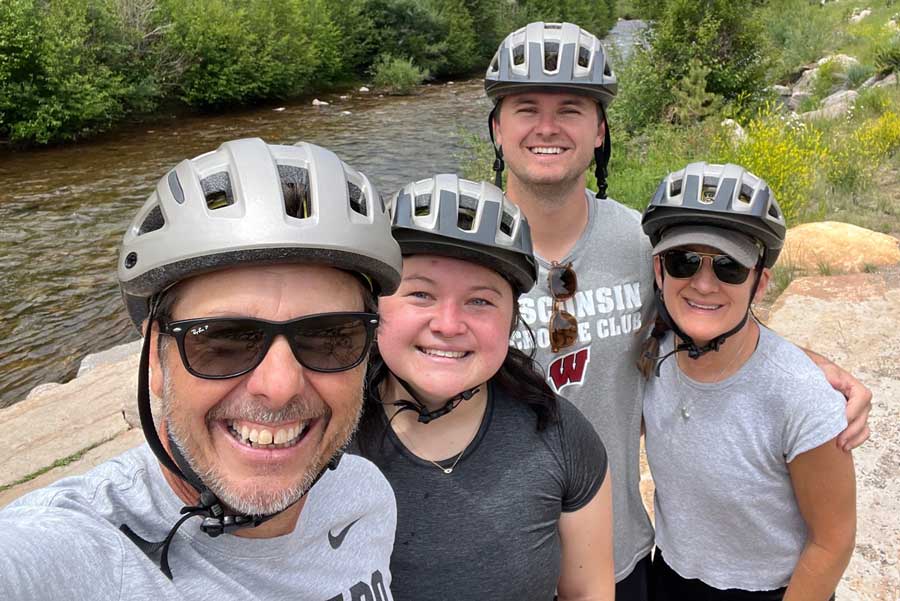
Hannah: My dad owns an advertising agency, and my mom is a substitute teacher at the school that I actually attended.
Cooper: Oh, nice.
Hannah: Yeah, I remember they brought us to diabetes camp as well. We attended the family camp. I was maybe 10 and my brother was 8. I love that they were able to go. It was just a fun kind of family bonding experience and meet other kids with type 1.
Cooper: Have you heard of that nonprofit called You’re Just My Type?
Products & Services
Hannah: Yeah, I know about it.
Cooper: They’re kind of like meetup groups for type 1 diabetes in different states, in cities. It’s a way of building community and focus on mental health.
Hannah: Right. Community is the biggest thing with type 1. I don’t know what I would do without the community that I have. The camp that I went to—I’ve been a counselor at the camp. I went there as a teenager. I’ve been really lucky to have had many opportunities to meet other kids my age, teens my age, however old I was with type 1, and I still have those friends to this day as an adult. Having the community is one of the best things that comes from it.