






Circa 1998

There are only a few people that most Americans can recognize by their initials–FDR, JFK, LBJ and MLK perhaps. However, they have all been dead and abbreviated in the history books for decades now. Think about it. How many public figures, alive and well today, could you recall by their initials alone? I only know of one–the kitten that roared, MTM—Mary Tyler Moore. While it seems she is modestly unaware of it herself, she has had a significant impact on late twentieth century America. Not in the overt sense of the aforementioned abbreviated figures, but in a more subtle way she has made her mark. A quick review of web sites on the internet, or even something as remote as feminist literature in academic journals provides strong evidence that Mary and the characters she brought into our living rooms changed American culture and the role of women in the workplace. Laura Petrie, unlike Harriet Nelson or June Cleaver, was the first woman to literally and figuratively occasionally wear the pants in the family on television. And in the 1970s, during the heyday of the Mary Tyler Moore Show, a whole generation of women learned to look at situations in their lives and ask, “What would Mary do?”

At the same time, few people really know the real Mary behind Laura Petrie and Mary Richards. It is often difficult for us to separate the characters we see on television from the actors who play them. If we were to ask a random selection of people on the street what they thought Mary Tyler Moore’s life has been like, they would perhaps be quick to reference the experiences of her television alter egos from the Dick Van Dyke Show and the Mary Tyler Moore Show.
Yet, in reality, Mary has lived a life much more ordinary than any one of us could imagine. Unlike her sitcom counterparts, she has had to wrestle with the very serious and unfunny aspects of alcoholism, diabetes, a miscarriage, divorce and the tragic accidental death of her son. Anyone who had read her recent autobiography, After All, understands that she is quietly aware that the reality of life can often be much more of a drama than a sitcom. Yet, while many of us in similar circumstances would have perhaps turned inward, Mary has always kept herself and her work in the limelight. And I don’t just mean her Emmy winning television shows or her Oscar winning performance in Ordinary People. No, the real star is the real Mary Tyler Moore.

In recent years, she had dedicated herself to improving the lives of people with disabilities and with changing the way we think about animals in our society. She has served as the spokesperson for the Juvenile Diabetes Association (JDF) since 1985 and works actively in conjunction with the government and the research community to improve the lives of not only people with diabetes but a variety of other health concerns. She has brought her passion for these issues to the screen and stage in roles where she has depicted a breast cancer patient in the Emmy nominated drama, First You Cry, and as a hospitalized quadriplegic in her Tony winning performance in Whose Life Is It Anyway? Recently, Mary was able to merge her work with disabilities and animal rights, acting as the host for an award show where in her own words, “All the winners have nothing to say and they are all completely naked.” No, it wasn’t a silent nudist convention, it was an HBO special dedicated to the miracles of animal assisted therapy. The winners were a diverse group–cats, dogs, horses, a turtle, a pig and even a stingray which had brought care and comfort to people with disabilities. Mary hopes to one day be able to say she changed the way people think about animals the same way she helped change the how we think about women in the workplace. As she remarks, “I’m convinced, with heightened awareness, that there will come a time when we look back and say, ‘Can you believe that people used to eat animals?’ A human being has been given an intellect to make choices, and we know there are other food sources that do not require the killing of a creature that would protest being killed.”
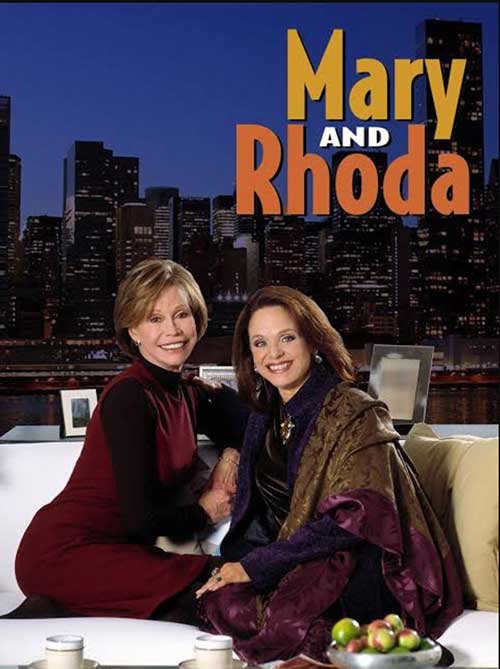
We spoke to Mary about her work and her passions and in the end found that a lot of what is inside the real Mary Tyler Moore, despite all the challenging times she has had, really is that happy inspiring screen presence we have come to know over the past thirty-five years. She plans on returning to the small screen next year in a new sitcom entitled Mary and Rhonda. In a year, where there won’t be any Jerry Seinfeld and too much Jerry Springer, America will undoubtedly welcome back the intelligence and wit of an MTM sitcom to the prime-time lineup.
Chet Cooper: Looking at some of the pictures you have here I am quite interested in knowing the background behind them. This one with you and Elvis Presley?
Mary Tyler Moore: I was his last leading lady. And it was funny because not that many years after the film was finished, he was quoted as saying “I’ve slept with every one of my leading ladies except one.” I don’t want to bust anyone’s cover but I know who the one is.
CC: Can you spell her name?
MTM: Me! (laughs)
Products & Services


CC: And that’s spelled M-E? How did you feel about that?
MTM: (laughs) Well, I was married at the time. He didn’t seem too interested in me anyway and to tell you the truth he was not my type. He kind of viewed me on a pedestal, he would talk to me with this head down and kick the sand; I guess from my image of the Dick Van Dyke Show days–and he kept calling me Ma’am.
Products & Services


CC: What about this picture with you and Robert Redford? Is this on the set of Ordinary People?
MTM: Yes, it was. There are a few 100 percents in life but the whole experience on that film was a 100 percent experience. It was creatively satisfying and it provided me with a source of comfort. I was just beginning my separation from Grant Tinker at the time. As a director, Robert Redford was just my dream. He was so thoroughly prepared and yet he is a complete artist. He let you give birth to feelings and emotions that you never knew you had. Not only did he allow it but also he required it. He would remind me if I fell back on a Mary Richard’s gesture. From all standpoints it was a great experience.
CC: I also read that Robert Redford said he slept with every one of his leading ladies except one. (laughs)
MTM: (laughs) I doubt that. I don’t think that would be a Redford action.
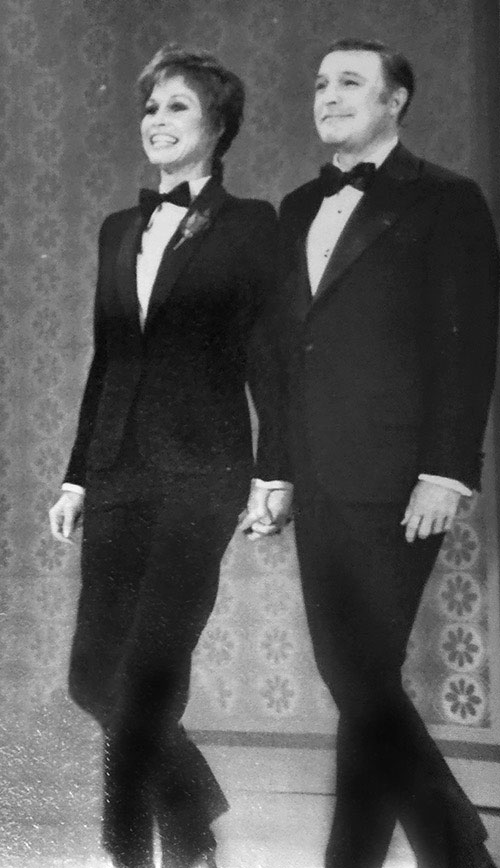
CC: What about this photograph with you and Gene Kelly?
MTM: That was a high point. He had been my idol. I was in love with him as a teenager and that was the short-lived variety show that I did. He came on as a guest. I really was not there for the whole week. I was just circling Pluto or something. The show was called a “sitvar.” It was a situation comedy and variety show and the plot was that he was a guest on my show, but I threw my back out and couldn’t dance. And another thing was actually happening to me: I was so dazzled being next to him that I couldn’t remember the steps. It was a tough week for me but one I wouldn’t trade for anything.
CC: And this photo with Dudley Moore?
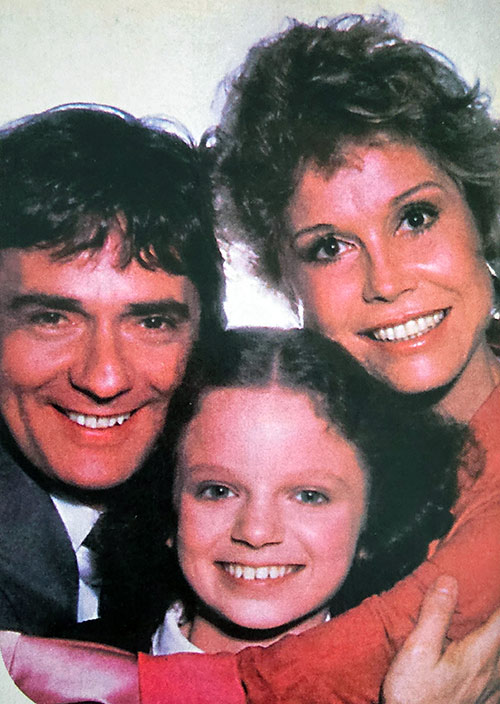
MTM: That was a sweet movie which went wrong because of the direction. I don’t know if you’d remember it but Dudley played a cardiologist who was supposed to be superficial and career driven and not paying attention to his family. When his little girl develops leukemia and he falls in love with me, therein lies a metamorphosis where he realized the good things in life, and there is a big change in him. But it was hard for there to be any change because he was adorable right from the beginning. Not matter the words on the script there was no doubt that this was a man with a good soul. I never thought it worked, but so many people tell me they saw it on late nights and how moved and touched they were by it.
CC: Is this you and Dick Van Dyke in a bowling pin return?
Products & Services

MTM: That is a photo of the “Twizzle”, the Dick Van Dyke Show’s answer to the “twist”. I don’t remember the plot of the episode. I just remember it was the first year and we were in some bowling alley, dancing. I still talk to Dick from time to time. He lives in Los Angeles and is very busy doing his series. He’ll give me a call at eleven o’clock at night when it is eight where he is and we’ll reminisce. He is a great human being.
CC: Have you ever been on his show?

MTM: I’m not crazy about doing episodic television. I’ve made a few exceptions. I did a TV movie with Ed Asner but that was a very disappointing script which I had been promised would be changed. The critics were disappointed, and rightfully so, that this was seemingly all we could come up with for a reunion. It was certainly never my intention for it to turn out that way.
CC: To take a turn from our showbiz reminiscing to another part of your life. What has it been like to live with diabetes?
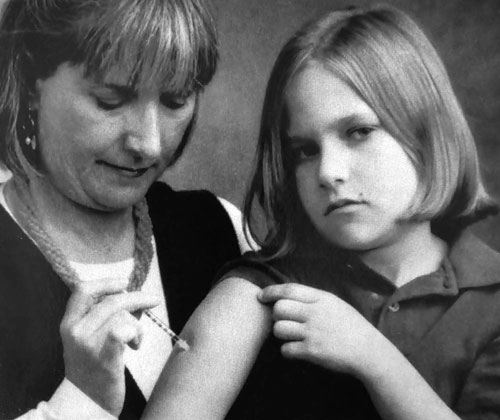
MTM: It never affected my work. I can think of only one instance where I had very low blood sugar. I had taken too much insulin and exercised too fiercely and I was under a lot of stress and that was during a rehearsal on my show. I just lost touch with reality while reading the script. That is the type of thing you learn with experience, to always check your blood sugar throughout the day. Now, not only do I check before my three shots of insulin during the day, but also in between.
CC: Did that loss of reality feel life threatening?
MTM: It felt like it and I suppose ultimately it could have been.
CC: You battled alcoholism as well, did you not?
MTM: Yes, that was something I tried to keep very secret from the world but as it turns out the supermarket papers found me out and blasted the news. And it turns out that was a good thing because the public, my friends and family gave me tremendous support. But it also awakened the point to many women that you don’t have to be rolling in the gutter and falling down drunk to be in the process of destroying your life. You can be every bit the lady and show up for work on time and be completely disciplined and never miss a beat and still have a life-threatening problem. Many women have been able to get out of the denial I was in and get themselves some help. So, I am very pleased that it is public and I can share that with the public.
Products & Services

CC: Was it difficult to deal with the recovery?

MTM: Yes, it was, even though I went to the Betty Ford Center which entails a five week process where you get tremendous support and an education which strips away the denial that you march in there with, and when you get home it continues with Alcoholics Anonymous meetings. My husband, being a doctor, was completely familiar with the feelings an alcoholic in recovery may have and thus has served as a live-in counselor.
CC: You talked about some of the women who changed their lives through your experience. Do you realize your impact on American culture and the feminist movement?
MTM: Well, I’m not sure they are too crazy about me today in retrospect. For instance, I believe if a woman is having children, her place is to be with those children. That is certainly not possible for women who have to work. One only hopes that they find the support to make their children’s lives secure. One month to three years is the critical time to raise a child, and I believe that if that child is raised by day care workers it isn’t learning to relate to its mother or seeing the world through its mother’s eyes. That’s a very important aspect for development. Children need to learn it is acceptable to love their mommy and then to hate her the next moment if she doesn’t give them that cookie. Then later they learn to change hate into disagreement.
CC: Last night I watched your HBO special, Three Cats from Miami and Other Pet Practitioners.
MTM: And what did you think of it?
CC: It was great.
MTM: Are you touched by it like I am? How about that stingray?
CC: That was unbelievable.
MTM: It’s amazing that a prehistoric animal would make contact with a human being.
CC: How did you get involved with this?
MTM: Well I was quite taken by some things I had read about the Delta Society. I sent them a fairly substantial check. Their Chairwoman called me to thank me and said, “By the way, is there any chance you would want to host our awards ceremony in Atlanta in a few months?” And I said, “Yes, I’d love to.” And they told me it was going to be filmed, in part, by HBO. So I said, “Why doesn’t HBO do it as a full special and let me be the host of the whole thing?” And we were on our way.
CC: So, in a sense, with your name you helped push HBO to look at it in a different light.
MTM: Probably–it may have. That is what I enjoy doing in my life these days. I think each of us has an obligation to speak out, either in support of or decrying the things that happen in this world–things that could be changes or just celebrated. Some of us have a larger megaphone than others and that is just the way it is. But it doesn’t frighten me or make me at all embarrassed to pick it up and use it.
CC: I think more people should follow that lead. It is interesting that you said “to celebrate”. That also brings out awareness.
MTM: Of course. You never know. When someone is watching something like this, they may only be celebrating the contribution that an animal is making to somebody’s life. But then they may be struck by the other side of it, which may cause them to question what had been ingrained in them for most of their lives–that it is perfectly all right to consider yourself as a human being and part of the food chain. Possibly, they may want to rethink that and probably do. Like me, they may realize how many options there are in that area of life and that you don’t have to participate in the slaughter of feeling, living, breathing creatures.
CC: When did you become a vegetarian?
MTM: I guess for me it was about seven or eight years ago. At that point I stopped eating the flesh of four-legged creatures. Shortly after that I also stopped eating chicken after reading the accounts of how these poor things are kept and slaughtered. I was very glad that I made that choice. Someone then educated me on what it is like for a fish to be caught and the pain it endures in the most sensitive area of its body, which is the mouth. There are more nerve endings there than anywhere else. I just began to think that this is something I don’t have to participate in. I felt like I could make a change and tell the story.
Products & Services


CC: I think it would be very difficult to be a 100 percent vegetarian.
MTM: It is, and you don’t have to try to be rigid. Just let it evolve at your own tempo. At least now that you know, you’re not going to turn your back on what goes into the slaughter of animals for food.
CC: You have a workout video out as well, do you not?
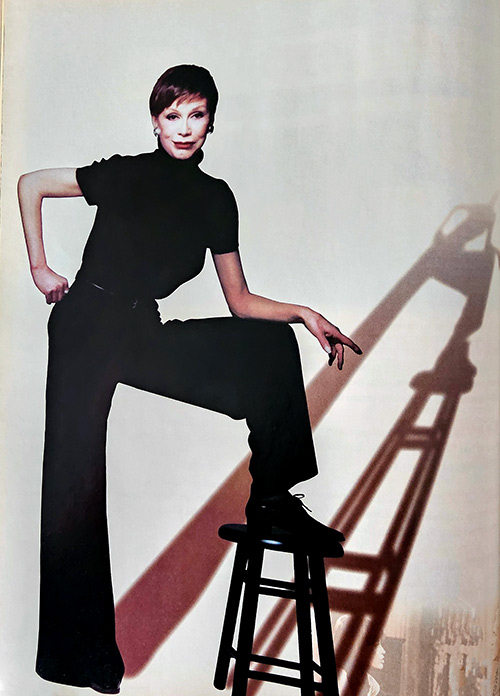
MTM: Oh God, that was so long ago. Yes, it is still out there on the market but not doing very well. It came in at the same time everybody decided to do a video. I think mine at least had a point of view. Body movement had been a part of my life since the age of four when I trained as a ballet dancer, and I worked as a dancer for many years before I began to think about acting. So it wasn’t just about a celebrity wanting to make a few bucks. It had an eye to getting some interest from women who are in their fifties and sixties and showing them that with some modification they can do pretty much anything that someone younger is doing and that they can have fun doing it.
CC: Do you maintain a regimented exercise program?
MTM: Yes, I do. I take low impact aerobics classes three days a week and the other two days I do strength training. I have a trainer who comes over to my apartment and works out with me for an hour. When we are up in the country I horseback ride and use our own private gym.
CC: Well, you definitely look like you are in great shape. Going from a meat eater to a vegetarian, did you experience any changes in your energy level?
MTM: Well, I have always been acutely aware of the balance of what I eat and the amount of exercise and stress that I am under. Being a diabetic, I have to keep everything well-balanced. That is something that I was already used to as a meat eater. But then there was the issue, when I became a vegetarian, of getting enough protein.
CC: How did your doctor feel about the change in diet?
MTM: Well, luckily enough I am married to a doctor so I did not have to go outside to get my questions answered.
CC: But he still bills you, right?
Products & Services

MTM: (laughs) Well, we have a trade agreement.
CC: What type of doctor is he?
MTM: He is a cardiologist. He is no longer practicing. He concentrates now on fixing healthcare and improving public policy in the United States. He was on a panel for Vice President Gore which is trying to find out how to make healthcare more affordable and more wisely delegated in this country. He works very hard on increasing funding for the National Instituted of Health (NIH). He is obviously working with me on Childhood Diabetes as well, but he does not limit himself. There really is this new global push to get funding for all diseases. It is sad that we have to go to congress and compete against other diseases for funds. It makes more sense to align various scientists to do research for one disease which can have applications to others. This is nothing unheard of. When Salk discovered the vaccine for polio he was, in fact, looking for something else.
CC: I just came back from the space shuttle launch of Neurolab mission by NASA. They have a similar objective of concentrating their research to focus on various diseased within the nervous system…
MTM: …And it is that kind of study–specifically nerve regeneration–that has direct applications to those with diabetes. In particular, neovascularization–wherein the retina will develop small blood vessels which are not up to the task while older more substantial blood vessels die–eventually leads to blindness. This is the leading cause of adult onset blindness. A very useful method of addressing this problem had come from spinal cord research.
CC: Did you see our last issue? We have you with Christopher Reeve at the NIH.
MTM: Yes, that was the beginning of our thinking about the problem of competitive fundraising. We felt that more spontaneity and cooperation could lead to better outcomes.
CC: Actually, through some of my interviews, I have been able to put researchers in touch with each other who were unaware of one another’s work. It has made me realize that there needs to be more networking to combat tunnel vision in medical research.
MTM: We need cooperation to mimic the progress that has gone on in computers and technology.
CC: Are you comfortable around computers?
MTM: No, not at all. I have an assistant who understands all that is necessary and all that can be derived from a computer. When I wrote my book After All, with an eraser and a pencil, I would then dictate it to him and he would put it in typewritten words. And I felt very comfortable with that. There is something special about putting the pencil to the paper and I wouldn’t want to lose that.
Products & Services
CC: I know what you’re saying, but I wonder if putting fingers to a keyboard might not feel the same way especially now with the advances in speech activated computing. Eventually, people will be saying, “I remember the days when I used to use a keyboard.”
MTM: I hope in the far future I will be able to look down and see all these amazing inventions and new technology–depending on what ever happens to us after death.
CC: Oh, for a second I thought you were speaking of looking down from “the NASA level”.
MTM: (laughs) Oh, looking down from space would be just as good. Have you been watching the Tom Hanks specials on HBO? They were wonderful. Very admirable work and well times. I think we need to encourage exploration and continue learning what we can from space.
CC: The work in the Neurolab has been amazing. We tried to get Christopher Reeve down for the launch but there were some scheduling problems.
MTM: From what I understand it is very difficult for him to travel. From my own contact with him in Washington DC awhile back, it was my understanding that he lost the ability to thermostat his own body. He needs a controlled environment and it can be dangerous for him to be outside. But that hasn’t stopped him. He is so articulate. He is such an artist. I remember watching him do Chekov and Shakespeare in summer theater, which made me realize how gifted he is. But what I wasn’t aware of was how lucid he is and what a commanding speaker he is off the top of his head.
CC: I felt the same way. But I think you are also very articulate.
MTM: I grew up in a house where English was almost a presence so I speak very well but there is nothing behind it. (laughs)
Products & Services

CC: I know just from speaking with you that that’s not true. You have done so much in your life. I ventured onto the internet and was amazed to see all the sites chronicling your life and shows. It outlines a great wealth of personal experience and knowledge that you’ve gained over the years.
MTM: I’d like to see them. How difficult is it to find those things?
CC: It’s as easy as getting to an internet search engine and typing in your name. It would be interesting to watch your reaction to the number of sites dedicated to you.
MTM: Maybe you will see it in my new show, Mary and Rhonda–which will hopefully air sometime next season on ABC. We are just waiting for scripts to be polished.
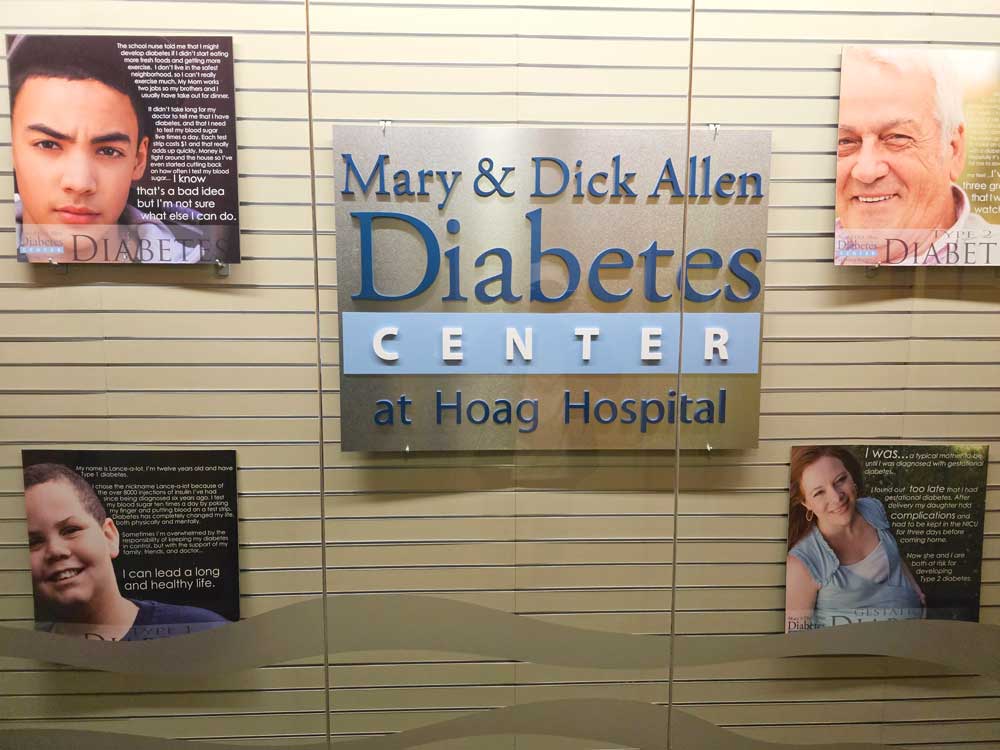
CC: You work for so many good causes. How much work are you able to do with the Juvenile Diabetes Foundation (JDF)?
MTM: Quite a bit. I travel to Washington DC and go on the Hill to encourage more spending on research and I do the annual reports for JDF as well as televised public service announcements. It is something that I am very happy to do. But in my busy schedule I still leave time for myself. I get to my gardening when the day is done.
CC: How much gardening do you do?
MTM: Well, I don’t know how to calculate that. When I am up here in Connecticut I have time to garden, kick back and read a book and relax. I play with the dogs and go ride the horses. The advantage of gardening time is that it cuts down on the number of aerobic classes I need to take.
CC: You just have to go to your manicurist.
MTM: No, I wear gloves. (laughs)