














A type 1 diabetes diagnosis reshaped Samantha Markovitz’s life in ways she couldn’t have anticipated. What she found in the aftermath was not a roadmap for how to live well with the condition, but a patchwork of obstacles: employers unwilling to adapt, medical systems that provided the basics but not the nuance, and insurance companies whose constant changes left patients scrambling. Those early struggles exposed a larger problem—too often, people with chronic conditions are left to figure it out on their own. Determined to fill that gap, Markovitz left her career in higher education and film to train at the Mayo Clinic as a health and wellness coach. She founded GraceMark Wellness with a simple mission: to guide others through the realities of diabetes with tools, education, and advocacy that she once wished she had herself.
In her conversation with ABILITY Magazine’s Chet Cooper, she discusses why lived experience matters in health care, and how empowerment is essential as treatment in building a healthy, sustainable life with type 1 diabetes.
Chet Cooper: How did you start GraceMark Wellness?
Samantha Markovitz: When I was diagnosed with type 1 diabetes, I was working in a very different field and in an environment where they did not understand what I was going through at my diagnosis. They were also not interested in following the guidelines that are set forth in terms of how you’re supposed to provide accommodations and support for an employee at an organization of that size to be able to manage their condition and continue doing their job successfully. There were a lot of challenges, and ultimately, I realized that I wasn’t going to be able to take the kind care of myself that I needed to in getting used to the new diagnosis and just moving forward in my life in a positive way without making some changes. So, I had to figure out what I was going to do next. When I thought about the experience that I’d had so far—it was about a year in at that point—I thought about all the places along the way where I had really asked for help or expected that there would be some education or resource or somebody that could tell me how to not just do the minimum things that you need to do to be able to live a healthy life with type 1 diabetes but also the things about just being a human being or at that point being a young woman, being whatever you are at that stage when you’re trying to figure out what happens next now that you’re a person that lives with type 1 diabetes. And as I looked at other jobs in my field or other things that I could possibly do, one day it just came to me, and I thought to myself, “What if there was someone who could have helped me through all of these challenges that I had in my first year? Is there some sort of coach or support person that exists?” So, I did some research. At the time, health and wellness coaching was much newer than it is now, but there were still some prominent organizations that were pushing this forward, and one of them was the Mayo Clinic. When I found the Mayo Clinic health coach training program, I thought this seems like the right place to learn how to be a health coach and how to do it in a way that’s going to be evidence-based. It’s something where I can take it to physicians or other medical professionals and say, “Hey, I can be a part of a multidisciplinary team. I can help support your patients with this because I live with it, but I’m also trained to be able to do that.” So anyway, that is how I got the idea to get started. I decided at the time that the best thing was to just get going with my own private coaching and consulting practice. There wasn’t really the opportunity to join large digital health companies or things like that at the time. That came later, as we’ve seen some growth in this area and some recognition of all of the different things that health and wellness coaches can do. But at the time, getting started on my own was the way forward.
Products & Services


Cooper: What kind of work were you doing prior to finding yourself in the wellness area?
Markovitz: I worked in higher education, fundraising, and with a film and television specialty.
Cooper: What were you doing in film and television?
Markovitz: Specifically, I was working at a top-five film school, and I was doing the advancement. It’s like relationship building and fundraising to be able to continue supporting special programs at the college and be able to do important things that help support students’ career building or bringing mentors from the industry into the school. There was a lot of industry relations work, as well. In fact, just a couple of months before my diagnosis, I was at the Sundance Film Festival, and I was so excited. I had always wanted to do that. I was a film and television producing major in college, and this felt like such a pinnacle moment that I was really doing something amazing. I remember it was very cold, and the main street in Park City is on a hill, and I was at the bottom of it and I was going to a brand activation or some event that was at the top of the hill, and it felt like something out of a movie. It felt like it was so far away. It was so hard to climb up to the top of that hill. When I got up to the top, they were giving out Coca Colas. That was part of the event that they were doing. I took that Coca Cola and I drank it like I was in one of those commercials where you’re like, “Oh, this is the most refreshing drink I’ve ever had.” Of course, not knowing that the reason that I had struggled so much to get to the top of the hill and struggled to feel refreshed and that Coke felt like it was so refreshing was because my body wasn’t functioning properly. I had type 1 diabetes, but I didn’t know it yet. I’m really grateful that I was able to safely make it through that trip and get home because I think that would have been quite a challenge had things worked out differently while I was there.
Cooper: Had you already started losing weight?
Markovitz: Yeah, I had. That’s a very common symptom that people experience. Something that I learned from that one specific symptom is that people will often comment on other people’s weight. Something that I learned myself from going through this is it’s really important to try to avoid doing that if you can. There are a lot of ways to compliment people that don’t involve commenting on that specific subject. Obviously, I didn’t know it yet, but I was quite ill, and people were telling me, “Oh, you look so great. You lost weight. You look so skinny.” And that’s meant as a compliment, but ultimately, it turned out that the reason that I was losing weight was a really bad one, and it’s changed my perspective. We have a lot more conversations about maybe we don’t comment on people’s bodies at all, and we find other things to appreciate and highlight for them, but also just the fact that someone who’s losing weight might be really sick, or they might be going through something really challenging. Someone who’s gained weight might be on a medication that is doing things that they don’t have control over or whatever the case may be, it doesn’t really matter. That’s someone’s personal business, and we should be more sensitive to that. Also, if you start to notice that a friend or a loved one is losing a lot of weight, maybe the question should be, “Hey, are you okay? I just want to check in on you.” That was my experience, and I’m sure everyone’s experience with that varies.

Cooper: Yeah. What happened with that? Just having type 1 diabetes shouldn’t cause you to not stay in that entertainment field.
Markovitz: You’re right. A diagnosis of type 1 diabetes really shouldn’t stop you from doing most things, hopefully. It definitely was an issue with the employer, and by the time I learned more about the Americans with Disabilities Act and the rights and responsibilities of the employer and just how that process is supposed to work, there had already been some significant challenges that had come up. I was in the early stages of my career, and I didn’t know how to advocate for myself yet, and I didn’t know that I could advocate for myself. Ultimately, that did lead to a situation where it was no longer the best idea to be staying there. I didn’t feel that the same growth opportunities that I’d had just before my diagnosis were available to me afterwards. I also think this was a good lesson about how little we can know about other topics. I think that the folks that I was working with, they just really didn’t understand type 1 diabetes. For work cultures where long hours and weekends are a part of the job, it can be difficult to understand that sometimes people, when they go through something like that, they need time to be able to figure out how to do those things again in their new circumstances. In this case, they weren’t able to or didn’t want to find a way to make it work, and I wasn’t in a place yet where I knew how to educate in a way that would have created a more positive situation. I think I tried to do that. Sometimes you educate, and it’s just not enough. I think that that was something that definitely took place as well. You hope for the best, but ultimately your health has to be number one. Otherwise, you’re not going to be successful at work or anywhere else.
Cooper: One of the things you talk about is dealing with insurance. Do you want to talk about that a little bit?
Markovitz: Yes, talking about insurance has become a hot topic for me. When I was working at the Mary and Dick Allen Diabetes Center at Hoag Hospital, we did a series of educational topics that were presented. This was during COVID, so it was all virtual, all online, livestreams, and webinar-type things. I’ve also had some opportunities to do this in person as well, but what I learned from starting out online was that this was something that people have a lot of questions about. It’s understandable that they would because dealing with insurance is a really key aspect of living with type 1 diabetes. It’s not something that anyone tells you about when you’re diagnosed. The first thing is, let’s get your blood sugars in the optimum range. Let’s talk about how to give insulin. Let’s talk about checking blood sugars. But, there are a lot things about living with diabetes that are part of your day to day that are not part of the official diabetes education, so talking about insurance was a way to address one of those issues that comes up. There are certainly challenges in our system for people who live with chronic conditions like type 1 diabetes. Everything from choosing the right insurance plan or learning how to navigate the insurance plan that you have, those are things that can make the difference financially for individuals and families. It can also impact stress because sometimes the stress of not knowing if you’re going to be able to get your supplies, what they’re going to cost, addressing paperwork challenges—these are all things that can be incredibly stressful when you’re relying on these medications and these devices to keep you going. I think empowering people with the knowledge of how to move through those things as successfully as possible is something that is really important, and I’m really glad that I’ve had the opportunity to speak about that.
Cooper: Do you have something that navigates the intricacies of what materials or pumps are covered under which insurance plans, or is it just a moving target because every year, things change with the insurance companies?
Markovitz: You really hit the nail on the head there when you said it’s a moving target. These things do change. They change quite frequently depending on all sorts of factors that are all outside of patients’ control, which makes it really challenging. I think we can speak in generalities about some of these things. I think that’s where educating on the vocabulary and where you can find things typically for your insurance information, those are the types of information that are applicable regardless of what changes take place.
Obviously, things can continue to evolve and to change, and then maybe we’ll all be finding new ways to navigate these things, but knowing some of the key terms, knowing how to navigate, for example, a prescription formulary to see what’s covered and at what tier, being able to have some familiarity with the different distributors so that you can make sure that when you’re talking to a representative from your insurance, that you’re able to get a recommendation that is a distributor that actually carries diabetes supplies. I know I once had a situation where I changed to a new insurance, and I needed to find out who the durable medical equipment (DME) supplier was for my pump and CGM supplies at the time. When I spoke to the person on the phone from the insurance company, she gave me the name of their DME supplier. I said, “Thank you so much.” I hung up the phone. I looked them up to call, and it turned out that they were an orthopedic specialty distributor, and so they actually didn’t carry diabetes supplies at all. But of course, I didn’t know that because I just trusted that when I ask the person on the phone that they would be able to differentiate, but they also didn’t have the information on their end to be able to give that really essential and helpful piece of information. I use that story as an example of how you can do everything right and still end up with some unhelpful information. It’s really important to know how to advocate on your end and ask all the questions that are necessary to get to the bottom of what you need. That’s a lot of work. It’s like another job.
Products & Services

Cooper: I’ve heard many horror stories of people doing the right thing getting wrong information and then finding yourself stuck with insurance and/or distributors that are not working together. It’s a strange landscape out there.
Markovitz: It definitely can feel strange, and it can feel really uncomfortable. To your point, you can have the same health insurer but a different plan and experience very different types of coverage. There’s all sorts of varieties of combinations and ways that insurance can impact both positively and negatively, and that’s a lot for patients and their families to come to understand, come to navigate together or separately. Sometimes in the transition from, let’s say, pediatric care to adult care, that’s a particular area of challenge when it comes to insurance, but it’s also an opportunity. The more that we can learn at any age about the systems that we’re working within to receive our care, hopefully the better our outcomes are. This is a system that has a lot of impact on our daily lives, and yet most people don’t have any impact on changing it to make it more effective or more efficient for people living with diabetes. I think we’d love to see that happen, but we just do the best we can every day to make sure that we’re staying healthy and hopefully impacting change when the opportunities do arise.
Cooper: Personally, what do you do to manage your type 1?
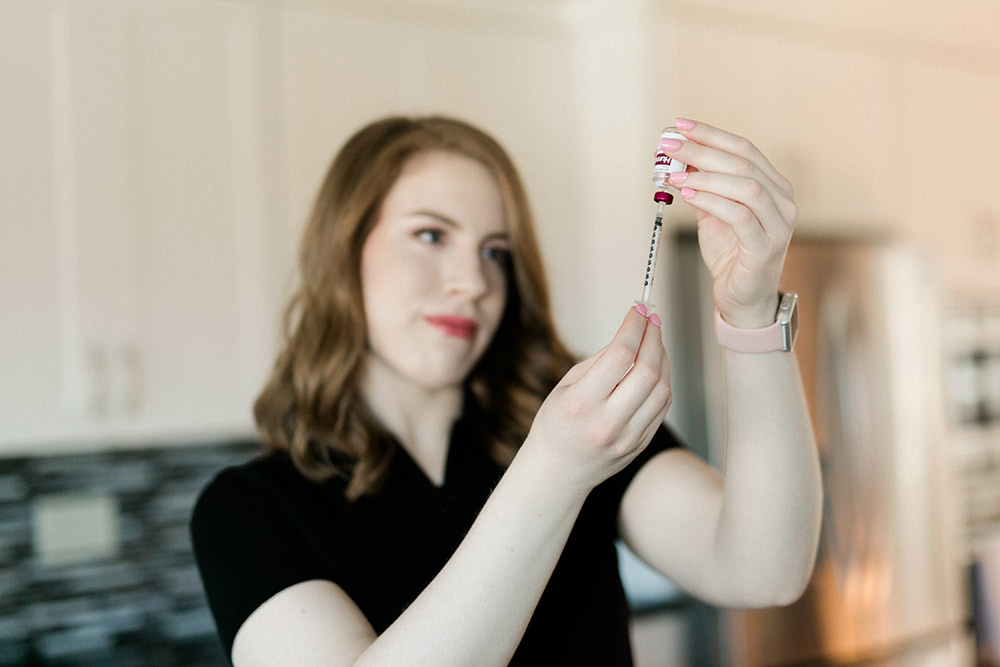
Markovitz: I use a hybrid closed-loop system. I use a CGM and a pump that speak to each other through an algorithm, and I do the best I can to try to support that essential piece of management, because, of course, with type 1 diabetes, insulin is definitely required. Outside of that, to try to help make my insulin work more efficiently; I try to eat balanced meals and snacks. I try to get consistent rest and exercise regularly and try to manage my stress to a healthy level with healthy coping strategies. Those are the types of things that I work with people on in my work every single day, and I try to do a good job of it myself, too.
Cooper: Where did they set you for your target? Does everybody get set at around 110?

Markovitz: Everyone is different. I guess it depends on what you mean. Specifically, the American Diabetes Association has guidelines that they recommend for optimal care, as well as doctors will work with their patients to determine what might be a safe and appropriate target for them. This is also something that is not only is it individualized, but also how we get to those conclusions. Hemoglobin A1c is still the gold standard in terms of determining how blood sugar has been. It measures the average blood sugar over the past 2-3 months with much more weight over the last few weeks before the lab is drawn. Then if you have the ability to use a continuous glucose monitor, or CGM, we also are able to use a metric called “time in range” that determines or indicates to us how much time we’re spending in the desired range or how much time we’re spending above or below that range and trying to adjust both A1c and time in range to be able to set ourselves up for long-term success, reduce the risk of complications, and live our healthiest life possible.
Cooper: What’s the difference between that and GMI?
Markovitz: GMI is sometimes referred to as an estimated A1c. GMI is based on CGM data, and A1c is based off of a venous lab draw, or I guess you can do a finger stick A1c as well. So, GMI is going to be based on the data that your CGM has available to be able to calculate that number. I don’t know the calculation that it uses or how it comes up with that number exactly, but it’s on that data, whereas A1c is a lab test that is supposed to indicate how much glucose has been in the blood over a period of time. One more quick thing that I would note about that is that A1c–since you’re reflecting average blood sugar over those past 2-3 months–is a longer-term indicator versus with the CGM data. You’re able to get the GMI over a shorter-term period, a more frequent look at how things are going versus A1c that’s usually drawn every, let’s say, 3-6 months, depending. There’s an incredible amount of data available to us now with CGM for sure.
Cooper: Anything else you want to share that you’d like to add?
Markovitz: I think that the most important thing for anyone living with any type of diabetes—any type of health condition, but particularly type 1 diabetes—should know about their experience with the condition and how–whether it’s insurance, an employer, interpersonal relationships, any of these things–are impacted by type 1 diabetes. Because everything in your life, once you have type 1 diabetes, is impacted by it in one way or another, you have to be your own best advocate. No one’s going to know how you are feeling. You are the expert in your own body. We talk a lot about that in health and wellness coaching, and I think that’s something that’s really important to remember. Whether you’re communicating with a doctor, trying to share an experience with a loved one, working on resolving a pharmacy issue or an insurance-related issue, you are in the best possible position to get your point across. I just want to encourage people who live with type 1 to remember that and boost their own confidence in knowing that they’re the expert in their own diabetes, and they can get it done. They have the power.