







For Maayan Ziv, access is more than a feature—it’s a foundation. What began as a thesis project to crowdsource accessibility information has grown into AccessNow, a global platform that connects users with real-time insights on accessible spaces through a free mobile app and website. With a decade of innovation behind it, the company is now expanding beyond place-based data to influence education, events, and industry partnerships—all with a mission to build a more inclusive world.
In this conversation, ABILITY Magazine’s Lia Martirosyan and Jennifer Woodall met with Ziv to discuss the journey behind AccessNow, the evolution of her cultural festival AccessFest, and the growing need for platforms that amplify disabled voices. Ziv shares candid reflections on representation, city infrastructure, and her creative roots in photography—illuminating how storytelling and lived experience can drive social change. From launching a grassroots movement to receiving the King Charles III Coronation Medal, Ziv’s work offers a compelling blueprint for what accessibility can look like when it’s informed by the very people it’s meant to serve.
Products & Services


Jennifer Woodall: Can you tell us about AccessNow?
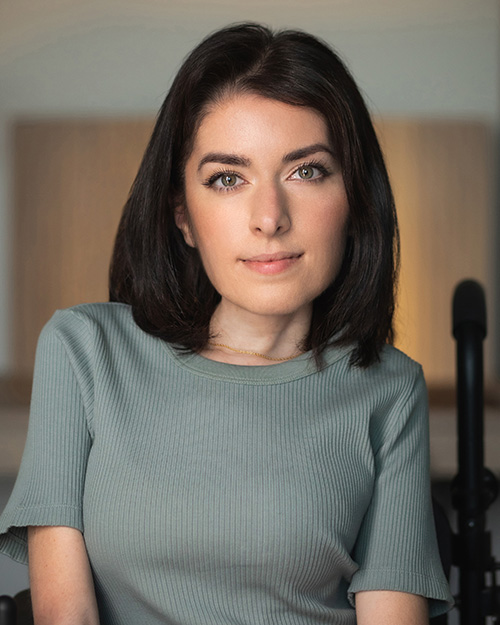
Maayan Ziv: It really started as a thesis project. The idea was maybe we could crowdsource information about the accessibility of places. We could invite people to share information about the places that they know, experiences that they’ve had–whether they be positive or negative–and get more information about very basic things like entrances and washrooms and all different types of access. So, 10 years later, AccessNow has grown into a company that shares information all around the world. Increasingly so, we’ve also grown into education and events and expanding that definition of being a go-to resource for accessibility information to being beyond just place-based information to also experience services, and supporting customers and supporting companies that are also looking for information about accessibility.
Woodall: Is AccessNow an App?
Ziv: So AccessNow started as a website and now has a mobile app. It’s free to use, and so whether people want to use our browser-based map online or download the AccessNow app, they can search for places in their own neighborhood or around the world. And whether a company, a government, or an individual has shared information, you’d be able to get answers on what types of access you might be expected to find there, and you’re always encouraged to contribute yourself. So, if you know something about some form of access, about a space that you’ve been to, we’re always engaging and encouraging communities to contribute. That’s how we grow.
Woodall: Can you tell us about AccessFest?
Ziv: Yes. So, AccessFest really was an idea that started very long ago. Over the course of being a founder of an accessibility company, I’ve had the opportunity to travel all over the world. I’ve been to many conferences and events, spoken about accessibility and met with great people. But often we find that accessibility conversations happen behind closed doors. They happen within conversations and communities of people who already care about access, already know about access, and are in the space of creating or improving access. They are typically also a similar format like conferences or trade shows. There aren’t that many culture festivals that are dedicated to amplifying the message of inclusion, so AccessFest really is a response to the desire for people with disabilities to be able to show up and be unapologetically ourselves and celebrate the power of inclusion and showcase why accessibility is so important.
Products & Services

Lia Martirosyan: Do you have local talent, international talent — familiar faces?
Ziv: AccessFest is really focused on amplifying disabled talent. That’s one of our key focuses. So, everyone who’s performing on main stage does identify with disability. We have a series of different performers with different experiences, from Matt Maxey, for example, who is both a deaf interpreter, but then also runs his own ASL workshops. He’s also the performer who recently did the ASL interpretation for Kendrick Lamar’s Super Bowl performance. We’ve got folks like Mattmac who is from Winnipeg, I believe, and he’s an Indigenous pop trap recording artist. He recently won the CBC Searchlight competition here. We’ve got folks like Courtney Gilmour. She’s a Toronto-based comedian who was on Canada’s Got Talent, who is going to be gracing this stage and bringing us some laughs. So, it’s really a diverse lineup of different types of artists and performers, as well as we have a speaking series called Unfiltered, where folks with disabilities are coming together to talk about things like media representation and the next generation of leadership from a youth perspective. We’ve got one called Designed AF, which is looking at accessibility and design and whether that be digital, physical or experiential. It’s really a broad day of programming.
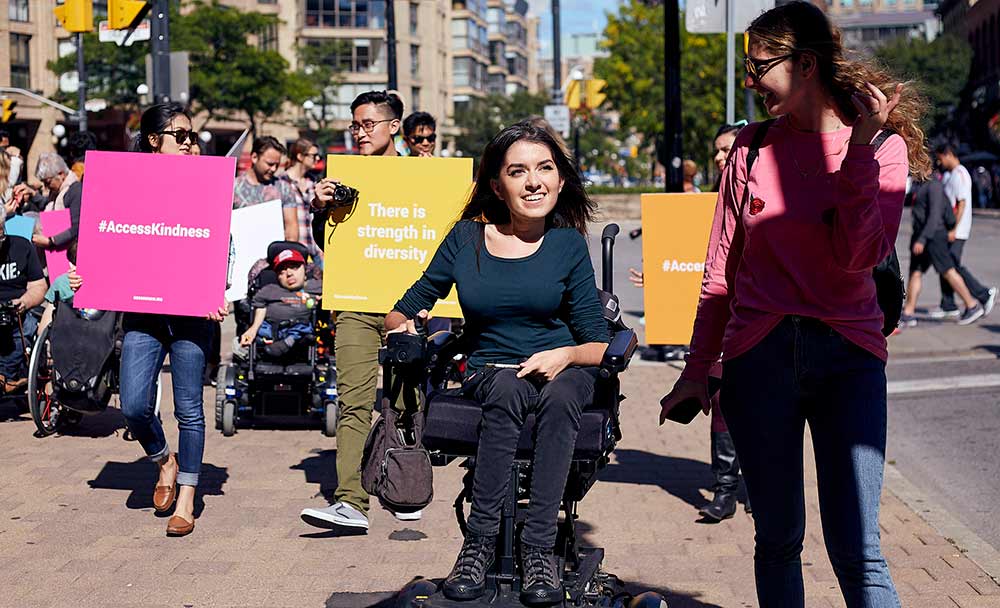
Martirosyan: Did any of the inspiration for creating AccessFest come from your experience of not being able to access festivals in the past?
Ziv: Not really, no. The festival stems from a desire to have something that’s ours and owned and dedicated to inclusion. Although, it has come up in conversation definitely with other folks that are expressing that they wish all festivals were this accessible. Our goal is not only to make the festival accessible, but also to celebrate the diverse and dynamic nature of disability within an accessibility conversation. It’s very rare that you’ll have more than one moment within any type of event dedicated to accessibility. We’ve decided that that’s an entire festival worth celebrating, and that’s really what we’re focused on.
Woodall: You said this was 10 years in the making, can you talk about the process and the work that you had to put in to get to this point?
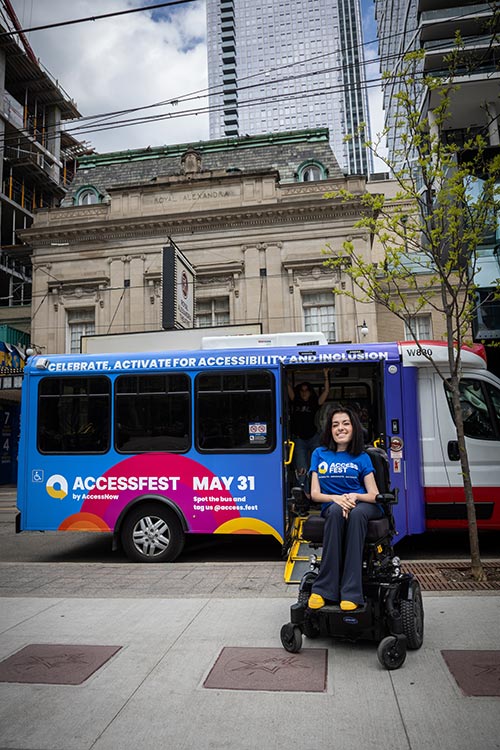
Ziv: AccessFest was always something that I longed for. AccessNow has been around for 10 years, and since the very early days, I’ve always been a guest in the conversation about accessibility. Often, disabled people are simply that or guests within larger spaces held by other organizations that include access but are not totally or only explicitly focused on that. So, AccessFest really is the 10-year journey to realizing that “Why not us?” Similarly, with the launch of AccessNow app, we’ve just decided that we want to create a space that’s celebratory and unapologetic and broad enough that anyone could see themselves being part of it, disabled or otherwise.
Woodall: What research goes into picking a venue to host something like this?
Ziv: There’s a lot of different things that go into it. When we were looking at venues, we were hoping for a location that would be quite central in Toronto, that would be easy to navigate to with public transit, that was also accessible. We looked for a space that was quite barrier free–so not many obstacles, no hallways or issues with elevators or just things that get clunky–especially when you think about the broad and diverse nature of access needs. We wanted a very open space. AccessFest is in partnership with the city of Toronto, so we’ve been able to take over a public park, which is very open and very central. In the middle of the park, there is an eternal flame that’s been there for as long as I can remember, but what many people don’t know is that that flame is actually there to symbolize the spark of the resilience of the disability community. So, it felt very fitting for us to be able to host AccessFest right there in that space at David Pecaut Square. AccessFest is in year one of hopefully many years to come, and although AccessFest is based in Toronto, it’s an open invitation for anyone from anywhere who would like to join us.
Woodall: Do you find the infrastructure and cityscapes in Canada accommodating to people with disabilities?
Ziv: I’d say it varies. I mean, similarly to many other places in the world, you can get some great access and some places that still need improvement. I think I’m pretty lucky. I live in the city of Toronto, where I’d say for the majority of the time, I’m able to navigate pretty independently. Like, yes, there is still a need to improve access. Not all of our transportation is 100% accessible. Not every space where business is operating is totally accessible. So, there’s still work to be done, but for the most part, having had the opportunity to go many places, I’d say that we are at least pushing in the right direction.
Woodall: You were awarded the King Charles III Coronation Medal. Can you tell me about that?
Ziv: Yeah. It was a really special honor. Here in Canada, folks were awarded this medal for contributions to Canadian society. Mine was in relationship to the work that I’ve done with accessibility, inclusion, and advocacy. I received my medal from Senator Chantal Petitclerc. She’s a very decorated Paralympian, and also now a senator, and having a chance to be received, and to have been acknowledged by another disabled leader, is just that much more meaningful.
Products & Services


Woodall: Do you know Lisa Franks?
Ziv: I do
Woodall: We interviewed her for the magazine. She spends her winters down in California rather than Canada, and we caught her surfing on the beach one day. There was an event going on and a lot of Paralympic surfers were participating, including international athletes like Lisa. Switching gears a bit, can you tell me about your photography?
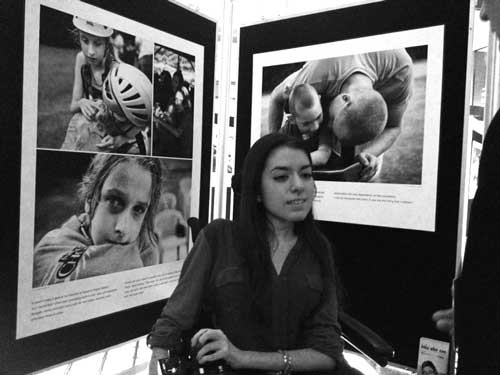
Ziv: Sure. It feels like a lifetime away now, but I would say I found my voice through photography. When I was in high school, I went on a trip to New York City, and it was supposed to be a theater trip with all of my classmates, and when I arrived, my wheelchair was broken and I could not use it. It had broken in the flight–which is not the first or the last time–and so I didn’t get to participate in the regular itinerary. It was about a day later, I received a temporary loner device from the airline and was able to at least get around, but it was not really comfortable and not really supporting me well. I had to just navigate slowly around the hotel that I was staying at, and just try to get a little taste of New York City. I had a little point and shoot camera and I started just taking pictures of things that I was seeing, and it was the first moment where I realized that I could communicate what I was experiencing without words, and I could invite people to be closer to my perspective. So, I think photography for me became very quickly a vehicle to share my perspective on the world with folks. It really opened a whole new pathway to advocacy without me even knowing it. I’ve always been a creative. I’ve always loved the arts and media, and it’s still something that I love to do. But I’m not currently working professionally as a photographer. It only comes through in my work when we need a photo. But I always have my own photos.
Woodall: I noticed on your photography website that you got to participate in a project called ‘Kids Who Can‘. Can you tell me about that?
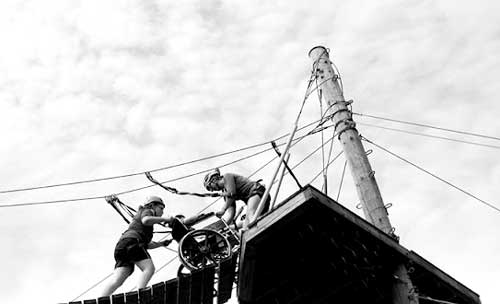
Ziv: So, the Kids Who Can was a photo journalism project that I did, where a group of about 13 photographers went to different Easterseals camps across the country. I was assigned one of the camps, and I was also the only photographer with a disability who participated. It was an amazing opportunity. It was actually one of, I’d say, the first moments where that passion that I had for storytelling was touching another part of my life. Before ‘Kids Who Can’, I was taking pictures of celebrities and then models, but I had never been to an Easterseals camp. I’d never been to camp as a kid with a disability either. So, not only did I get to experience camp for the first time, along with the others that were there for the first time, I got to bring those stories back and be part of a big exhibit, which was great.