







Language comes in many forms. Many may think of it in terms of speech first, then maybe in physicality, but art is a language and an essential part of how we communicate.
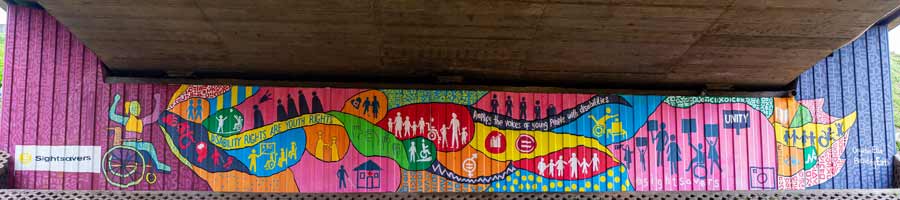
In September 2024 the UN and the organization, Sightsavers, revealed four murals in four different cities across the world. They appeared in New York City, USA; Homa Bay, Kenya; Dakar, Senegal and in Abuja, Nigeria. Each mural communicates the importance of supporting youth advocacy in disability rights.
Artist Ella Onyebe designed and painted the mural in Abuja, Nigera. In her eyes, “The mural demands inclusion and global decision making.” She stated, “That message from Sightsavers and from young people with disabilities is what I was able to express through the patterns. I love to work with patterns and colors, and I have been able to create a style for myself so that I can speak to the world with my art. With this project, I was able to take my style and combine it with the work that Sightsavers does.”
Products & Services

Sightsavers is an organization that works to reduce stoppable vision-related diseases and tropical illnesses in Africa and Asia, but that also aims to build a more inclusive and equitable world for people with disabilities.
With the support of Sightavers, Onyebe created a piece with rich colors and bold designs, despite the obstacles that arose. In describing the process, Onyebe said, “The work started long before the sketch. That took almost two or three months. I started talking about it with the Sightsavers team and they were able to guide me on how to do the work and how to accomplish the message. The painting part took me almost two weeks and there were a lot of challenges. We had water problems because the mural was under a bridge and the water kept dropping onto the work I had done. The water came full force.”
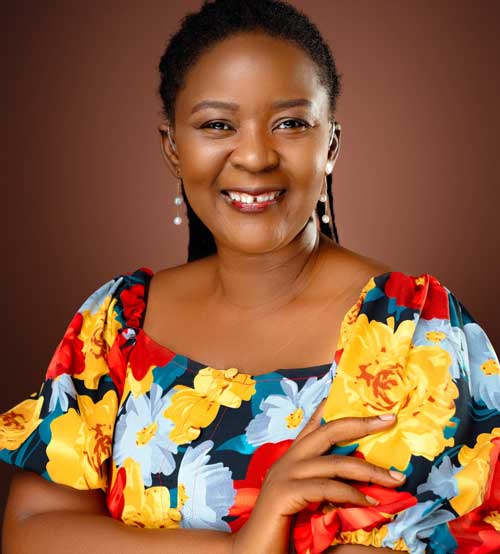
Still, Onyebe found it to be an immensely impactful process: “It was a beautiful, beautiful experience. It took a lot, and I was able to show every side of my emotions. There were moments I felt angry, happy, sad and they all came together into this wonderful mural to make young people with disabilities proud.”
Onyebe describes being hard-of-hearing: “You want to sit down and communicate with your friends and family, but even if you’re talking and they understand what you’re saying, how would you feel if you couldn’t hear them? I have a hearing aid now, but it was too expensive for me to get one especially with the level it needed to be for my hearing. During that time, I would just be silent. I’m always in my room, even in a big house. My mom knows how I feel when I’m alone and she pulls me back to my family so that they can always be around to make me feel happy. She tries to help lighten the weight of what I’m going through. It helped when I was struggling.”
Onyebe found solace through her art. “The very fact I found my way to art makes me cry. I’m where I want to be. It’s a therapy for me because I’m able to express myself. I’m always in my happy place when I’m painting.”
Art can foster communication and connection, even when it feels difficult. The process alone is a way to communicate because it is, fundamentally, an expression of oneself. Isn’t that what language is? The form through which we express our truths and build connection? Onyebe stated, “I work from my instincts. I bring work down from my head to the canvas and sometimes I may not be able to express things in words, so I draw.”
For her it has been transformative: “I’ve been able to heal my depression because I know what to do when I feel down. I try to talk to people and to other artists who are completely deaf and who communicate through writing or who read my lips. Some had hearing before, so they read lips and that’s how they listen to you when you’re talking. I know a little bit of sign language too and I try to encourage them to do art. I’ve also had the opportunity to train a few people. I teach them how to paint and I notice they’re always excited when they come to learn.”
Products & Services


Onyebe also taught art to children with and without disabilities at a carnival event in Abuja. “They got so happy. I love to see that excitement on their faces. They didn’t want to leave the venue. According to what a few of the children’s sisters told me, they had never seen anything like it before. They said ‘Please, do this again.’ We invited students from special needs schools and from schools for the deaf. It was an event to celebrate young children. It’s something I want to do, maybe; go city to city and train young children to do art. So that we have a network where the kids can grow up to be great artists.”
Onyebe stated that: “Young people with disabilities also have dreams they want to achieve through art or whatever means they can. I am hoping that more global leaders will be able to put in more effort concerning young people with disabilities. They need to encourage organizations like Sighstavers and put in more effort in order to get all these young people with disabilities to be active, have jobs and opportunities. There are some people who have multiple disabilities. You can imagine what that child is going through. If world leaders can come together to make it easier for every person with a disability, it will reduce pain, trouble and depression. I encourage the leaders around the world to support and to help.”
When there are obstacles to communicating, it is essential to find other ways to allow for connection. Even when we have differences, art can be a profound way to lessen the divide. Giving young people with disabilities the opportunity to express themselves through art creates connection between us all and builds a more inclusive world. Maybe something we can each do on a daily basis is to support the young artists with disabilities around us.