






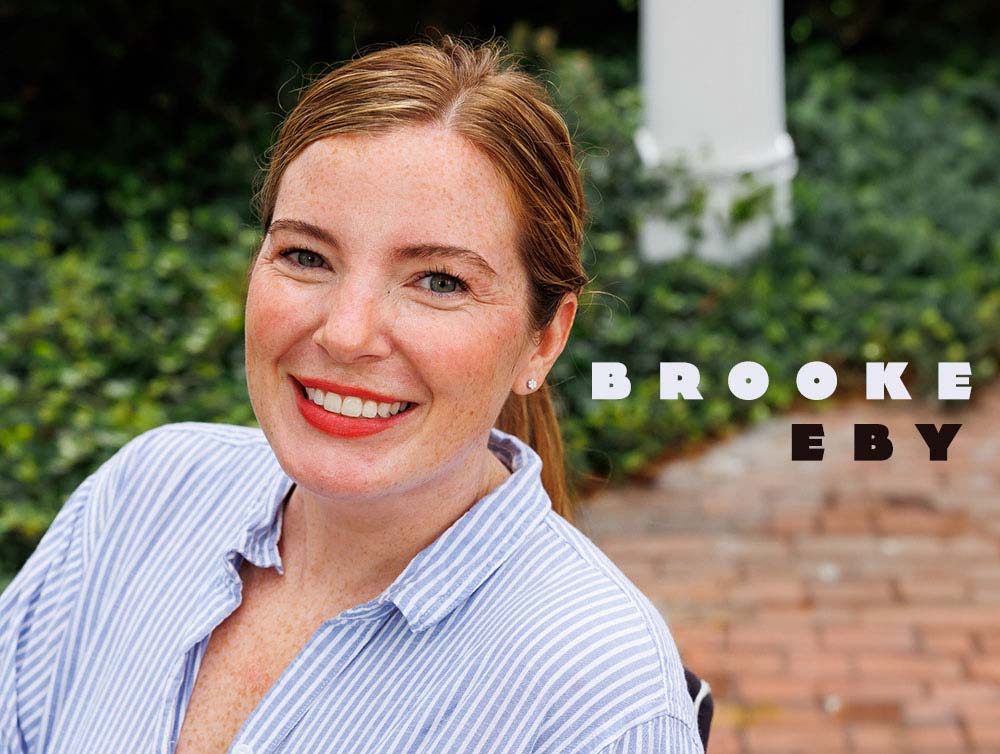
Brooke Eby, ISV Principal Business Development Manager at Salesforce, struggled with self-identifying at work when symptoms from her illness became more pronounced. In a recent Forbes article she said, “I didn’t know what my future would be with working; I didn’t know if they would want me to plan my transition out.” Quite the opposite happened.

In 2022, Eby used LinkedIn to disclose her ALS (amyotrophic lateral sclerosis) diagnosis. Soon after, she was met with overwhelming support from her Salesforce team, which extended all the way up to the C-suite. The company transformed into cheerleaders and champions for Eby and her cause. Salesforce developed The Levity Project, a company-wide fundraiser for ALS research that raised half a million dollars.”
Outside of her day job, Eby brought her humor and vibrant personality to TikTok, documenting her journey and gaining nearly 200,000 followers along the way. Recognizing the great need for community, Eby founded ALStogether, an online support community for people living with ALS.
ABILITY Magazine’s Jennifer Woodall met virtually with Eby, where she shared a candid look at the events leading up to her diagnosis, her evolving relationship with her health, and how she transformed her experience into advocacy and support for others. Eby reflected on the importance of connection, humor, and resilience in the face of a progressive condition.”
Jennifer Woodall: Can you tell me a little bit about what led up to your ALS diagnosis?
Brooke Eby: Sure. Really nothing for the first 29 years of my life. Very normal. I wouldn’t say a star athlete, but certainly active. Then once I hit 29, I was working in tech. I just moved back to New York City from San Francisco, and as I was walking, I just felt some tightness in my calf. I had felt that tightness before. I just assumed I wasn’t stretching properly or I don’t know what had happened. But this time, the calf tightness just stuck around and then led to what I now know is called foot drop. It’s like foot weakness, but I really couldn’t put my finger on what I was feeling. It felt like when I was walking, my left foot couldn’t push off from the ground, so I wasn’t making progress when I was walking. It was like I would walk with my right foot then just drag my left foot forward. So, that started 2018, and it just progressively got worse to the point where people were pointing it out, people were asking questions because, all of a sudden, I was just walking so differently. I had my sister, who’s a doctor, take a look. I was like, “Yeah, I think maybe I pulled something. I don’t know.” I was such a naive 29-year-old. She was like, “Why don’t you walk on your heels and on your toes towards me?” and when I would walk towards her, my right foot would stay up just fine, but my left foot would immediately slam into the ground, which is called foot drop. That kicked off a four-year diagnosis process.
Products & Services


To get an ALS diagnosis, there’s no yes or no test. There’s no blood test that says, hey, you have this. At least for 90% of cases. For a small percentage, there’s genetic test, but for most of us, it’s not a genetic thing. I went through every round of testing you could imagine for those four years. I heard ALS brought up, I think once, two years in, and then we ignored it because I wasn’t meeting any of the trackers they needed me to meet. Then four years in, I started feeling the same thing on my right foot, and that’s when I was able to go in and they’re like, “Okay, now we can see that it’s progressed, we’re seeing progression with this motor neuron death or issues.” So, they were able to finally diagnose me.
Woodall: There seems to be an overarching theme that women are sometimes brushed off in the health care system, particularly when they’re trying to figure out what’s going on when there isn’t a direct test for it. Did you feel like you experienced anything like that?
Eby: Not really by medical side of the world. I mean, it’s interesting. I’m in a support group of a bunch of women who have ALS. They were all diagnosed young, and so many of them were diagnosed with anxiety before getting an ALS diagnosis. All of these just fallback items that I think a lot of women get. Mine was a different case because I think I was the anti-advocate for myself because I didn’t want that diagnosis.
So, I almost ran away from any time they would start leading down that path, and I’d be like, “No, it’s definitely not that. Let’s move on.” I didn’t really want to hear that answer. Then on top of it, I don’t think my body was giving the cues it needed to give to pass all these tests for them to say, yes, this is definitely ALS. I think to give someone a diagnosis, especially at the age of 29, you want to be really sure. And I don’t think anything was sure about it. So, I didn’t really have that experience. I will say, I think the people in my life and I all probably tried to brush it off more than the medical world because we’d be like, “Oh, it’ll get better, it’s just a limp.” So when I look back at it, I think we were the bad ones in this scenario, which is not really helpful to the thesis of women getting misdiagnosed, but I do see that a lot.
Woodall: I can definitely see wanting to say, “No, it’s something else.”
Eby: I feel like if I was in pain, it would have been a different story because I would have been like, “I want to get this figured out so I can feel better.” But what I was feeling was just weakness that I thought was going to get better on its own, which obviously it wasn’t going to, but in my mind, I fully convinced myself of that. I think it’s maybe different because I wasn’t searching for an answer. I was searching for an out.
Products & Services


Woodall: Can you talk a little bit about what it’s like living with ALS?
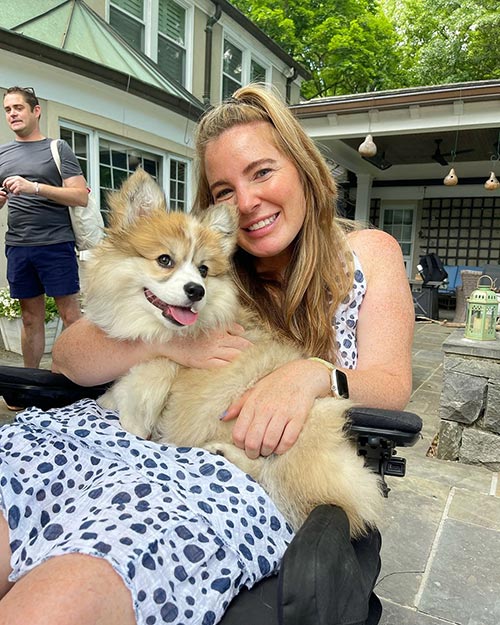
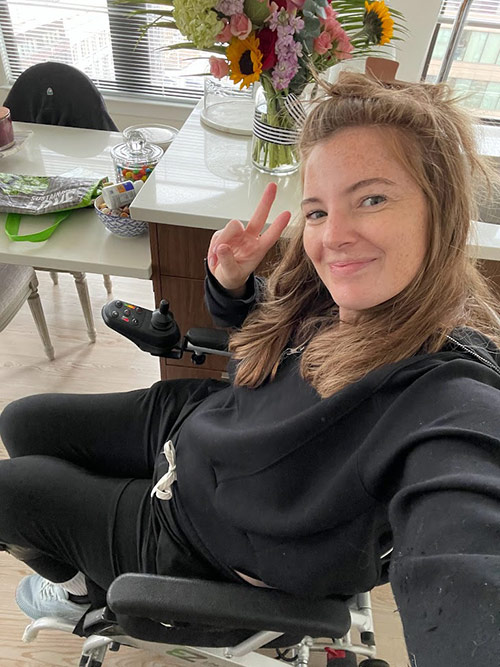
Eby: Yeah, although it’s different every week. In the early stages, I remember thinking,”This is awful.” because my legs were getting weak. I had to go from a cane to a walker to a wheelchair in—I think it was nine months, probably. I’ve been in a wheelchair full-time for two years now. At the beginning, I think it’s more mental where you’re like, “Oh, my God, this is really happening.” Then as you get used to it, it’s just trying to figure out adaptations that make things easier and how can I make my day fun and not so, so tiring. It’s just constant adapting is the short of it. Every step of my day has had to be adapted from brushing my teeth to getting in bed to showering. Everything looks different every month, it seems like the changes don’t stop, I guess, is the overarching feeling.
Woodall: What is the most surprising thing that you’ve come across so far about these changes that you’re experiencing?
Eby: I think the whole thing is just surreal. The change has happened so fast. If I watch videos of myself when I first started posting videos, I’m like, “Oh, my God. So much has changed since then, physically.” I think surprised is probably not the right word for that. Surreal is the only one I can think of because it’s crazy to look back and see how fast this disease can take from you. It’s also different for everyone. I know people who have been living with this for 20 years and are still walking, then I know some people who lost their voice before they lost anything else. That always surprises me. It’s like, how are we all considered the same disease when nothing looks alike in this scenario? I think ALS is really just an umbrella term for people who have the death of their motor neurons. Where that happens or how that happens, it doesn’t matter. That’s just how we’re classifying it now.
Woodall: What inspired you to get on to TikTok and decide to document this journey you’re going through?
Eby: I got diagnosed in March of 2022, and I went to the doctor’s appointment by myself because it had been four years of the same appointments of them being like, “We don’t know.” So I just thought it was going to be another one of those. It was not the same. I remember all of a sudden the doctor being like, “I don’t like what I’m seeing,” and it all went downhill from there. For two months after that, I was just in shock. I was reading a book a day. It was anything to get my mind escaping. I remember I was working, but I have no idea if I was doing a good job. There’s no memory of it. Those two months were just a blur.
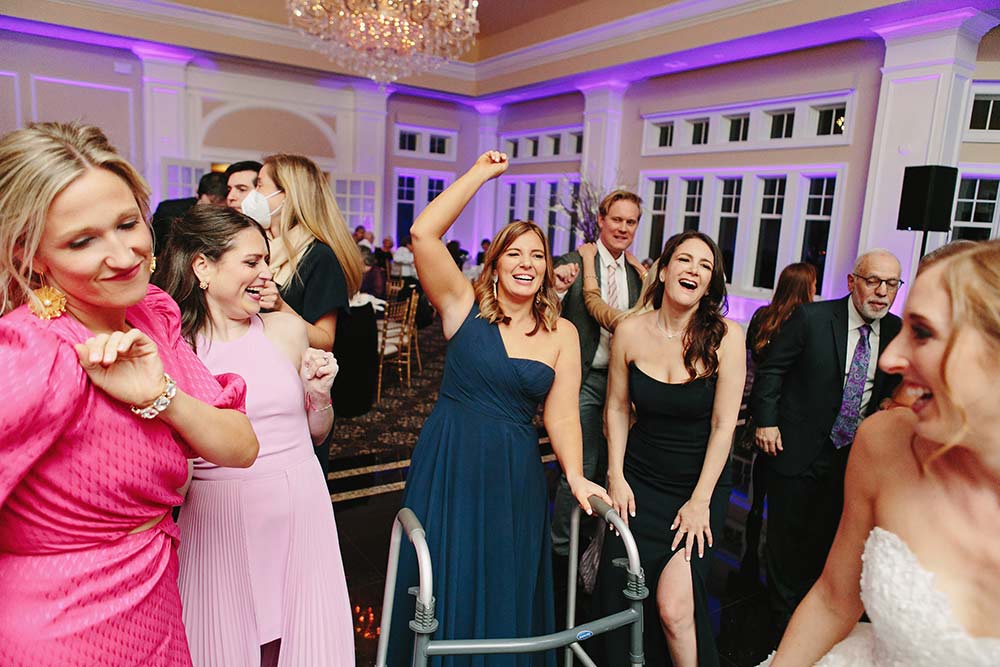
Then I was going to my friend’s wedding. It’s one of my best friends from college. I was a bridesmaid. And I was like, “Oh, no. This is basically a college reunion.” Everyone was coming in looking great, spray-tanned, so pretty and worked out, and I was showing up with a bride’s maid dress that was way too tight because I had basically been eating M&Ms for the prior two months. Then I was using the exact same walker as the bride’s grandma with the tennis balls, and I was like, “Oh, God, I can’t do this.”
So I tried to leave. I remember turning to my friend and being like, “Let’s get out of here. No one’s going to know I’m missing. Let’s just go.” She basically was like, “No, this could be really embarrassing, but you could also just make it really fun. So let’s just try it.” We ended up just turning the night around, and within a couple of hours, everyone was dancing with my walker on the dance floor. I was giving walker rides. People were doing the limbo under it. There’s an amazing video of the bride doing the limbo under it in her wedding dress. It just was finally a comfortable setting where people weren’t just crying when I told them the news. It was the first time I could actually connect with people and laugh about it as opposed to ruining their days by telling them the news.
After that, I just started writing down all the funny things—well, funny to me—that had happened since my diagnosis that I was like, “I don’t know if anyone else is going to find these funny or if it’s so niche because I’m just living a weird life as a 30-something-year-old.” But I just started writing them down then one day decided to start posting. In hindsight, now I’m like, “Wow, those actually did really well for someone who had no idea what she was doing.” And that’s just how it started. I remember YouTubeing “how to make a TikTok,” and it just has grown from there.
Products & Services


Woodall: What’s the transition into social media influencer like? Are there some behind the scenes you can share about that?
Eby: I really don’t consider myself an influencer because I think that term is reserved for the top 5% of people doing this, where if I were to show a ChapStick in a video, it would sell out the next day. That, to me, is crazy influence. I think what I’m doing is just documenting my life. Maybe it’ll influence people to get more involved in ALS, but I think it’s not your traditional influencer where it’s pretty and Photoshop style–just glamorized. I’m just considering a video diary where I just sign on. I’m like, “This is what I’m having trouble with today. This is the engineering we fixed it with.” I think it’s probably different than the glamorous life of a true influencer. It’s more just like I’m making my own documentary about myself. Behind the scenes, it’s been really cool. I’ve gotten to do some really cool things over the last couple of years. A lot of speaking engagements and going on really cool podcasts and meeting people, throwing out the first pitch. I’ve gotten to do a lot of cool things, but I don’t think my day-to-day has changed all that much other than getting busier just because I’m not making content that requires production. I’m just talking into a camera about my life. So, yeah, it’s a weird blend of feeling like nothing’s changed and feeling like everything’s changed.
Woodall: You’ve transitioned into advocacy and ALS advocacy. Can you talk a bit about your nonprofit ALStogether?
Eby: I would love to. The idea started probably a year ago, where I was thinking, when you first get diagnosed, it’s the worst day. They tell you two to five years. They tell you there’s two medications you can try, but there’s nothing that’s going to save you or change the decline. Then you just go home and they give you this freaking folder. I feel like everyone with any illness knows this well. When you get diagnosed with something, they give you this folder and you’re like, “Okay, great. I have to go do some homework on my own disease.” And you go home and you go through it. And it’s just resource after resource that you don’t need at that moment, but it’s almost scary because you’re like, I’m going to need this at some point, but I don’t know what to do. So I just tucked that folder away in my closet. I think it’s probably still there, probably in the apartment I moved out of at this point, but I just thought “Why are we still doing this?” Even my nieces who are seven and 10 in school aren’t doing big folder packets to learn things.
Products & Services

There’s just new technology that can make things more accessible for people. I work at Salesforce. I’ve been there for eight and a half years now. I started talking to some people internally who were also involved in ALS advocacy or have family members that are and just thought, “What if we were to build a platform that could make everything, all the resources available, all the support available come together in one platform where anyone around the world can access it?” We started thinking through it and decided to build this out on Slack, which I think a lot of people know, it as just a messaging tool—an instant messenger, a G-Chat— but it’s so much more than that. It can really become an operating system for what you want to do. Now what we decided to do was open it up to anyone living with ALS, anyone with a confirmed diagnosis. They all came into Slack. Then we introduced caregivers so they could all come into Slack. Then in the future, we want to introduce organizations, advocates, doctors, providers, anyone. You can do a couple of things. You can either just talk to each other the way a support group would operate, but then you also have access to different organizations if you need equipment or if you need to talk with a provider about certain things.

You can access it from wherever you are. If you’re in an area like India, where there’s no ALS clinics, there’s no specialists, you can log in to Slack and have the exact same access as I would have. I’m typically in the DC area where there’s lots of doctors. I’m connected to so many people socially, so I have so many resources at my fingertips. I’m like, “Let’s just bring this all to everyone so that we can all have very quick access to what we need because speed is very important.” When you need a wheelchair, you needed it two months before you actually needed it. There are so many things that people need quickly, and I feel like the medical world has not really caught up on technology yet. So we’re just trying to make things operate the way the tech world does, but in the disease space. So far, I’ve just been running it myself more just to get things squared away and get the infrastructure in place, then we’re going to be hiring a team to actually run it as its own nonprofit. So yeah, exciting stuff to come. I’m excited to have someone on it who can focus all of their time and energy and has energy to focus on it because I feel like I’m trying, but it’s hard.

Woodall: Do you have any advice for people that maybe are freshly diagnosed with ALS, or it doesn’t even have to be ALS-specific, but just a life-changing type of diagnosis and how to tackle that?
Eby: I feel like the grieving process is the worst part of it, especially if you have one that’s progressive or even just unpredictable because you’re always anticipating the next change, which I honestly think that’s the worst part. For me, it was the point before I needed the next mobility aid. Before I needed a cane, the thought of a cane was so embarrassing to me, and I’m like, “Oh, my God, I’m never going to use it.” Then once I started using the cane, I’m like, “This is amazing. I can actually walk my dog.” but then so quickly after, that wasn’t enough. I’m like, “Crap, I have to move again.” Then same thing with the wheelchair. I’m like, “Oh, my God, this is forever now. You can’t go back once you’re in it.” That part, I think, is the worst part. Then once you actually start using it, you’re like, “Why wasn’t I doing this sooner? This has changed my life for the better.” I think that knowing that is the worst part is a relief because you’re like, “Oh. It’s literally my head, mental state, that’s making this harder. So physically, I’m just going to let these devices help me, but mentally, I just have to get over that hump.”
I think support groups are huge for that, talking to people who are in the same position, especially people in your age range. When I first joined my local support group, it was me and a bunch of really sweet old men. And I was like, “Why am I here?” which is why I went out and found a group of young women going through the same thing. Then I could be like, “Oh, my God, I have to use a cane for the first time.” They’re like, “No big deal. Literally no one will even notice.” So, I think having that support group can really help.
Also don’t Google anything. There’s no need. Even if you don’t have a diagnosis, people always make jokes. It’s like, “I Google that I have a headache and apparently I have a brain tumor.” That’s how I felt every time I Google something. I’m like, “Okay, so I’m dying tomorrow. What should we plan?” Google does not have sympathy or empathy.
Tik Tok: @limpbroozkit