







In the ever-evolving landscape of Hollywood, the push for authentic representation has gained momentum, and projects like The Great Cosmic Hoax show the vast potential of this change. A product of the Easterseals Disability Film Challenge, this short film is not just a testament to creative ingenuity but also a beacon of hope for greater disability inclusion in the entertainment industry. From the outset, The Great Cosmic Hoax was an ambitious undertaking. Created within the rigorous time constraints of the Easterseals Disability Film Challenge, the project required careful planning, adaptability, and an unwavering commitment from its team.
Director Ethan Leisie, producer Nicole Santolo, and lead actress-writer Eileen Grubba each played integral roles in shaping the film. Leisie, whose background in cinematography and directing prepared him for high-pressure projects, took on the challenge of executing a visually compelling and engaging film within a tight deadline. “I’ve done these timed challenges before,” Leisie noted. “I started making short films in high school, and it really teaches you to think on your feet and adapt quickly.” Santolo, an experienced producer with a passion for inclusive storytelling, handled logistics, scheduling, and post-production, even editing an extended cut for future festival screenings. “Redoing the edit took over a week for only seven minutes,” she shared. “Editing is probably the most time-consuming part because you’re constantly refining, making sure every second serves the story.” Grubba, a dedicated advocate for disability representation in Hollywood, was both the creative force behind the film’s narrative and a key figure in assembling a diverse and talented cast. “This is my community,” Grubba emphasized. “I really wanted to put together the best team possible and create something meaningful.”
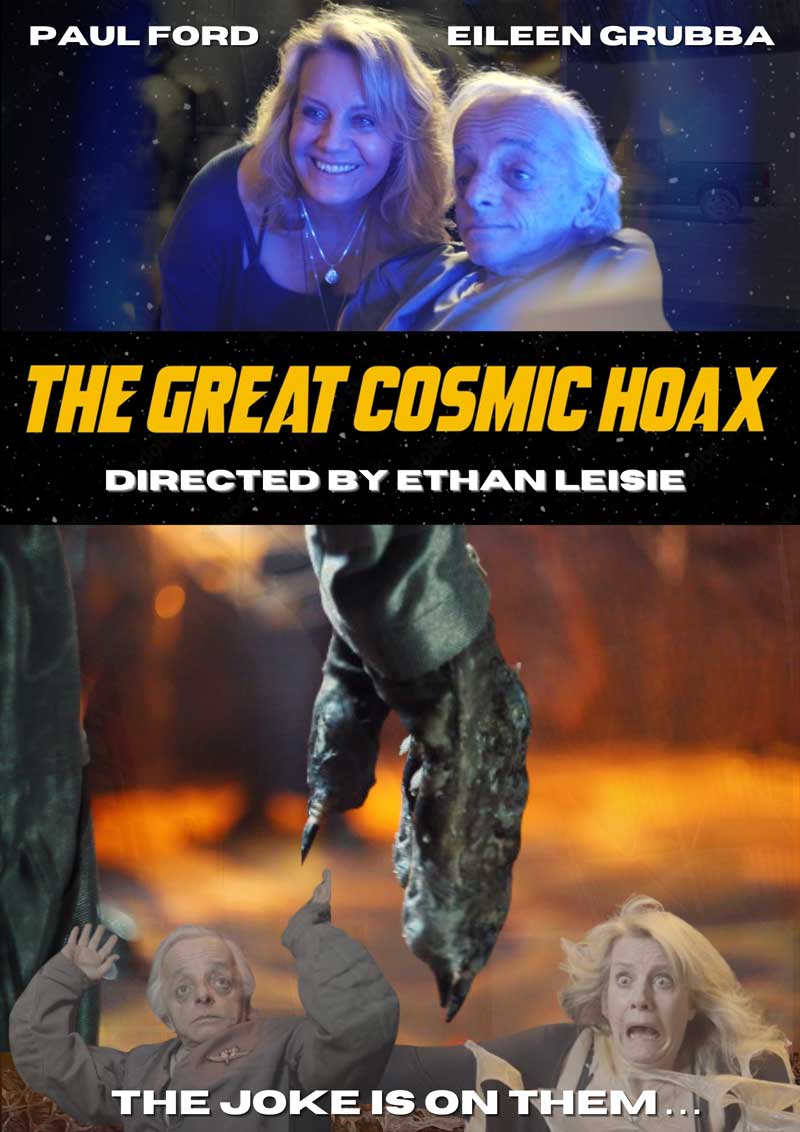
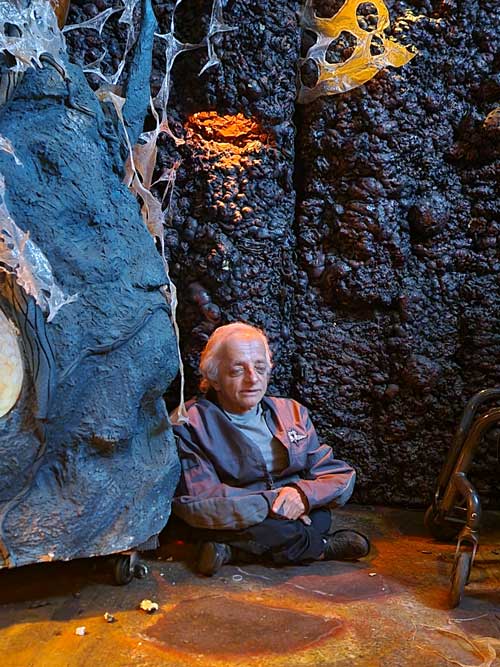
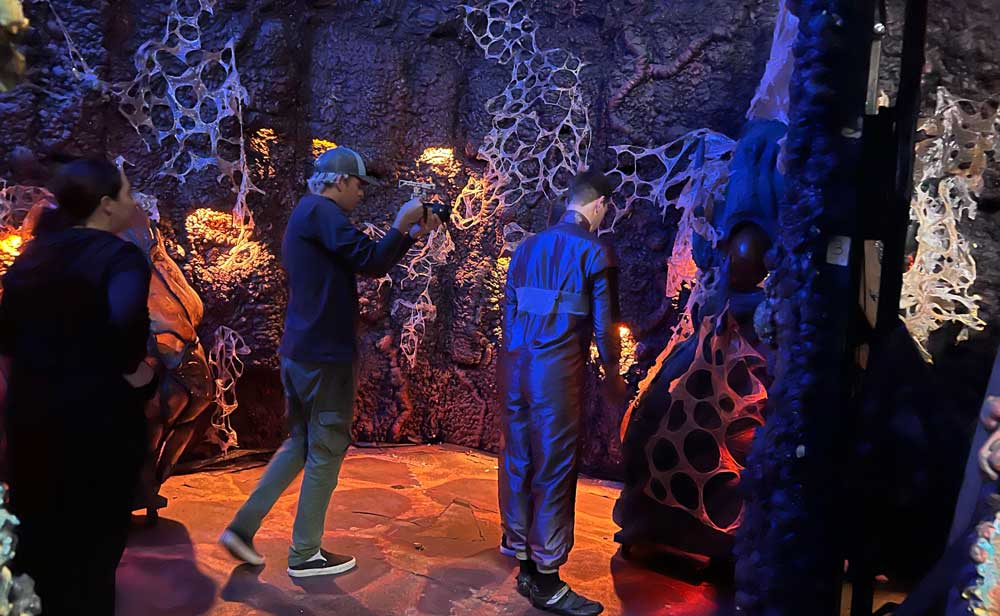
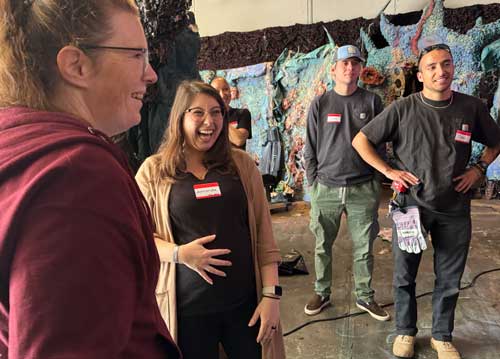
The film’s production was marked by unique opportunities and challenges. One of the most striking aspects of The Great Cosmic Hoax was its otherworldly set, provided by producer Marc Scott Zicree, known for his work on Space Command and Star Trek. Featuring authentic science-fiction props and set pieces from major productions, the setting added a sense of scale and credibility that elevated the film’s production value. “We had all these amazing people working on it,” Leisie recalled. “And filming on a set like that, filled with sci-fi memorabilia from films like Real Steel and Passengers, was an incredible experience.” Beyond the technical aspects, the team’s camaraderie and shared vision played a pivotal role in bringing The Great Cosmic Hoax to life. “Everybody we brought into that set was like, ‘Whoa, what is this? This is really cool,’” Santolo said. “It made the experience so much more exciting.”
While The Great Cosmic Hoax is a triumph in its own right, it also serves as a microcosm of the broader conversation surrounding disability inclusion in Hollywood. Grubba, a longtime advocate for disabled actors, has been vocal about the need for increased opportunities both in front of and behind the camera. “95 percent of disabled roles are played by non-disabled actors,” she pointed out. “That needs to change. We need to be telling our own stories.” Despite Hollywood’s recent push for diversity, disability remains one of the least represented aspects of inclusion. According to industry data, an overwhelming majority—roughly 95 percent—of disabled roles are still played by non-disabled actors. This persistent exclusion is not due to a lack of talent but rather a combination of outdated perceptions, limited networking opportunities, and logistical barriers that studios are often reluctant to address.
Santolo, who leads initiatives for diversity in Hollywood highlighted the importance of changing industry mindsets. “Studio executives seem to think it’s too hard to find talent with disabilities or that it’s too expensive for accommodations,” she explained. “But clearly, I was able to do it without spending any extra money on films like The Great Cosmic Hoax or Wheels. It’s just about making the effort.” Leisie echoed these sentiments, noting that while Hollywood has made strides in embracing diversity, the disability community has often been overlooked. “The industry has focused on racial and cultural diversity, which is great,” he said. “But there’s still a gap when it comes to disability representation. That’s why projects like this are so important.” The fight for representation extends beyond casting. Hiring disabled individuals in key production roles is just as crucial. “When you have disabled people working behind the scenes,” Grubba explained, “you ensure that the representation is genuine. It’s not just about who’s in front of the camera—it’s about who’s telling the story.”
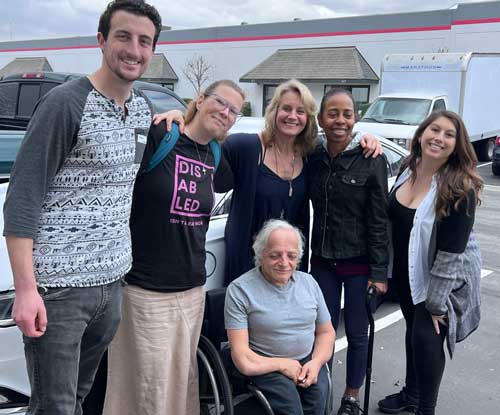
The impact of The Great Cosmic Hoax extends beyond the film itself. By proving that high-quality productions featuring disabled talent can be made on a tight timeline and budget, the team behind the film is helping to reshape perceptions within the industry. As Grubba champions the fight for authentic casting, the hope is that projects like this will become the norm rather than the exception. For Hollywood to fully embrace inclusivity, systemic changes must be made—not just in casting but in hiring practices, production planning, and executive decision-making. Organizations are pushing these conversations forward, but it will take a collective industry effort to ensure lasting progress. There are also emerging platforms that are playing a crucial role in facilitating industry change. abilityE, for example, serves as a hub for studios looking to hire authentic disabled talent, making it easier for productions to connect with actors, writers, and crew members who bring lived experience to the stories they tell. The platform is also free to use for members of the disability community that wish to add their profile and share their talents. “We need to normalize disabled talent in all areas of filmmaking,” Santolo said. “That’s the goal—not just special projects but real, consistent inclusion across the board.” In the end, The Great Cosmic Hoax is more than just a film—it’s a statement. “We couldn’t have done this without the phenomenal team,” Leisie said. “This was a project where everyone came together to create something meaningful, and that’s what filmmaking should be about.” As Hollywood moves forward, the lessons from The Great Cosmic Hoax offer a compelling vision for what’s possible when inclusivity is prioritized—not just as an ideal but as a fundamental part of storytelling.