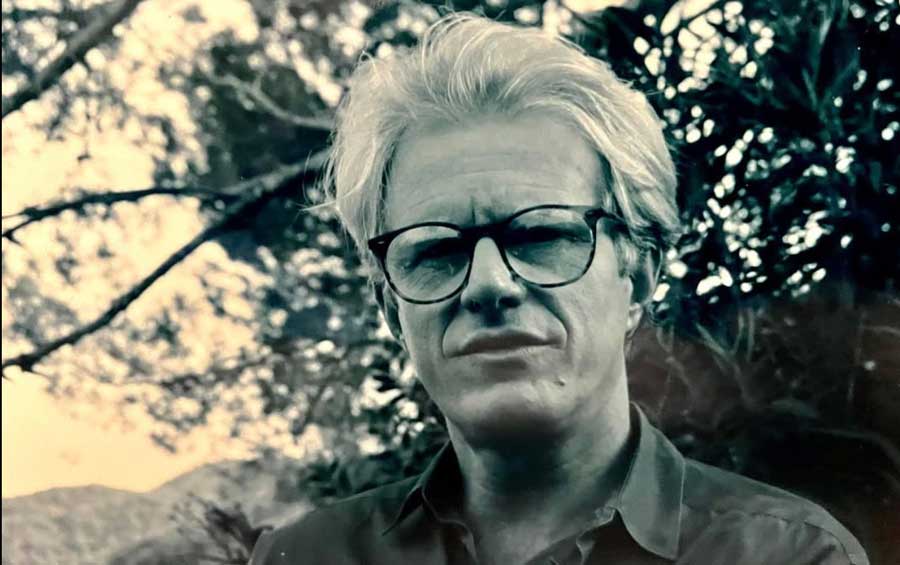










Ed Begley Jr., an actor and environmental activist, has spent decades captivating audiences with his performances on screen and stage. Best known for his Emmy-nominated role as Dr. Victor Ehrlich on the groundbreaking NBC hospital drama St. Elsewhere (1982–1988), Begley Jr. continues to charm younger generations with memorable appearances in shows like Better Call Saul, Lady Dynamite and Young Sheldon. Beyond his storied acting career, he has become a prominent voice for environmental responsibility and clean energy, advocating for sustainable living long before it became mainstream.
Products & Services


In this candid conversation, Begley reflects on the challenges and triumphs of living with Parkinson’s disease, which he was diagnosed with in 2016 after years of managing symptoms unknowingly. He shares his journey of maintaining his health through rigorous exercise, a disciplined diet, and targeted treatments, all while continuing his work in Hollywood. With his trademark humor and resilience, he explains how he’s balanced his career with the demands of his condition, even surprising co-stars and colleagues who remained unaware of his diagnosis.
In addition to discussing his health and career, Begley touches on his recent venture: To the Temple of Tranquility … And Step on It! A Memoir. The book offers a deeply personal yet humorous look at his remarkable life, detailing his relationship with his legendary father, iconic Hollywood adventures, struggles with addiction and recovery, and the roots of his passionate environmental activism. Through heartfelt anecdotes, Begley reflects on his lifelong search for wisdom and common ground in a world often divided by differences.
ABILITY Magazine’s Chet Cooper spoke with Ed Begley Jr. at a Proud Stutter’s Gala, where Begley highlights the parallels between his experience with Parkinson’s and the challenges faced by those with speech disabilities, as he lends his voice to the Proud Stutter event. It’s an intimate glimpse into the life of a man who has spent his career not only entertaining audiences but also striving to leave the world a better place.
Chet Cooper: So, it’s been a while. When we talked, it must have been at least 10 years ago, maybe 15 years ago, and you were doing a reality show.
Begley: That’s right, that was 2007, 2008, 2009, 17 years ago. (laughs)
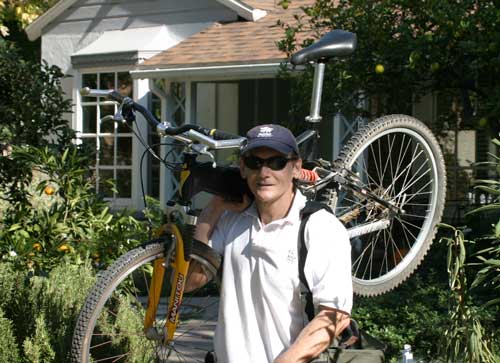
Cooper: You remember I came to your house with a bicycle, does that ring a bell?
Begley: (laughs) That’s it, that is ringing a bell.

Cooper: How did you come about being a part of the Proud Stutter’s event here?
Begley: Oscar’s a friend of mine. He introduced me to his family his family who are involved. They asked me to do it, and I heard that he was going to be here, so it was a good excuse to see Oscar.
Cooper: Yeah, good. We did an article with her—last year, I think—Proud Stutter and the podcast they put together. That’s how we got invited to this.
Begley: People with Parkinson’s–and I have Parkinson’s–do have a challenge in speaking. You don’t have the kind of diction, the kind of vocal instrument, you used to have when you were younger, before you had the symptoms of Parkinson’s. It takes a lot of work, a lot of training of your voice, vocal training, speech therapy. That’s something you have in common with stutterers. A lot of people with Parkinson’s have a form of stuttering because the disease keeps seizing the muscles. Things tighten up and constrict, and you have these pauses that you didn’t intend on making.
Cooper: I didn’t know you had Parkinson’s.
Begley: I’ve had it since 2004. I didn’t know I had it because I was in such good shape. All this stuff was happening. I lost my sense of taste and smell and I had trouble with my balance. I had all these different muscle problems all on one side, on the left side. I didn’t figure that for a while.
Cooper: Is the left side something connected to Parkinson’s? Is that typical?
Begley: No, it just always presents one side before the other. You might start with the right, the left, it just picks a side. It usually doesn’t happen uniformly, it can, but that’s rare, I think.
Products & Services

Cooper: If you’re ambidextrous, right? (laughs)
Begley: Yeah. All this stuff started to happen. I didn’t get diagnosed till 2016. That’s eight years ago now, and I’ve had it eight years—since I was diagnosed. I’ve had it 20 years–since I’ve had it.
Cooper: They could figure out when it started?
Begley: Yeah, but 2016 I knew I had it, and I started treating it. And I’m still in pretty good shape for having had it diagnosed for eight years.

Cooper: So, there must be a spectrum for Parkinson’s.
Begley: Yeah, there’s a big spectrum. Some people have more pronounced cases, people like the wonderful actor Bob Hoskins, my dear friend. When Bob got the news, “Mr. Hoskins, I’m sorry to inform you, you have Parkinson’s,” three years later he was dead. That’s the way it can go. You go quickly. You go slowly. And there are some things you can do that can help keep it at bay.
Cooper: What are you doing to slow the disease?
Begley: I do the dopamine that the neurologist recommends. I have a very good neurologist and he recommends that I take a form of dopamine called RYTARY.—It’s a carbidopa and levodopa combination.—And I take those a few times a day. In addition, for extra credit, I go to the gym every day. I do 30 hard minutes on the bicycle, and then I do the whole upper body circuit. I do that every day. I hang on a chin-up bar in my office every day—10 times a day usually. Whenever I’m walking past it, I hang on it. I can always hear clickety-clack because, always with Parkinson’s and similar diseases, the body’s trying to pull you forward and tighten up. You’ve got to loosen up, stretch and stretch and stretch. So, then I’m doing that kind of thing.—Exercise is very important, one of the most important things.—That’s why I didn’t know I had it from 2004 to 2016. A dozen years I had it and didn’t know what it was. I knew there was something funny going on with me that was minor.—Then glutathione and something called NAD that can help Parkinson’s. Eating right, having a very good diet is important. With all that stuff you can keep it so it’s manageable. That’s my goal. You can’t make it go away, but you can keep it from taking over your life and your body in a bad way.
Products & Services



Cooper: Does it affect your work at all, your acting?
Begley: It does affect it in that there’s no way I could do a stage play where I’d have to be loud every night, and with the stage play, you’ve got to hit the back wall, talk loudly. Could I do that every night? I don’t think I would want to guarantee that I could. I’d hate to ruin a play by realizing two weeks in that I couldn’t finish the rest of the run of the play because my voice is going Parkinson’s on me.
Cooper: But you’re still acting?
Begley: Here’s the best news that I’ve gotten since I’ve had Parkinson’s. On two separate occasions, on two separate TV series that I did over the course of several years, I’d say “Now that we’re winding down, I just want tell you, you guys were so kind to me the whole run of the show with my Parkinson’s. The way you accommodated me.” They’d say “You have Parkinson’s?” They had no idea. That was very good. People worked this close to me every day, actors and people working six inches away from me, in a close-up, they didn’t know that I had it. That’s very good news. But, now I’ve written a book that I’ve talked about. It’s called To the Temple of Tranquility … And Step on It! A Memoir. (Read the Excerpt)
Cooper: (laughs) Great title.
Begley: It’s a humorous look at my many years in Hollywood.