














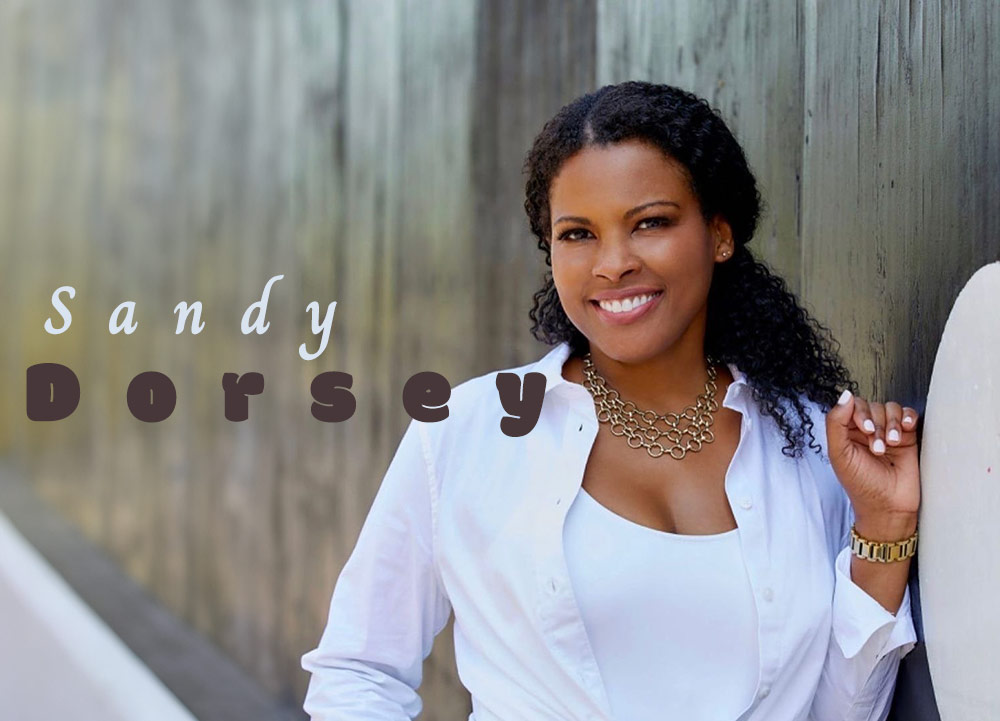
For Sandy Dorsey, speech therapy is a fundamental human right—one that millions of children and adults worldwide still struggle to access. As a seasoned speech-language pathologist and the founder of Smiles for Speech, Dorsey has made it her mission to bridge the gap for individuals in under-resourced communities, providing life-changing therapies, education and support where they are needed most.
Since its founding in 2017, Smiles for Speech has transformed lives across Africa, the Caribbean, and Latin America, equipping local professionals with training, delivering specialized assistive devices and ensuring that children with disabilities—many of whom are isolated or denied education—have the tools to communicate and thrive. From working with children in Ghana and Kenya to supporting Parkinson’s patients through the Speak Out program, Dorsey’s impact extends far beyond individual therapy sessions. Her approach prioritizes sustainable solutions, empowering local families, educators, and therapists to continue the work long after her team departs.
ABILITY Magazine’s Anne Njoroge and Jennifer Woodall met with Dorsey in a virtual interview to talk about her journey, the speech therapy process, the urgent need for speech therapy in underserved communities and the inspiring ways Smiles for Speech is changing lives—one voice at a time.
Jennifer Woodall: You are a speech-language pathologist, can you tell us what that involves?
Sandy Dorsey: Sure. Speech language pathology is a huge field that has many different areas. Most people think of speech pathology as “Oh, but I can talk.” “My child can talk.” or “You help people talk.” It’s so much more than that. Some of the different areas we have are expressive language, pragmatics, which is how we understand each other. We work with voice, and that can come in different forms, anything from if a patient has a stroke or a head injury or any cancer of the throat. We work with helping people communicate that have electrolarynxes like singers or people that have vocal nodules, so that’s a whole area.
Then we also work with fluency. Anyone that stutters and has challenges in that area. For adults, we work with things like stroke or head injury, and then Parkinson’s is part of it, but also any adult that has a neurodegenerative disease where speech is impacted. If you think of the head and neck, this is the area that we work with, which also has hearing. What is a person’s speech like if they have a hearing impairment or they’re deaf? Now they might have a cochlear implant, or they might have hearing aids, so there’s oral rehabilitation there. Those are the main ones.
I think speech pathologists are called on a lot now because the rates of autism are rising. There are so many children now that are autistic. That’s an area that we’ve really had to step in for. Anything that has to do with communication, and that can be spoken or non-speaking communication. We have communication where they’re using alternative, augmentative devices. Anything that has to do with—if there’s a low tech device, like a simple board with four pictures, or we have advanced devices. There’re devices where you can write and get your message across. So that’s another area for non-speaking individuals to be able to communicate.
Products & Services

Woodall: Can you share some early signs to look out for that may indicate a child would benefit from speech therapy?
Dorsey: The main thing that we think about in the most basic level is if a child doesn’t have two-word combinations or at least 50 words by two years old. Sometimes, family members or even doctors might say, “Oh, it’s a boy. It’s okay if he starts talking late. Little Johnny didn’t start talking until he was four or five.” If the child’s not talking at two years old, then we want to make sure that they get an evaluation. If we see that the child is not interacting with others, the child that only wants to play alone and doesn’t interact, there’s no joint attention, then we want to think about getting an evaluation. So many mothers wait too long, and we want to make sure that between those ages of zero to three, that they’re getting evaluated. Sometimes they’re waiting and they’re waiting and thinking, “Oh, should I be concerned? I’m not sure.” But in the meantime, the child can be getting help during those most crucial years.
For babbling, that’s like early communication. If a child is cooing and babbling, we want to see this during around eight to nine months. If the child is not making any sounds in eight to nine months, then we’ll be concerned about that. Babbling turns into vocalizations, sounds that are approximated to something else, like “mama, mama.” We want to see that at seven to 12 months. Then we want to see those first words, 12-18 months. Like I mentioned, with those combinations, we’re going into 12 to 18 months. Now, by two years, for sure, they should have words and be putting words together.
If we hear that the child is leaving out sounds like the beginning of words, the endings of words or there is sound distortions or substitutions, and we can’t make out what they’re saying—Sometimes families want to say, Oh, it’s cute that he’s doing this and that, but we are concerned and we want to get referrals. If there’s any kind of harsh voice—Sometimes children might have a very high pitch voice or a different voice.—then we want to think about if they are hearing or is there some vocal nodules or something happening there? I just met a little boy, and he was very nasal, very difficult to understand. In these cases, the child could have a cleft palate. Even though they’re still able to function, when we hear something that doesn’t sound like what we’re used to hearing and there’s some nasality, then that’s another reason that we will want to get them checked out. Then also, if they are repeating the same words or getting stuck in blocks, it might be considered stuttering. If their child is not able to get their words out, then that’s another sign that they would need to get an evaluation.
Woodall: Can you give me some examples of what a speech therapy session may look like?
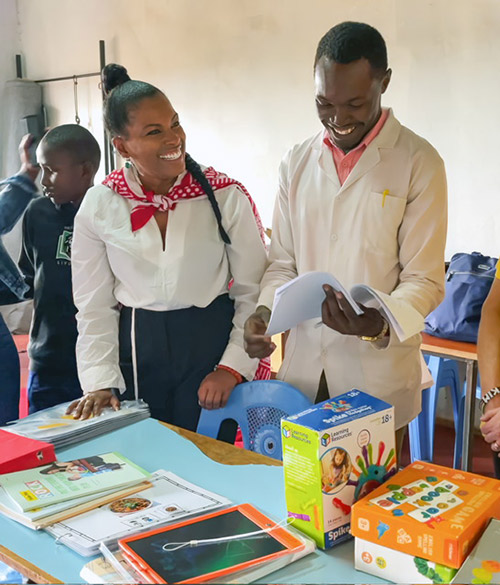
Dorsey: I will talk about sessions for young children because we want to catch children really young. We want to think about how children communicate because they have a need or a feeling that they want to express. These are reasons that we talk. Because we want something, because we are feeling something. The first step in speech therapy, especially for the little ones, is that we’re creating opportunities for communication exchanges.
We’re giving the child a choice in a session. Even when we start off the session, we ask something like “Do you want the blue car or the red car?” and they’re already now engaging. They’re making a choice about what they’re doing. We want to follow the child’s lead and make sure the things that we’re using are motivating for them. We want to make sure that they’re culturally responsive that we’re using materials that speak to that child and their culture, and that they are feeling empowered during the session.
We would start off by giving them choices, and then based on what they choose and where they are with their language development, increase that. If they’re making a sound, we want them to either use their board to show us what they want or model the word for them that they’re wanting to say. If they’re using one word, then we’re wanting them to use two words, add a color, add a shape or a size. Then that’s going into who, what, where, and when, and how they’re going to build sentences, and how they are interacting with each other.
When we have group sessions, then we can have each person in the group ask questions amongst each other. They’re also working on their social skills. Usually, if we see a receptive or an expressive language disorder, there probably could be some social skills that that they can also work on. That’s for little children. Then for older middle school, it’s usually comprehension and what is the main idea. At that point, when children are in middle school or high school, then we’re supporting their academic success. So, we want to make sure that they’re successful in the classroom. What might be barriers from keeping them in those Cs and Ds? What can we work with the teacher to accommodate the child in the classroom? Then there’s all the strategies that go with What do we think will make the child more successful?
Products & Services


Woodall: Can you tell me a bit about being awarded the Speak Out Grant for the Parkinson Voice Project?
Dorsey: Yes. So This grant was really important because it ties into Smiles for Speech and how there’s so many communities globally that don’t have access to this information. So with this Parkinson’s Voice Project grant, we’re able to train students in the countries that we’re working in on the techniques that they can use Parkinson’s patients.
Woodall: Are there some standard things that you would do in a speech therapy session with a Parkinson‘s patient as a speech therapist? How is it different than the approach you would have with children?
Dorsey: For the Parkinson’s patient, we want them to be empowered to use their voice with intention. That’s a big part of the program, using your voice with intention, because we want that patient to be heard. Voice has emotion, it tells us how a person might feel, just based on how their voice is in that moment. We can tell if they’re excited or sad or not feeling great that day. But when we have Parkinson’s patients and their voices are lower and a little shaky, we may not be able to make out what they say.
That’s why they call the grant “Speak Out”, so they can be included in society because when people aren’t able to communicate or they’re not able to hear, then there are levels of depression that can come with that because they don’t feel part of society. When we’re working with a child, then we want to help them to reach their developmental milestones. So, that’s the difference there. If they’re delayed, then we want to help them get as close to those milestones as possible. Sometimes, they might not be able to reach the milestones. So, then we want to get them to have the most functional communication that they can have for where they are. Based on the strengths that they have, how can we build to help them to communicate?
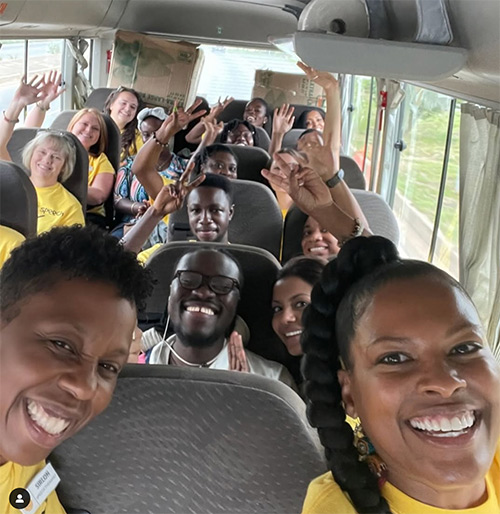
Woodall: Can you tell me what Smiles for Speech is?
Dorsey: Yes. I founded Smiles for Speech in 2017 with the mission of enhancing the lives of children with disabilities that are living in disadvantaged communities. I’ve been a speech therapist for decades, but after 25 years, I really wanted to bridge the gap for communities that didn’t have access to these services. The first trip was to Cuba, and I had planned on taking personal toiletries and items for the community and then realized there’s a skill that I have that I can share, so from that very first trip to Cuba, myself and an occupational therapist, we came together and started to visit orphanages and children that were bound in the homes.
If the child was severe or wasn’t able to communicate, then they’d have to be institutionalized. So, some parents decided to keep their children at home, but then they’d be there without services. Then we went on to Peru where we worked with a therapist. We were able to distribute 13 electrolarynxes that were donated by another company and work with the community there. It was a similar situation where a lot of children are not able to attend school because the schools are not available or they’re not allowed to attend schools. In many countries, they don’t know what speech therapy is or there just aren’t any available. If they are, the community is not able to afford the services.
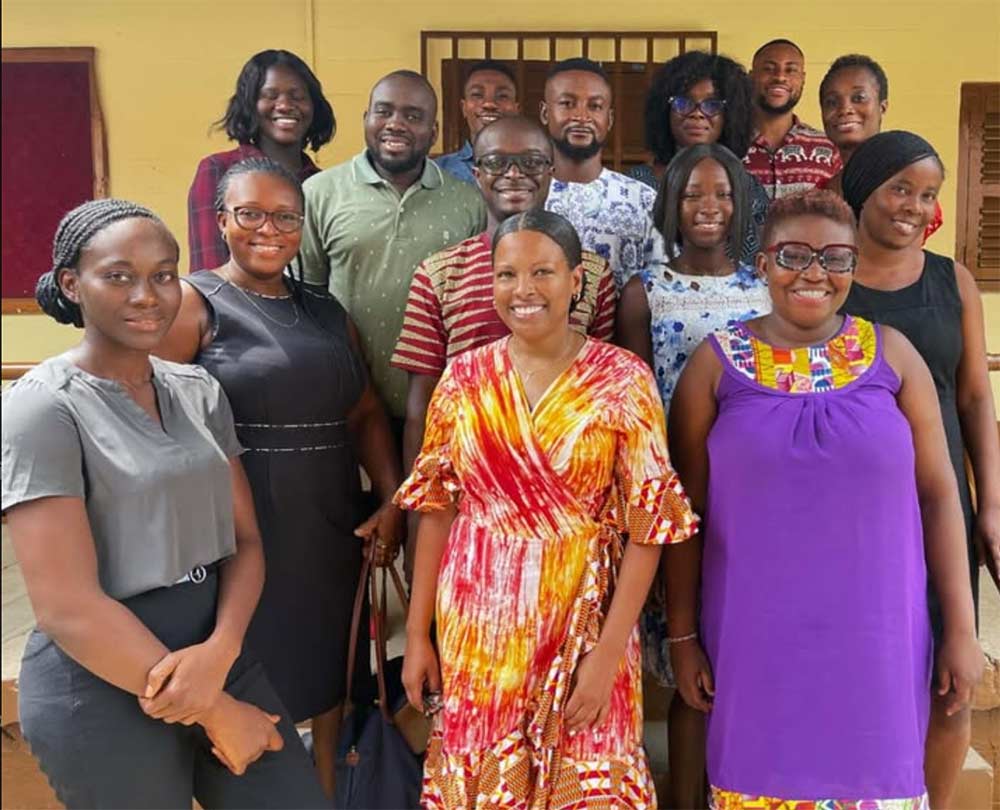
After Peru was Jamaica. We worked with programs there like the only inclusive school in Savanna la Mar. Then we went to Ghana. Ghana is our largest program. We have worked there since 2019. When it started, they had a new speech program that began in 2016, and we supervised and mentored those six graduates who have continued on. There are now 50 therapists there, and they’re just flourishing. Our next project will be in the North, where there’s only one speech therapist.
The stigma that is in many countries is that the mother is considered a witch or the child could be considered a river child or snake child, and they end up experiencing neglect and not being included. When we hold our community clinics, we want to bring as many mothers as possible that might be hiding their children at home and bring them to our clinic and offer them strategies and training, as well as the teachers and anyone that’s involved in the child’s life.
In Kenya, we have a parent, Regina, and we were working with her son, Alvin. She was hiding him in the home until he was 11 years old. Now he’s 13. She hid him because he had to change his shirt six times a day and people were scared of him. They thought he was contagious. Lo and behold, we worked with him with speech occupational therapy and feeding, and the whole community is like, “What happened to Alvin? He’s so different. What happened to Alvin?” She has now gone into the villages and shared this information with 100 mothers—and she is like a powerhouse. She’s gone to the Senator—And this is really our goal. We want mothers to be empowered and to speak on behalf their children that deserve these services. These are the stories that just light me up because one mother can tell five other mothers, and now they have the information.
During COVID, we had a virtual talk with over 541 people joined in 17 countries. Some of the people there said they never heard of speech therapy and they never knew there was anything they could do with their child. The village leaders came and then gave the information to the community. We might see about 300 children when we have our mission trips, but those 300 mothers, we hope, will share the information with another 300 so that it’s even growing while we’re not there. We have relationships with local programs, so they continue. We believe in sustainability and making sure that they have continued support.
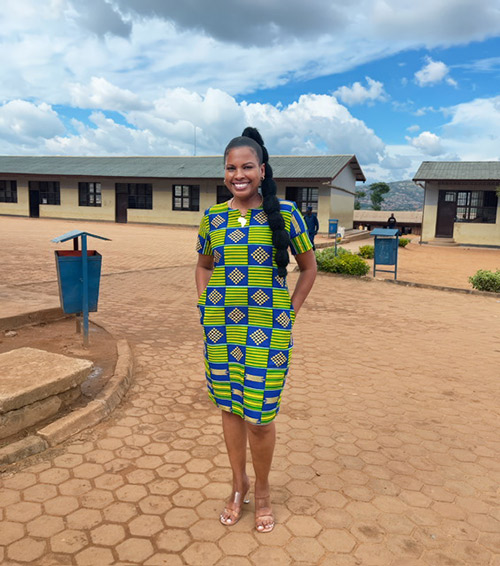
After Ghana, we start working in Kenya, which is my heart, next to where I am now in Zanzibar. We work with the Maasai and for children that aren’t in school, to give them things that the children can work with because sometimes we can’t tell if they’re non-speaking because the children are quiet. So, we screen to see things that we think the children could work on to be able to even communicate with each other because they stay in their little groups.
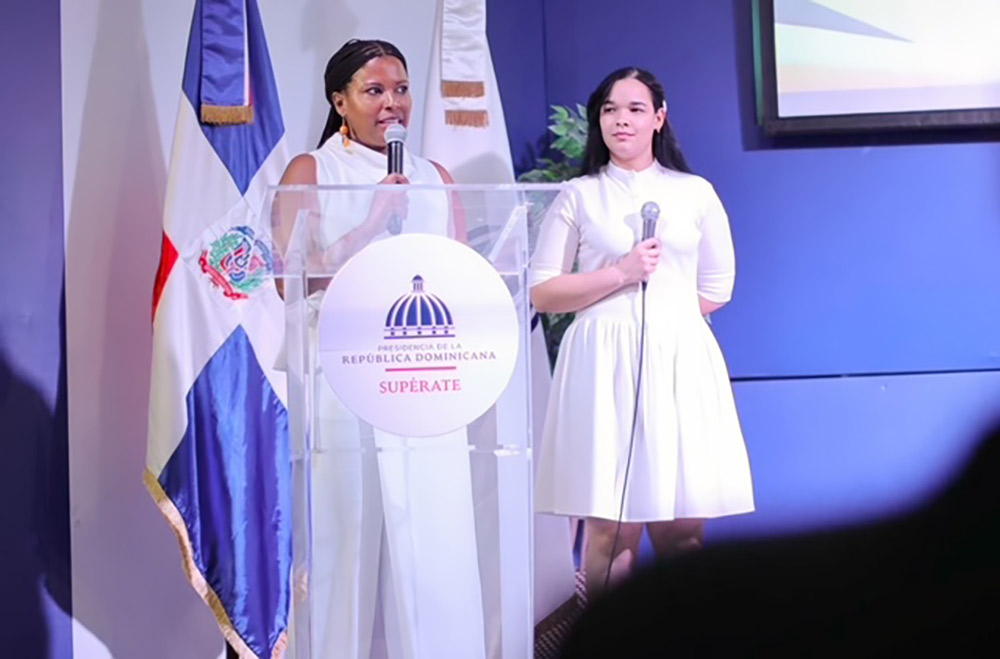
In the Dominican Republic, we work very closely with their government who’s really supportive of the services, but they don’t have therapists there. In Rwanda, we support fluency. So, we gave a talk for 60 teachers so that they could go back to their schools and know what they can do, what strategies they can use to make sure that they’re supporting children that stutter in the classroom. We also supervised therapists in Rwanda, Uganda, and Kenya, Zanzibar–the whole East African community overlaps—I just ran into a therapist here in Zanzibar, who was from Rwanda, and then I’ll see them in Uganda. It’s all overlapped.—That’s what we do, and making sure that they have resources and tools.
We set up five libraries in Ghana. There were students that didn’t have any books since it’s such a new profession that they’re starting off with very little. Kenya just graduated five speech therapists at Kenyatta University! Also, swallowing is a huge concern in Kenya and in Ghana, where you have children that are malnourished, children with cerebral palsy and the parents don’t have the information for feeding and the child is losing weight. We started a fund called Gideon’s Fund because there was a young man who was 22 years old that only weighed 9 kg (about 20lbs). Typically, by the time they get to the hospital, nine times out of 10 they pass away in the first two days. Speech pathologists also work with dysphasia. Pediatric dysphasia for children that have feeding disorders, and then for adults that have had any kind of weakness, or motor weakness from strokes or head injuries, usually. Then in the later years in a nursing home, a majority of the patients that are getting speech therapy is for swallowing.
Woodall: Dysphasia is the medical term for difficulty swallowing?
Dorsey: Yes.
Anne Njoroge: By the way, do you understand Swahili?
Dorsey: I’m learning–is it Kidogo-kidogo (bit by bit)?
Njoroge: Kidogo tu (a little).
Dorsey: I know Mambo (Hello/how are things?) and Ama vipi freshy (slang way to ask “what’s up?”), Freshy (slang way of saying “good!”) and I also know Baadaye (later or see you later).
Njoroge: That’s helpful.
Dorsey: You have good- Maisha Marefu…am I saying it right? (laughs) You’re putting me on the spot.
Njoroge: Maisha Marefu means long life.
Dorsey: Maisha Marefu, yes! That one. I’m trying. I was even taking classes, and then I stopped when I went home for Christmas. And then I forgot everything again, but I’m trying. I’m determined. We have materials in Swahili for children. That’s another thing that Smiles for Speech does. We have materials for Uganda, Kenya, and then the Spanish ones for the Dominican Republic. We have them in Ewe, Twi, and Ga (different languages) for Ghana. We really want to make sure that our materials are as accessible as possible. Some of the books that we donated, I’m like, “I want to I have these books so I can practice my Swahili with them!” (laughs) We donated them to a nursery school here in Zanzibar, where we’re sponsoring a child.
Products & Services

Njoroge: You mentioned that you’re working with local communities, especially in Kenya. I was interested to know your work that you’re doing with Safari Yango Community Inc.
Dorsey: Oh, with Nick. When we first started, he’s in New York, and we collaborated because he had a group that was joining at the same time. I think he wrote an article about me for the magazine that he writes.
Njoroge: I was wondering if there is any other or any other projects that you’re doing with local communities in Kenya or maybe in Africa?
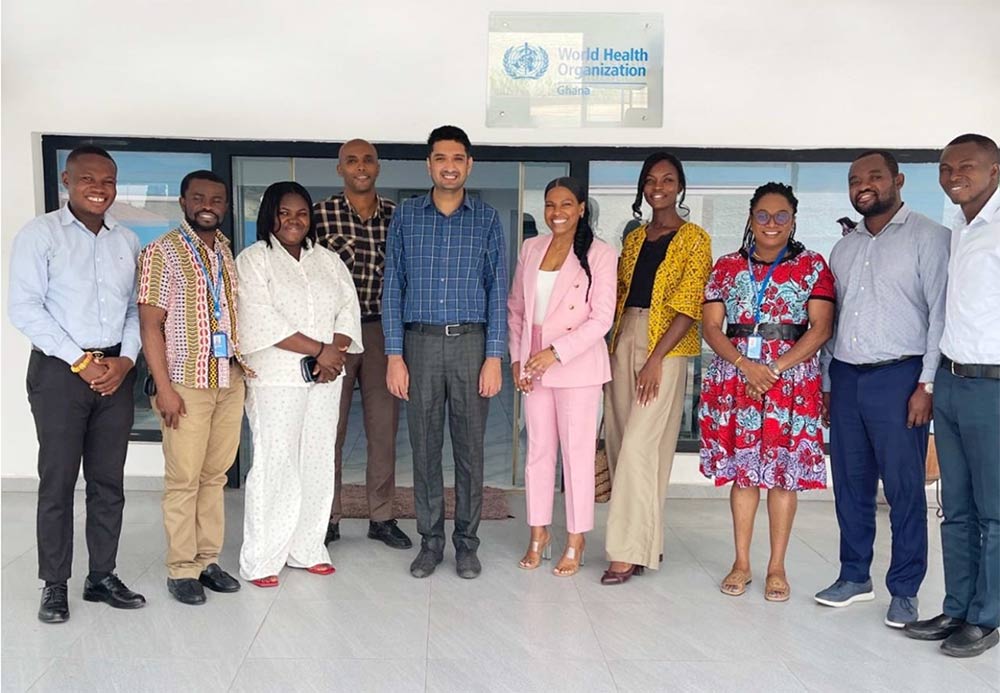
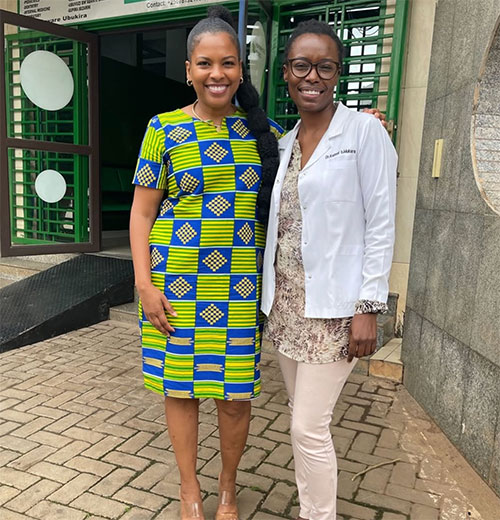
Dorsey: So many programs. We focus on connecting with local programs. We met with WHO in Ghana, and we work with 25 programs there. In Kenya, we work more with the government school in Kenya. In Ghana, we work more with private schools, but Kenya is more strict. Rwanda as well, about how they really want the government to be involved. We collaborate with the therapists in the community like Grace Macharia, who was the first speech therapist in Kenya. We scout out the speech therapists that are there and then Special Ed programs in schools. Then from there, we support the great work that they’re already doing. We don’t go and decide on setting up shop. We go look for the people that are already working there, doing great work, and then help support them. We worked in the Eldoret with a workshop there for parents, and then we created the curriculum for the Moi Teaching and Referral Hospital to have a speech program. We work with about five government schools in Kenya, in Nairobi.
Njoroge: What is the logistics for setting up in those communities?
Dorsey: There’s a woman named Salome, and she’s in charge of the special Ed schools and she will decide on the school—Our last trip was with Dagoretti Special School.—Then she will call the teachers from the local schools, and then they come together. We did a Hanen training—which, thankfully, they’re going to be also donating to train students for Zanzibar and for Ghana—but their program is all about following the child’s lead and some of the things that we talked about, like setting up choices, observing, waiting, and listening to a child. Salome will call all the teachers together, and then we call it “community clinic.” Our model is training the teachers, and then if we’re at a school, we ask the teachers and parents to be called in with the child so we’re all on board.
Then when we leave, they all still have the tools to continue what they learned. We’re learning together. The first thing I say for any talk that we give is that we’re here offering information that we hope might be helpful, but that you all already have the things that you’re doing, and you can teach us what you’re doing so that we can also share these things when we go around to other communities.
Products & Services

We want our communities to know that we want communities to be empowered and say, “Here’s information, but this information also has to work for your culture. You decide how you want to take this information that we’re sharing so that it’s appropriate for you.” The way that we also do that is by talking to the therapists that are in the community to see what they’re already doing and then have conversations about the things that we’re planning to do so that it’s a collaboration and learning process. I feel very strongly about that because I’ve seen other programs where people are coming in like they know everything and making the community feel like, “Oh, no.” We want to be hand-in-hand. We’re side-by-side in the communities that we serve. Hand-in-hand collaboration.
We’re all learning together. That’s why the communities we work with, they feel safe. It’s a very sensitive issue to have a child that makes you outcast from your community. Some communities in Uganda, if you have a child with special needs, you can’t even go to church to the very place that you need support from. We want our families to feel safe or anyone that we’re working with. The local programs, if they have families that can afford their services, what they do is call in the ones that aren’t able to afford it. Our goal is for families that do not have access to these resources to get what they need, not for the people that can afford it. There are always people that say they want their child to go to school, but they don’t have the money. Well, they’ll have a list, and then they’ll let the school know.
A lot of children are orphans because they get left and their parents might just leave them somewhere. There are parents that have created schools themselves as parents. They’re not even teachers. It’s just inspiring to see. We have one program that we work with in Buduburam called Pure Heart Children’s Center and it’s a parent that got together other parents. And we gave them resources that they can use to work with the children. A lot of them are non-speaking but they’re doing it themselves with no money and no support from the government. They’re giving the children a place to go that might end up on the street. These are the kinds of programs that we support.
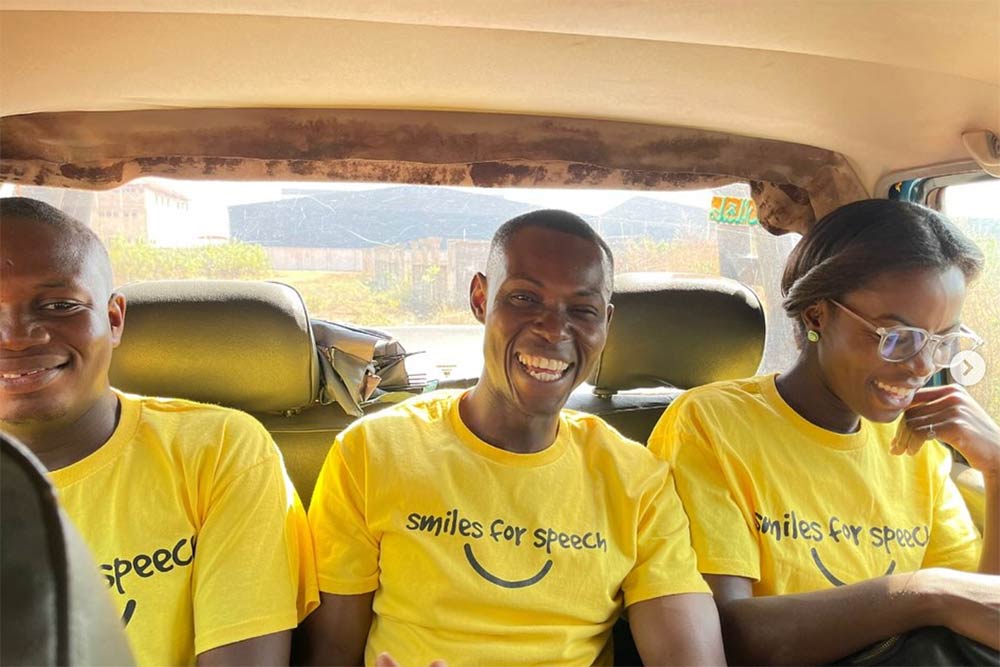
Njoroge: About the upcoming trip to Ghana, would you like to mention something about it?
Dorsey: Yes. Like I mentioned, our focus is on the North. There’s one speech therapist there, he’s amazing, his name is Desmond. There’s one hospital, Tamale Teaching Hospital. We’ll be working in the community. We’ll have three days of screenings and trainings for families, and we’ll be offering resources. It’s July 27th to August 5th 2025. The trip will start off in Accra with a city tour, and then we’ll go ahead and go to the north for those three days. We’ll visit the King in Tamale–actually the lead of our Ghana team is from Tamale, so he’s ecstatic.
The north is 12 hours away from Accra, which is where everyone goes, so it’s the least served. Then we’ll visit Cape Coast and the school that I mentioned in Buduburam, Pure Heart Children’s Center, and also collaborate with the Occupational Therapy Speech Association and our colleagues in the community. It’s an emersion where we’ll be right there with the families, but then there’s also a training component. We do want to make sure that our volunteers are culturally responsive to the communities that we serve. We just partnered with Pepperdine University, so we also have a certificate option. That program has four hours a week of global training, and there’s a virtual option where there’s two days of teletherapy, and there’s the immersion where they will join our Project Ghana trip. That one is from July 17th to August 7th 2025. They will get a certificate from Pepperdine University and Smiles for Speech.
Woodall: Is there anything that you’d like to talk about that we haven’t covered today?
Dorsey: Well, we’re working on a center in the north. The literacy rates are very low, so that’s why we’re choosing to create a center there. We also want to build a library. That’s the next project that we’re working on, for them to have a community center, a place where they can go learn for free, and learn how to read. It’ll be an inclusive school, so not just focus on children with disabilities, but so an everyday typical child can go read a book and also be read to.
Regina Hall, Actress for Smiles for Speech