







Clothing is a powerful tool. Whether it’s shopping for something new, deciding what outfit to wear in the morning or donning that itchy shirt you avoid because it’s time to do laundry, clothing can make or break the day. Even so, the fashion industry has a pattern of not always meeting the needs of the population. Some issues are slowly improving, for example the lack of variety in sizing has gained forward momentum in recent years. Now, some companies are working to make adaptive fashion apparel.
Products & Services


“At the end of the day, we’d all love for customers with disabilities to be able to shop at whatever brand they’re feeling and build a wardrobe that expresses their style. We see that as the future. We want that for disabled customers.” Julia DeNey is the founder and CEO of Sense-ational You and an advocate of making more clothes that are designed for people with disabilities. “The mission of Sense-ational You is to increase inclusivity and the success of neurodivergent children. Our goal is to help them be out in society with more comfort and less anxiety or overstimulation.”

DeNey describes that there are two parts to her work: the first is to remove the issues with clothing that can cause sensory overwhelm, the next is to add tools to the clothes that offer sensory support. “A lot of kids get really dysregulated by their clothing and don’t want to wear them, so we tried to help solve that, but then we also wanted to take it a step further and help with regulation.”
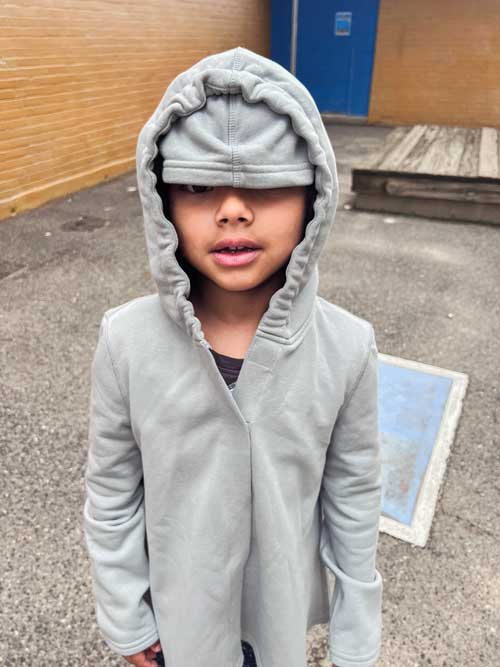
It’s a common image in the mornings; parents trying to get their child to school, but the child is too uncomfortable in their clothes to get ready. In reality, itchy tags or clothes that don’t feel right would affect anyone’s day negatively. So, DeNey made an alternative: “We changed the clothing to have no tags and flat seams so that they are generally more comfortable and don’t cause dysregulation.” Sense-ational You clothes, also, have built-in, calming qualities. “The biggest thing was to focus on key sensory tools. We have a hoodie with sound reduction and an eye mask to pull down so you can have a sensory break wherever you are. We also have a shirt that has a built-in compression lining so, rather than having to wrestle a kid into a vest or remember to carry one around in case they need it, you can just lift up the shirt and tighten it to give them that calming input, similar to a hug. We use magnetic closures to help with their independence when dressing and to allow them to take the hoodies on and off themselves. The magnetic closures are also fun, built-in fidgets so we added them to our pants so that they can play with them as part of their clothes in case they don’t have a fidget toy on hand.”
Adaptive clothing companies are taking the leap to be innovative in the face of an industry that actively excludes large groups of the population. “I think companies don’t realize just how many more customers they could have by being inclusive and designing clothes for everyone. There is a huge portion of the population that has disabilities of all kinds, so if you make things that serve them, there is a return on that.” These companies definitely see challenges, though. “Manufacturing is really slow because a lot of it is so specialty and new that we have to go back and forth a lot. Finding the supplies, and that whole side of the sourcing for the supply chain, is so different because a lot of it is not usually used in apparel or not used that way. They don’t usually take sensory needs into consideration. It’s not commonly part of the aesthetic or part of the design. So, you have to specify that literally every seam has to be flat. There’s back and forth.”
Products & Services

DeNey describes that the process requires more care than most fast fashion companies are willing to take which makes it quickly apparent that the fundamental values of adaptive clothing lines differ from the average leading fashion brand. “Many of us, adaptive fashion founders, try to come together because we’re all working towards the same thing. If a customer comes to me asking for something that we don’t have, I’ll say ‘check out this brand!’ because at the end of the day the most important thing is that everyone has the clothing that works for them. We’re competitors but we’re all working towards the same mission: more inclusion and more acceptance of disabilities. We want everyone to have clothing that makes them more confident and allows them to express themselves.”
Fashion truly is an opportunity for empowerment. “What you choose to wear each day says something and makes you feel a certain way and we want to be able to offer that to everyone. There’s, also, power and confidence in the ability to dress yourself and to choose the sensory tools you use. That’s really empowering, too.” DeNey’s eventual aim is to be able to offer even more choices with additional fabrics, styles and more sensory tools. Making choices in fashion is a big part of how we discover our taste and personality, after all.
Fundamentally, these options need to be just as available for people with disabilities as they are for people without. What can further that along is for everyone to support the goal. “These clothes are for sensory needs and to be advocates for children, but everyone can wear them! I was just flying and wore our sound reduction hoodie because the eye mask is great for taking naps on a plane. I’ve heard disability advocates explain it as the curb-cut effect. The cuts in the curb at sidewalk corners, which were originally for wheelchair users, also benefit you if you have a stroller or a suitcase or a grocery roller. It just shows that being inclusive benefits everyone and it has all these other applications. If you don’t need magnetic closures, you have the fine motor skills to use a zipper and you don’t mind the feeling of it, that doesn’t mean you can’t use the magnetic closures. They’re still easier than regular closures, more fun and if we shift towards using them it will include everyone.”