







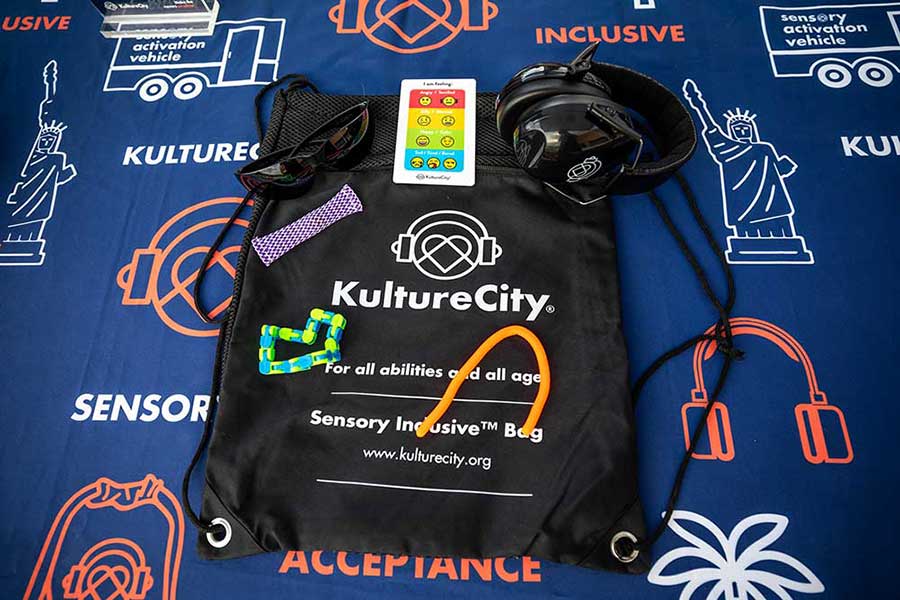
A concert can be the highlight of a lifetime—or a reminder of exclusion. For families and individuals with sensory needs, venues that buzz with lights, sound, and crowds have often meant leaving early or not attending at all. That reality was the catalyst for KultureCity, a Birmingham-based nonprofit founded by parents determined to ensure their autistic son and his younger brother could experience the world together, not apart. In just over a decade, the organization has grown into a global leader in sensory accessibility, partnering with more than 6,000 venues in 40 countries. Among its most visible collaborators is Live Nation, which has embraced sensory-inclusive certification across amphitheaters, arenas, and clubs nationwide.
ABILITY Magazine’s Diana Pastora Carson and Jennifer Woodall met with KultureCity’s Uma Srivastava and Live Nation’s Kate Lieberman to discuss the origins of this movement, the practical steps to making live events inclusive, and the impact of turning once-overwhelming spaces into welcoming ones—where every fan can feel safe, supported, and seen.
Products & Services


Diana Pastora Carson: Uma, can you give me a little bit of a breakdown about how KultureCity got started?
Uma Srivastava: Absolutely. KultureCity is a nonprofit based out of Birmingham, Alabama. We are eleven years old, and we were founded by a set of parents, both physicians, as they were navigating their own journey with their older son through an autism diagnosis and beyond. Essentially at the age of two and a half, their older son quit speaking overnight and showed a lot of regressive behaviors. They were just trying to understand how they could best support their son and went to a variety of different physicians, to just understand what they could do. They ultimately got an autism diagnosis by a physician who said, “Your son is autistic. He’s never going to speak again. You’ll need to institutionalize him. Thanks so much. Have a good day.” They at that time then also had a six-month-old. They realized this wasn’t the life they wanted to live. They weren’t going to separate their children. They valued both of them just as much, and they took on the fact that they were going to support both kids and their needs together. Then life went on. They did what they had to, and it wasn’t until their younger son was about three and started asking questions–“Mommy, why aren’t you coming with us? Why is Abram staying back?”–that they really took a step back and said “Wait, we’ve lived in this bubble of social isolation for years, even pre-diagnosis,” where they would go to a restaurant, they would go to the zoo, go to the library, but then have to leave within ten, fifteen minutes because their older son, Abram, was feeling overwhelmed. Ultimately, after countless looks, countless, “Hey, we’re only here for five minutes. We have to leave.” It was just better for them to stay back. They didn’t really realize this isolation that they had till this younger son, and that’s when they said, “Wait, we haven’t been to a birthday party. We haven’t hosted a birthday party.” And so KultureCity was founded to really shift that notion and that narrative to say, “We’re going to break this culture.” Yes, family should come prepared, whether you’ve got a newborn and you need to bring milk, diapers, wipes, or whether you’ve got a neurodivergent teenager and you need to bring fidgets and headphones, but it’s also on our communities and organizations to say, “We accept you as you are, come as you need, and we will be here to support you.” We started off primarily supporting families with an autism diagnosis, but very, very quickly found out that it was also families with sensory needs in general, other diagnoses, or just folks being overwhelmed from time to time who needed the same support. We now support one in four of us. Whether you were born with a said diagnosis or acquired it through a life event, our goal is to support.
Carson: Kate, can you tell me about how Live Nation and KultureCity came to work together on this project?
Kate Lieberman: Yeah, of course. This partnership really does support our mission to elevate the fan experience and make our events and venues a more inclusive space. We chose to partner with KultureCity because they are by far the nation’s leading nonprofit focused on sensory accessibility and acceptance. It’s just been this incredible journey over the last two years of really working with Uma and her wonderful team to help bring this to life at our Live Nation owned and operated venues across the country.
Carson: Where have the barriers shown up for you?
Srivastava: From a KultureCity standpoint, Live Nation truly has welcomed KultureCity sensory accessibility with open arms. Dollars has never been a question. Training staff year by year has never been a question. It’s always, “Hey, guys, here’s a new list of venues. Let’s hop on a call, educate the managers on the process, and let’s get started.” It’s very refreshing to work with a partner who really understands the importance of this and doesn’t really take it as, “I need to do it to check the box.” One of the few barriers that we might encounter oftentimes is space for a proper sensory room. We know that these amphitheaters and arenas, oftentimes are crammed for space. They might be old venues that have been transformed that don’t necessarily even have elevators sometimes to support ADA. So, it’s finding those ten-by-ten rooms to really carve out for sensory spaces. I would say that’s maybe the only barrier that we’ve encountered on our end.
Carson: Are you collaborating with other organizations and entities, or just Live Nation?
Srivastava: KultureCity supports 6,000 different venues and events throughout the year, in 40 different countries. Live Nation is a good chunk of that, but we work with every NBA team and we work with 80% of your NFL, MLB, MLS teams. We work with different tours like Coldplay, which ironically does fall under the Live Nation umbrella. We work with a variety of different music festivals, different conferences, symposium that take place. So yes, sporting and live events is a part of that, but it’s also library, science centers, zoos, aquariums.
Carson: Kate, did you have anything to share about the barriers or resistance?
Lieberman: This has been one of the most well-received programs we have launched at our venues in my recent memory. We have Live Nation staff who share how excited they are and how much pride they feel to know that they are now working at a venue that has created this space and has certified it sensory inclusive. To echo Uma’s point, some of our venues are older, so while we may not be able to create an official sensory room at all of them, we have been able to at least identify a quiet area that can work, that where should a fan request it, we are able to direct them somewhere intentional at the venue so that they can take the moments that they need to just separate and work through that timing. I think part of this is it can’t be all or nothing. We have found ways to make sure that we are creating what we need to create in order to really bring this to life at our venues. It just may look a little different than an official sensory room, but otherwise, the reception by fans, by staff, by leadership has been nothing short of incredible.
Products & Services


Carson: KultureCity pays for it at the venues?
Srivastava: No, this is a certification where, no matter if your capacity is 500, 10,000, 100,000, there are certain criteria that the venue and the organizations must meet, and we’ve bundled this through that certification. With Live Nation venues, we formalize it a little bit more and standardized it, but we’ll apply and secure the certification. They’ll ensure that they’re reaching these requirements that we’ve listed out, and Live Nation venues will pay for this.
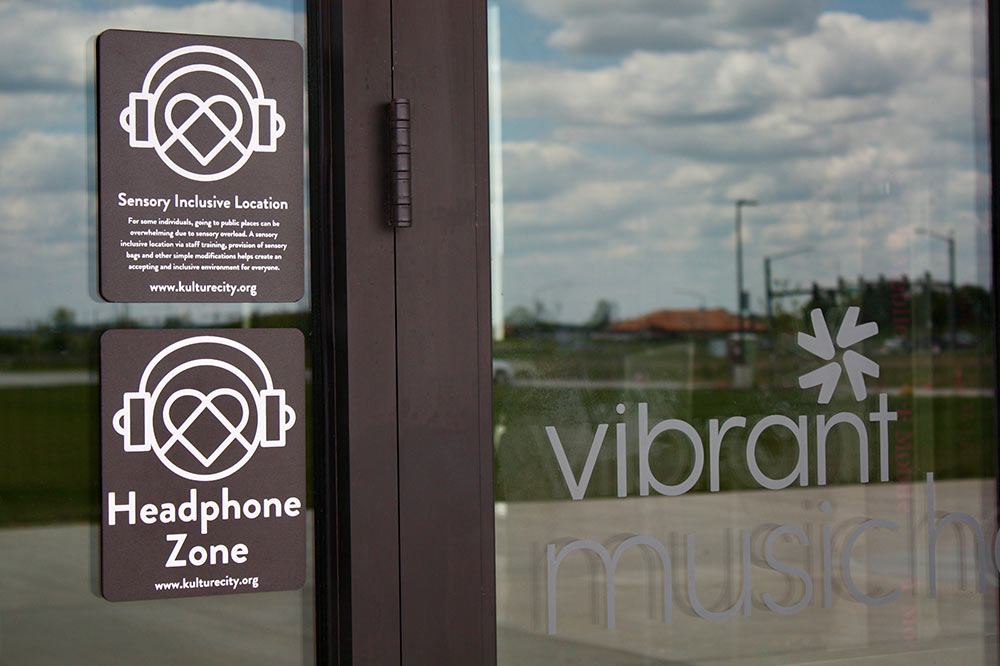
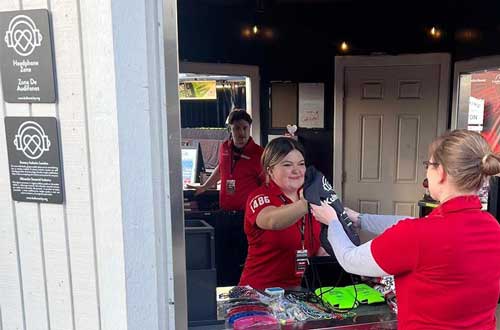
Lieberman: As part of the certification process, our event staff, our venue staff at our designated venues, go through an eLearning training that has been provided to us by KultureCity. Once that gets completed, fans can visit our guest service booths, tents, kiosks, where there is signage indicating not only that we are sensory certified, but where they can pick up a sensory bag should they need one and check it out for the show. We have signage with clear indications for quiet zones, as we mentioned, should a fan request that need. Then additionally, as part of the certification, we create what’s called a social story. This lives on the KultureCity website and app where fans prior to arrival can go onto the website and really look at all the different touch points of the experience that they should expect prior to coming on site so they are informed, they are educated, they feel empowered, and more specifically, more comfortable to come into these spaces to enjoy live events. That’s all part of the certification process.
Carson: A concert venue is an overwhelming, over-stimulating environment.
Lieberman: For so long, many of these folks just didn’t even want to go because they didn’t know what they were walking into. They weren’t comfortable. The idea that we can have these fans come and see the music that they love and do so in a mindset that they feel safe in doing that and supported, as the live event producer in the world it just gives us a tremendous amount of joy to know that we can help bring that to life for so many more fans.
Carson: Is there any stone that is unturned at this point in terms of who is included?
Srivastava: For us, even being a nonprofit living and breathing in this space, sensory accessibility is never 100%. We’ll never be able to say, “We’ve done everything in this space for everybody.” We feel like we can get to 99.9999%, but we never want to make the claim that we’re doing it all. That’s because each of us is so unique. Our journeys are unique, our sensitivities are unique, what we need might differ even on a day-to-day basis. We certainly provide items, tools, training, empowering our guests to come in. But we know, and Live Nation is also a great partner in this, that there’s always something else we can do. Maybe it’s live closed captioning for someone, maybe it’s ASL. I know a lot of these venues do provide those services, but for us, we never want to rest on the laurel and say, “All right, shop closed. We reached that 100%.”
Carson: At KultureCity, how many people do you employ? Are they people who experience sensory disabilities?
Srivastava: They are. We have 10 teammates now, I believe is the most updated number. 80% of our team is neurodivergent, including myself. So, we’re very cognizant. We want to include these voices throughout the process. We don’t want anybody to feel like we’re just checking a box at the end to say, “Oh, I asked so-and-so person.” Lived experiences, these journeys, are very important for us.
Carson: What is next for KultureCity?
Srivastava: Next for us is continuing our journey with accessibility. Yes, we’ve done great work when it comes to brick-and-mortar venues, concert venues, but expanding that into more tours, more festivals. Just anywhere we go, we want to make sure those facilities are sensory accessible for all.
Products & Services

Carson: Do you have any stories that you can tell us of individuals and how the presence of KultureCity and Live Nation has made a difference for somebody?
Srivastava: Yeah, I’ve got one that actually took place at a Live Nation venue in Toronto. It was at Rogers Stadium, and we actually received this email from a dad. Paraphrasing, it said, “Last night, I brought my eight-year-old daughter to her first-ever concert. The performance started, and she freaked out due to the volume of the music. I had to carry her off to the back of the stadium in search for earplugs, which were thankfully provided by staff at the venue. However, those weren’t enough. In a last effort, I brought her over to guest services and asked if they had anything else. We were then provided with the sensory bag, which included ear covers that went over her ears, made the volume quiet enough for her to return to the concert and have an amazing night. As we are planning to attend more concerts this year, we would love to know if there’s a bag we can bring ourselves. For context, we’re located in Toronto and attached is a video of my daughter enjoying the concert, thanks to you providing them at the stadium.”
Carson: That’s so huge. Our family growing up with my brother, really, we had nowhere to go. We’d only take drives to the country because there was no place we could go with him. He’s autistic. That email from that dad is just so touching. That is going to not only empower her, but her whole family.
Srivastava: And it allows them to come back together, right? That’s what we want to do is not have the dad sit at home with the daughter, not have the daughter when she’s a teenager to be home alone while everybody else gets to enjoy music. It’s for all of us to enjoy. And we’re so lucky that we get these messages day in and day out.
Carson: Any other stories?
Lieberman: We have absolutely received feedback from fans, both posting on social media or following the event, just talking about, “I didn’t know that this was there. It was incredible to show up and see it available” and then go into a story about their child or their friend, someone who they were with who were able to use this, and then it just made them so happy to know that they were being thought about, too. Receiving feedback like that, getting comments like that, there’s really nothing better. We want to just continue to make Live Nation venues a more inclusive space for all music fans, and everybody deserves to have that memory. It isn’t something that’s reserved for some.
Srivastava: To that end, yes, it’s those guests coming in, but it’s also employees. With one in four of us having a sensory need, a lot of our venues are hiring neurodivergent individuals. Now, it might not be 80% like KultureCity, but when we do these trainings, we oftentimes have employees come up to us and say, “Thank you so much for this. I now recognize I have a sensory need,” or “I feel more seen.” We’re allowing employees to work in an environment that is safe and comfortable. They know if they were to feel overwhelmed at a certain point, that they’re not just going to get fired because they took an unexpected break. It’s truly their team understanding that So-and-so gets sensitive. Let’s give them space. Let’s give them time.
Jennifer Woodall: Kate, with Live Nation, how do you go about deciding which venues you want to have participate in this partnership with KultureCity?
Lieberman: Initially, we started with certifying six flagship venues as sort of our pilot year. Then this year, we expanded to an additional nineteen throughout 2025. It’s a mix of amphitheaters, large theaters, small clubs, and new venues that we’re opening around the country and that we will continue to open into ’26. It’s a mix of existing buildings. The goal here is that there really is no criteria, that every space should just be inclusive and sensory certified. At this point, we really are just looking at our venues, talking to our venue leaders and trying to just bring new ones in every year. Like I said, we continue to open a lot of new venues, too. So, it’s this great mix of existing spaces, new spaces, being new in the market and knowing that we get to launch with this. It really is just about trying to make them all that way.
Woodall: Is there a place on either the Live Nation site or KultureCity site, where people are able to give feedback about venues they wish had accommodations?
Products & Services

Lieberman: After a show, just like if you go to a hotel or you fly on an airplane, you get a survey. Fans can comment there. We absolutely read those. We take all of that into consideration as we’re thinking about where we move to next. If guests are posting on social media, we really do take everything that our fans say to heart and try to ensure that if we are seeing patterns or themes, that we’re working with Uma and her team to see if we can do something more there in the future.
Srivastava: For us, I personally manage our support email with a couple more folks. I’m personally seeing these comments that come in: “Hey, this venue did a great job,” or “I went to this venue, I didn’t see this thing that was mentioned,” or “There’s a sister location. Would love for that location to have something.” So, we’re constantly monitoring support as well as social media, Instagram, Twitter, Facebook, all those channels.
Carson: How do you get the word out to families and individuals? How do you promote what you’re doing?
Srivastava: Conversations like these. We appreciate these conversations, you guys spreading the word, sharing the work that we’re doing. Our venues will also do local releases, announcements, and they’ll tag us on social media. Word of mouth–grassroots efforts is still very big for us. When you go somewhere and you find a space that is accepting of you, accepting of your family, you’re going to go back, you’re going to make efforts. Not only that, you’re going to share that with your loved ones; you’re going to share that within your friends, your community. We end up getting tagged on a lot of different Facebook groups where a family will say, “Hey, I went to so-and-so concert last week. I had a great time. You guys should check it out for the next time such artist hosts another event.” We’re very proud that we have families who end up becoming our ambassadors and champions.
Lieberman: Part of how we are trying to create more inclusive spaces is just ensuring that we have the information available to the fans. If they go on our venue websites, those venues that currently have a certification, they can see that prior to coming. Then again, that there’s links to the social stories that live on the KultureCity website. It’s really ensuring that those fans feel informed. I mean, information sharing and empowering everyone to know what they are walking into beforehand is such a huge part of how we’re trying to make our venues a safe space for everybody.
Carson: When you say a venue, is KultureCity venue-specific or is it event-specific?
Lieberman: For the partnership that we have with KultureCity, it’s venue-specific.
Carson: How can people find you?
Srivastava: Social media, website. We’ve got a wonderful map on our homepage. If you go to KultureCity’s website, scroll about halfway through, you’ll see a map. So, let’s say Kate was to come visit me in Nashville. Kate could pull up ahead of time and type “Nashville” and see all the different venues that are certified. We can plan our outings, we can figure out what museums to go to, where to eat, etc. This is available for all families and individuals. We are fairly active on social media posting where we’ll be at, what events. So that’s the best place to follow us.
Lieberman: I would say that that’s definitely the best place for fans to go to start. That map is an incredible tool and resource because for Live Nation, each venue has their own website, so KultureCity is a great centralized area where they can go click on their state, dig in further, and see which venues are certified for them.