






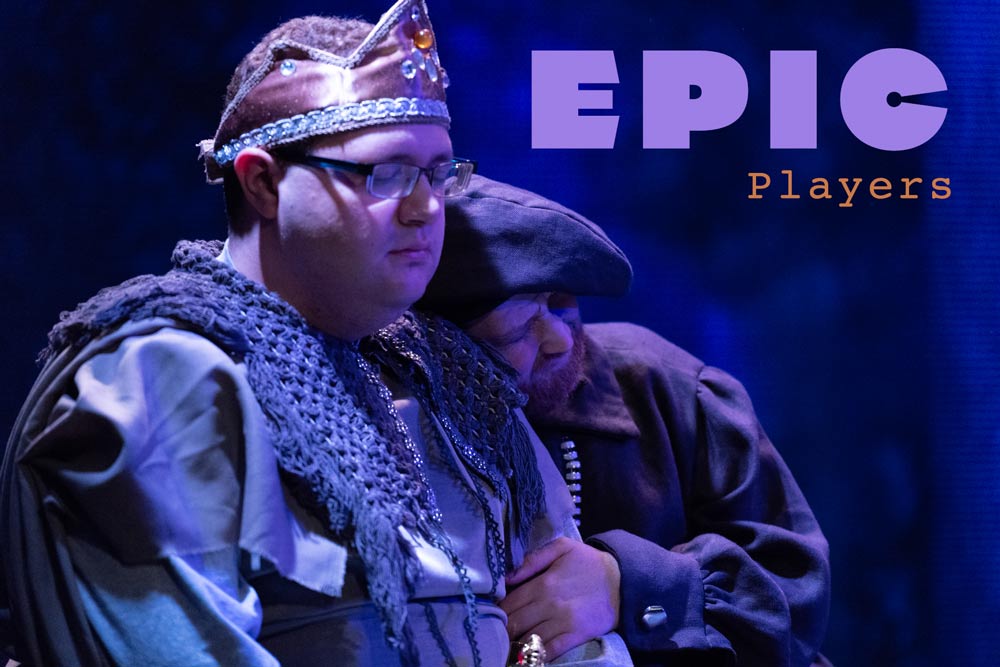
Founded in 2016, EPIC Players theater company was created as a neuro-diverse theater environment dedicated to creating professional performing arts opportunities for neurodivergent and disabled artists. To achieve this goal, EPIC offers inclusive mainstage productions, musical cabarets, original showcases and skills-based classes and career recourses.
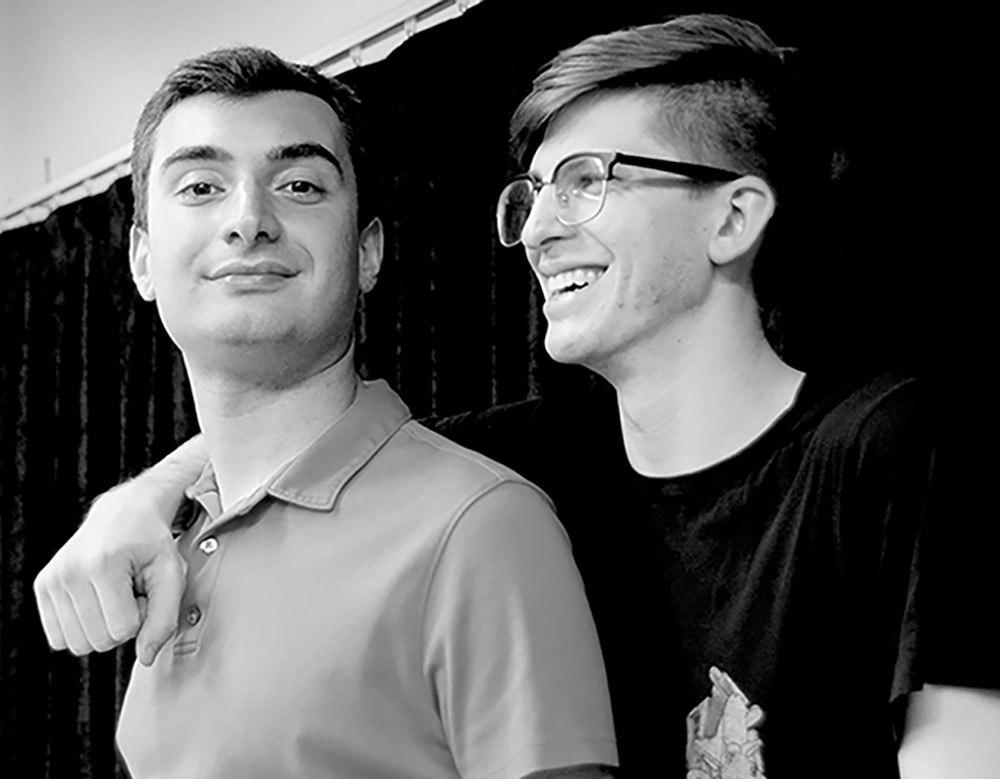
ABILITY Magazine’s Jennifer Woodall met EPIC performers Josh Cartagena and Mina Cuesta in a remote interview to discuss performing with a neuro-inclusive theater company, navigating the theater industry with a disability and how impactful it is to find a safe space to perform, both as a member of the disability and LGBTQ+ communities.
Jennifer Woodall: Hello. How are you today?
Josh Cartagena: Hello.
Mina Cuesta: We’re great. How are you?
Woodall: Good, thank you. Can you both give me a bit of your background and how you became involved in the performance arts?

Cuesta: Yes. So, for me, I actually started out studying little classical music, and I had some teachers and I would do a little piano. I actually participated in a citywide youth opera company when I was 15 and 16, only about two years. And then in high school when I was 15, turning 16, I really got into musical theater. I actually got lucky, when I was 15, I got the role as Cosette because at the time I was really studying classical music–this was at John W. Engeman Theater in Long Island, Northport–so from there on, I went on audition. Sometimes I was successful, sometimes I was not. I had a very detailed, interesting, diverse background. I even performed at Carnegie Hall a few times, once with the New York Pops, with Judith Clurman as a choir director.
Cartagena: So, I have a learning disability, and I have struggled with Tourette’s syndrome. About 15 years of my life. Around this time is when I fell in love with music because it felt like my hiding place, you know? I learned about EPIC through a good friend of mine in 2022, and when I started attending, it made me feel accepted. I performed with Billy Porter and Lady Gaga’s mother, and it made me feel accepted at that time. I feel more safe performing with EPIC players who are more neurodiverse and being accepted and being queer. Whatever happens, you know, they accept me and they love me for who I am. I got to meet with so many entrepreneurs, like Whitney Houston’s mom, Cissy Houston. I got to perform with her at a choir, it was a gospel choir, and I got those opportunities. Then I started moving on to EPIC Players, and I got to perform with Kodi Lee, and Boyz II Men–one of the members–and it was just incredible experience, you know?
Products & Services


Woodall: Can you guys tell me sort of what EPIC Theater is all about, and how it’s different from other theaters that people may go to?
Cuesta: So EPIC Productions is a semiprofessional/professional theater company that provides performance opportunities and classes for those who are neurodivergent or those with disabilities. It’s the first real, really, really, really legitimate theater production I could find where they had other neurodiverse individuals. It’s just like a jewel. It’s an oasis in a way, because there aren’t a lot of theater companies or let alone places like EPIC.
Cartagena: EPIC is like a neurodiverse nonprofit organization for people with disabilities that enjoy theater and the arts. I feel like it’s a safe zone to be who we are, and they accommodate with other people and accommodate with your needs, you know that, because there’s times that I struggle a lot and I thank them a lot that I have my advocate, Alexander, who’s been there with me, and he always guides me. They have a lot of resources like jobs and performances, and you get paid for these performances. It feels really amazing to have that amount of light pressure. It doesn’t feel like it has to be just thrown at you, and they were accommodating to me.
Woodall: So, speaking about the performances, can you guys tell me about some of the shows that EPIC puts on? I would love to hear about your favorite that you were involved in?
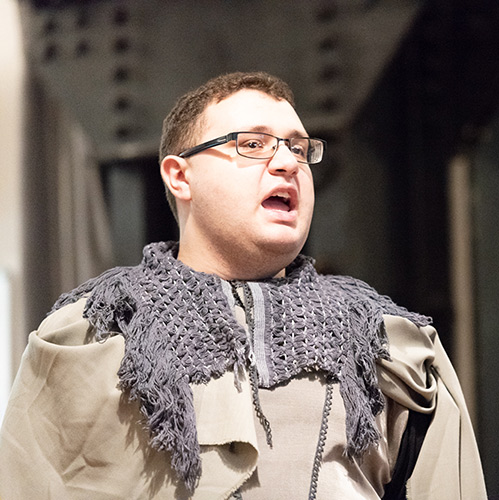
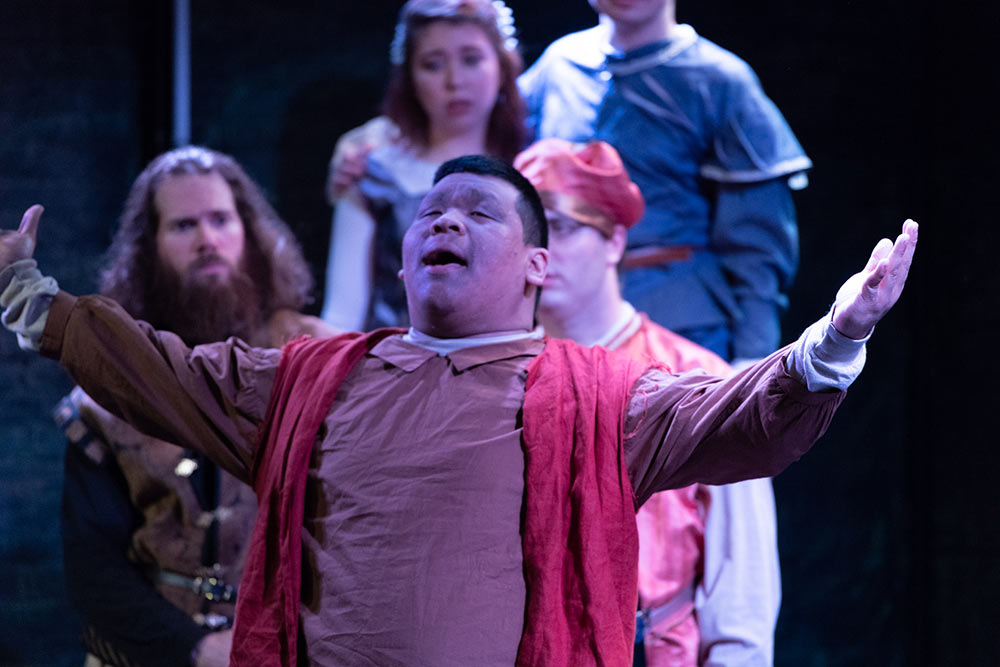
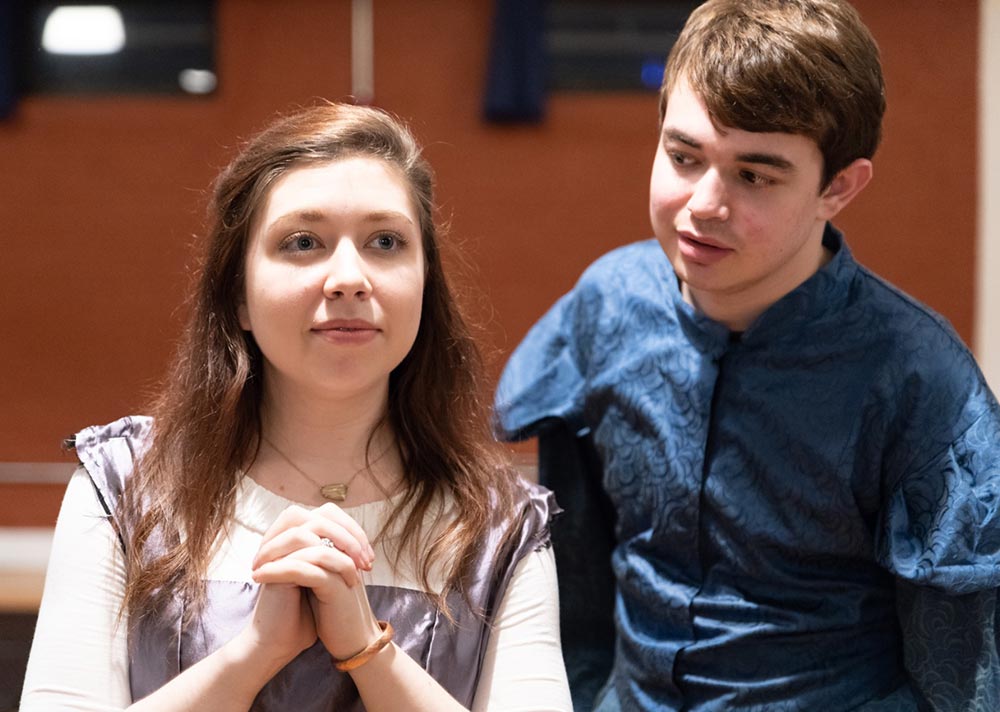
Cuesta: Josh and I did sprint Spring Awakening, and it was one of the most heartbreaking productions we did. Spring awakening is about baffling, really complicated feelings. It addresses topics that most Broadway shows–specifically musicals–don’t really address. And, because we were a neurodivergent cast, we were performing Spring Awakening through a neurodivergent perspective. It’s interesting because anyone could go through this, but neurodivergent people–any marginalized group–are especially impacted by many of the events that happen in Spring Awakening.
Woodall: Can you give me an example of the type of topic that’s covered in Spring Awakening?
Cuesta: Well, sexual abuse is a big one. I played Ilse, which was one of the characters, and along with Martha, who, unfortunately, is sexually abused by their own father, someone who’s supposed to support her, but ends up hurting her. I think with people who are neurodivergent, it happens a lot in certain communities. I know this is a heavy topic.
Woodall: Heavy topics are important, especially when we are talking about a group of people, that may not have the ability to advocate for themselves or society is telling them that they can’t advocate for themselves, so they get put in a tough position like that.
Cartagena: I did Spring Awakening, which was my first musical production. I really felt good about it because it opens a world to different priorities, and it feels like me being queer and coming out as who I want to be. It feels different. You’ve got to work hard and study and learn your lines and learn your scenes and the music as well. It’s amazing because I got to play Ernst, who is a queer character. I love it a lot because he tells a story similar to what I go through. I can relate the character of how he feels coming out, you know, and just being you. I’m really thankful a lot to Aubrey and Travis who offered me the role Ernst, because it shows a lot of varieties, a lot of voice dynamics, a lot of processing how to work through trauma and how to be you and take it at your own pace. Love my first performance.
Products & Services


Woodall: So, I grew up in the 90s, and I was on the EPIC website, and I saw a 90s cabaret show, can you tell me about that?
Cuesta: Well, it’s basically different songs from the 1990s, and it’s an entire collage of, like, different themes from the 90s. It could be Sarah McLachlan, it could be Backstreet Boys, it could be The Cranberries. I’m really excited for that theme because the 90s has a lot of angsty music, and I’m so excited to see EPIC interpret that.
Woodall: Yeah, absolutely. Definitely full of angst, that’s for sure.
Cuesta: I’m definitely a very angsty individual.
Cartagena: I think it’s a really good idea because it showcased not only musical theater, but it showcased different levels and styles of singing, and it’s really good. They give opportunities to those who fit the song, you know? I really love that they came with idea. You know, I didn’t get in, but I really appreciate that they took my idea, which is amazing. I did “Creep” from Radiohead.
Cuesta: Love Radiohead.
Woodall: I love Radiohead, too. I got to see Radiohead in 2006. It was really awesome to see them live. Extremely impactful vocals.
Cuesta: This is going to sound very subjective and opinionated, but that’s when music was just really, really, really creative and really, really, really collaborative. I miss the early 2000s music genre.
Woodall: I agree. I don’t know if it’s because I’m biased due to nostalgia or what, but definitely the 90s going into the early 2000s, there was more of a space for experimental music within mainstream than there is now, so you got more diverse things, you know, like Primus, but then also Shania Twain and then also Radiohead. The diversity was a lot more prevalent. I definitely missed that era of music.
Products & Services
Cuesta: A little goth, like a little, Evanescence, My Chemical Romance, and of course, Panic at the Disco, which is a little more pop, but they do implement a lot of angsty music. You don’t hear that anymore, now everything is a lot more upbeat. I mean, it was upbeat back then, but everything now is just kind of commercialized. I feel like we definitely need an early 2000s revival.
Cartagena: I actually am opposite. I love songs–a lot of ballads, you know, like, Billie Eilish. I know she has Tourette’s and I have something similar, so we have something in common and I feel like I look up to her a lot. Her songs are amazing. Also, Sam Smith or Adele or something that’s not overwritten all time and you make it your own, we can make it our own. That’s what I like about those.
Cuesta: I completely agree with you, Josh. There’s still really amazing music, especially Billie Eilish. I love her metaphorical songs about anxiety. I feel like she does a great job expressing anxiety in ways that aren’t really talked about, because anxiety is a big thing with neurodiversity.
Woodall: That’s the wonderful thing about music, right? It’s a universal language. There are so many different types of music that can speak to different people, and they can relate to it through their personal experiences. It’s a wonderful thing. What does a day in the life look like when you are preparing for a show?
Cuesta: So, in theater, you get a script, there’s audition and then in a few days, you’ll get a call back through an email. You really have to read your emails because sometimes in theater they might let you know when there’s a callback, they might not. Then if you get the callback, it’s best that you star your email. Then in EPIC, they break it down a little bit. You go to the audition–it’s always nerve wracking because EPIC is very professional, so you definitely feel that adrenaline–then, like, it takes maybe, two to six days to receive a callback. Then, whether you get the part, they’ll offer you, “Would you like this role?” And if you didn’t get in, they will tell you. They’ll give you a reason. I think it is very disappointing and saddening when you don’t get a place or the role that you really, really, really aspired and worked smart to try to audition, but instead of just leaving you hanging, they will tell you if you did or did not get into a show–specifically in EPIC–which I think is very uplifting, for me, at least. They really see your potential. In most other theater companies, they just don’t even bother to tell you, but EPIC will tell you. They’re honest when it comes to casting someone in a show and rehearsals and EPIC is prestigious. You’re expected to be on time with your materials, with everything. Of course, there are staff there. Sydney Davis, I want to reach out to her, she’s helped me through so much. And there’s always extra scripts there. You’re encouraged to always have your materials with you, but let’s say you left your script, there’s most likely going to be a script there. Then the first week or two we’re kind of just going through the script and breaking everything down, then as maybe a month and a half goes by, we start blocking, and then that’s when the action really starts to mold, and you work with your advocate to work on lines and work on character development, too.

Cartagena: So, things I do to prepare for shows. I struggle a lot with memory. I used to have good memory, but I struggle a lot with shows. My biggest thing to prepare for auditions or shows that I’m doing is basically do the song, look at the character. What character fits you the most? Because apparently, it’s not about the voice, you know, it’s more about who they see in total as a character. You can have the amazing voice and the amazing gift. But I feel like they mostly look out for who has the whole package. It’s not a judgment in place–they love us for who we are–but auditioning in real life, you wouldn’t go for a role like, “Oh, I could sing better than him. Let me try this.” No, it doesn’t work like that. I wanted to do Into the Woods one time, but maybe I was too young for the role. You know, it depends on how it fits you personally. Inside, we can feel like, “Oh, but that’s me more. I like this person.” but it’s not gonna really end up the way you want it to be. It’s more about having the voice, having the dance, having the personality, and just presenting it well. I think that’s one of them. Also, not to get off topic, but I auditioned for Spring Awakening, and I had to memorize. I didn’t want to do the show, but I really thank Aubrey so much for pushing me an amazing way. She encouraged me a lot to do the show. I was not going to audition, and I was like, let me just do it. It could be a chance. Maybe she’ll give me a hint, like “You got this. I want you to do it because I know you fit the right role.” It all depends on how you put it together and what kind of casting director wants to see you, and they might want to see you understudy, and you have to study multiple roles, and that’s it. I feel really calm about it sometimes when I get at the middle section.
Woodall: So, it sounds kind of like there has to be a lot of adaptability on your side, where you have to sort of be able to adjust to certain things.
Cartagena: I think I’m more relaxed when the show’s about to start, because when it’s rehearsals, I feel like I’m memorizing, learning blockings, learning dancing, learning singing, learning acting, and all these amazing abilities, but I think it’s more relaxing when it’s done rehearsing and just get to the show and show them what you got. Bring it big–big, and strong. I think that’s what makes it really happy for me, because I feel like I did it. I give myself pat in the back, and, you know, I did. We all did an amazing job. That’s why.
Products & Services

Cuesta: Thank you. Joshua. I know this sounds very subjective, but when I saw you as Ernst, I was like, “Holy moly!” You have something really, really mystical and really, really, really magical. I thought in terms of your vocal abilities, you had such a uniqueness about you. I was almost, like, envious, but in a good way.
Cartagena: You too, Mina. You have an amazing, angelic voice.
Cuesta: Thank you, Joshua. I miss you.
Cartagena: Miss you too.
Woodall: If people or performers want to get involved with EPIC theater, what should they do?
Cuesta: The best thing to do is to talk to someone who knows about EPIC and then maybe get access to the director’s email, which is Aubrey, and just email her and kind of give her a description like “Hi, I’m very interested in EPIC productions as a whole.” and then just kind of ask her what’s the best way to audition and then she’ll probably set up a meet. Back in 2021 when I first became a member, there would usually be a meeting, and then they’d offer you some things or some duties that you may have to attend to, like giving tickets during events out. Giving out tickets or checking people’s IDs, you know, and then, getting involved, taking some virtual classes. Classes are a big one. It can be nerve wracking to get into a new company and meet new people. I think as long as you work smart and do your best to approach it professionally, you can start somewhere and take baby steps to get even higher and maybe get into a cabaret. But the first thing you do is you take a lot of classes. I remember taking a lot of classes when I was the newbie.
Cartagena: I think the best thing you can do is research. EPIC is really amazing because you get a lot of opportunities, and not only that, they’ll reach out to you afterwards. You get into a program. I will say, if you don’t have friends who know EPIC Players, I will say search epicplayersnyc.org and you will get a whole website where you get to reach out. It’s a really good thing because, you know, it’s kind of hard. When I got in, I didn’t know about EPIC. I didn’t know anybody from EPIC, but my best friend helped me get into EPIC. That was kind of a connection. We have different resources–you can search the website. It’s amazing. Then, once you get there, you will start doing commitments, like doing classes, and there’s no judgment, no judging others. We are always here for each other. That’s what is matters. We get to do opportunities. The more you do classes, that’s part of the commitment to earn your way to there, to the opportunities.
Woodall: Do you have any advice or encouraging words for someone who is neurodiverse that may want to get involved with theater but is kind of scared to do that or hasn’t ever done that before and may be feeling a little nervous?
Cuesta: Oh, most definitely. What I would do is take baby steps. I think maybe just, like, maybe start off by taking classes or ask as much questions as you want about musical theater. This might sound a little subjective, but I think it’s best to start somewhere small but good. For example, taking an acting class through EPIC and learning how to read monologs and developing a little work ethic yourself and developing those soft skills. If you’re up for the challenge, then maybe audition for a play, but sometimes that can cause a lot of anxiety or it can make you feel drained, you know? So I would suggest taking those soft skills. Soft skills will give you the foundation. That’s what I’ve always done, and I’m still in the process of those skills. Sometimes it’s not always easy to embrace those soft skills, but remember that those soft skills are going to really not only train you for professionalism, but also help you psychologically through the process. For example, if you take an acting class or an audition ready EPIC class kind of show–which I still do even though that I’m in plays–you know how to audition for a play, so I think the best thing to do is soft skills.
Products & Services

Cartagena: So if people don’t have the access to EPIC–which I encourage everyone to have access because EPIC is amazing–have a list of pros and cons, and the pros of what you want to achieve like what’s going to happen if you do well. and stuff like that, and the cons will be more of a negative thought, but I wouldn’t think of it as negative. I would think of as positive, because anybody can do it. I started singing in 7th grade. I didn’t really start when I was small, but I feel like growing up, I got the chance and opportunity to open up my voice, and my singing is my safe zone. It’s a safe place for me and I get to sing and perform and dance and act and all these kinds of amazing instruments that I play. Piano–I want to really learn. It’s good to take initiative and learn more. Ask questions. Always say, “Hey, how do you do that? I like the way you play that. Can you teach me or stuff like that?” Be confident in yourself, because that’s the most important part, is being amazed and telling yourself great things. Never beat yourself up. Always think positive in a way, whatever you want to do, because you can do it, and you will make it great.
Woodall: Do either of you have anything else that you want to mention that we haven’t covered today?
Cuesta: Well, I think I want to talk about diversity. I do love where diversity is going with performance. Not only is there EPIC, but there’s other theater companies that provide performances and classes for people who are neurodivergent. There are places that we don’t know about, like in California, in Florida and many states. However, I think that people have to realize that people with disabilities are not just like a minority group. It’s much more general, you know? I think more general theater groups can provide programs specifically for people who are neurodivergent and maybe adopt some of the foundations that EPIC has. We need society–especially education institutions–to do a better job with providing accommodations or creating a space for people with disabilities. I acknowledge that there are accommodations, which is very helpful, but that’s not always enough. Yes, I think we’ve come a long way when it comes to performances, but we’re still really behind. I mean, at least through my experiences. This is a little subjective and a little biased, but we’re still behind. On a more general note, higher education–specifically in college (through my experiences, at least)–if we can create a space that’s similar to EPIC, where the material and the things that are being taught are accustomed to people’s individual needs. I unfortunately don’t see that or a lot of that in higher education. Even though I see accommodations, I just personally don’t think that’s enough. I think an adaptive curriculum–which EPIC is very professional, but it’s also adaptive all at the same time–I think that’s what college should be. Many people would disagree on me on this, saying, like, “Oh, it costs money,” and “Oh, it’s higher education,” but if we’re going to provide equitable access, then we’re going to have to consider catering things towards people’s needs. It’s just that higher education is equality but not equity for people who are neurodivergent or autistic, or people with learning differences or disabilities. We really need to do better generally rather than performance opportunities. That is my opinion.
Products & Services

Cartagena: I wish they had more queer LGBTQ+ musicals. I feel like they have Kinky Boots, but we as queer, we don’t get a lot of recognition. Even being neurodiverse mixed with a gender/non-gender confirmed, you know? I feel like no matter what happens, to have more opportunities for those who are interested in that field. I’m queer and I’m neurodiverse. I want to be out there more. I want to be comfortable in my spirit. I wish more people did not feel insecure. Everybody’s loved for who they are–not everybody’s gonna like it, but if nobody likes it, that’s their problem, you know? We are who we are, and we should definitely do more musicals. I’m hoping they have a musical on Broadway soon. It’ll be amazing to keep the pace going. We had a lot of Tony award winners–Conor Tague, who was part of How to Dance in Ohio, and it really means a lot that he did that. He did an amazing job.
Woodall: Have either of you heard about abilityE?
Cuesta: I think so. Do you mind elaborating a little?
Woodall: Yeah, sure. So, abilityE is part of our nonprofit group that we have, and it is a free platform for people within the entertainment industry that identify as having a disability. You get to put your profile on there, and studios that are looking to hire authentic talent can find you on the platform. I would definitely encourage both of you to make a profile on there because it is free to use, and it’s a way for you to be able to get connected with studios that are wanting to hire authentic talent for various types of productions. That’s something that we’ve been doing for a while because we did recognize a need for disability inclusion, particularly within the entertainment industry.
Cartagena: Awesome. If I don’t have autism but I have a disability, can I still join?
Woodall: Yes, absolutely. It’s open to everybody that identifies as having a disability. You don’t have to strictly be neurodiverse. We have a lot of people on there.
Cartagena: That’s cool.
Woodall: Well, thank you both for your time today.
Cartagena: You too.