






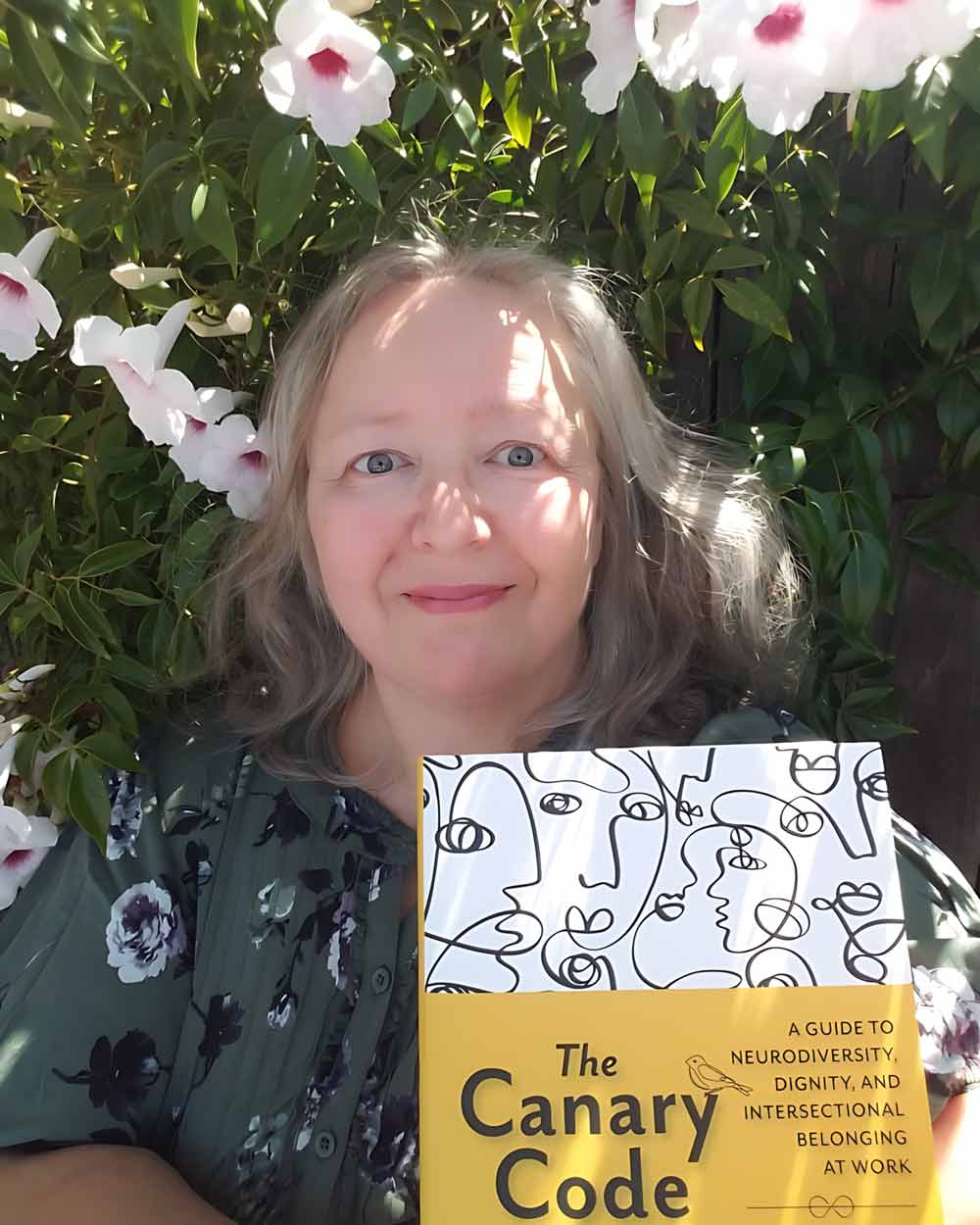
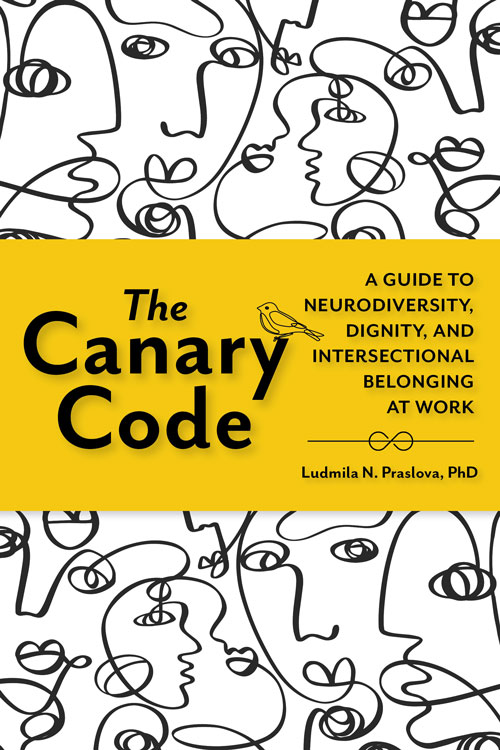
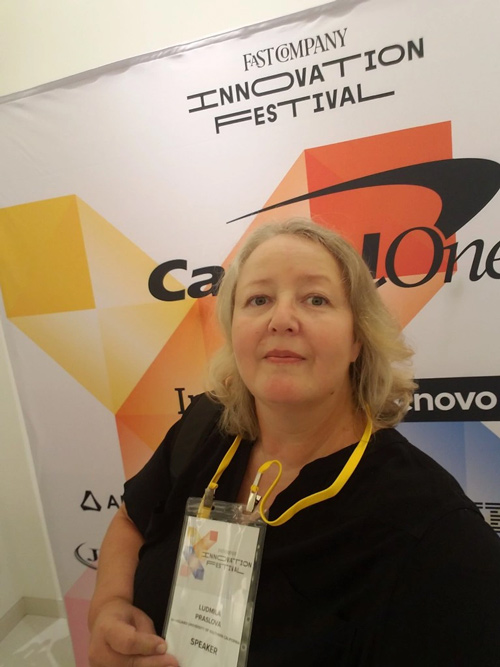
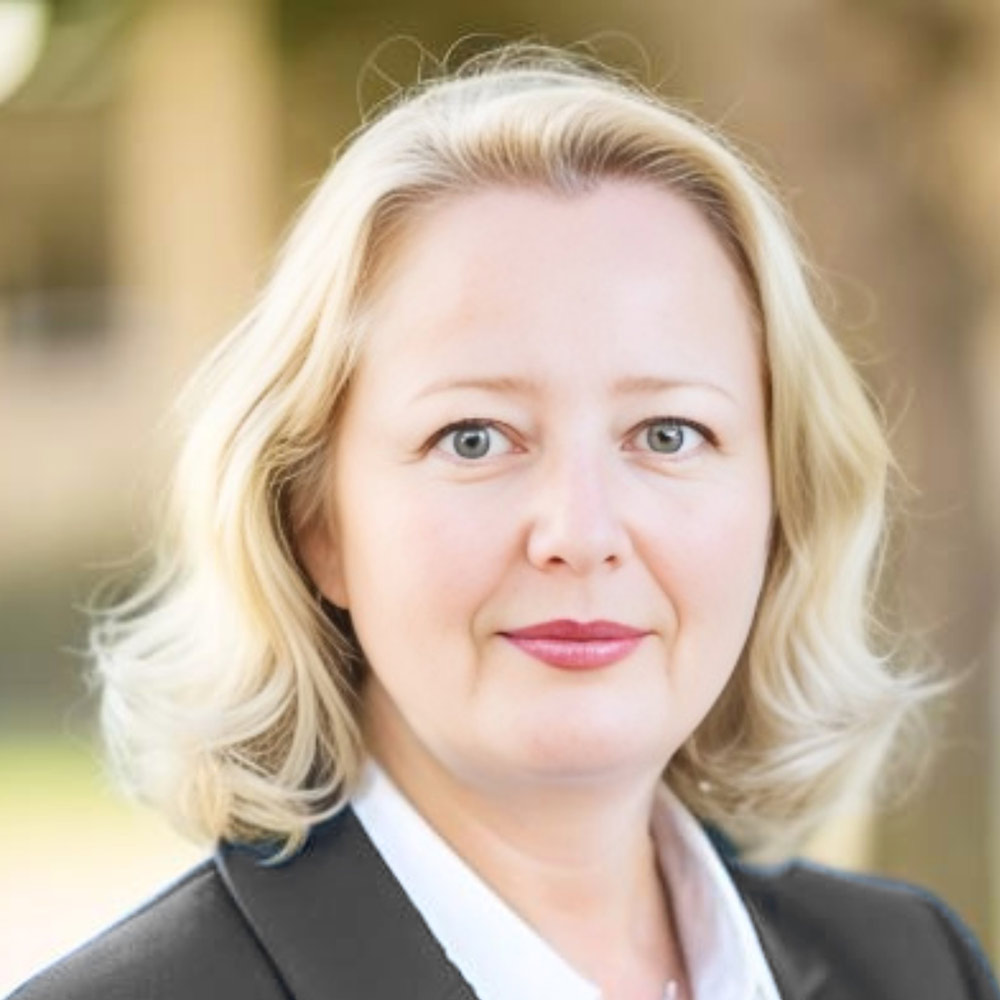
Earning the title of Director of Intercultural Relations by age 25, Ludmila Praslova, PhD is well versed in the corporate world. Being told point-blank that as a neurodivergent woman, she would never advance past that title made her well versed in discrimination. It also sparked a desire in her to do more–to change corporate culture. Earning a doctorate degree in Industrial-Organizational Psychology gave her a platform for change, and her new book The Canary Code addresses exactly how we can be inclusive on the organizational level.
ABILITY Magazine’s Jennifer Woodall joined Praslova during a virtual interview to discuss her inspirations behind The Canary Code, what an inclusive workplace looks like for everyone, and how diverse and valuable neurodivergent employees can be.
Jennifer Woodall: What inspired you to write The Canary Code, and what impact do you hope it will have on workplaces worldwide?
Ludmila Praslova: Well, one big influence is just the horrendous unemployment rates for neurodivergent people. In the US, the estimate is for autistic people with college degrees, it’s up to 85% [unemployment], which really does not need to be happening, and about 30% to 40% for all neurodivergent people. There are countries who do a little bit better, like Germany and Australia, but even there it still could be better. Unemployment rates are definitely something that can be quite devastating on the individual level for neurodivergent people, and it’s definitely not good for society to have groups of people included to that degree. That’s really the pain point that I wanted to address. But of course, there’s also my own journey and experience with the lack of inclusion and specifically intersectional inclusion. I would work somewhere and it would be wonderful on the big culture level, but completely oblivious that you need to respect gender, or someone will be talking about gender, gender, gender, but completely exclude disability. There’s also this intersectionality piece that was very important to me in addition to addressing specifically workplaces and the lack of inclusion of neurodivergent people.
Products & Services


Woodall: Can you elaborate on the significance of neurodiversity and its role in fostering innovation and productivity within organizations?
Praslova: Sure. By definition, neurodivergent people think differently from the average. Our thinking styles could be much more visual or much more systemizing. There’s a full range, but we tend to be on those margins where the creativity comes from. Creativity also comes from different perspectives. Sometimes people focus on just the singular genius. Yes, I do use examples like that in my book. For example, I talk about Nikola Tesla and how he literally changed the world by his creativity, but it’s not just a singular genius that gives this boost of creativity and innovation to your company. It’s also just the richness of perspectives overall that supports innovation. If you only hire that average person that thinks within this traditional corporate box, you’re not going to have the richness of perspectives. That is something that would really make your organization innovative and just even aware of how quickly the world is changing.
Woodall: Can you share a compelling example of a company that has successfully embraced the principles outlined in The Canary Code and the transformative effects it had on its culture and productivity?
Praslova: Well, the book is actually based on multiple case studies. There are some companies that have been doing this type of work for quite a while. One example is Ultranauts, which is a tech company. They’ve been practicing flexibility–for example, work from home–way before anyone else. When the pandemic hit, no problem. They were already remote and fully flexible. They’re also transparent, and they are posting all the minutes of all the meetings. Ultranauts was designed initially for employment of autistic people. They are majority neurodivergent, but they’re also attracting all kinds of talent and all kinds of communities that are traditionally marginalized because of their systems and how they are arranged. Another company I absolutely love is a little bit different, and that is a hotel chain in India called Lemon Tree. They decided to hire people others consider unhireable. They started deaf people. Then they expanded to all kinds of people, like survivors of acid attacks, but I specifically looked into their practices for people with Down syndrome. They tailored jobs for what they can do instead of thinking, “Oh, okay, so those people just can’t do anything. We’re not going to hire them,” they created jobs at which people with Down syndrome excelled, and the company is also thriving. There are many organizations that do amazing things. Now I’ve heard some universities and colleges are actually using my book structure and the way I present information to revamp their courses. That’s an unusual use of what I was doing in my book. Taking the form rather than the principles, but that’s cool, too.
Woodall: Yeah. That’s really cool, though, that it’s being adopted into universities. Have you heard of a company called 101ability?
Praslova: I think so, but I’m not super familiar with them.
Woodall: They sound like the first company you mentioned. We host a career fair called ABILITY Job Fair and they participated. They’re a tech company that just has a sole focus on hiring neurodivergent people.
Praslova: There are several really good tech companies that do this. The problem is we need to expand it beyond tech, so that’s a whole other conversation.
Woodall: Yeah. My cousin has autism, and she’s a brilliant artist. She’s amazing at art. She hates technology. What I noticed is a lot of the focus on neurodivergent positions are within the tech industry, but she hates it. She’s like, “I don’t like technology. I want to draw.” Making room in other professions to have the same draw for neurodiversity would be amazing to see.
Praslova: That’s one of my pet peeves because whenever people ask what jobs are good for autistic people–any kinds of jobs this particular person is suited for because of their individual set of talents.
Products & Services

Woodall: In your experience, what are some common misconceptions surrounding neurodiversity, and how can we overcome them to promote greater understanding and acceptance?
Praslova: That’s one of them. That neurodivergent people seek a particular range of jobs. If you’re dyslexic, somehow, you’re supposed to be creative. Well, some are and some aren’t. Or if you’re a ADHDer, are you supposed to thrive in an ER environment. Well, some do and some don’t. Trying to see people based on whatever label and just making assumptions about what job they’re going to enjoy. There are people who are ADHDers and they love tech, and there’s literally any talent they want, any kind of job. Then in a more general way, it’s the extremes of focusing on either all limitations and there are no abilities. So whatever label there is, whether it’s dyslexic or autistic or any other neurodivergent label, people are like “Okay. So then you can’t do anything?” and the complete denial of abilities. On the other hand, we have this idea, “Oh, so autistic people, they have super powers,” or “People with ADHD, they have super powers,” and the complete denial of struggle that comes with it. Sometimes it comes from looking at the more privileged autistic and ADHDers and whatever neurodivergent people who are able to self-accommodate because they can afford it. They are able to say, “Well, I got those superpowers.”, but a lot of people have so many struggles. People are saying, “Oh, we’re going to hire autistic people because they’re going to do twice the work of the average person.” I mean, that was literally the argument that’s been presented over and over and over by some companies, Hire autistic people because they do twice the work of the average person. No. Autistic people have done twice the work of the average person, and I have done that too, but that comes from not taking breaks and physically working until you’re physically sick, so making this into a superpower and a hiring argument is a significant problem.
Woodall: I can definitely see that, especially when you get into the hyper focus, where you just forget to eat and you don’t really drink or anything like that.
Praslova: That’s how I work. It works, but it doesn’t mean that I should be forced to work like that 24/7 and be expected to do it.
Woodall: When corporations are operating on a bottom line standpoint, they look at that person, they go, “Oh, wow, that’s incredible.” But It’s not fair, like you’re saying, for that to be expected to happen.
Praslova: And then they’re just going to pile more and more jobs on you. So that’s literally what happens, and if you’re not careful, and if you’re just an autistic person who is trying to people please because you’ve been bullied your entire life and because you don’t really see hidden agendas, then you are going to be forced into years and years and years of overwork until it destroys you.
Woodall: How do you envision the future of work evolving as organizations increasingly prioritize neuroinclusion and intersectional belonging?
Praslova: Well, the whole idea of The Canary Code is that all neurodivergent people are canaries in the coal mine. They’re more sensitive to whatever is toxic and not good for any human in organizations, so really making organizations more neuroinclusive and ensuring intersectional belonging–including those who are on the margins and those who are most affected by toxic environments, bullying, the lack of transparency–is something that’s good for everyone. It’s really making organizations more human-centric and less toxic for everyone, because when canaries can breathe freely and be creative, so does everyone. It also doesn’t mean more progress. I’m not talking about bringing more programs for every label. We actually want just fewer barriers, not saying, “Okay, so how do we help autistic people or people with PTSD, to get over that barrier that really shouldn’t be there to begin with?” Let’s get rid of those barriers. There are many unfair barriers in organizations, and just make them more just and less toxic for everybody.
Woodall: Some companies when they hear the word ‘accommodation’ or have someone coming in that needs certain accommodations, they would just rather not deal with that. Do you have any recommendations on how someone coming into the workforce that is neurodivergent might be able to navigate that conversation?
Products & Services

Praslova: It really happens everywhere in every industry. People just think that, “Oh, someone is imposing on how I do things,” or they automatically think this is going to be expensive, even though most accommodations are not expensive at all. If you’re talking about the vast majority, let’s say, of autistic people, working from home, flexible work or hybrid with a significant proportion of working from home, sometimes is really the only thing that people need. Or clear communication. Instead of just mumbling something on the run, talk and make it clear, or better yet, put it in writing. Make all the instructions and rules clear and put them in writing, and they just keep using it. You do it once, and you don’t have to keep running into the same problems of people asking for clearer instructions. A lot of this is really something that will improve organizations. More flexibility is going to be appreciated by everyone, and clearer communication and sticking to the rules not making things up every time you do something. That is to improve clarity for everyone. Let’s say someone does need a unique accommodation, very often it’s just different software. Software that helps dyslexic people, for example, has now gotten pretty cheap, so what’s the big deal? It used to be that text to speech, speech to text were rare and expensive. Now, it’s basically everywhere. So again, what’s the big deal? Obviously, it depends. There are some people who have multiple co-existing issues that might require a little bit more of accommodation. We did an article on long COVID, for example. There are some things that might be a combination of multiple accommodations. But still, you get a talented person who can do the job, and there is a particular tweak that you can make that is going to bring this unique perspective and bring a unique experience to your organization. We used to throw around the $500 number. Now they say it’s actually even cheaper than that. It’s under $300 because I think a lot of software went down in price. Even things like, “Oh my gosh, a special desk for someone who uses a wheelchair.” Well, apparently they say if you just put a bricks under the regular desk, that lifts it up exactly at the height that’s needed. We actually had a demonstration and people came and showed how easy it is, and that’s literally what they did. So, sometimes you need a brick or 2×4, which is, again, not going to break your bank. Sometimes people just imagine something that’s really not true. Just get rid of those assumptions and just look into it. It might be a lot simpler and easier than you think.
Woodall: Your book discusses the concept of organizational justice as a core principle of the Canary Code. What steps can organizations take to ensure fairness and equity for neurodivergent employees?
Praslova: Again, we’re not even necessarily talking just fairness for neurodivergent people. When we ensure fairness for neurodivergent people, we ensure fairness for everyone. We don’t want a back door that’s just for neurodivergent people. Let’s take hiring. Fairness in hiring. Right now, we’re really not doing very good job with hiring neurodivergent people. We’re not doing that a great job with hiring in general. Most people now, regardless of whether they are accountants or food prep or whatever, get hired through interviews. Okay, so if you are a salesperson, a face-to-face salesperson, maybe the ability to verbally sell yourself has something to do with your actual job performance. If you are a cook or an accountant or a majority of other occupations, the ability to verbally sell yourself has very little to do with your actual job performance, and sometimes it has the inverted relation to your actual job performance.
Why not ensure fairness in hiring by giving people mini job tests specific to what they need to do–and I’m not talking about those two, three weeks camps because that’s a lot of unpaid labor–I’m talking like 30 minute snippets of specific qualifications of what you need to do. I’m a university professor. To get a university professor job, you need to teach a class. That makes perfect sense because that’s what we actually do. Why in so many occupations, people think that just talking to someone is going to replace the actual ability to show whether you can do something doesn’t make any sense. Or the resume, or how much experience you’ve had with something. Maybe you didn’t have official experience, but you can do the thing. If we had people demonstrate their skills, that will ensure really a lot more fairness in hiring for everyone. When we do this, which is the use of a valid instruments, which is a lot of the principles of the Canary Code, we actually not just get rid of discriminatory biases that interviews are riddled with, but we make better hires because we use more valid assessment of someone’s ability to do the job because we’re asking them to do the actual snippet of the job. It’s going to be better for organization and it’s going to be fairer to every job applicant.
The same thing for performance evaluation. A lot of it is, “Okay, how often do I see you and do I like your smile?” The same thing, promotion. Remove bias, use clear criteria that are known to people that are clearly job-related. Stick to those criteria for everyone, and that, again, will just ensure more fairness in the organization in general. Right now, neurodivergent people do tend to be hit by those aspects of unfairness more than others because the system was designed for neurotypicals, but it doesn’t make this system fair in general. It’s more unfair to neurodivergent people, but it’s not really fair to neurotypicals either because there are cultural differences, there are gender differences that also get caught in those biases when we don’t stick to criteria and do whatever in our interviews. So, removing bias and then creating checks and balances and ability to double-check high-stakes decisions, will go a long way in fairness for everyone.
Products & Services
Woodall: That’s such a great point about the interview process and how it pertains to the job type. I’m a huge fan of a working interview just because, like you’re saying, you get to show your skills and you’re relying on this piece of paper that’s like, look what I can do.
Praslova: It’s much more realistic for everyone.
Woodall: So as someone who has navigated both academia and corporate environments, what advice would you offer to organizations seeking to foster a more inclusive culture? We covered this a little bit, but you can you go more in detail about it?
Praslova: Right. We obviously can start in many different places, but there’s a reason participation is the first principle in the Canary Code. I would start with participation and ask your people specifically about their pain points. It could be, “Nobody understands how do you get promoted in this place.” Or it could be “The office spaces are considered horribly and are giving people migraines.” Or it could be something else. Your people are the ones that are going to tell you what the pain point is and why there is, for example, turnover among neurodivergent people or pregnant people or whatever. Start there, fix that pain point thing. Then whenever you want to do any other inclusive work and take any other steps, you’re going to get a lot more support for whatever else you’re going to do. You can start implementing systems and taking down more barriers. I am a big fan of just finding out this biggest pain point that’s really hurting your people now, taking care of it, and then going from there. Then you can ask me, of course, and I’ll be happy to come and consult with you, but it’s really your people who are going to tell you what their pain points are.
Woodall: Yeah. No, that’s a great point, too. For our job board packages that we have for companies, we do consultations, like a one hour consultation thing, where we basically teach them how they can be in accommodating workplace. But part of that is teaching them, talk to the people in your workplace that have the disabilities. Ask them what they need for accommodation because everybody’s different, again, touching back on that. And open communication is going to be the first step of success, for sure.
Woodall: In what ways do you see technology playing a role in facilitating neuroinclusion within workplaces? In addition, what potential changes do we need to address?
Praslova: Well, that’s an interesting question because sometimes people say, “Oh, yeah, technology is going to save us.” or “Technology is going to ruin us.” Obviously, technology is a tool that can be used for good means or for bad means. For example, I already mentioned some tech that can improve accessibility. It could be anything from screen readers to text to speech to whatever else, the organizational software that takes the load off executive function, little robots that help people reach things that they can’t reach physically. But people are also saying, “Oh, the robots are going to make everything possible,” or “ChatGPT is going to solve all the neuroinclusion problems.” That’s not going to happen. It’s not going to replace good leadership. It’s not going to replace just sound decision making within the organizations that is done by ethical and caring humans. It’s ultimately humans who make decisions about hiring and performance management and whether or not to provide someone accommodations. That’s really the crux of it. Technology can only go so far and not putting an app on somebody’s phone that’s going to bug them every 20 minutes, telling them to relax is not going to help people, especially it’s going to annoy some people to no end.
So just saying, “Oh, yeah, there’s an app for that.” I think people are getting to the point where it’s like, “No, no more apps.” There definitely is a tension that some people are uneasy and stressed and just experience a lot of techno stress, both from having to learn things all the time and the future anxiety. Again, that takes us to human ethical decision making. If people are using tech as a threat because they like their employees scared and they think that a good employee is a scared and anxious employee, and they’re telling people, “Oh, well, you better behave and suck off or I’m going to replace you with whatever,” that’s a human behaving unethically. That’s not really a tech problem. It’s how people are using it. If we are really not thinking on the societal level about what’s the appropriate use of tech and what’s not appropriate use of use of tech, we can really create society that is even more anxious than it is now.
We do know that mental health is not going very well. There is a potential both for tech overwhelm and tech anxiety to really mess up human psyche. Obviously, neurodivergent people who are already more prone to anxiety might be even more impacted by that. That, again, is a matter of ethical human leadership, because what people are saying, “Oh, you’re going to be replaced by a robot.” or “You’re going to be replaced by someone who knows how to use technology.” actually, no. You’re going to be replaced if someone in a place of influence decides that human value versus monetary value equation always needs to be solved in favor of short term monetary value. I do think, in the long term, it’s just not going to work because if you get rid of all the employees, we’re going to be buying stuff. Short term people making decisions that are really hurting people, that is something that needs to be addressed or humanity is going to end up in a huge crisis. So, It’s a humanity question. Tools and human ethics are just more important than ever because tools are powerful and how we use them, it just needs to be an ethical decision.
Products & Services

Woodall: What actionable steps can individuals take to advocate for neurodiversity and promote inclusive practices within their own organizations?
Praslova: Yeah, so my entire concluding chapter is about it. One point to remember is that you really can lead from anywhere. Yes, CEOs have power and the boards have the leverage that the average person doesn’t, and they can change organizational policies and make things more fair through that. But there’s a lot that an everyday person can do just by being an example. For example, I don’t have to be a big boss to ask during the meeting if everyone had a chance to contribute, or just say, “If it’s a virtual meeting, do we really all have to be on video? I don’t have a big problem with it, but I read this article that’s for some people that creates anxiety. Why don’t we let people do whatever works for them?” and “How about we allow some brainwriting in addition to verbal brainstorming? Because I read this article and it says that you actually get more ideas and better quality ideas, and it also gets introverts and people who are less comfortable speaking to participate.” You can do those daily things and be an example. That can actually lead to pretty significant change.
Also building alliances. Building alliances with other people who might come from a different group, but they will benefit from the same changes. For example, all kinds of people benefit from flexibility, from working parents to students. If we’re just making it an issue of one group, we’re less likely to accomplish an inclusive change versus when we’re saying this is good for all kinds of people. So, advocating for changes that are good for neuroinclusion, but are also just generally good for pretty much all employees. Just again, thinking about everyday communication. How do you structure your emails or how do you use a combination of spoken and written communication to reach as many people as possible? Sometimes doing those things is really the best example. We can talk about people in specific position then. People in human resources can arrange training, can check for whether procedures make sense, and check what they do against neuroinclusion audit, and make suggestions for how to train leaders to support neuroinclusion in the workplace. There are people who have more leverage within an organization, whether it’s HR or training and development or line managers or CEOs and board members. I actually have a huge table that gives specific ideas for each of those groups in specific places, like from HR to CEOs, but most of us are not CEOs, and we still can make a difference. So that’s something that I think is very important to remember.
Woodall: Do you see any room for something that’s maybe a branch of the HR Department of a company that might be related to disability and neurodivergent support?
Praslova: Some bigger companies have them. Unfortunately, some of them are also getting rid of them, but it could be under a disability office. There are also some organizations that have accessibility offices, which is definitely helpful. As far as neuroinclusion, a lot of education will be needed because very often people are pretty stretched, and it’s one person who is in charge of disability everything and they might be usually trained on the more visible things or more traditional understanding of disability, like you need screen readers and you need a ramp, but with so many different psychological level needs and neurodivergent needs, there may need to be training because people sometimes really do have a hard time understanding how someone who are both autistic and has a dyslexic needs to communicate. Learning a little bit more about various nonapparent differences might be helpful for those offices. Organizations that have those offices, that support those offices, that give them voice in decision making, can definitely go much further in creating inclusive environments.
Woodall: If someone who is neurodiverse is coming into the workforce for the first time, and they may be scared or apprehensive because of their experiences with bullying and things of that nature, do you have any recommendations on when they’re navigating the workplace for the first time?
Praslova: Yes. Transitions are always complicated. Learning a new place is definitely not easy for anyone. When we come into a new place, sometimes it is a matter of just learning, surveying the lay of the land, and finding that sometimes you just need one ally. If you just find one person who is accepting–who you can talk to–it can be very helpful. But they also might be wondering whether or not they want to disclose. That’s another huge question. Actually, I did a big article on disclosure. I have this idea that you might want to have at least two people that are supportive of you. In this particular case, if you are any kind of different or need help, because then it creates even a small network is better than one person. So, trying to maybe find two people or maybe three people or maybe a group that can be supportive is really helpful. Also, don’t be afraid to ask what ERGs (employee resource group) do you have? You don’t necessarily have to ask, “Okay, so do you have an ERG for autistics or dyslexics?” but you could say, “What kind of ERGs do you have in general?” If you don’t want to self-identify, you just say, “I just want to check them out.” or clubs, clubs or events.
That might be one way to just ask questions without completely self-identifying, or just asking, “So what do we do here? Have we done anything for ADHD month or autism month or anything like that?” and find out who was involved and who leads those things. That might be one way, again, to find people that might be more similar to you and find people that you might be more comfortable with. All organizations are different, and some organizations will easily give you this information. They say, “Oh, yeah, we have disability ERG.” and “We have autism ERG, and we have all kinds of things.” Another organization could give you a blank stare, which this absence of information is also information that tells you quite a bit of the current state of your organization that might influence your expectations or how you might want to go about it. Anybody is going to be learning the lay of the land of their organization. It might be a little bit more of a mine field for neurodivergent people. We might need to ask certain questions, but there are ways to ask them without disclosing what you don’t want to disclose.
You could just say, “Okay, so who is into what cause here?” That might tell you “Oh, so there are other neurodiversity advocates here.” Or, you could just ask for a calendar of specific events that you have this month or that month. If the organization has any diversity person, that might be a pretty safe place to start asking these questions. Even if they don’t do anything for neurodiversity or disability yet–again, that’s information–maybe that person will say, “Oh, maybe we should.” Maybe that’s how you might end up getting involved or meeting other people with similar interests.
Sometimes, trying to figure out what structures are there that could be supportive of this particular diversity is a helpful first step, and working with what is there. You obviously need to know that those things exist. Relying on just your workplace may not be enough, but joining something like a group. There’s so many now online groups for neurodivergent people in the workplace. I have a LinkedIn group, and there’s all kinds of groups where you can ask those questions in a non-threatening environment that you won’t ask of your colleagues, but you can ask just someone with more work experience, and that can be really invaluable. There are online groups where you can just ask those questions without having to out yourself in the workplace if you’re not ready to out yourself.
Products & Services


Woodall: Do you know of any college programs that are accommodating to neurodivergent people?
Praslova: Well, there are entire colleges that are specifically for neurodivergent people. So Beacon College in Florida, or Landmark–somewhere in New England I think–are entire colleges based around neuroinclusive learning. Then there are many, many universities where most of them have in some shape or form, neuroinclusion programs, but there are some larger ones. I mean, like Stanford, they have all kinds of things. You could like the particular university because you like their chemistry program, but you can also inquire whether they have considered neuroinclusion and what they do.
Woodall: Is there anything else that you’d like to cover?
Praslova: Just that everyone is in their own place, and sometimes the society just tries to put neurodivergent people into our boxes. One of the reasons I wrote my book is to blow those boxes apart a little bit and to show the diversity within neurodiversity. There are many different ways to be neurodivergent, and that includes leadership. Very often society tells us, “No, neurodivergent people can’t be leaders.” but there are many ways that people can exercise leadership, including through thought leadership and through writing. I just think sometimes neurodivergent people have faced so many barriers. It’s hard to see the possibilities, and really, I think just finding someone who may be similar to you, but not to other neurodivergent people and be inspired by their example is really helpful. That’s why I put so many personal stories from different people, from different types of neurodivergent, just to give people something to see, “Okay, so those are the struggles that we experience in the workplace, but then there are also opportunities.” I talk about leadership by people with Tourette. I talk about leadership by people who had brain surgery and to recovered from that. Really, neurodivergent people can do all kinds of things, and we don’t have do it in ways that society tells us to do it.
Woodall: Well, thank you so much for taking the time to talk to me today.
Praslova: Well, fantastic. And again, the more your divergent voices we have out there, the better. Have a good rest of your day.