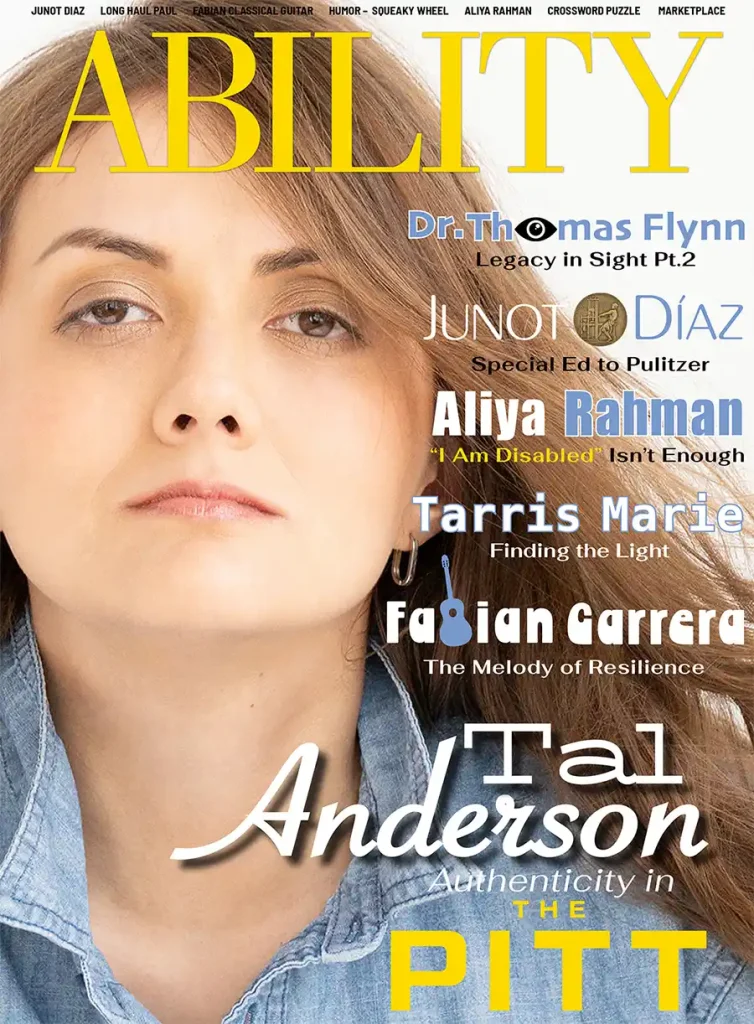







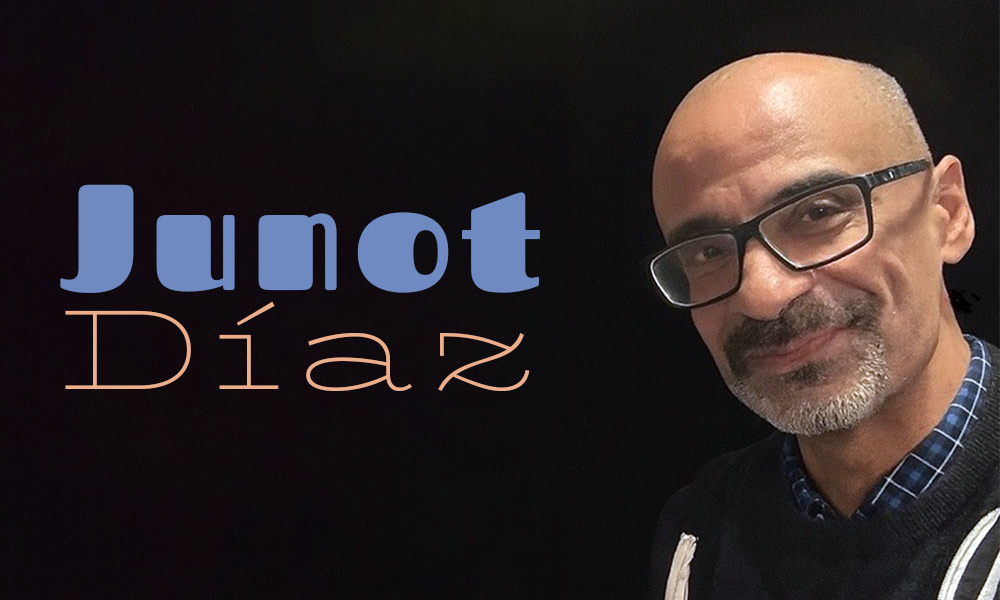
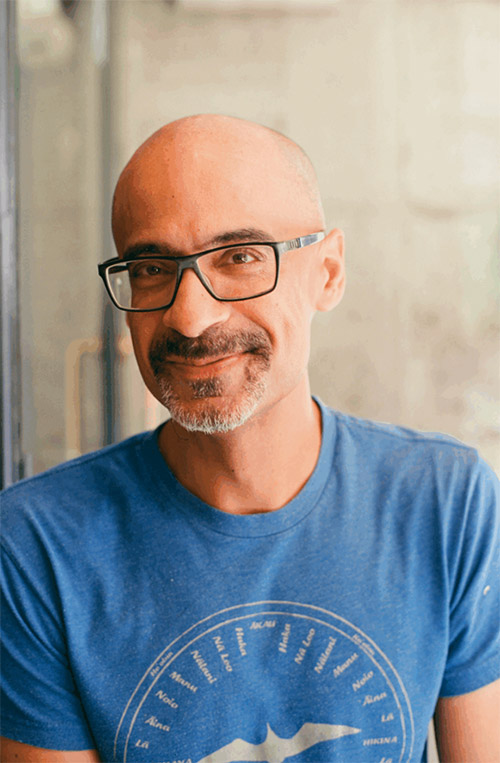
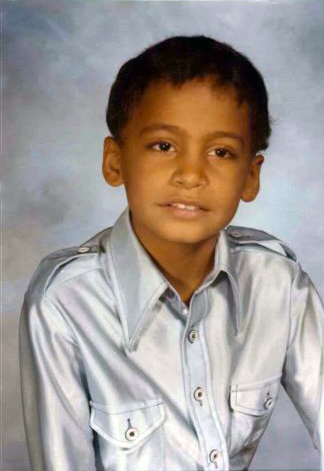
The life of acclaimed Dominican American author Junot Díaz serves as a case study in perseverance and tenacity. After arriving in New York City in the 1970s at the age of seven, Díaz and his family soon relocated to New Jersey, where they began their pursuit of the American dream, a journey familiar to many immigrant communities. Struggling to learn English as a second language, Díaz was placed in special education and faced significant challenges in school. Despite being a failing student, he found solace and escape in books.
Today, Díaz is a professor of creative writing at MIT and the author of several celebrated works. His most renowned book, “The Brief Wondrous Life of Oscar Wao,” earned him the Pulitzer Prize for Fiction in 2008. He has also received the MacArthur Genius Grant and been inducted into the American Academy of Arts and Letters. In a recent interview with ABILITY Magazine, Gina Velasquez spoke with Díaz about his experiences as an immigrant in the United States, his struggles with education and mental health, and his insights into what it takes to succeed.
Velasquez: I find it interesting that you’re an award-winning author and you struggled to learn English.
Díaz: Yes, very much so. I had great difficulty with it. I was one of those people who was put into special education, which back in the ’70s, for someone who did not speak English, was not fun.
Products & Services


Velasquez: Given your facility with language and writing, why do you think you struggled to learn English?
Díaz: It’s hard to explain. I do not actually think I have an inordinate facility with language, or above average. This just happens to be the thing that I really plug at, that I really work at. In fact, I’ve always found language very difficult. I’ve lived in a number of countries. I’ve had that privilege. Never had kids and always been lucky enough to be able to take some time and go abroad. And let me tell you; despite living in countries for six months or a year, I can never pick up even a few words. I just don’t know what it is, but there’s something amiss in my language acquisition circuitry. And it’s noticeable to friends because they can always see it. They’re like, “Wow, you really struggle to pick up even the most simple terms in other languages.” I have friends who are really talented. Wow, man, they just absorb language.
I also saw it because there were four of us siblings. We all came over at the same time. And I was able to see firsthand how I had these others— My little brother came along later. He was born in the States.—And here we are, my other siblings learn language the way you would imagine a kid thrown into that environment would learn it, which was very quickly, very organically. They had no difficulty. They just glided right from immigration to English.
For me, it was just impossible. I don’t know what was happening. Teachers quickly figured it out. They had these other three examples, and they’re like, “Man, this kid’s got a younger sister who’s picking it up way faster. And his older brother is just crushing it. His older sister is crushing it.” So, they immediately assigned me to classes. I was just basically sitting in the back of classes, not understanding what anything was, anything of it, and just, in some ways, moldering.
Velasquez: What was special education like?
Díaz: They brought a teacher in who I met with, and she began the process of really focusing and getting me to do the necessary drills and the one-on-one attention that you could get in those days when there were still some availability of resources. It’s a balance because, back then, it wasn’t as widespread, the specialization education, but the numbers were smaller. That really helped to turn the corner. But it was a process, and it was a great struggle for me.
Velasquez: So one-on-one you were able to start picking up English?
Díaz: I think it was more that there were drills that got around my block. It wasn’t that I needed one-on-one so much as that (the teacher) really went at it in a different way and got me to think around it.
Velasquez: Do you think maybe you have some learning difference?
Díaz: It’s hard for me to say. You know how it is, maybe undiagnosed. We live in this world where everybody is quick to diagnose themselves. I’m from that generation where we’re the last people to diagnose ourselves. All I know is that I’ve never been able to learn languages, and it’s been a great struggle. It’s been 45 years, 50 years, and I still can’t think of it without wincing.
Velasquez: I ask because as you said, this is a generation where people get diagnosed with learning disabilities or learning differences. I have a friend whose child was a bright kid. But somehow he couldn’t pick up reading or writing. It took a while to get him evaluated. They discovered that this bright kid has something called disorder of written expression. My friend did what it sounds like your teacher did, like special drills every day for a while. And then suddenly it clicked for him, and then he became a pretty good reader.
Díaz: That’s what I’m wondering. Yeah, that sounds very familiar.
Velasquez: That’s why I was wondering that perhaps you might have a learning difference.
Díaz: Again, I always think it’s extraordinary. From everything that I’ve seen, it’s so hard sometimes to get the answers you need, and especially when you’re a parent and you’re dealing with a child. I’m at that age where my friends have their kids, And watching them go through some of the steps that they’ve needed to go through to figure out things that are happening with their children, to get the right expertise, I’m not surprised. Of course, my immigrant mother, very poor, was just glad that we read and kept it moving. She was glad that we could read and write and speak and just kept it moving.
Velasquez: Yeah. I tell my American friends, the idea was just go to school, graduate from high school and go to college. And that was it. I don’t know how we did it, but we did okay.
Díaz: Man, hallelujah. How rare and how beautiful.
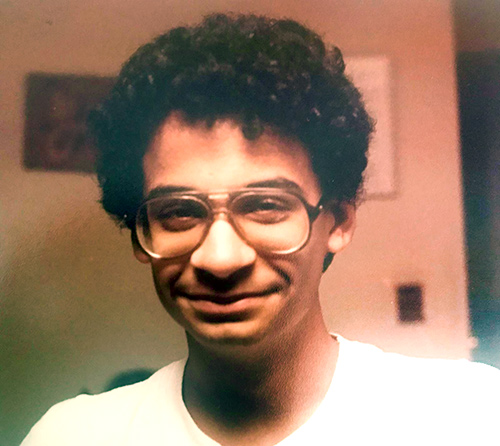
Velasquez: I understand you also struggled to get through high school.
Díaz: I was a terrible student. Just terrible. I just don’t know what it was. I think because I was already a kid who, in many ways, should have been in therapy. Probably should have been medicated. I suffered from tremendous depression starting from probably around sixth or seventh grade, debilitating levels of depression. It probably didn’t help anything in my life and anything in my education that these were mental health challenges that went completely not only unobserved but unaddressed. I shouldn’t say unobserved. People saw it but misunderstood and unaddressed it.
I mean, by the time I got to junior and senior year— I think each year.—I was racking up to close to 100 absences and just wouldn’t do the work. If it hadn’t been for the push for graduation of those days, they wouldn’t have handed anything to me. But they didn’t want me in the classroom. They didn’t want me coming back. They wanted to move me along, and they definitely did. It was miserable. Again, I look back on it now and I’m surprised that things worked out the way they did. I was able to turn things around. But my God, I was a mess, a real mess.
Velasquez: How do you think you did that? You went to Rutgers and then Cornell for an MFA.
Díaz: Yeah. What happened was that my mother basically came down on me like a pile of bricks. I get out of high school with pretty much a useless degree. My mother was like, “Guess what? You’re either going to work full-time or you’re going to start taking classes. I don’t care what you do. You’ve got to take some classes.” My other two siblings were in college. My mother was just seeing the road that way. I think she was very wise.
What happened was that I started going to a local school that accepted me. There’s always a school that’ll give a student like me a crack. I was working delivering pool tables and taking classes at night and on days that I didn’t have any shifts. I loved college. College was a completely different experience for me. I don’t know what was going on. I don’t know why. Maybe it was also just timing. Maybe my depression lifted that first semester. But I got just perfect grades that first semester and then applied for a transfer to where my two siblings were, which was at Rutgers. They were living in dorms. They were having what looked like the time of their lives. There was ample funding in those days for education, and universities were very cheap comparatively. And lo and behold, one semester at this other school, 4.0, next thing I know, I get accepted to Rutgers. And again, it was a lot different in those days. If I tried to apply to Rutgers with my transcript now it would have been impossible. I would have been laughed out. But those days, things were, I think, a little bit more forgiving. Things were a little bit more flexible.
Products & Services


I got into Rutgers, and I never looked back. I found the university experience very, very different. I think being away from home helped my mental illness a lot, just a lot. I think I was away from a lot of the triggers. I was away from a lot of the pressures. I also was surrounded by people who were very different. The university had people around who had themselves gone through the same struggles I was going through, who were able to point me to resources. It was just night and day for me. I became someone who thrived, where before, school was the worst possible outcome for me or the worst possible experience. I suddenly turned it around, and university life, in some ways, fulfilled me profoundly.
Velasquez: Was that when you realized you enjoyed writing?
Díaz: Yeah, I was trying to figure out what in the world I was any good at. I’m in college, and, for me at least, for all of its joys, there was always the clock hanging over your head and the very practical question: What’s next? I had to figure it out. I had to figure out what the hell I was going to do with myself. There was this sense that I really enjoyed history a lot. I thought, “Okay, you know what? I could just go to school. I can become a history teacher. I wouldn’t mind that. That would be fun. I’m easy, good with young people.”
Then, at the same time, I was doing this creative writing. I thought, “Well, maybe that’s possible.” When I was getting done with my undergraduate, at the encouragement of one of my faculty members, I applied for MFAs. I applied for five or six of them and got into one. And that’s where I went to Cornell. And again, it was another just incredible stroke of luck because I was denied everywhere, from the most local, you would say, the safety schools. All of them rejected me, but Cornell accepted me. I got so lucky. And that was another “never looked back” from then.
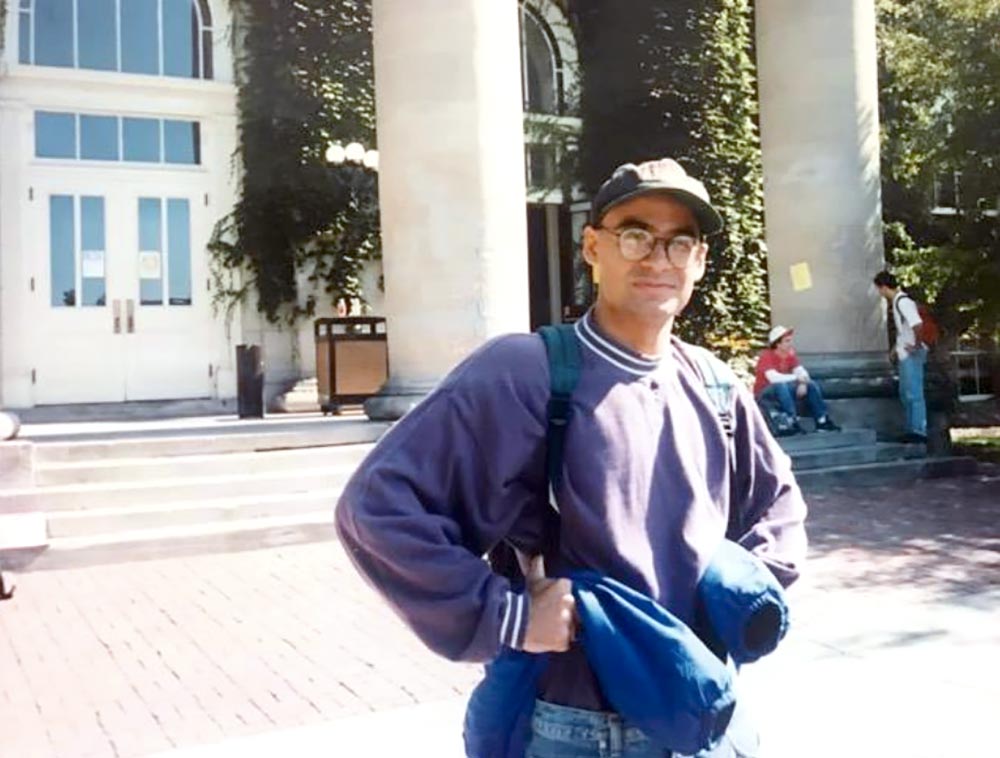
Velasquez: I’m sure it’s more than luck. They must have recognized your talent. They must have seen something there.
Díaz: I mean, you wonder. But I’ve been on applications—Listen, I worked at an MFA. I did admissions. What I mean by luck is that, sure, we get a lot of talented young people. But when you’re in an application, it’s a lot of art. When you’re in an application, it’s a lot that’s arbitrary. People get up at the right time of day or they don’t get up. If you’ve got a committee that’s in a weird mood, a kid who would otherwise be in tomorrow doesn’t get in today. I guess I was thinking from that perspective. But again, I felt lucky, and I felt like I also took advantage of the opportunity. I really went hard.
Velasquez: And did the depression lift without medication?
Díaz: No, I think I wrestled with it all the way through. I think it was just easier and better when I was at school. I mean, when I was at Rutgers, there were semesters where everything looked to me like it was coming through black and white. I barely spoke to people. If it hadn’t been for the fact that I was running and going to the gym every day, I don’t know what I would have done for myself. I can remember weeks where I just didn’t have any contact with anyone, and my friends would have to come and drag me out of my hole.
I would never say that I just got into college and everything was sunny. I think that it was definitely a struggle, but at least there were some angles and there was some help. And that was the way it was all through school. When I was in grad school, it was the same way. I would have month-long depressions where I was just useless.
Velasquez: Do you think this was related to your experience as an immigrant, living in certain communities or lack of resources and opportunities for kids of color?
Díaz: I mean, none of it helped. Being with no resources, being from a community where they didn’t even consider mental health important. Now you can get online and see all the memes like, “Oh, I’m from the immigrant communities.” Everybody has memes around it. Everyone’s, “This is what mental health looks like in my community.” And the parents will throw something at the kids.
But let me tell you, it was the silence. The looking away was complete, was total. None of that was useful. And certainly, all of those biases made the matter harder. I was carrying a lot of those biases as well. I was like: You know what? I’m not going to deal with this in the way that I probably should have dealt with it because I was also a product of these kinds of lack of resources. Yeah, definitely, that was part of it.
Look, you don’t need to be a sociologist or the person who does this work to realize that growing up in very poor communities, growing up with an enormous amount of precarity, growing up inside of the family I grew up with is just not going to leave you with the most balanced frame of mind. No. I think there’re certainly people who could come out of this very stable, but it would have been a challenge, I think, no matter what my brain chemistry was in my childhood.
Velasquez: Then fast forward to what’s happening now in immigrant communities with all the news that we see of mass deportations and undocumented people being labeled criminals. Do you think current immigration policies are impacting the mental health of Latino-American kids?
Díaz: There’s absolutely no question. I mean, I think that this period, if it continues in the same manner, is going to be another dark valley. If you think about the developmental history of our communities the same way that COVID represented this dark valley, developmentally—The way that COVID in so many places set our students back in terms of their mental health, their resilience, skills, and education. If this continues, I think that this is going to not only be another COVID-like event, but it’s going to be much worse because we’re talking about communities and families being torn apart at the seams. We’re talking about the dystopian “running man” fear.
Products & Services
This is extraordinary what has happened. This sadopopulism, as Timothy Snyder describes it, this desire that so many people have in this country to see other people be sadistically tortured in this way. I think it’s going to not only impact the communities that are being victimized, but also I think it’s going to distort the humanity of people and populations who are here rooting for this crap, who are thrilling at the sadism. I think it’s just poisonous any way you look at it.
Velasquez: You’re a professor of creative writing at MIT. Are you seeing it in your classroom at the level where you teach?
Díaz: I have so many students who are struggling with this, struggling with whether they go home, how this is going to play out. But I think, for me, it’s more that I’m a member of an immigrant community, the ground zero. My dearest best friend, I visit him in his house, and he has an extended family member who just is so fearful of leaving the house because he has himself a very irregular immigration status, and he’s just terrified of leaving the house. His life has just been transformed and completely hemmed in on all sides by his fear, by the very real danger. And that’s just one example, but there are many.
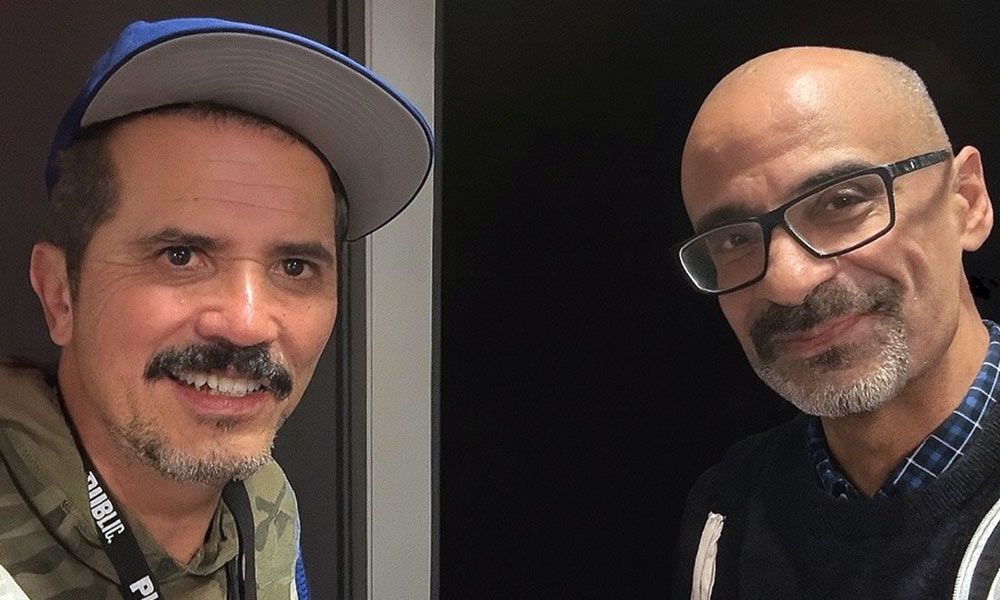
I’m that immigrant. I think many of us can know this. Many of us are this. I’m that immigrant who never really strayed too far. I may have gotten this incredible job and all these privileges, but most of my friends are still in this community. As people say about me, at any given moment, you run into him, he’s going to be with other Dominicans like him who are immigrants. It’s been nuts. It’s been fucking nuts. I cannot grasp this. I cannot grasp this. This is so horrible and unnecessary and just vicious.
Velasquez: I completely agree. Like you, no matter where I go, no matter how much I assimilate, you never feel 100% American. You always straddle both worlds. You feel it. It’s happening to them. It’s happening to me. It’s happening to all of us.
Díaz: It’s just nuts. I don’t know what to make of it. But you know what? What can one make of it?
Velasquez: Do you think there’s a recovery in view somewhere within our lifetime?
Products & Services

Díaz: Yeah, I mean, I don’t know. I think it’s just the nature of human beings. We’re not great at predicting. We’re not great at seeing the future. And we’re also just imperfect and we’re suffering. And when you suffer, it’s hard to see anything. I don’t know. I guess a part of me just doesn’t know what— I’m in that place where I just don’t know. This is very bad. That I could tell you.
Velasquez: Yeah. I’m sorry I took it to a dark place.
Díaz: We’re in a dark place.
Velasquez: I wanted to go there with you because of your very unique perspective of being an immigrant, struggling to learn English as a second language, going to special ed and going on to being a renowned author, a renowned writer.
Díaz: Well, I mean, listen, I don’t know anything except that boy oh boy, are we in for it? We just got to keep the struggle going.
Velasquez: Can you tell me how it felt to receive the MacArthur Genius award and to be inducted into the Academy of Arts and Letters? I mean, for a kid from New Jersey, how did that feel?
Díaz: I think I was stunned. One gets excited, of course, to win anything like that. It’s an extraordinary experience, once in a lifetime. But also, I think I am just stunned. Look, I am not that great a winner. Some people are terrible losers. I’m a terrible winner. I get very nervous. I put a lot of pressure on myself. I always think, “God, this makes it harder in a way.” On one hand, it was great, but, on the other hand, I think it made it harder for me to do work. So, whatever. It’s woe with me, pity, pity. I was glad for it, but on the other hand, it slowed me down. I was already an incredibly slow writer, and it just slowed me down even more. So, glad it happened, but, boy oh boy, I’m definitely one of those writers who do better when I have a lot of time just to be— just a lot of time by myself.
Velasquez: Quietly.
Díaz: Yeah. But one of the funniest things is that when I won the Pulitzer, I tell you, not everything translates to the level of culture. My mother had no idea what the Pulitzer was. You really can’t convince people of something being important if they don’t know it. My mother just simply asked, “So, how much did you win?” When I told her $10,000, she just looked at me and said, “You were making more than that the year you were doing your newspaper route.” I was like, “Well, first of all, that’s not true. But thanks, Mom.” Because in her mind, she boils it down to that. It cannot be that important if it was only $10,000. There you go.
Velasquez: Oh, wow. Do I know your mom? It sounds like my mom.
Díaz: I know, it’s incredible. It’s incredible.
Velasquez: Yeah, they bring you down to Earth. How long did it take you to write “The Brief Wondrous Life of Oscar Wao”?
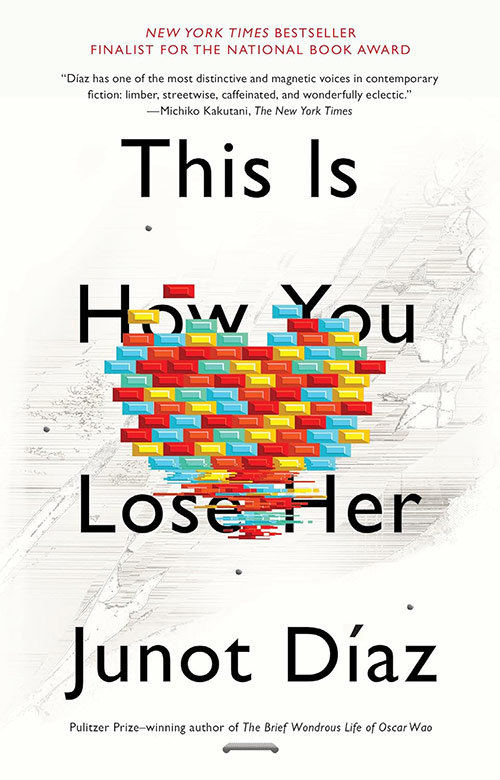
Díaz: It took me 11 years. It took quite a long time. I’m way past that mark now. I think I haven’t written a book in 15 years, excuse me, or 13 years, something like that. I just am a slow writer. As a friend of mine said, “You’re not just a slow writer. You’re the slowest.” But we’ll see. We’ll see.
Velasquez: Are you working on something else now?
Díaz: I am and hoping that something comes of it.
Velasquez: Well, I can’t wait to read it.
Díaz: I really appreciate it.
Velasquez: Is there any advice or message you would want to give to the immigrant kid who’s struggling out there, to the kid with a learning disability or depression?
Díaz: I’m not sure I’m the great person for advice. I’m also pretty unremarkable on so many levels outside of the visible success as a writer. Whenever I have to talk to my godchildren or my nephews, and I tell them, “Listen, I am nothing special. If I can do the things that I’ve done, almost anyone can do them.”
I think that these lives are so difficult. Our lives are so fucking challenging. But the truth of it is that there’s not much that a little resilience and a little persistence can’t overcome. It sounds simplistic, but it certainly proved it for me. I don’t have magic powers. I don’t have special gifts. I didn’t have anyone who looked out for me. I wasn’t in any special services beyond just the initial special ed. I got to tell you, man, I discovered that just a little bit of persistence and a little bit of resilience saw me through a lot of bullshit, a whole lot of bullshit. If you got people helping you, all the better. All the better.