







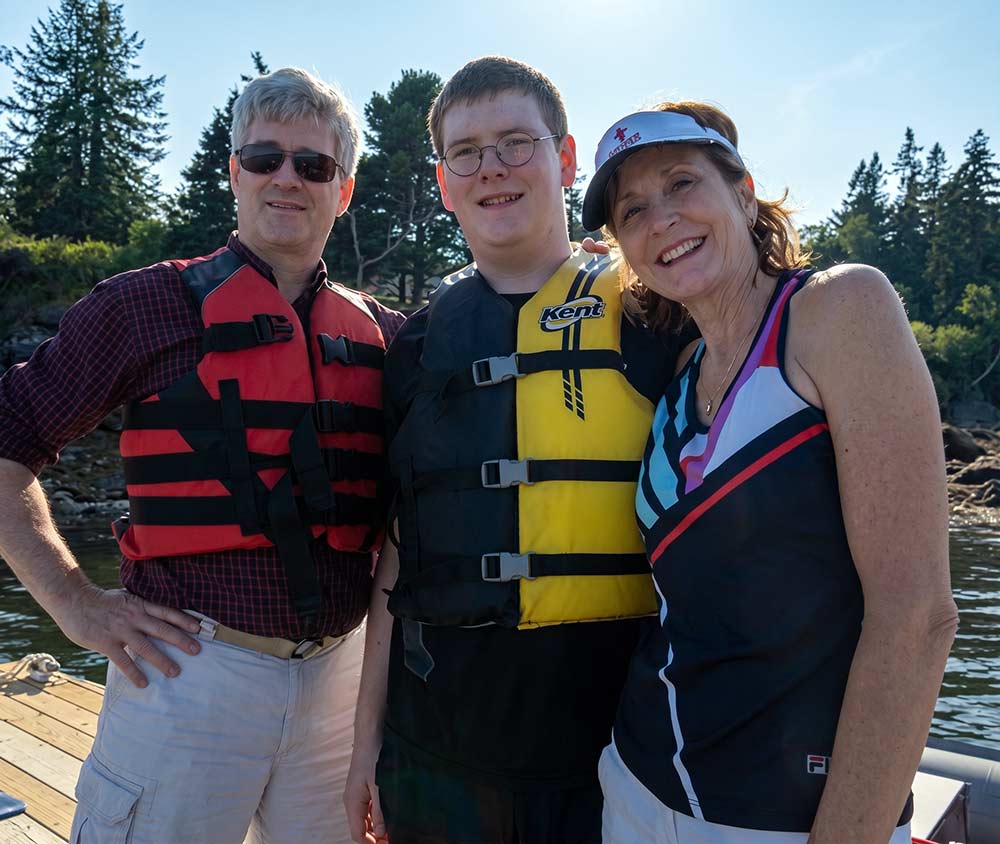
In the previous issue of ABILITY Magazine, Gina Velasquez sat down with her former ophthalmologist, Dr. Thomas Flynn, and his daughter, Dr. Erin Flynn, also an ophthalmologist. Together, they reflected on the height of the AIDS epidemic in New York City during the 1980s and 1990s — a period when Dr. Flynn purposefully took on the difficult task of treating patients with Cytomegalovirus (CMV), an opportunistic infection that caused blindness in people with advanced AIDS. Against all odds, Gina survived her terminal prognosis and recently reconnected with the doctor who helped manage her care.
In this continuation of their conversation, the focus shifts away from the AIDS crisis and toward the later stages of Dr. Flynn’s career. After relocating his practice to Maine, he anticipated a quieter professional life but, instead, found himself running a busy clinic treating patients with severe and complex medical conditions. In a rural state with limited healthcare access, Dr. Flynn became, for a time, the region’s only ophthalmologist specializing in uveitis, an inflammation of the uvea, the middle layer of the eye.
Velasquez and Dr. Flynn then turn to his personal transition from doctor to patient following his own terminal neurological diagnosis. Joined by his daughter, who temporarily stepped in to help run his clinic as his symptoms progressed, he describes the intricate process of identifying his rare condition, his deep discomfort with becoming a patient and the medical legacy he leaves behind.
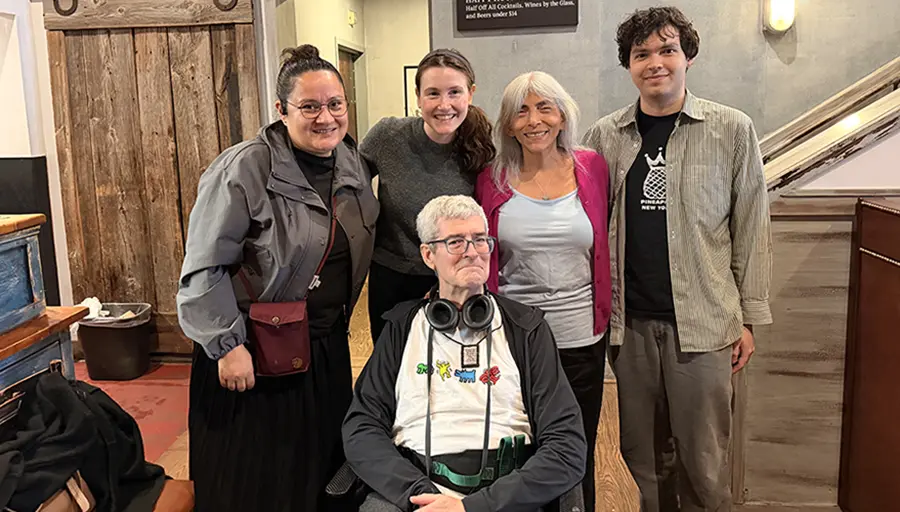
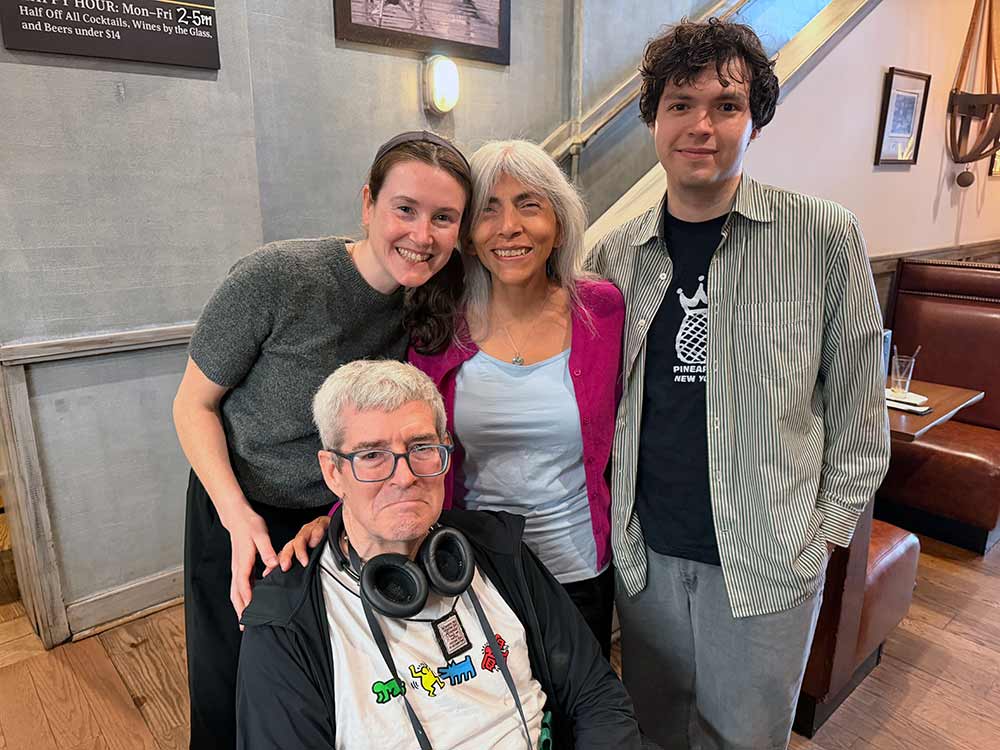
Editor’s note: Due to Dr. Flynn’s medical diagnosis, he experiences difficulty speaking. Dr. Flynn’s daughter assists in communication and expanding on Dr. Flynn’s comments. Additionally, Velasquez’s son, Aiden, commanded the audio equipment for the interview.
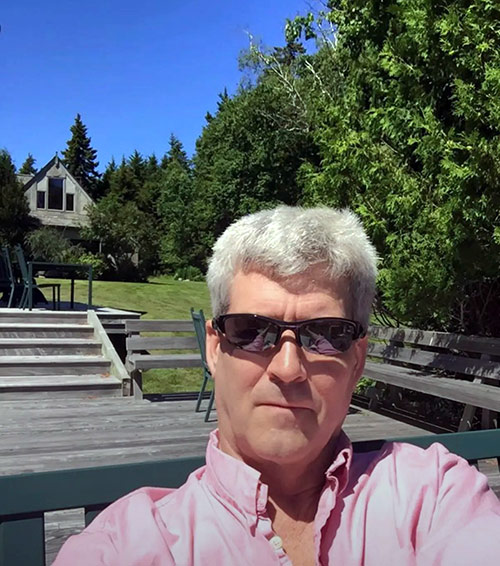
Velazquez: You moved your practice to Maine. You kept some patients in New York; I was one of them. You were 27 days of the month in Maine, three days in New York. Did you move because you wanted to move somewhere rural?
Dr. Erin Flynn: No, he didn’t.
Dr. Thomas Flynn: You got it right.
Velazquez: I think it was because your wife was retiring and she wanted to move to Maine. I’m not blaming your mom. I’m just saying it’s like a life decision.
Dr. Erin Flynn: Yeah, he was forced against his will. He was not happy about that.
Velazquez: You moved to Maine and you decided to open up shop there. What was it like to be a doctor in a rural community?
Dr. Thomas Flynn: There’s something very strange about Maine. Sickest goddamn people in the world.
Velazquez: In like health?
Dr. Erin Flynn: I think he’s alluding to the fact that healthcare there is a little underserved. The population’s very diabetic, overweight. And also, I think Maine’s got the highest rate of cancer in the United States, and we don’t quite understand why that is.
Dr. Thomas Flynn: That’s right, and drug abuse
Velazquez: I know that those other illnesses, I don’t know how they contribute to eye health, like diabetes. Did you somehow become the AIDS doctor up there as well?
Dr. Thomas Flynn: Yeah, but there wasn’t much AIDS. Most of them had died. The ones who had it, most of them had died. So, I had one exceptional young man who survived. He dressed Ivana Trump.
Velazquez: Who survived in all those years?
Dr. Thomas Flynn: Yep.
Velazquez: Well, by that point, and this is the 2010s, there were antiretrovirals.
Dr. Erin Flynn: Yes, antiretrovirals made AIDS like a chronic illness.
Velazquez: Then your patients who were going blind were going blind from cancer, diabetes?
Dr. Thomas Flynn: The first thing I learned is that I really had a weird specialty nobody wanted to do. Usually when a new doctor comes to a place like Maine, they won’t refer patients. But I had referrals from the first minute I showed up.
Dr. Erin Flynn: Because you’re uveitis.
Dr. Thomas Flynn: Because they wanted to get rid of the patients.So, I was busy from the first minute I showed up.
Patients in Midtown. Patients in New York. I take it from 40 million people in the tri-state area, Maine has 1.5 million, and I was just as busy in Maine as I was in New York.
Dr. Erin Flynn: He felt like his clinic was just as busy, if not more busy, than his uveitis practice in New York.
Products & Services


Velazquez: Was that because the other doctors don’t want to deal with uveitis, just plain uveitis, not necessarily HIV uveitis.
Dr. Erin Flynn: Yeah, a lack of uveitis specialists there. When you came up, Dad, was there anybody else who did uveitis?
Dr. Thomas Flynn: Not really. Not in Maine. So, if they did have complex uveitis, they’d refer down to Boston, Massachusetts Eye and Ear.
Velazquez: And untreated uveitis— Do you go blind from that?
Dr. Thomas Flynn: Completely blind. Yes.
Velazquez: Did some patients who didn’t get care go blind?
Dr. Thomas Flynn: Yes. I remember when I did corneas for the very first time. This young woman, and one eye looked like a piece of rock. (The eye) had been lost, and the other eye had—She was very emotional, you know, “What are we going to do? I’m going to go blind. It’s horrible.” And I smiled and I said, “No way. We can treat this.” She pointed to the eye that was destroyed and said, “They could have treated this? This didn’t have to happen?”
Dr. Erin Flynn: I’d say uveitis is treatable. It’s dependent on the therapy medication. A lot of them aren’t particularly pleasant to take. And it’s on the importance of following up.
And it’s tough to follow up if you’re in Maine and the only uveitis specialist is hours away in Boston. When my dad came there, he found a large, underserved community of patients who probably could have had much better outcomes if they’d been properly managed and treated.
Velazquez: There was a lack of doctors who are willing to work with patients with uveitis. But was there another factor for these outcomes in Maine? Was there a good healthcare system, hospitals, insurance?
Dr. Thomas Flynn: Yes. But reimbursements. Reimbursements are lousy.
Velazquez: What does that mean though?
Dr. Thomas Flynn: You spend hours and hours and hours dealing with the eye and the patient. You get paid $5 by Medicaid for that 4-hours. You do a cataract; you don’t make any money. $500 for 15 minutes.
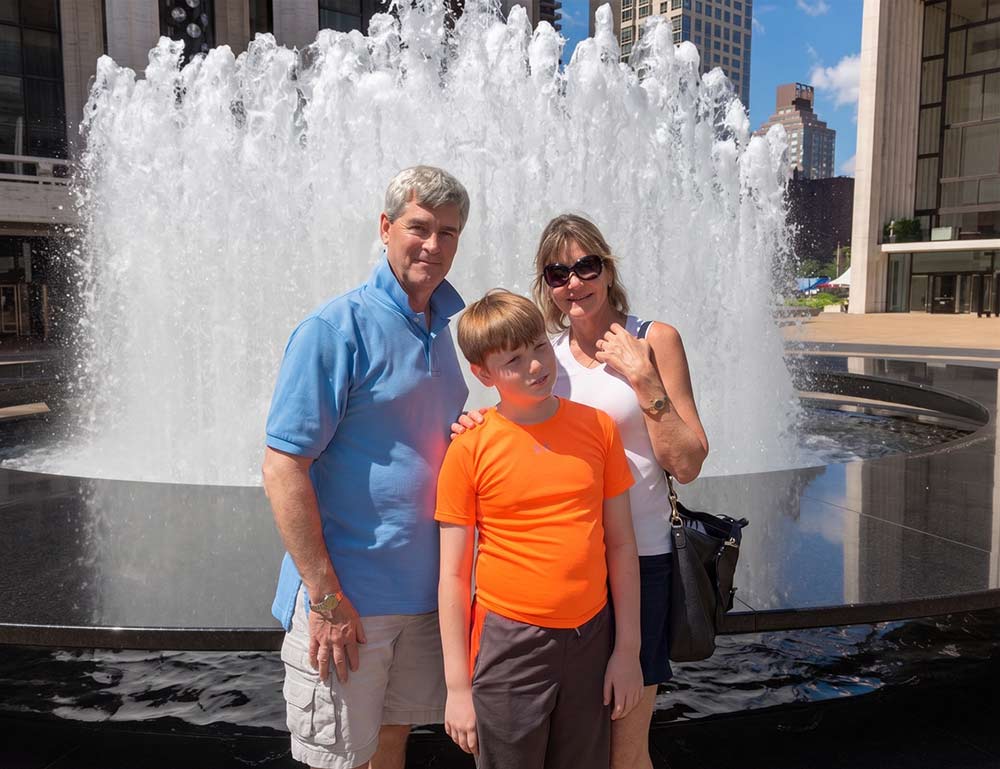
Dr. Erin Flynn: He’s specifically saying uveitis, as a subspecialty, doesn’t make the big bucks in that you spend hours with your patients. You ask the questions. You’re managing them, not just their eyes but their body systemically because you’re putting them on medications that have implications for the rest of their body. So, it’s not a quick visit. And patients get complicated. All the medications come with a host of side effects that impact the patient, all different parts of their body—which Gina, you know better than all of us—And it just doesn’t pay well.
So, the patients become your best friends. You spend hours with them. And spending hours with patients—Unfortunately, the American healthcare system doesn’t reimburse our long visits with patients. They want us to get patients in and out of the door.
Dr. Thomas Flynn: And in Maine, I didn’t have the kind of backup I had in New York. I would start people on deadly, dangerous drugs—And I’m it. I’m the person monitoring and take care of them because of busy feeders (doctors) would say, “I don’t know anything about these drugs, I can’t handle it.” I was forced to practice a lot of primary care in Maine because I didn’t have any backup.
Dr. Erin Flynn: So, it was hard to coordinate care with their primary care doctors or even rheumatologists in Maine because there aren’t many of those as well. My dad kind of had to run the show for the whole body.
Dr. Thomas Flynn: Why is the goddamn ophthalmologist taking care of your liver?
Velazquez: Oh, I see.
Dr. Erin Flynn: So, the doctors would ask this—And I’m assuming that’s because methotrexate, which is an immunomodulatory medication my dad puts on his patients can cause elevated liver enzymes.
So, my dad had to become primary care doctor, tracking and making sure the liver was okay while he’s starting this medication, making sure the diabetes or their blood sugars were controlled while starting them on high-dose steroids for their uveitis, etc. But he had to be a body doctor.
Dr. Thomas Flynn: And the psych doctor.
Dr. Erin Flynn: Psychiatrist, yeah.
Velazquez: And you served like an entire region, a couple of counties.
Dr. Thomas Flynn: For a while, the whole state.
Dr. Erin Flynn: I think now we’ve got maybe 2 more uveitis providers in the state of Maine.
Velazquez: Oh, you were the only uveitis provider for a while in all of Maine?
Dr. Thomas Flynn: Yeah. I mean, to give you an idea, I remember one patient was a scientist at the Jackson Lab. That’s the place that sells mice to investigators around the country. She was a scientist at the Jackson Lab. She came in and she had horrible eyes due to high blood pressure due to untreated lupus.
I looked at her and said, “We can take care of this. We can take care of your lupus and your eyes.” And I made a call to the rheumatologist, saw her, and she was put on a horrible drug called Cytoxan emergently (urgently), which shuts down her immune system.
So, a few weeks later, she was better, but she wasn’t. She was funny when I first saw her. She wasn’t funny this time. She was kind of sad, distracted. I remember getting a phone call two days later. She died getting surgery.
Products & Services


Velazquez: She died of what?
Dr. Thomas Flynn: Fungus. Fungus throughout her body. Because the steroids are toxic. To treat her lupus, save her eyes, and it succeeded. And succeeded in even killing her.
Dr. Erin Flynn: Basically, this woman, who is in charge of a very important cutting-edge scientific institute, walked into his office with eyes ravaged from lupus and she wasn’t being treated for her lupus. So, my dad started her on CellCept, Cytoxan. He saw her several weeks later and she didn’t seem like herself. She just seemed a little bit off, and a few days later she actually died of disseminated fungus throughout her body because the immunomodulatory drug that he had started her on killed her immune system, which predisposed her to a fungal infection. But it’s because I guess she wasn’t really seeing another doctor.
Velazquez: That must have been devastating.
Dr. Erin Flynn: She didn’t know anything was wrong with her, and she probably didn’t think it would be easy to see a doctor about these complaints she was having. It’s just crazy in that even somebody who is like the head of a scientific institute like that can die of something that somebody who doesn’t have proper access to medical care would die of.
Velazquez: Maine’s an interesting place. What makes it interesting is that the stereotypical underserved small communities’ image in this country is of southern states, not northern states. You think Appalachia.
Dr. Thomas Flynn: Right, Appalachia. Maine is part of Appalachia. Maine is Appalachia. It’s West Virginia with lobsters.
Velazquez: Did you know this before you moved up?
Dr. Thomas Flynn: I found out very quickly. I really thought I was retiring to Maine.
Dr. Erin Flynn: And now, 25 years later, he’s finally retiring, but it’s not because Maine doesn’t need him.
Dr. Thomas Flynn: When they assessed my risk of committing suicide, they asked, “Do you feel worthless?” And I said, “No, I don’t feel worthless at all.” I know what I’m worth. I just can’t do it anymore. I’m not going to commit suicide because of that.
Dr. Erin Flynn: At all of his neurological visits they are screening for suicide risk and they ask him, do you feel worthless? And my dad always answers, no, I know my worth.
Velazquez: When did you retire, if you have?
Dr. Thomas Flynn: Halloween ’25.
Velazquez: What brought on the decision?
Dr. Thomas Flynn: Due to the tremor.
Velazquez: Is that what you noticed first? The hand tremor?
Dr. Thomas Flynn: And then I underwent a little neurosurgical procedure to deal with the tremor. And I lost my voice and I lost my ability to walk. My tremor’s pretty good, but otherwise I’m destroyed.
Dr. Erin Flynn: It all started with his tremor, and it’s hard to be an eye doctor with a tremor because a lot of our medications are injected through needles into the eyes, or sometimes we do lasers. My dad first had this tremor that started and essentially it would?—Initially it was diagnosed as an essential tremor, which usually in and of itself isn’t a big problem and doesn’t progress.
But the tremor was getting worse and worse and it was impacting his ability to see patients and run his clinic. So, he got a procedure. He first went to Columbia Neurosurgery and got a procedure called a thalamus ablation. And it’s where they use an ultrasound to ablate the thalamus. You got it on the left side corresponding to your right hand because that had the worst tremor.
Velazquez: What does ablate mean?
Dr. Erin Flynn: Ablate means destroy. Essentially, you’re giving yourself kind of a localized stroke to try and stop the tremor. My dad got it initially in Spring 2024.
Dr. Thomas Flynn: Yeah.
Dr. Erin Flynn: It worked for six weeks and then the tremor came back. So, he got it done again, but the side effect of the thalamic ablation is it makes you very ataxic or makes your gait very unsteady. That also kind of muddied the waters in terms of his diagnosis or prognosis. And then the tremor came back.
So, my father made the decision to do something called deep brain stimulation, where they put a device in your brain—It’s like indicated for Parkinson’s tremor—that helps bilaterally reduce the tremor. And it’s like you need to get it programmed. And then after that, he started to notice that he began to have difficulty with speaking and swallowing. His gait was already unsteady after the thalamic ablations. It became difficult for him to walk. And he started to have a lot of other symptoms that couldn’t necessarily be explained by Parkinson’s.
Velazquez: Were you trying to diagnose yourself?
Dr. Thomas Flynn: Yes. trying to ignore it, hope it would go away.
Dr. Erin Flynn: And I think that he really wanted to still be there for his patients and see his patients because that’s a big part of his identity.
Dr. Thomas Flynn: I want Jesus to walk in and fix it.
Velazquez: I think it’s common for patients to ignore it.
Dr. Thomas Flynn: I’ve been on the doctor side and the patient side, and the patient side sucks.
Velazquez: I ignored CMV for a long time. I was seeing those floaters months before I reported it because it was just too much. When did you get the actual diagnosis and what is your condition?
Dr. Thomas Flynn: April of 2024
Dr. Erin Flynn: I remember you were diagnosed with Parkinson’s, but your actual diagnosis is still kind of muddy.
He was told it’s probably not essential tremor and you probably have Parkinson’s in April 2024. It was at Columbia and I was a fellow at the time at Columbia. I remember we showed up at the clinic together and I was stressed out because I had surgery that I had to be in. So, I was a little stressed out about the appointment. And I remember that they made him do all these tests and I was shocked at the things my father couldn’t do because he’d gotten so good at hiding it from us.
And the neurosurgeon walked in and he said, “I think you know it’s not an essential tremor, and I think you know what you have.” And my dad said, “Yes, I think I know what I have.” And they decided it’s probably Parkinson’s. But in the months that followed after that, it became very atypical for Parkinson’s itself.
Dr. Thomas Flynn: Yeah, it takes neurologists two hours to see me. I’m so complicated. They just spent two hours You don’t even know what I have.
Dr. Erin Flynn: He was complicated. He was a bad patient because he really wanted these procedures. So, he said he was fine with the Parkinson’s diagnosis because that was the diagnosis that would get the procedures approved. (To dad) So, you were a bad patient. Dad, would you agree?
Products & Services

Velazquez: Was I a good patient or a bad patient?
Dr. Thomas Flynn: You were a good patient.
Velazquez: You can be honest.
Dr. Thomas Flynn: You just had healthful on your head. I mean, remember I had to write a note to say that you weren’t faking it. Remember that?
Velazquez: Yes. You had to convince my ex-husband. Yeah, my ex-husband didn’t believe it. — I, I don’t know if I’m going to include this part because I don’t want to tick that man off anymore—But yeah, he kept saying that I was faking it. I had to bring him into one of my appointments and Dr. Flynn kind of read him the riot act.
Dr. Thomas Flynn: How can you fake this? I mean, why would you fake it? Yeah, you know, what’s the gain here, right?
Velazquez: Yeah, why would I fake it? Exactly. Then, you weren’t really diagnosed, but what is the—
Dr. Thomas Flynn: It’s confusing because Parkinson’s is potentially a buffet of diseases. I have some of one called B, some they call C. The only way they’re going to know for sure is when they scoop out my brain after I’m dead and section it (for a microscope).
Dr. Erin Flynn: He’s got basically a buffet of the different diseases, the different neurological diseases. There’s one that was kind of kicked around, which was multiple system atrophy, but my dad’s a lot older than you’d expect from that. His blood pressure is low, and you’d expect a higher blood pressure. There’s the one that his latest neurologist thinks he has, which is progressive supranuclear palsy (PSP), which is a death sentence. Which affects your eye muscles around your eyes and breathing, swallowing, walking.
Velazquez: How sure are they?
Dr. Thomas Flynn: They’re not. They’re not because I have some features of MSA (multiple system atrophy), some features of PSP, the features of corticobasal (degeneration), some features of Parkinson’s. Some features of cerebellar atrophy. I have features of all these diseases.
Because neurosurgical treatments were done. Definitely. What could they come up with? Nothing near surgical treatments that I had done.
Dr. Erin Flynn: Yeah, it’s tough too because he’s already had those ablations, so that further muddies the water into terms of what is most contributing to the fact that he’s having difficulty walking and is very unsteady because he had these ablations and that made him very unsteady as well.
Dr. Thomas Flynn: Was caused by the, uh, by the ultrasound.
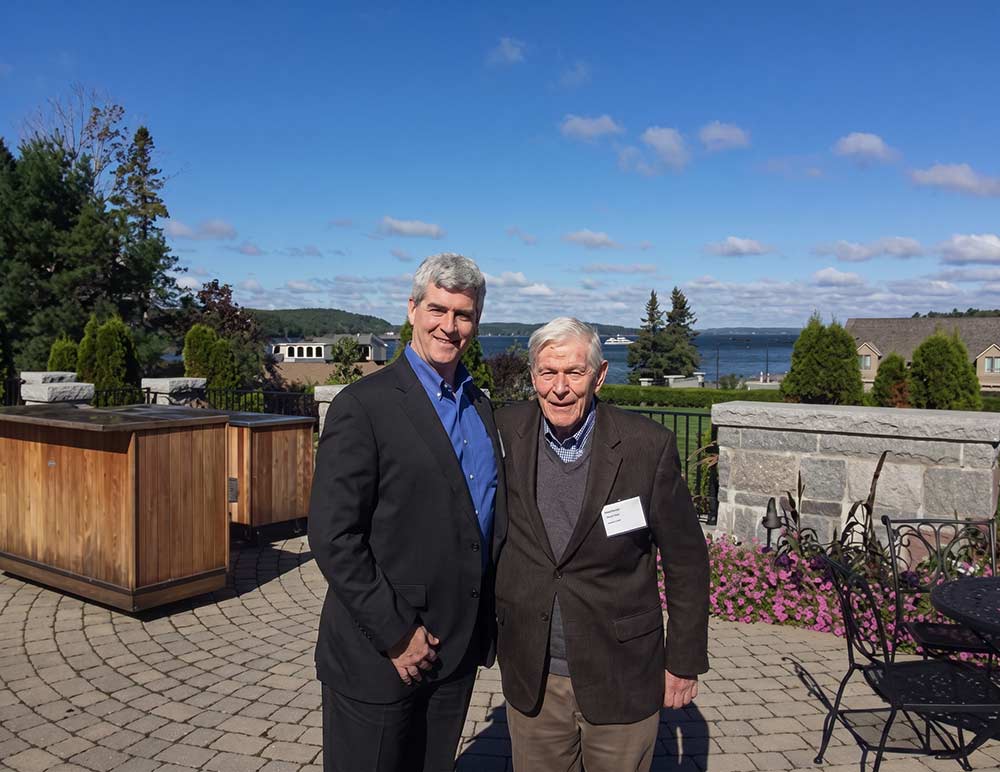
Dr. Erin Flynn: Or it could be his disease. You’re not quite sure. So, it keeps the neurologist from making an official diagnosis.
Dr. Thomas Flynn: In the course of the disease, your brain picks up misfolded proteins. Like Alzheimer’s has misfolded protein called tau. This one has misfolded protein called alpha-synuclein. But PSP has tau. The only way they’ll know for sure is after I die. We’re very interested to find out.
Dr. Erin Flynn: He’s talking about the fact that after he dies, he’ll probably want a brain biopsy done to see if he also has the misfolded proteins, the tau.
Dr. Thomas Flynn: The tau destroys the circuits of the brain in Alzheimer’s. It also destroys the brain in PSP, which is the disease I might have.
Velazquez: What’s your prognosis, do you know?
Dr. Thomas Flynn: Zero.
Velazquez: But how long do you think? Will it be a couple of years?
Dr. Thomas Flynn: Yeah, the Meyer curve gives me about a year. I figured, you know, how long. It’s already been about a year.
Dr. Erin Flynn: If it’s PSP, or honestly any of the really difficult diagnoses, like we’ve been kicking around, like multiple system atrophy, the crappy part is that a lot of the times they’re initially misdiagnosed as Parkinson’s. And then you just see them advance much more quickly than you would Parkinson’s.
One of my friends is a neurologist, and he always says time is the best diagnostic tool we have in neurology because time will show what your trajectory is.
Dr. Thomas Flynn: And so, I think, Robin Williams, is case in point.
Dr. Erin Flynn: Robin Williams, who had Lewy body dementia. It was initially diagnosed as Parkinson’s. I think that just because it’s progressing very quickly, that’s why my dad thinks it’s probably a year. But these diseases are tough because they’re just initially misdiagnosed, and then you’re not quite sure how long you’ve been on that trajectory.
Velazquez: Do you get all your healthcare in Connecticut because there’s no—
Dr. Erin Flynn: No, actually, he travels. He was in Arizona this winter where my parents have a house because it’s easy to get along there. And also, he’s got a great neurologist in Arizona, Dr. Janani at Banner Health. Then he’s coming to Maine for the summer due to the climate. And I set him up with neurology here at Yale where I work.
Dr. Erin Flynn: (to dad) What are you smiling about? He’s smiling. What?
Dr. Thomas Flynn: You ruined her morning.
Dr. Erin Flynn: Oh. Because I’m sure your new neurologist had to get quite the history on you.
Before our meeting, I checked her schedule system. My dad’s appointment was at 10:00 a.m., and the chart said she was still seeing him after 12 o’clock And I was like, “Oh shoot.”
Dr. Thomas Flynn: She spent a lot of time.
Dr. Erin Flynn: That’s neurology. They should spend a lot of time with patients, whereas I’m retina. I’m just like in and out.
Products & Services
Velazquez: But how amazing it is that you’re also an ophthalmologist and you can help your dad.
Dr. Erin Flynn: There are so many ophthalmologists in the family. I guess it’s a family tradition. My grandfather was an ophthalmologist. My dad is an ophthalmologist. And my great-grandfather was an optometrist, who hated ophthalmologists.
Dr. Thomas Flynn: Until his kid became an ophthalmologist, then he just puffed his chest out so far.
Dr. Erin Flynn: He hated ophthalmologists until his first kid, my grandfather, became an ophthalmologist. Then he puffed his chest out really hard.
I’m really glad that I became an ophthalmologist because it gave my father and me like a single language to talk about. Like we’ve got the same world, and we have a similar sensibility. And I mean, it’s a big part of your identity to be a doctor.
Dr. Thomas Flynn: The last year, I was deteriorating and I didn’t know why, some of it. Erin stepped in and saved my practice. While she was a fellow, they let her head to Maine and take care of my patients. The injections she did.
Dr. Erin Flynn: Yeah, during my fellowship for a year because my dad couldn’t do the injections anymore. He just needed a steady pair of hands. I stepped in and I would do the injections or lasers or the procedures he needed done so that he could keep that part of his practice alive. And then he just saw uveitis patients who didn’t require procedures.
Velazquez: And how long did that last?
Dr. Erin Flynn: So that was my last like 6 months of fellowship. And I still go up there every two weekends to see his patients.
Dr. Thomas Flynn: They love it.
Dr. Erin Flynn: I think they do love it because they get to kind of still see him in a way, even though he’s not still there. And we’ve got a similar sense of humor, I’d say.
Dr. Thomas Flynn: You’ve been embraced as being from Maine.
Dr. Erin Flynn: Yeah, I’m from Maine, which, you know, they like that.
Velazquez: Do you live in Maine too?
Dr. Erin Flynn: No, I’m here because I’m 80% at Yale. But when I go to Maine, I’ll stay at my younger brother’s apartment in Bangor, Maine. I’ll have like maybe one or two clinic days every two weeks, just to kind of see his patients. It also gives me a connection with him because I get to hear the stories of when they first met my father and how they initially fought about the meds he was starting them on. I think their stories are similar. They’re like, “At first, we argued and I hated him. And I hated his sense of humor. And now he’s my favorite doctor and he’s the only doctor I want to see.”
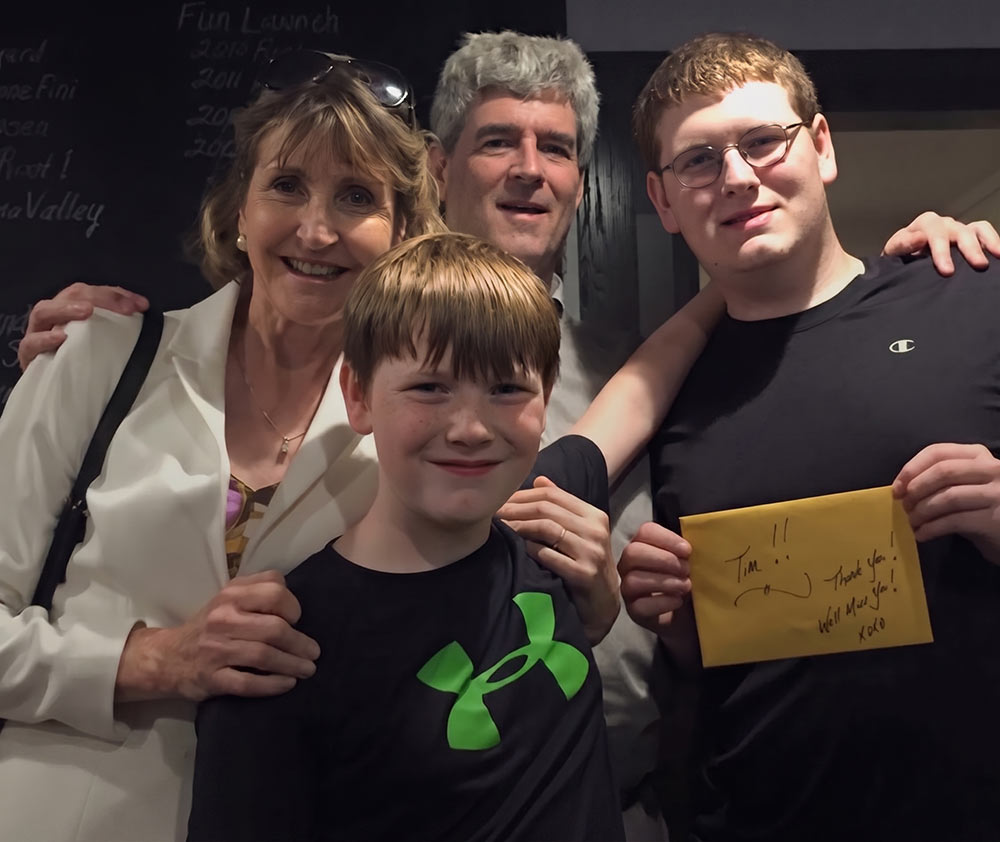
Velazquez: People hated him? I can’t imagine that.
Dr. Erin Flynn: He’s shrugging right now.
Velazquez: You’re the funniest guy. The comments you made. When I’d go see him up at Columbia, I knew that if my appointment was for 10, I wouldn’t get in to see him until maybe noon or 1. I had to be put in the queue and wait my turn. I would just dedicate the day to seeing Dr. Flynn. He’d come out every once in a while, to get his patients, and the way he did it was so hilarious. You made big announcement. You had such a big personality. All the nurses were always laughing. I knew that the minute I walked in, there’d be some quip and you were hysterical. I can’t imagine anyone not liking you.
Dr. Thomas Flynn: I lay it on the line. You’re going to go blind. Fungus in their eye? I smile and I say, “Listen, I’m a New York doctor, I know how you get this fungus in your eye. Cut the shit. When did you inject heroin last?”
Dr. Erin Flynn: I guess that’s a reference to your no bullshit.
Velazquez: Oh yes, I could see that. You are a straight shooter.
Dr. Erin Flynn: Yes. He doesn’t dance around when he wants to say something to a patient.
Velazquez: But you know, the honesty is what I appreciated because I always wanted to know. I had a bunch of great doctors, but the ones who were trying to save me from the knowledge of what I was going through, I felt weren’t— I know my style. I want to face things and I want to know. I vibed with you entirely. And I trusted you because you were so honest.
Dr. Thomas Flynn: Yesterday, the doctor you sent me to said, “Frankly, you know too much. But on the plus side, I feel like I can talk to you.”
Dr. Erin Flynn: My dad definitely knows too much. Dad, I’m sure you had opinions about how she should manage things or diagnose you.
Velazquez: Your style was similar to Dr. House, a warm one because you were so kind and caring. But you were like a House with your quips and your snarkiness and your directness. Now, you’re really Dr. House diagnosing yourself. See, that’s what House would do, right?
Dr. Erin Flynn: It’s definitely what Dr. House would do.
Velazquez: It’s been an incredible honor to have been your patient.
Dr. Thomas Flynn: I still remember the day we had to fight to get seats in the clinic for you. I still remember the day we had to fight to get chairs for people with HIV in the waiting room.
Velazquez: In New York City?
Dr. Thomas Flynn: Yeah.
Dr. Erin Flynn: I don’t know if Dr. House would fight to get his patients seats.
Velazquez: Dr. Cox from Scrubs would. You’re also Dr. Cox a little, you know.
Dr. Erin Flynn: I don’t think my dad’s seen Scrubs. I want him to, but he hasn’t.
Velazquez: Oh, you would love it.
Dr. Erin Flynn: That’s one doctor show my dad hasn’t watched. Also, watching doctor shows with him sucks because he’d always get the diagnosis right. Like, when we watch House with him, he’d be like, “This guy is a moron, obviously it’s like syphilis.” Or this guy, “Jesus Christ, it’s like lupus. Like, what is going on?” We always hated watching Dr. House with my dad because he’d be like, “What a moron, obviously it’s cysticercosis of the brain. Come on!”
And he’d be like, “fuck this shit.” And we’d be like, “Dad, shut up, we’ve got 45 minutes to go.” He’d be like, “Obviously she’s sleeping with a prostitute. Come on.” I’d be like, “Dad. That was a plot twist that was supposed to come about in like 25 minutes, okay?”
Dr. Thomas Flynn: I will also be an enemy for life. This is a Yanuzzi story. I was late for grand rounds after I had many hours in the emergency room dealing with a patient. I walk in and Dr. Yanuzzi says, “Oh, Dr. Flynn, so nice for you to show up to grand rounds.” —And I’m trying to be quiet and sit down. —He says, “What do you think it is?” I said, “Look, it’s amyloid.” And sit down. Turned out it was amyloid, and the poor student was presenting, it was only 5 minutes into his presentation.
Products & Services

Dr. Erin Flynn: We have this retina society, it’s called Yannuzzi Rounds, and the point of Yannuzzi Rounds is to like have cases that stump all of us and make us all look really stupid.
The point of Yannuzzi rounds is to almost be like an episode of Dr. House, right? This poor guy who had spent hours putting together these slides and was so proud of his case and had all these twists and turns in the story. And this poor kid who was probably a fellow or a resident who had like not slept the night before, who was stressed out about this presentation, suddenly got shut down. But that is my dad. He’s very quick and smart.
Dr. Thomas Flynn: And Dr. Yannuzzi asked, “Why did you think that?” I said, “Obviously.” (rolling his eyes)
Dr. Erin Flynn: Like it was the most obvious diagnosis in the world. I can attest as an ophthalmologist or a dumb retina specialist, that is not an easy diagnosis. And if I was asked the same question, I would probably stumble around and say something dumb.
Velazquez: When I was your patient and my eye trouble became more than just retinal problems, you sent me to a couple of different people. You sent me to Dr. Odrich for my optic nerve, and then you sent me to Dr. Sperber for my cornea, and I also saw Dr. Shrier, I later found out that you guys all went to school together? All my doctors were in med school together?
Dr. Thomas Flynn: They all were. I wasn’t. I was brought to D.C. But there’s something called a resident instructor program.
Dr. Erin Flynn: They all knew each other from Manhattan Eye and Ear residency program. And then I think that Shrier, Barile, Odrich, Bill Schiff, all went to medical school together. But my dad was a little bit of an outsider. He didn’t go to medical school with them, but he trained with them.
Velazquez: You were an outsider? I feel like you were the nucleus.
Dr. Thomas Flynn: Well, I was the instructor. I was head of the group; I became director of residency.
Velazquez: Were they residents when you were director?
Dr. Thomas Flynn: See, what happens is Manhattan NYU selects elite people–doctors who’ve just finished fellowship–and makes them resident instructors. I’m the graduate from the fellowship. It’s an honor, prestigious. I switched to the residency because I’m only a year older than you, but I know how to basically stop bleeding patients. I’m here to help.
Dr. Erin Flynn: So, I guess my dad, Shrier, I’m not sure about Odrich, but they became the resident directors, after their residency. Because they did a great job, they were asked to be supervisors to the residents. So, even though they had just been in the shoes of those residents, they now had the responsibility to oversee these residents.
Dr. Erin Flynn: It’s kind of like me at Yale. I’m fresh out of fellowship, so I’m like a little baby, and I’m now watching and supervising others.
Valesquez: You are the supervisor?
Dr. Erin Flynn: I teach surgery and I supervise residents and fellows in clinic, but it is a little bit crazy. When you’re like, “I was just in your shoes” and you’re telling them this is how you do it, like you’ve been doing it for millions of years.
Velazquez: But it feels like it’s a cadre of just remarkable people. Wonderful people. I mean, Dr. Odrich is the sweetest man and kind and gentle and caring, and so is Dr. Sperber. And Dr. Schiff is just very soft-spoken and knowledgeable. It was huge luck for me to land with you guys.
Dr. Thomas Flynn: The disease that I have has robbed me of a lot, but it won’t take the people away.
Dr. Erin Flynn: They won’t take that special place for him because you’re right. All those people are just salt of the earth people. Just so smart, fantastic doctors, but also so humble and just really good people.
Velazquez: And you’re friends for life, and what an incredible group to have as friends for life.
Dr. Thomas Flynn: Yeah, they are. Because we understand each other.
Dr. Erin Flynn: They went through a lot of these things together.
Dr. Thomas Flynn: Yeah. Including AIDS.
Dr. Erin Flynn: When my dad asked them to do all the things possible just to save the vision. And they asked him, “Why are we doing this, Tom?” And he said, “Because we gotta save the vision.” And they roll their eyes and say, well, you trained me, or we trained together. So, let’s do it.
Velazquez: Yeah, wow. So, um, do you have any final thoughts, anything you want to share that we didn’t cover that you want to want people to know?
Dr. Thomas Flynn: Well, the field has sort of devolved to almost nothing. For a while, it seemed that I might become the chairman of the department or something. But then the disease kind of went away. And I was never so pleased in my life to see my opportunity to leave. I couldn’t stand the way it was in the ’80s again. I couldn’t stand how grim things were. This is a disease we’ve managed to do away with.
Hopefully, nobody gets CMV right now. In fact, one of the things I was doing at Columbia was— I was kept in the freezer —When somebody saw a peculiar-looking eye, they’d bring (me in). “Let’s get Flynn. He remembers what it was like.” When they’re seeing me right now, they see some old guy. So, this is a disease that we’ve largely cured.
Products & Services


Dr. Erin Flynn: Yeah, I think something that I remember my dad would mention to me when I was a kid was he kind of poured his life and his passion into the manifestation of AIDS in the eye. And he really sweat a lot of blood and tears into it. And it was a huge thing he contributed to, both in his personal life and in his academic life. And now it’s pretty much been cured. It’s gone. So, in a way, I think he would express this feeling like, damn, like I poured myself into this cause and now it’s all gone. And he’s so grateful that it’s gone. Thank God.
But, but for him, it’s like, that was like everything to him. And the big irony, though, is that because he threw himself into it and now that it’s all gone. It’s like a big part of his work, right, you know, is almost for naught in a way. But he’s still so grateful that it’s for nothing, but a large part of it does feel like “poof,” it’s gone.
Velazquez: What an incredible time to be practicing, huh?
Dr. Erin Flynn: If we compare him to Grant, my grandfather, contributed to Retinopathy of Prematurity (ROP), and his work is still very much used every day. There’s even a depressor, a scleral depressor for babies, which is called the Flynn depressor.
Velazquez: The Flynn depressor?
Dr. Erin Flynn: Yeah, But my dad, his legacy is not something we use every day because, you know, the CMV retinitis and the AIDS has been almost eradicated, which is great, but it’s also like, damn, Grandpa gets more of a sustainable heritage. My father’s grateful that his heritage is mostly unnecessary right now. It’s almost dead, and that makes him happy in a way.
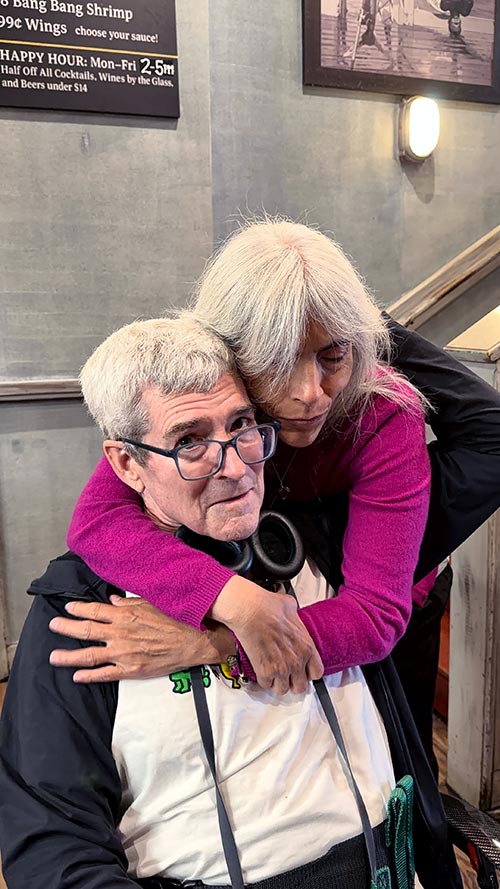
Velazquez: Also, your legacy is your patients. Your legacy is your children. Because of you and the work you did, I’m here and my son is here. We all looped in together for this, and that’s because of you.
Dr. Thomas Flynn: Yeah, I wouldn’t go back to the same stuff.
Dr. Erin Flynn: Well, thank you for everything. Thank you, Gina.
Velazquez: Thank you, Erin. Thank you, Dr. Flynn. Thank you, everybody here. It’s, it’s been incredible.
Dr. Thomas Flynn: (To Aiden) It’s a good thing your mother didn’t listen to me.
Velazquez: Yeah, because we wouldn’t have an audio engineer. What would we do? We can pull the table and just figure out, was it a good decision or not?
Dr. Erin Flynn: oh, my dad is smiling. He’s nodding. He’s got this sassy look on his face like he had to think about it.
Velazquez: That was the face you gave me when you walked into my (hospital) room, and I’m there literally dying. And you said, “I’m here to see your eyes.”