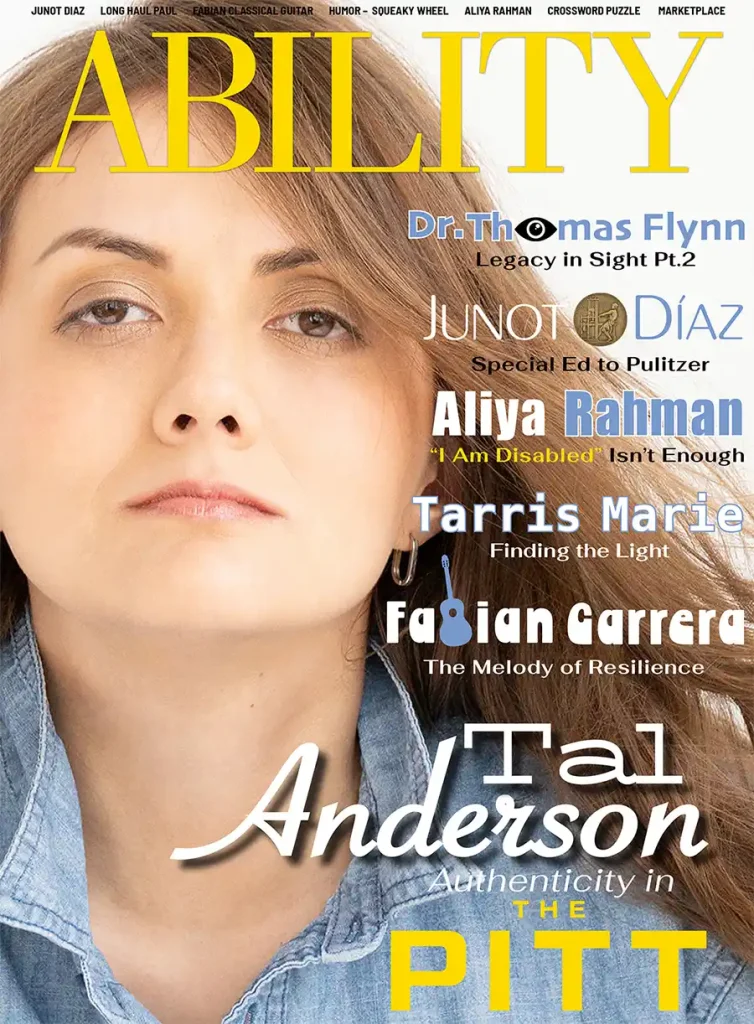
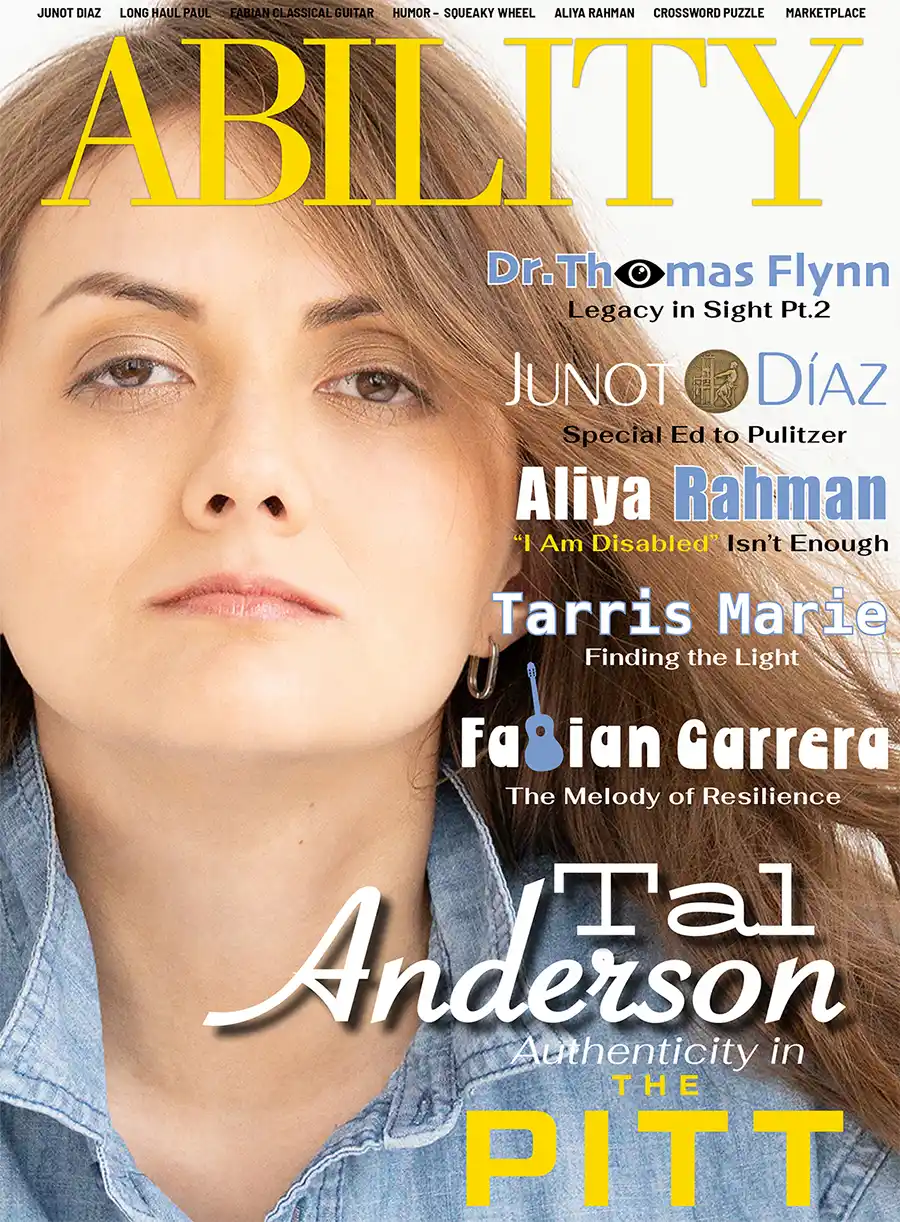







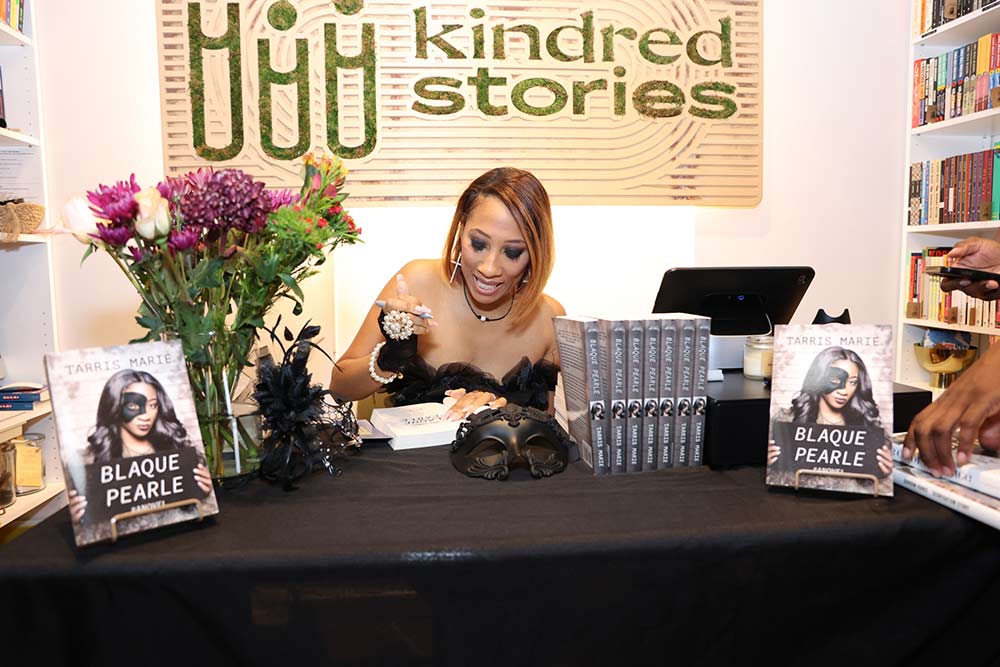
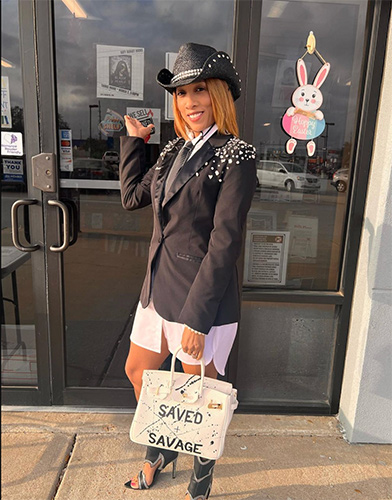
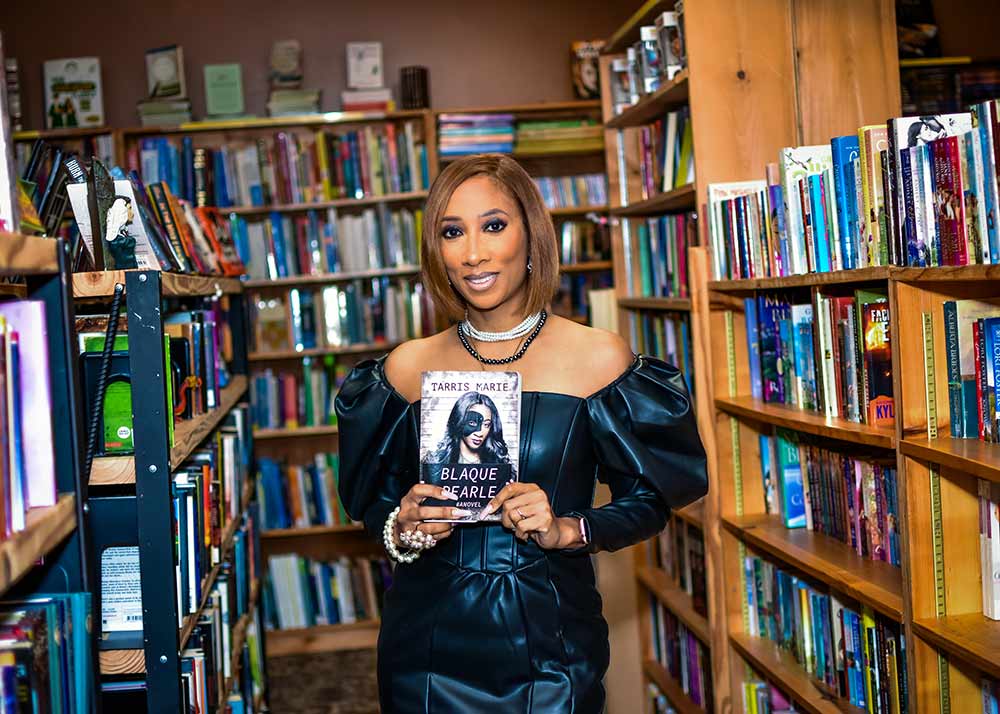
The journey of a novelist is often one of discovery, and for author Tarris Marie, that path was paved through a life transition. After a career in the fashion industry as a buyer, Tarris faced a life-altering diagnosis of Stargardt’s disease. The progressive loss of her central sight caused a transition away from the corporate world and opened a door to a new and exciting passion: storytelling.
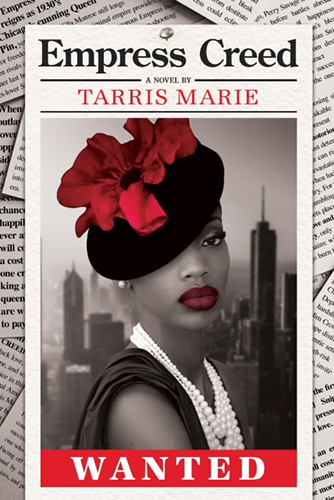
This creative pivot led to her first novel, Blaque Pearle, a gritty crime drama set in the neighborhood of Compton involving the complex webs of organized crime. She followed this success with her next book, Empress Creed, a historical drama set in the 1930s. Both novels skillfully interweave themes from the fashion industry, high-stakes crime, and romance, reflecting the diverse facets of Tarris’s own experiences and imagination.
Today, Tarris is a celebrated novelist, proving that a change in perspective can lead to a more profound narrative. ABILITY Magazine’s Gina Velasquez and Jennifer Woodall met with Tarris, discussing her transition into writing, how she develops characters and the nuances of the publishing industry. She describes the importance of motherhood, a supportive family and the power of “finding the light”—both through digital magnifiers and the support of a community that refuses to accept “no” as an answer.
Woodall: What was it like navigating the publishing scene?
Marie: It was actually a blessing for me when I got started because I started my career off as a buyer first. I was in the fashion industry. I did a lot of things, not just buying, but I started off as an assistant buyer. I saw myself doing that really until I retired. But then when I lost my vision, I had to pivot because of the company I was working for at that time. I just wasn’t able to read the numbers as quickly as they would want. It was just a lot of challenges that were going on when I came back to work after I had my devices and things.
To answer your question, when I actually started writing and I hired a writing coach, I first started with an agent. My journey into the publishing world actually started with, of course, the story. I had a writing coach, and then I found a literary agent who then connected me into the publishing world. I started that journey, really, by just a test. I didn’t know where the writing was going to go. I didn’t know if someone was going to take to it, or pick it up. But as soon as I sent out my manuscript, I started getting some responses from agents. Then I found the right one who then put me in contact with my publisher.
Woodall: Can you talk about your process as a writer, like how you approach character development and plot?
Tarris Marie: So, really, character development is my favorite part of my writing to be honest. I usually create a whole life for the characters before I even put them down on paper. Where do they come from? Genuinely, I would have to say God. I mean, they just pop up and they start talking to me, and I’m like, okay. When I can’t take it anymore, I just start writing it down. I usually start with giving them a life, if that makes sense. It’s like I start with them from birth. I write their whole life story. Then once I write their life and what they do, then I actually start the story. So, my story usually begins with the character.
Woodall: You said you had a writing coach?
Marie: Yes, Bruce McAllister. I called him my “Yoda” that connected me to the literary “Force.”
Woodall: What was the process of finding a writing coach? What was that like?
Marie: So, when I first started writing, which was in 2020 —I can’t believe it!—the character started coming to me. The story started coming to me, and I just started writing things down or typing things out. As I was typing, I was like, “Okay, I have a story.” So, I tried to find an editor first because I’m thinking, “Okay, I have the story. Now I just need somebody to clean it up.” But I didn’t. An editor actually recommended that I find a coach because writing is an art form that does have elements that are required, and you have to learn your craft. I didn’t realize that at first.
I was so excited to be writing that I just wanted to get my story out there. So, how Bruce came to me was just through research. I started researching and I started cold calling. I talked to different writing coaches and told them a little bit about me and what I was trying to do. He and I hit it off from the start, so that’s really how that came to be.
When you hire a writing coach, it has to be someone that matches with you and your personality. Also, depending upon where you’re trying to go in your career, you want to find the right match. It’s almost like a marriage, right? That’s how I feel about it. Same thing with the actual agent, and same thing with the publisher. It’s all a marriage. So, you want to do your research. You want to do the interviews. And then you want to be true to who you are as an artist. Then find that perfect match for you. And Bruce McAllister was that match for me.
Products & Services


Woodall: Is “Blaque Pearle” your first book?
Marie: This is my first published novel. It wasn’t the first book that I actually wrote, though, but it was the first one that I brought to the world.
Woodall: Do you have advice for writers who are wanting to publish their first book who might not know where to start?
Marie: Yes. I feel everyone has a story to tell, right? So, of course, it always starts with a story. Be true to who you are and the story that you want to write. Then, after you’ve figured out what that is and after you put that art on the canvas, then you go out and do the research. Just look at books that are similar to the book that you have written. Look at authors that you look up to and see who published them. That’s really what I also did as well.
When I found my literary agent, I looked to see who wrote a book that was similar to mine. Who was the agent that got them that deal? Who are those authors? What are those books? What is the genre? All of that. So, that’s why it starts with the story first. You have to get that nailed down. Once you get the story on the canvas, then you would find a literary agent. An agent is not required for all publishers, but most of the big publishing houses do require a literary agent. So, that takes some research as well. It’s a marriage that you are committed to as you are navigating through the publishing world. You are trying to figure out the best fit for your work and for you as an artist.
Woodall: Did you run into any accessibility issues when you were doing book signing events and finding a good location or things of that nature?
Marie: Oh, that’s a wonderful question. I will say that from all the events that I did, everyone was so great. I did not run into any accessibility issues at all. You know that, as I talked about earlier, I stay true to who I am. Being legally blind is one of the things that I embrace, of who I am. Putting that out there into the world and making sure that they know that, of course, is important to me. So, every encounter that I have had in publishing, as far as writing is concerned, I haven’t had any issues. Everyone has been just welcoming and kind, and I haven’t stumbled into any issues. I use my magnification devices when necessary. My magnifier stays on me at all times in case needed. I just make sure that I stay ready with my devices if any challenges were to come my way.
Woodall: I’m glad to hear that you haven’t run into any accessibility issues. That’s always refreshing to hear.
Marie: Not at all. That would be another story, honey. That’s when I was in the corporate world, so that’s when I had to pivot. That was where I ran into issues. But in the actual writing world, no. I use big screens. I use all my devices, and I don’t have any issues with that. Just so you know, too, it was important to me that I have my book available in audio, which it is. That’s how I write. I speak the words onto the page if I’m not using my magnifier. Being able to utilize my voice to speech is super important for me as a writer, and I make sure that I use that. My publisher has been a great partner. That’s something that they also wanted to make sure that my work was available in audio.
Woodall: Gina and I have both had conversations about audiobooks and the actors and how much of a difference a good audio actor can make for listening to the book. So, do you get to choose who the actor is?
Products & Services


Marie: So, for “Blaque Pearle,” this was my debut novel. I did not have any say in who the actual actors were, but they were phenomenal. They picked the perfect actors for Blaque, Pearle and Goldie. I was super pleased with the actors that were chosen, but I did not have any say in that process.
Woodall: I was always curious how that worked, and if the authors got to make that decision.
Marie: Sometimes they do. But, for me, with my debut novel, I was not a part of that process. I was super pleased with the actors that were chosen. For someone who’s been listening to audiobooks for a while, the game has changed and made the experience so beautiful. I love a good audiobook. Oh, my God. Compared to years ago when I first started listening to audio, it’s changed so much. The actors put in the work and create the art and bring our books to life. I think that they deserve the credit that they get. Those actors that portrayed my characters in “Blaque Pearle” did a phenomenal job bringing my characters to life in the audiobook.
Woodall: That has to feel really rewarding as an author to get to experience your characters being brought to life through another person and how they’re interpreting that and then being like, “This sounds amazing.”
Marie: Oh, my God. I can’t even describe it. If you would have told me even five or six years ago that this would have been my life, I would have laughed. I am just continuously amazed. My next book, “Empress Creed,” has gone to print. When I got to see the cover and I got to see the inside pages of the book, I’m like, “I did that.” I cannot believe this is just such a blessing. It’s so beautiful and fulfilling to be able to tell these stories and to have them on the shelves. As you said, especially as a legally blind woman, I am able to be a legally blind author. I have my book told and brought to life through another human being who then just embraces the characters that I created and made them their own.
Gina Velasquez: So, you and I share several parallels. I worked in publishing for a decade but left twenty years ago because I was losing my sight. Back then, I didn’t know about assistive technology or support systems. My main focus was becoming a mother, so I prioritized that before eventually figuring out how to balance a career. Navigating that journey for myself and my child was a long process. Could you talk about that for you?
Products & Services

Marie: Now, that’s a heavy question. Well, just so you know, it’s beautiful to be able to talk to another sister in this space. I understand your frustration because when I was first diagnosed, I was handed a Sherlock Holmes magnifying glass at that time. I was just told to learn Braille. I was like, “Oh, okay. Wait a minute,” because I hadn’t lost my vision at that point. It’s called Stargardt’s disease. It’s progressive, and it leads to legal blindness. My peripheral stays intact, but I have blind spots with the central vision.
Velasquez: I know what that’s like. That happened to me, too.
Marie: When I went back to the corporate world, that’s where I had some issues. First, I went through occupational therapy. With the occupational therapy, I learned to look through new eyes. I was given bioptic lenses and bioptic scopes. I actually even learned how to drive with these bioptics that I’ve purchased. I went through that for 12 weeks, and I went back to the corporate world ready to rock. So, what happened to me at that time—and again, this was before working from home—was that the landscape changed. I mean, this landscape has changed so much that I don’t know what that would look like, but everything happens for a reason.
Anyway, when I did go back to work, I had my magnifying device and I had my big screens. So, I was ready to rock. Then they would ask me questions, as I did my presentation, like “Tell me what was that number three years ago, week two, day three and four?” When I would try to fumble to find it, it was like, “Oh, God.” So, those were some of the things that I ran into. And then it led me into the writing world.
So, press forward, I’m a mom. I have two children, a girl and a boy. Before I started writing, I did the stay-at-home mom thing. For me, it was a great experience, but I felt like something was missing. There was a part of me that was missing. On my journey to figuring that out, I ended up losing my vision. I had lost my job.
I had lost so many things that it took me to the bathroom floor. Then I spun into depression. So, then God told me to get up, and I said, “Well, God. Tell me what to do so that I won’t ever get on this floor again, and I’ll help as many people as I can to not be on the floor.” And he said, “Write a book.” So, that’s literally how I started. I mean, I sat in front of my blank screen, and then I was like, “Okay. God said write a book, so what is this going to look like?”
Products & Services


It started with the character Pearle, and I started writing what her world was like. The process was very difficult at first as I was getting my bearings and trying to figure out what that was going to look like. I had no clue. I mean, I’m still learning as things go on, as my life begins to transform and as I have to continue to pivot. Some things will happen, then something else will happen, then I’m like, “Oh, okay.” I’m still navigating this world and trying to figure it out. Like I told you, book number two is coming. But for my kids, I taught my daughter how to read with my magnifying device.
Velasquez: Yes. That’s amazing, right? Because I was almost completely blind when my son was starting school. You know how that Common Core reading is so tough the way they teach it now. I had his little books memorized, so when he got home, I could pretend to be reading them. Actually, it was more from what I had memorized. So, the fact that our children learn to read when we couldn’t see ourselves, I find that—now that I look back—a little crazy.
Marie: Oh, my God. Let me tell you this quick story. So, I told you I taught my daughter how to read with my magnifier, and my magnifier is digital, right? So, it has a light on it, and it has a screen on it. I would blow it up so that I would teach her how to read. I took her to a party—And this is one of the things when I decided to, I would say, come out the closet. And I’m going to be honest. I was still a little, I don’t want to say embarrassed, but maybe that is the word I’m looking for. I was still not fully out, although most people knew that I had vision issues and was legally blind at the time.
But I was sitting there with my daughter, and there was a mom that was reading to her dauhter. There were a few moms, actually, that had books out, and they were reading to their children. My daughter was little. She was sitting on my lap. So, then she was looking at the book and the mom said, “You want a book?” So, she nodded her head and the mom gave her a book. Then she handed it to me and got in her reading position to just put her head back on my shoulder. I was like, “All right,” and I couldn’t see, right? So, I’m like, “Oh, shoot. What do I do?”
So, I started just talking like, “Okay, here is a cloud.” My daughter looked at me like I lost my mind. She reached over me, grabbed my magnifier out of my purse, and said, “Light, mommy, light,” because she called it the light. And so basically, what she was telling me was, “Take this thing and read to me. This is how we do. You know how to read. This is how you read to me.” Ever since then, I take my magnifier out now. If I’m in a restaurant, it doesn’t matter. I embrace this. This is a part of who I am. So, my daughter helped me with that journey when she said, “Mommy, light,” and then she just put her head back on my shoulder like, “Now get to it.”
Velasquez: She showed you the light. (laughs)
Marie: Oh, come on now. Yes. Come on, Gina. (laughs)
Velasquez: For me, it was my cane. When I started losing my vision, I did not want to use my cane at first, and it was embarrassing. Well, not embarrassment. It’s almost like you don’t want to be different, right?
Marie: That’s it. Because it’s not embarrassment.
Velasquez: It’s standing up for being so different. And maybe people are looking at you with pity. So, it took a couple of stumbles, and it took my son pulling out my cane when we walk out. Because for him, it was almost like a toy. I began to use it, and that showed me how to just be myself. And I don’t care what people think. I’m blind, so what? I’m still me. I am just mom, like you said. It’s different, but I think it’s because he’s accepted me. It has now enabled me to model self-acceptance to him.
Marie: Absolutely.
Velasquez: That was so powerful to me when I realized that my disability, if anything, only helped him. I raised a human that accepts all disabilities because he really does.
Marie: Absolutely. I love that.
Velasquez: How old are yours?
Marie: My daughter is nine, and my son is 13. She’s about to be 10. So, yes, I have one teenager and a pre-teen.
Products & Services

Velasquez: And both of them are going on 25, right?
Marie: Oh, my God. Absolutely.
Velasquez: Did you ever worry when they were smaller and you were first coming to grips with your blindness that your children would have some disadvantage?
Marie: I took my daughter to see Lion King. This is before.— I take my bioptics out now. It’s not a big thing. —But at that time, even though I was just doing the mom thing, I was still focused on things I couldn’t do. There was a time period that I was just like, “All right, well, I’m not going to be able to do this. I’m not going to be able to do that. They’re going to miss out on this.” I went through a period that I would say I responded to depression. I was so focused on things that I couldn’t do, but I’m not there anymore.
But yes, to answer your question, there was a time when I was concerned for them and what I possibly couldn’t provide. They wouldn’t see me working because my career was very important to me. I didn’t think about how I was able to be there for them. I was able to still attend these different things. I wasn’t seeing it through that lens at that time when I was losing my vision. I had lost it, but it’s gotten worse. But you know what I’m saying? When I was losing my vision, I definitely went through a time period where I was concerned about that. Absolutely.
Velasquez: For me, I was worried that I wouldn’t give him a normal childhood until I realized it is what I give him. I’ll give him the best that I can and model for him how even with a disability, I can work. I can find a job.
Marie: Absolutely. I had a doctor that really started changing my perspective on things that I could do. He was like, “Hey, honey, you can do this. You can do that. Let me see your phone.” Then there was a free app on my phone where if I didn’t have my magnifier, I could magnify on my phone. I just didn’t even know that those things were even possible. I was very grateful to have the doctors that I had.
Just like the publishing world was a process because it took me a while to find that support. Before, I was told, “Hey, I can’t wave a magic wand and make you be able to see.” A doctor actually told me that. It was definitely a process to find the right support and the right doctors to be able to help me navigate.
Velasquez: Right. Normal. That’s what we’re trying to do, but our lives are normal. We have children. We work. So, yeah, we’re just like everybody else.
Marie: Absolutely. We all have a story, and that’s why I always say that everyone has a story. You never know the person next to you—what their story is. I’m always trying to make sure that I’m sensitive to that. I don’t know what they’ve been through. A lot of times we wear a mask and we’re masked behind the things we’ve been through. But sometimes, like you said, we’re the light, and we’re just shining. So, it just depends on where you are and what stage you are in your journey.
I noticed a parallel through my books where it’s like, “Oh, my God. I didn’t realize how much I talk about wearing masks.” And I think it was because there was a time where that’s how I was navigating through the world. I was masked in certain ways. Especially during COVID, we wore masks on masks, so it was just a crazy time. I talk about that as I look at characters. I’m like, “Oh, my God, this is a whole theme.”
I’m just grateful that I was able to come out on the other side and to be in this space and place and feel good. My kids see me glowing and growing, and I’m just excited and grateful for the opportunities that have been placed before me. My husband has also been a supporter and has been there because he’s been with me since college. So, he’s also been a part of the journey and has been very helpful as I’ve navigated into this new—I don’t want to call it new life—but as I pivoted in my life. He’s been a part of the journey, too. I guess I want to make sure I share that, too. So, it’s my kids and just my family as a whole.
Velasquez: Yeah. Family is important when you’re dealing with a loss, like vision loss.
Marie: It’s so important for the community. The best advice I could give, and I don’t want to sound cliché, but I would say, do your research and also just don’t accept “no.” Don’t look at your life as a wall, but just look at it as changing direction. Try to find the pivots instead of the roadblocks. Like, “Okay, this is in front of me. Let me pivot now to the left. Let me pivot to the right.” And just do what makes you feel whole. I knew even when that doctor said that to me, that was devastating, right? And it took me off guard. I was like, “Who says that to another person?” That’s crazy.
But what I knew was that that wasn’t acceptable and that it did not make me feel whole. So, I’m like, I need to find people. I need to do things in life that make me feel whole. So, in the process of finding my wholeness, it took some research. It took some editing.
When you’re writing, you’ve got to cut the fat. Sometimes you’ve got to cut certain people out. Some people are not part of the journey, but life is a journey, and you just want to make sure that you have the people in your life. You have the health care that helps you move forward and not stop you or take you backwards because it’s always about moving forward in the journey. And so, that’s what I would do. Definitely do your research and make sure that the people that you have in your life are helping you become whole and helping you move forward in this life.