








Mobility aids have not been treated with the same rigor and investment as other technologies. This is not the case with Strutt’s newly unveiled ev1, a personal mobility vehicle that melds advanced features you would find on a modern electric vehicle with a power wheelchair.
Mobility aids have notoriously lagged in innovation, receiving a fraction of the investment and design rigor devoted to other modern technologies. Strutt’s ev1 shatters this status quo, introducing a personal mobility vehicle that fuses the advanced engineering of modern electric cars with the essential functionality of a power wheelchair. For Strutt Inc. CEO Tony Hong, ev1 addresses a glaring lack in recent advancements: “We’re getting smart homes, smart cars, smart phones, but what about mobility solutions?” One could argue that investment in technologies may reflect priorities on a broader scale. Ali Kadet, a disability advocate and ev1 tester questioned, “Why are billionaires getting robots that do their dishes before I’m getting to go down the street?”
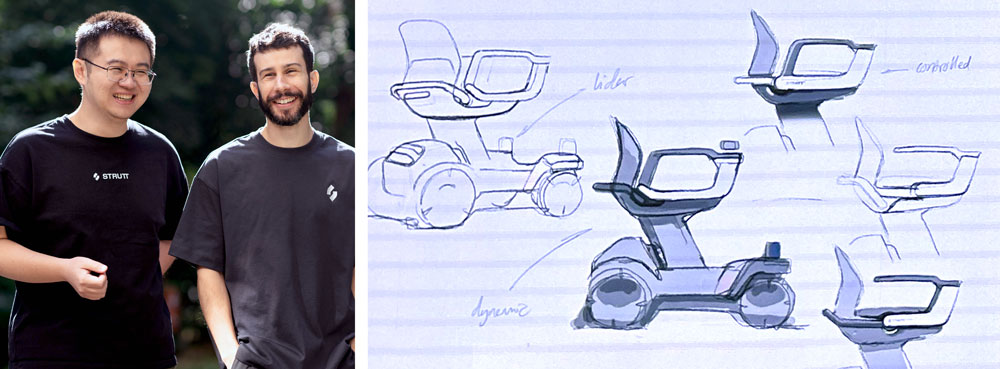
Hong led his team celebrating this marriage of mobility and advanced technology at Strutt Day 2025, launching the ev1 into its own new category of personal mobility vehicles. As the founder of Strutt, Hong began with inquiry. “I asked myself time and time again, ‘What is the purpose of my work?’” This led him to use his technological knowledge to create devices that people could benefit from immediately. In Hong’s perspective, “Some companies just think too much about tech without addressing the real problem. We are people who have deep skill, technological vision and understanding. And at the same time, we want to do something real, something helpful. That is the fundamental motive for us–to work on combining the technology with problem solving.”
Products & Services


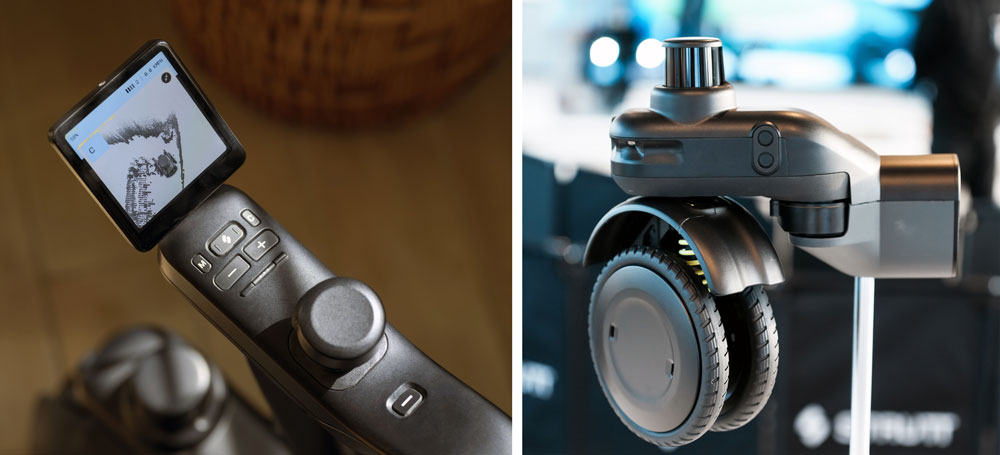
The foundations of the ev1 are the Strutt-developed eveSense and the Quad-Drive systems. Hong described the eveSense as a sensor suite made up of 10 optical sensors, 6 ultrasonic sensors and 2 cameras. This lets the chair detect the type of obstacle in the user’s path and glide around it, over it or stop altogether for the user’s own safety and the safety of others. For example, if someone’s foot is in the path of the ev1 or a dog blocks the path, the chair will prevent the user from moving forward.
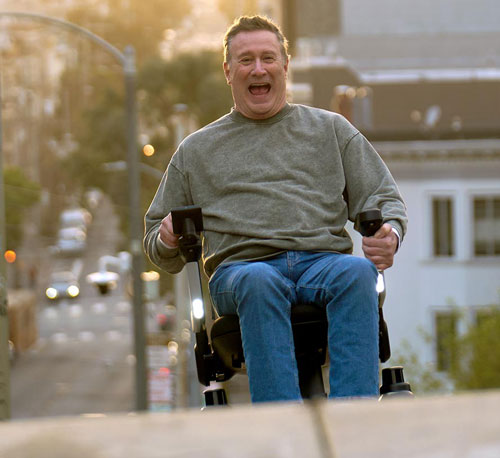
The Quad drive is four-motor drivetrain system, meaning a motor for each wheel that acts independently. Combined with an adaptive suspension, the ev1’s motion is seamless and the steering is more precise and responsive than a car. The suspension plus Quad-Drive provides power plus stability to drive up hills, gloss over bumpy terrain and even pull a car (not recommended). The ev1 is solution focused.
The chair has three modes the user can choose based on their needs and preferences. Strutt’s chief designer Barney Mason described the aim of for the design is to allow the user to “work in tandem” with the chair and to let it be “an extension of oneself.”
The first mode, Copilot, leaves the user with the most control. Similar to a typical power chair, it is steered by using a hand-guided joystick. That’s where the similarities end. Unlike any other motorized wheelchair, the ev1 has Quad Drive and independent suspension for added safety and autonomy to get where they want to go in a wider variety of circumstances and terrain. Like modern vehicles, the Copilot mode has Smart Drive Assist with collision avoidance, seamless adjustments for a smoother ride, and natural language voice commands. It can even be adjusted based on the technology a person may already be using.
Products & Services


“Copilot+ mode builds on Copilot and allows for more guidance from the chair. For example, if the rider needed to make a slight turn, this mode would tell the chair to detect the edges of the path without requiring particular precision when steering. The user can also tell the ev1, via the touch screen or app, to move with someone nearby without steering it.
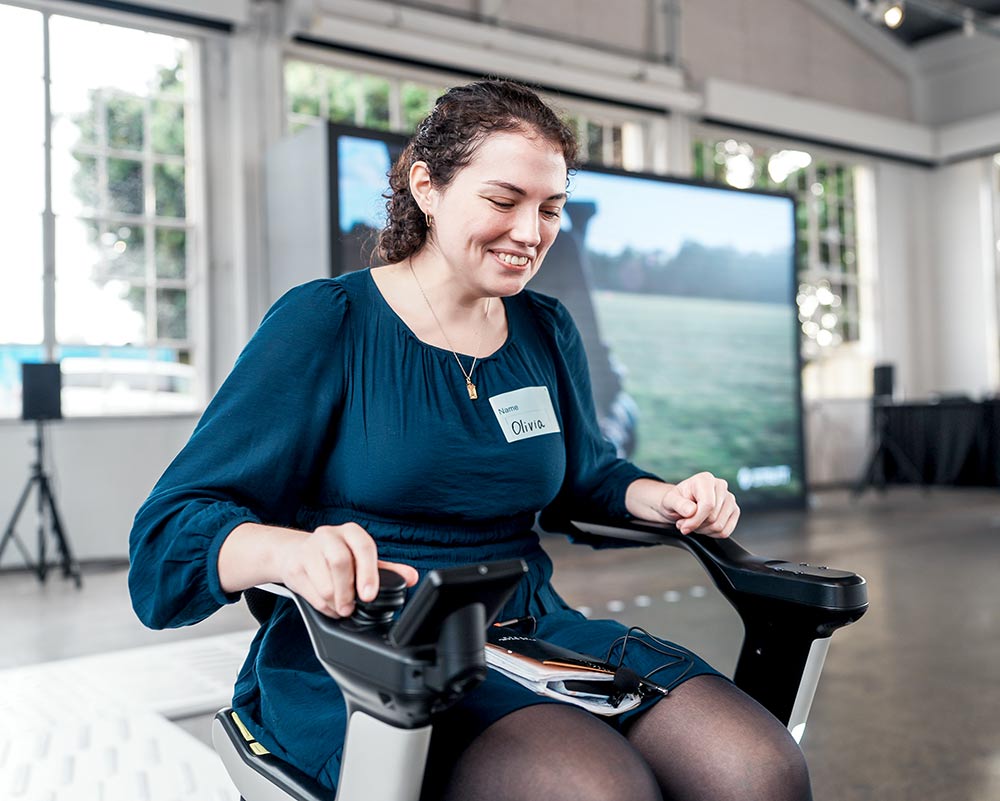
In the ev1’s third mode, Pathfinder, the user can pinpoint a destination by voice command, app or using the touchscreen and the chair will drive them there, autonomously, with no steering involved. The Strutt team has implemented AI technology within the chair to allow it to recognize previously identified locations and familiar paths when told.
At the Strutt 2025 event, attendees could take the ev1 for a test drive. One longer term tester, Ali Kadet, described the testing and feed back she provided to Hong, Mason and the team. “The few days that I was able to be in the ev1 were the most independent and free I have been in years.”
Kadet reflected on returning to her manual wheelchair after the test, “My shoulders dislocate so when I can’t push myself and when my neck hurts, I am literally stuck at whatever wall I’m looking at. I’m like, ‘Mom, could you please turn me?’” Kadet looked at her future with the ev1, “I’m just so excited to have autonomy over my own life again, being able to look where I choose. It’s such a simple thing but is so frequently overlooked.”
Strutt Inc. harnessed the advanced engineering of the electric vehicle industry and refocused it to transcend the status quo, redefining the mobility experience for those who navigate the world on wheels. The ev1 provides even more autonomy and opportunity, while raising the bar in the field of personal mobility vehicles. Hong said, “You don’t want to go anywhere without knowing you can conquer it.”