






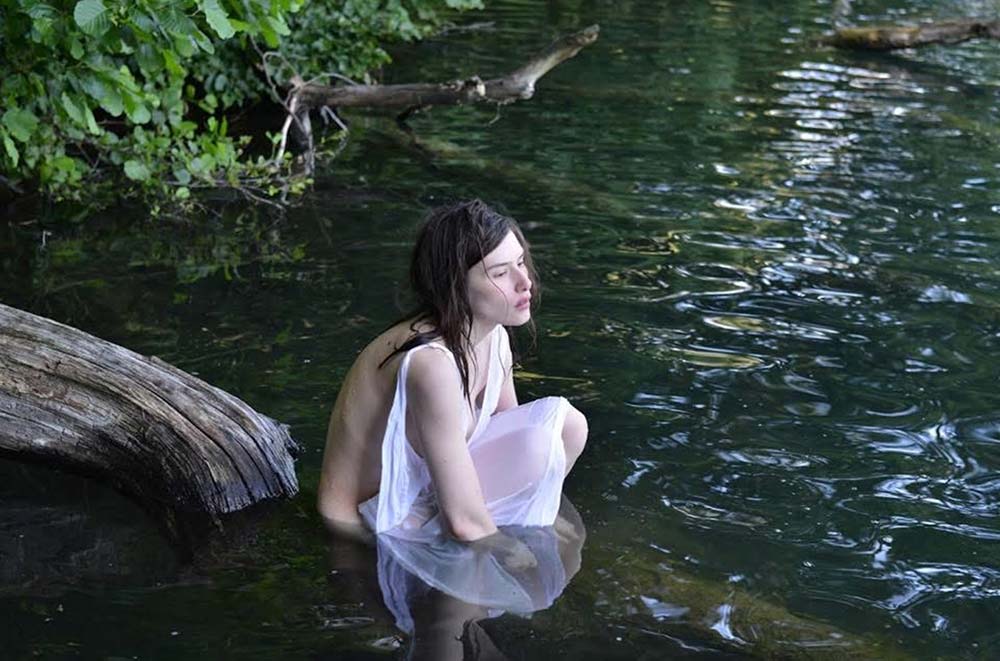
For filmmaker Sophia Dunn-Walker, disability is not a limitation on artistic vision—it is a lens through which that vision has been sharpened. Living with cone dystrophy, a rare degenerative eye condition that affects visual acuity and color perception, she has developed a distinct visual language rooted in bold choices, heightened emotion, and a willingness to reject strict realism. What some might consider a barrier has instead shaped her instincts as a director. It has pushed her toward graphic imagery, stylized storytelling, and an unapologetically expressive approach to filmmaking.
Originally drawn to theater as a more accessible way to engage with literature, Dunn-Walker’s creative path evolved from stage to screen. Collaboration, scale, and visual storytelling offered new possibilities. Today, she is the co-founder of Enkidu Productions, a small but mission-driven production company she launched with her brother, who is autistic. Together, they focus on centering disabled and neurodivergent artists—not through sanitized narratives or exploitative inspiration but through work that prioritizes emotional honesty, artistic risk, and authenticity.
Dunn-Walker the director of The Boy Who Spoke to Flowers a deeply personal documentary exploring autism, family, and public perception at a time when disability narratives are increasingly politicized. She is also co-producer of Vestibule, a long-form documentary shaped by more than a decade of lived experience. Additionally, she is continuing work on a forthcoming French-language action film that pushes feminist themes into deliberately uncomfortable territory.
In an interview with ABILITY Magazine’s Jennifer Woodall, Dunn-Walker discusses how cone dystrophy influences her filmmaking style. She explains why she believes disabled artists should be trusted as creative leaders and what it means to pursue raw, uncompromising storytelling in an industry often resistant to risk. She also reflects on self-advocacy, collaboration, and the importance of making space for disabled voices that are complex, imperfect, and fully human.
Jennifer Woodall: Can you give me a little bit of background on how you got into filmmaking?
Products & Services


Sophia Dunn-Walker: It’s always something I’ve been interested in. I knew I wanted to direct since I was probably 17 or 18, but that was more focused on theater just because that was more accessible to me. I originally got into theater because of my eye condition—because it affects my reading pace and my acuity. I loved literature, but it was really hard to read long texts. Being able to experience theater like Shakespeare or Chekhov was a really early way for me to experience literature without having to do the heavy lifting of a lot of reading. It was similar to how my dyslexic friends would be interested in theater, actually.
Woodall: Can you talk about your eye condition, Cone dystrophy?
Dunn-Walker: It runs on my dad’s side of the family. It’s very rare. There’s a couple of different kinds of it. If I have kids, there’s a 50% chance that my kids will have it. It is degenerative, but it manifests really differently from individual to individual. My dad’s eye state is still pretty decent, but my aunt is very close to fully blind. I don’t know why that is. I think it’s just the gene expression. Somebody explained it to me at one point. It’s a gamble, I guess. But it affects visual acuity and color perception and reading pace. It’s non-correctable because it affects the cones of the eyes, So, it’s in the back of the eye.
Woodall: So, the level of sight you are now, is that where you’ve been your whole life, or have you been progressively losing it the older that you’ve gotten?
Dunn-Walker: It’s pretty close to how it was when I was a teenager. I haven’t noticed too many changes, but I do notice increased sensitivity to lights or just more visual fatigue. I don’t know if it’s just because the world has become more screen-based, but being on the screen all the time is just really hard on my eyes. I think it is for most people. But interestingly, I think that people always assume that technology is going to be really good for people with disabilities. It can also be detrimental in some ways. So, I definitely prefer reading off of paper when I can.
Woodall: Since it affects the cones in your eyes, is your color perception affected by that?
Dunn-Walker: Yeah, definitely. So, I have just a smaller range of colors that I do see. I get brown and purple mixed up a lot or green and blue, or sometimes even red and brown. It’s interesting. I feel like I’m doing a bit almost when I ask somebody what color they’re wearing because my ex used to always get frustrated with that. It brings up a lot of questions if I’m seeing what other people are seeing.
Woodall: Do you ever make films that are stylized around your color perception?
Dunn-Walker: Yeah. And I wanted to lean into that more and just trust myself more as a director because I’m very drawn to big graphic, larger-than-life images. I love bright colors. I work with a cinematographer, and I think he’s starting to understand my style a little bit more.
Sometimes he’ll be like, “Oh, it’s very bold, a bold choice.” I read somewhere that Nicolas Winding Refn, who directed Drive, has classic green-red color blindness. I think you can really see that in his films because you have to be bolder if you have a more limited perception, if that makes sense.
Woodall: We interviewed an artist named Joshua Towery who works in the UX/UI design industry who is colorblind, and he specifically made palettes that were geared towards people who are colorblind to make things more accommodating so they could navigate pages and products better. It is interesting to see the different ways an artist’s colorblindness can impact their style.
Dunn-Walker: It’s really taught me to trust my instincts as well because, so many times, people have told me that something is too bold or they don’t want to step outside of realism. And that’s also a stylistic thing. And it’s also maybe being a woman. I’ve just really learned to just push for what I want because it might look weird to some people. I trust my cinematographer to find the balance of where I’m missing details that I can’t pick up on. I don’t have as much experience as him with the technical side of filming, but he knows when to let me take the lead and when to really follow my instincts like “No, I know that this is what I want.” Surrounding myself with people who strike that balance has been really important. They know that I do have some limitations, but they still let me lead. Those are really important relationships to me.
Woodall: You have founded a production company called Enkidu Productions with your brother. Can you talk more about that?
Products & Services


Dunn-Walker: Yeah. My brother is autistic, and so he leads the way with more of these stories that are neurodiverse. But less importantly than he’s autistic, I look up to a lot of sibling partnerships in film. Of course, there’s the Coen brothers or The Wachowskis. I think that it can be hard sometimes to know who to trust, especially when there’s a lot of money involved. There can be big emotions, both in front of and behind the camera. So, I’m very blessed to have a good relationship with my brother. I think having the ability to work with that person and create ideas together has been really rewarding so far.
Woodall: I was reading that you both focus on highlighting artists with disabilities. How did that come about?
Dunn-Walker: I noticed there are a lot of organizations and charities that do work with people with disabilities. But I really want to focus on the emotional and artistic authenticity of people with disabilities because I think that there’s a lot of “inspiration porn” out there or very sanitized disability stories. As an artist, I’m really interested in things that are a little more raw than that.
We’re co-producing this documentary called Vestibule. That’s a very personal raw story that the filmmaker Riley Hooper has made over 10 years. So, I think stories with a lot of depth and authenticity and just a little more edge is what I’m really interested in. We’re a really small production company right now, but that’s definitely what I want to do in the future.
Woodall: How did you come to work on Vestibule?
Dunn-Walker: We got on board a little later in the process. She reached out to me because she saw the mission statement on our website and we connected her to some investors and some talent. We’re just there to champion every step of the way. It is definitely right up the alley of the type of storytelling I want to be involved in.
Woodall: What is the process that your production company uses to find the artist you want to work with?
Dunn-Walker: We’re relatively young as a production company. I’m currently directing this documentary about autism that my brother’s producing. And that’s our primary focus right now. And then Vestibule, seeing that to the finish line. Once we expand, once both of those are completely finished, I than have an action film that I’m finishing in the spring.—We shot some dream sequences from it already—I think when those films are finished, we will be at the time where we start reaching out to more people. We just don’t have enough people staffed to make multiple projects in tandem.
I mean, we are making multiple projects in tandem with each other, but I don’t think we can take on anything else right now. In the future, I would love to make multiple films at a time. I would love to just develop these connections where I can help people get financing and help connect people to the right talent. That’s definitely the goal for the future.
Woodall: Can you talk about your current project The Boy Who Spoke to Flowers?
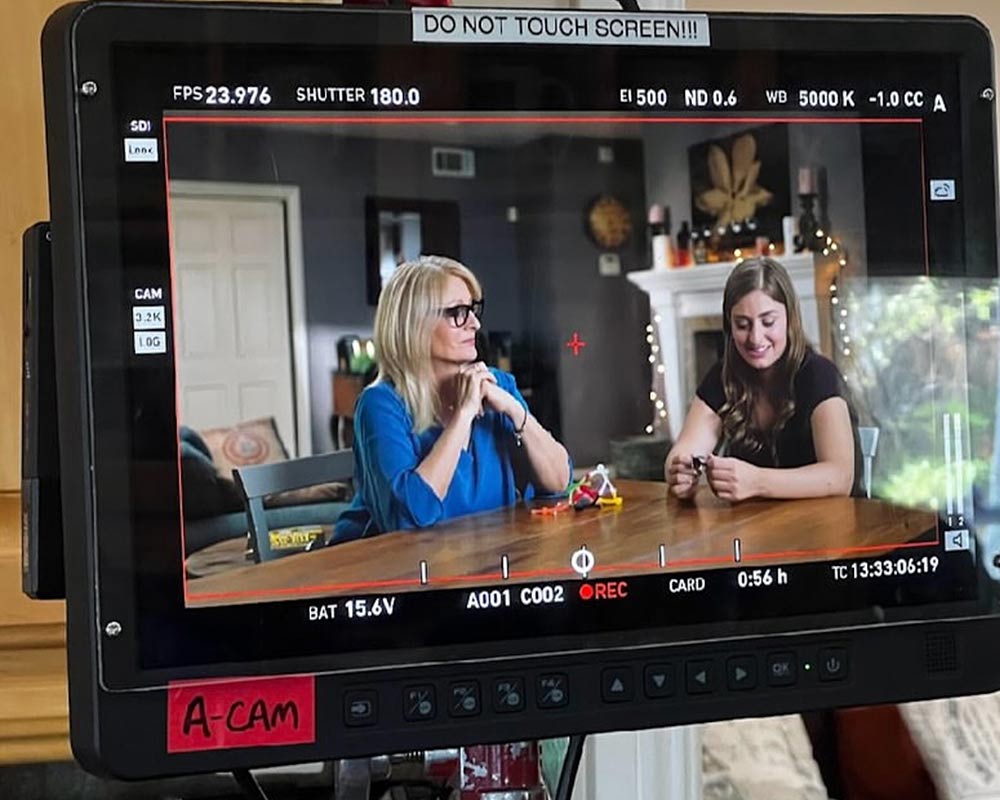
Dunn-Walker: We’re editing it as we’re filming it. The edit is very, very rough. I love my editor. He’s extremely talented, but we definitely have different ideas about storytelling. I want to encourage more narrative risk being taken there. I want it to feel more like a narrative film than just a documentary.
We’re still in the process of filming interviews and autism is such a broad subject that’s often very emotional. I thought it was going to be very wholesome when we started making it. Then there’s this flareup of Trump stuff and RFK. When I started making it, I didn’t think autism would be controversial at all. But there’s been this flareup of weird anti-vax controversy from the ’90s. There’s a lot of debate about autism which is surprising. It’s been an interesting time to make this documentary, for sure.
I didn’t intend on making a political documentary. Some of the investors I’m working with right now are a little bit politically divided, I would say. Some of them are more on the conservative side. So, when I started making a documentary about autism, I thought, “Oh, this will just be a wholesome story about me and my brother and the personal relationship that we have” because he helped me through some really hard times.
Just as a person, he goes against so many of the stereotypes about autism. I really thought it would just be this wholesome personal film. But then, there’s some pressure as a filmmaker to make things seem super relevant and super salacious. I’m on the fence about how I want to make things, tonally.
Woodall: I was reading where you mentioned AI in relation to the documentary. Can you tell me how that fits in?
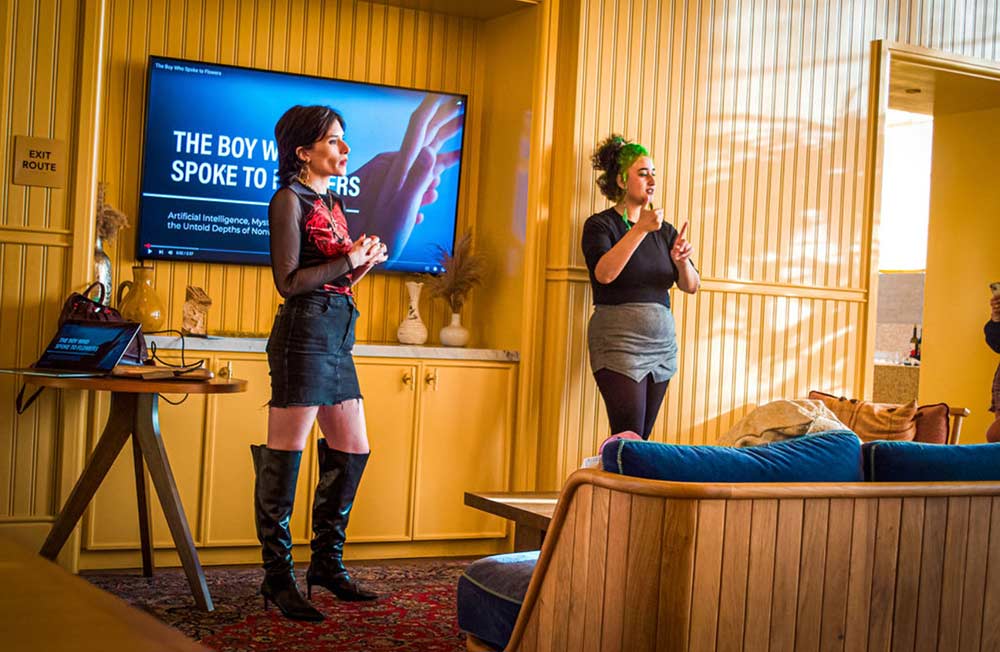
Dunn-Walker: To be honest, when we first started making the documentary, I thought that it would incorporate AI a lot more, but it’s really not about AI anymore. It’s evolved a lot since we first pitched the project and started making the project. I actually really don’t like AI. Some people like it. I know that it’s a tool. I know that it’s an emerging technology, and I use it for certain things. It’s very helpful for certain things, but I don’t find it anywhere close to human intelligence. I find it very isolating. I find it very strange. Some people on my crew do use it for some of the filmmaking process. Obviously, it saves a little bit of time and money, but when we can afford not to use it, I really prefer not to.
Woodall: There’s an interesting study that Andrew Begel does at Carnegie Mellon University specifically about AI use within the neurodivergent community and how neurodivergent individuals use it to navigate social situations and if it is helpful or not. They found that because of the nature of LLMs, the AI responses would often have ableist language or suggestions that did not work for a neurodivergent person, so they explored that space further.
Dunn-Walker: That is fascinating. I used to talk to ChatGPT a lot, actually, but it made me feel crazy. I noticed it would be really sexist a lot, too, in very insidious ways that not everyone might pick up on. I’m hypersensitive to gender bias and ableism but I just found it regurgitating stereotypes and being incorrect a lot. Then it would gaslight me when it was incorrect and I would try to correct it, and then I would have to fact-check things.
I could just see that being really dangerous for a vulnerable person. If I used that when I was younger, I could see it being very distressing. I’m very skeptical of where it’s at right now. I guess it’ll evolve like all technology does, hopefully to be more compassionate and work with people instead of against them a little bit more. But I, personally, have had negative experiences with it. I’m just skeptical of it from that perspective.
I don’t know what the future holds. That’s a topic, too. A lot of my ideas and one of my films is very feminist in a way that not everyone might like. I sometimes wonder about that. “Will this ever get seen?” It has to be a really good film to get your message across for sure. But it’s like, do you want to go like balls to the walls when you’re relatively young in your career? Do you want to be really controversial because what if they don’t give you another chance? But then I think I’m at a point where I think that life is short. I don’t know what the future holds. I just want to express myself in a really raw way. I trust my instincts. I trust my emotion. As a woman, I feel really sad and angry about a lot of things. I’m also really tired of seeing men making feminist films because a lot of them are really pornographic, and they romanticize really dark themes. I’m just going to go for it. If I never make a film again, I’ll never make a film again.

Woodall: What is the film you are referencing?
Dunn-Walker: It’s the action film that I’ve been making. It’s French. I’ve been making it for the past few years. The French tend to be less afraid of controversy, but they’re still very patriarchal, I would say. Even the feminist films play into gendered stereotypes a lot and don’t really make men uncomfortable in a way that I feel that they should.
It’s been easier to talk about certain things with French production companies. So, I feel really lucky for that, but I don’t want to jinx myself. I’m still trying to get that project over the goal line. (laughs) When I sent out the script to people, some people loved it and some people hated it. I think that it’ll be that way till it’s finished being made.
I’m working hard to make it high quality and get the right leading actress attached. I’ve learned to be very patient when making films. I really wanted to finish that one this year, but I decided I’d rather do it the right way because it’s so important to me. The producer was affected by one of the topics in the film as well. I just really want to do it the right way. There’s always a fear. If you wait too long to make something, then somebody else will make it first or people won’t care as much.
I think art with depth matters more to me than art that’s trendy right now. I can’t believe I’m saying that because for so many years, I cared about clout. I still do because you have to just to get money for things. But I think it’s just a balance. It’s like, “Hey, look at me.” But then you have to take your time to actually say what you want to say.
Woodall: How would you define your style as a storyteller?
Dunn-Walker: That’s a really good question. I think I’m still finding it. When I look at the theater that I made in college and then out of college, I would say there were two distinct styles, almost. One was very operatic and dramatic and really delved into these sad themes. I love Greek tragedies, and I love the opera and I love larger than life emotions. Then the other play that I made was like that, but it was campy. It was meant to be funny. It was very action-packed and cartoonish.
I definitely think I just really like bold choices. I hate Mumblecore. I hate Mumblecore with a burning passion. I get why it was trendy because people want to make movies for cheap and I get that a lot of people are limited by that. I’ve made Mumblecore works that I’m proud of and no shade to people who make those because it’s an economical way to make a movie. But I hate the obsession with realism and naturalism.
I just don’t like these self-effacing cool girl characters and something that looks like a documentary about people with depression. That is not what I want to make. I really want to make things that are very over the top and impressionistic with bold colors and bold movements. They are not necessarily naturalistic at all. I really come from theater. I like films that look like plays, actually. A lot of earlier Hitchcock works literally look like you’re watching a play. He’s somebody I really admire because he can be funny. He’s very stylized, but very big emotions.
Woodall: I also love Hitchcock because he doesn’t care about continuity at all. (laughs)
Dunn-Walker: That’s true. I recently watched his film Rope because, with the French film, I was just like, “Oh, we need an extra 100K, but we may or may not get it. So how can we do most of the story in one room?” And I watched a bunch of films that take place in one room. I really love that one because it totally relies on the writing. But it’s really entertaining the whole way through, despite the fact that it’s all in black and white and it’s all in one room. The way that it transitions is really—it will literally zoom onto somebody’s back to transition. I love that movie. As a person who watches a lot of theater, it’s cool to see a film that literally looks like a play.
Woodall: Would you say that film is your favorite medium for artistic expression?
Dunn-Walker: For now, I think, yeah. Perhaps this is my ego talking, but I like the ability to reach more people. You can share with people in different parts of the world, which is really amazing. I love how collaborative it is because my mom’s a visual artist. She’s a painter, and I never had the talent for painting. I think any talent can be learned, but it’s just not something I had naturally. I love working with artists and communicating through a visual medium. You can collaborate with so many different people in film, which I like. I love actors, I love photographers, cinematographers, composers.
As somebody who is interested in so many different types of expression,—and I feel like life is too short to do everything that I want to do—it satisfies this urge that I have to be every type of artist. It’s like “Oh I wish that I had done more with the teenage band that I was in, but, at least, I can work with this composer and express myself in collaborating with them.” I wish that I had the skills of a painter, but when I work with a cinematographer who’s willing to take risks, it satisfies that.
Woodall: We spoke briefly about French cinema, and you also spent time growing up in France. Are you more influenced by French cinema or US-based cinema?
Dunn-Walker: I’ve watched a lot of films, but I need to give myself a crash course in world cinema to really answer that, I think. But culturally, France and the United States definitely offer different things creatively. With the French, art is more accessible in it being a socialist country. It’s easy to get cheap tickets to the opera if you’re a student. There are a lot of government grants for artists, and there’s less censorship of artists, which I think is really valuable.
Products & Services
That being said, I think that there’s a little bit more limitation and there’s a little bit more nepotism, actually, in France. Nepotism is bad in the United States, but it’s even smaller circles over there. I think in the US—and what I like about Los Angeles specifically—is that you can get anything you want in the world here. There’re so many talented people and resources and underground work. There’s a lot of multiculturalism in Los Angeles which doesn’t really exist as much in France. There’s really value in both. I hope that that continues in the United States. I think that a little bit of capitalism can lead to innovation or experimentation. I think, unfortunately, we’ve reached a breaking point where it feels like it might not be that way anymore. But for now, I love how weird and open and experimental LA is.
Woodall: When The Boy Who Spoke to Flowers is released, where will people be able to access it and watch it?
Dunn-Walker: We’re going to definitely submit to some big festivals in the fall and also maybe look into selling it on streaming platforms. We don’t have distribution yet, but one of my producers has relationships at a few different streaming services as well as festivals. It’ll exist in the world at some point. I just don’t know when or where yet.
Woodall: Is there anything else you would like to add?
Dunn-Walker: I would love to say something to my younger self and also to young women who have a disability because I got placed in Special Ed from a young age. I think that that was in many ways detrimental. I want to say to people, don’t let other people’s limitations of you define you. That sounds really cheesy, and it sounds like something that everybody says, but I think I just needed to hear that when I was younger. You should just always stick up for yourself and look for the people who care about you.