












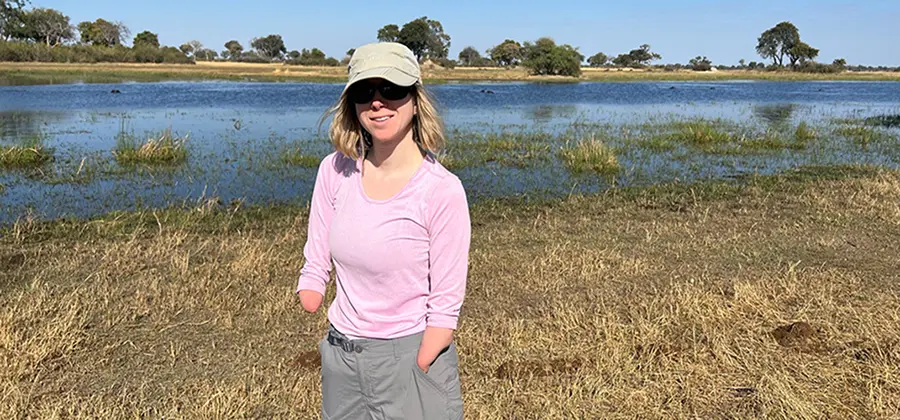
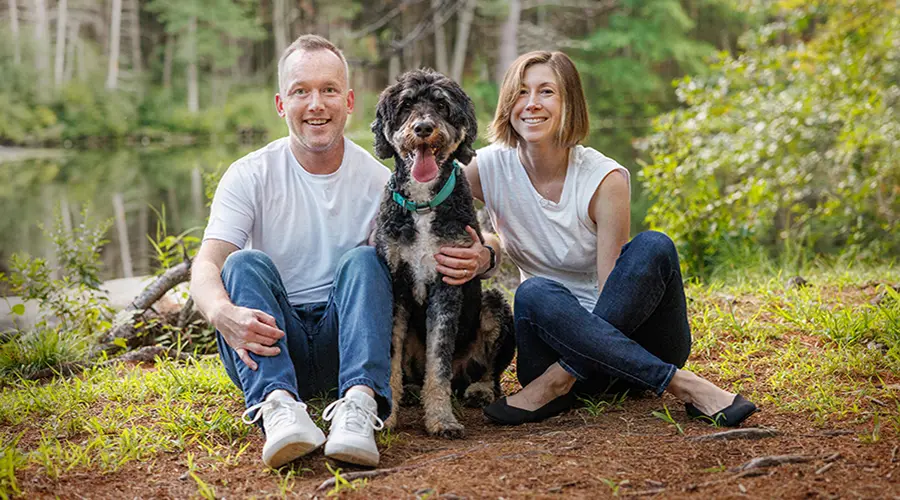
Venture capital (VC) plays a vital role in developing new technologies and supporting the growing space of disability innovations. Bringing their lived experience to the world of venture capital are Brittany and Rich Palmer, a husband-and-wife team who run Adaptation Ventures, a venture capital fund dedicated to early-stage, disability-centric innovations. Brittany, who was born with a bilateral, below-elbow limb difference, and Rich, a brain aneurysm rupture, deeply understand the importance of accessible technologies. Together, they are using their fund to support founders and prove to traditional investors that the accessibility space is both necessary and profitable.
Complementing the venture capital firm, Brittany also launched Ability Lane, a platform where startup creators can showcase their new projects and connect with consumers, testers, and investors alike. ABILITY Magazine’s Chet Cooper met with Brittany to learn about the world of venture capitalism and its role in funding innovations that help make life better for people with disabilities, and consequently, all people. Palmer shared the joys and struggles of having her own startup, Beeyonder virtual tours, and provided an enlightening education on how the world of venture capital works. Throughout the conversation, she shared her energy and passion for funding innovative startups that improve life for people with disabilities while shifting the broader mindset of the venture capital industry.
Editor’s Note:
Venture funds are used to invest in start-up companies in exchange for equity (a percentage of ownership) in the company. The Venture Capitalist, also known as a General Partner (GP), gathers investors (Limited Partners or LPs) to build the fund. The GP then finds start-ups that have a high potential for fast growth once they receive the investment. For example, early venture capital investments are what allowed small, garage-based startups like Google and Apple to scale into global tech giants.
Chet Cooper: You and your husband created a new disability VC venture. Can you give some background, whose idea was it?
Brittany Palmer: We came to the idea together. I was born with a bilateral below-elbow limb difference. So, I’ve had experience with disability my whole life. Rich actually had a brain aneurysm rupture in his late 20s and had to learn how to walk and talk and read and write all over again. We used our lived experiences and workplace skills to bring together the VC. After Rich recovered, he went to business school. He originally did finance and computer science on Wall Street and then went to business school because he wanted to start a company doing social good. And so, he started an AI company in 2015 before AI was a lot easier. And they helped nonprofits raise more money. He sold that in 2019.
Cooper: That’s early.
Palmer: Yes, and I started my career as a lawyer doing environmental and international health and safety law.
Products & Services
Cooper: I saw that you had a degree in biology, so you got to use it with that with environmental work.
Palmer: Right, with a concentration on the environmental side, but I was looking for something else to do. I was ready for a little bit of a change, and COVID happened. I absolutely love to travel, and with all the travel that got canceled, I started thinking, “How do people with limited mobility and other conditions travel? Can they see things that they want to see? And I did quite a bit of research before starting Beeyonder, which was my startup doing live and interactive virtual tours around the world.
During that process in raising funding, I heard a lot from venture capitalists: “Well, disability is really niche. There’re not a lot of people in this space, not a lot of money to be made.” And it was very frustrating.
The more we talked to other founders, the same thing came up on a regular basis. This was before there were really any VCs in this space.
I had been advising companies and serving on advisory boards for different organizations. We got together trying to figure out what we were going to do next and said, “This is really a space where these founders need that first money, high-conviction investors who really believe in the space and who can explain to other investors the value of investing in this space.”
There are a couple other VCs, but they don’t necessarily invest as early as we do. We are sector and industry agnostic (not limited to a specific industry), whereas others are not. So, we look across all kinds of disability markets and all kinds of products when we look at companies to invest in. So, that’s how we got started with the venture firm.
Chet: With your previous company, Beeyonder, offering virtual travel tours, I am curious, did you do cruises? Interesting that they are quite accessible and interesting to see how they’ve evolved over the years because of aging.
Palmer: That was on my list. Eventually, I really wanted to allow them to keep people engaged as they age. A lot of them do cruise, which is great, but if they got to the point where they couldn’t, I wanted these big travel companies to still engage their clientele. We were in early discussions with a public company that wanted to do that. And I said, “Well, you have to give me another year or two then.”
Cooper: So, you’re saying the client would be Royal Caribbean, and they would offer that virtual tour for those who can’t take tours anymore.
Palmer: Yeah. That was the big picture, what I really wanted to do. I think we had 500 tours on the site. I can’t remember exactly how many guides we had. I think well over 100, in over 50 countries. We sold to individuals, senior living and senior organizations, and corporations that took a lot of tours because they looked at it as a way to do something with the entire team.
Cooper: And who was doing the filming?
Palmer: The guide was using Zoom at the time with a gimbal to show themselves and their surroundings.
Products & Services


Cooper: Is this real time and interactive?
Palmer: Yes, real time. We actually had a tour happen in Lima, Peru, when the protests were going on, and a car accident happened right in front of the guide during the tour. It was kind of like you never knew what was going to happen.
Cooper: Wow. Well, that’s a lot of groundwork to get it all set up.
Palmer: Yeah. The international consulting work I did as a lawyer gave me a lot of experience working with people from different cultures, understanding how they work, how to communicate best with them, what to expect, and what would entice them to do the work. Allowing people to give a parent in hospice the opportunity to visit a place they had always wanted to go to but never got to see was incredible. There was a lot about that work that was really rewarding. I have a lot of other ideas about things in the travel industry. It’s a little frustrating because we don’t see a lot of that. I’m always on the lookout for startups in the travel space, but we don’t see a lot. At least when I started my company, when people thought of accessible travel, all they thought of was people in wheelchairs, right?
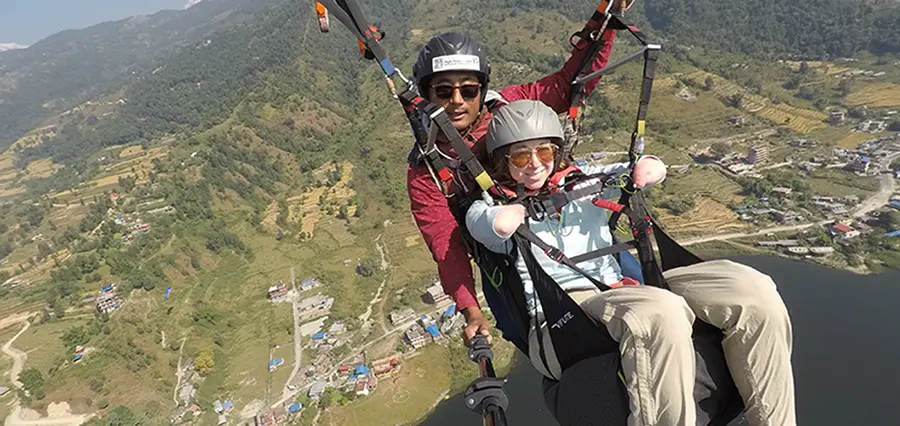
I recognize that there’s a lot of difficulty in travel and dealing with things when they get to places. The nightmares I’ve read that people go through are awful. But I felt like people thought that was the only part of disability affected by traveling. There’s so much more to take into consideration and so many more types of disabilities when you travel. There’s a lot of work to be done in the industry for sure.
Cooper: I saw that you previously helped Perkins School for the Blind. I think it’s great when organizations work together. We sponsor ABILITY Corps and during an ABILITY House build we partnered with the National Association of Blind who sent volunteers who were blind to help build a home for a family with disabilities. Maybe one day we can do something similar.
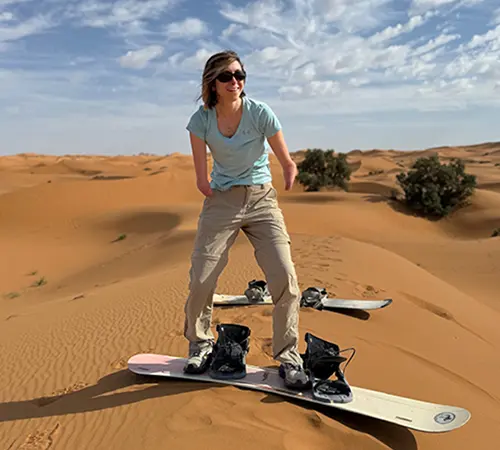
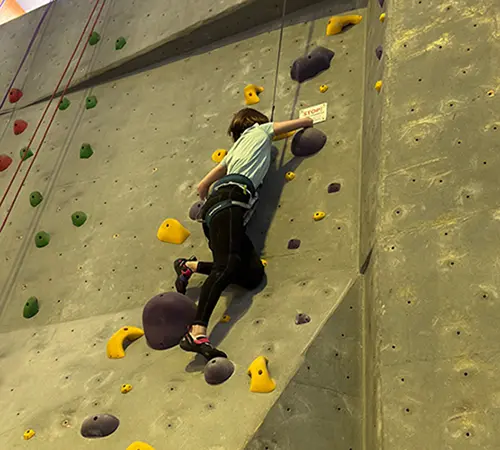
Palmer: I love that because people have views of what disability is in general, but then they also have views of what people with disabilities can and can’t do. I really like breaking their perceptions. Here in the U.S., yes, but certainly when we’ve traveled to southern parts of Africa, there is sometimes a lot of surprise that someone like me is there and can eat and do things independently. I think it gives them a different perception of what people with limb differences can do. Some people are more honest than others. I’ve had people say, “I had no idea that you could do that,” or “I have no idea how you do that.” And I think the more we can push the limits of what people think we can do, the better off everyone will be.
The other thing is just being out where people don’t expect people with disabilities to be or to have that conversation. When you go to events, they’re all great people and you know all of them and love seeing them, but you always want to see other people who are interested in learning more about this space or who have never been to one of those events before. I feel like it rarely happens.
We’re trying to do that too, in conferences, in the people that we talk to and with some of our investors who had never thought about this space before. Until we told them, they wouldn’t have an electric toothbrush, audiobook, typewriter or speech-to-text without that technology first being developed for people with disabilities. At some point, you see their eyes go wide, “Holy crap, I had no idea.” Then they realize just how important this space is. That’s if they don’t have a direct connection to disability. We talk about the curb cut effect all the time.
Products & Services

Cooper: In what context do you use the curb cut effect?
Palmer: We were doing a build-a-thon at a college and we were talking about accessible tech there. Rich and I started talking about the curb cut effect. And I’m looking at all these students and I asked, “Who here knows what the curb cut effect is? And like one or two of the people that Rich and I invited who were assisting the students with this were the only ones that raised their hand. And I said, “Who here knows what a curb cut is?” And no one raised their hand. All these students were born after curb cuts were made. They have no idea that they didn’t used to exist and how they came about. It’s so interesting.
Cooper: What do you and Rich do with your companies on a day-to-day basis?
Palmer: We have Adaptation Ventures, which is the venture capital firm, and then we have Ability Lane, which is the platform that connects founders in the accessibility space to community members and to other people in innovation and investors. So, our day-to-day is reviewing startup opportunities for Adaptation Ventures, speaking with founders, fundraising for the fund, doing our due diligence on companies and communicating with the investors in our fund.
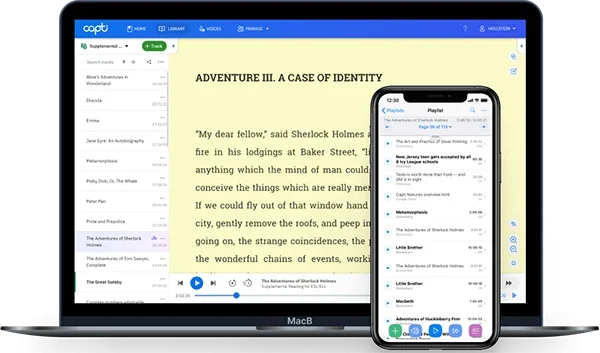
The reason why we started Ability Lane is because there is no place currently where it’s easy for people with disabilities, people who are aging, caregivers, and people who are neurodivergent to find the most recent innovative products on the market. So, we wanted to create a place where founders could get feedback from community members on their products to help them iterate (improve).
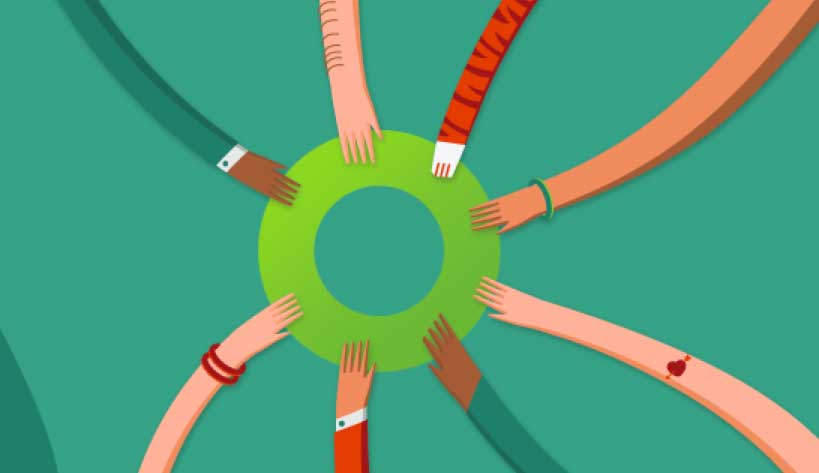
It really brings home the concept of nothing about us without us. We wanted a place where investors who were interested in seeing companies in this space and wanted to learn more about what kinds of companies are in this space could find companies that were raising funding. Ability Lane brings that all together.
We want a place that people can go to find solutions to make their lives easier. That’s why we started Ability Lane.
Cooper: Is there a cost for people to join Ability Lane, or a membership fee? How does that work?
Palmer: There is no cost. Founders can sign up and post their products here. They upload the information for their own products and add tags about who they serve and what industry or sector they’re in. People can click buttons that say, “I would use this product,” or “I would recommend this product to others.” They can also favorite it with a star. If you (visit) a product page, you can comment, share, or visit the company’s website. There’s team information, and some companies upload product images. So, it allows people to add different kinds of information.
Cooper: In the vetting process, do these companies have to be at a certain stage?
Palmer: Ability Lane has a little hammer (icon) that shows that a product is in development, but any other products that are not in development actually have at least a minimum viable product available.
There’s a discussion section where people can post discussions, ask questions and (write) responses. We have a product testing aspect where companies can post that they are looking for product testers and what they’re looking to have tested. And then as an Explorer, which is the term we use for community—they can sign up as an Explorer and click I’m interested and write a note to the Creator. We are here to make the connection.
Cooper: Are they paying the testers?
Palmer: We don’t deal with anything related to payment, at least right now. This is just for making connections.
Cooper: There’s controversy around disability and product testing. In other spaces, they pay testers. In the disability space, for some reason, there’s been this idea of, “We’re trying to help you, so you should give your time freely to test.”
Palmer: I understand that. This is really meant for startups that are typically developing products to help the community and are at the very early stages, so they either don’t have money to pay for product testing, or people in the startup world are eager to use new technology and will give feedback at no cost. That is why we have not set up charging here. If a large corporation started trying to list products for testing, we would go back and figure out how to make sure testers are paid. But this is really meant for early-stage companies.
Cooper: Nice that you thought of that.
Palmer: Yeah, definitely very much aware of that. And if a tester wants to be compensated for doing the testing, they can work that out directly with the company. We don’t get involved in that. We’re just here to make connections.
They can sign up to get updates about new products and determine how often they receive product testing and survey updates, so they can keep up with new products and participate as frequently as they want.
If you wanted to search by a specific market or sector, you could do that. You can search for funding. This is only viewable to Innovation Scouts, who are typically investors, so they can search for companies that are looking for funding, or nonprofits and foundations that are giving out grants.
Cooper: Are you saying nonprofits can join this and then find grant opportunities?
Palmer: Yep, they can. We have several nonprofits that have joined as Innovation Scouts, where they can go in and look for companies they might want to give grant money to and support.
Cooper: I was thinking, a nonprofit looking to get a grant.
Palmer: No, these are typically organizations in the disability space, and some of them are nonprofits. They can list a product. This is really meant for organizations that have specific products and services that they offer for people with disabilities, neurodivergent people, caregivers or older adults.
If they’re raising money and they’re looking for grant money, they can list that they’re open to grant money. If a foundation takes a look at the different organizations and companies that we have and sees, “Oh well, Tactile Horizons AI is looking for grants and their company looks really interesting and I want to support them,” then they know that this organization is open to getting grants, and they might contact them because of that.
Copper: How does the general public access Ability Lane’s website features?
Palmer: If you go to sign up, you can see three different options for who you are and how you want to join. Explorers are more meant for the people in the community who want to discover products, upvote favorites and participate in product testing and surveys.
Creators are the founders creating products. They sign up as a creator, create their product page, connect with potential customers via product testing and surveys, get feedback and increase their visibility by being listed on the site.
We have investors that have joined as Innovation Scouts. If you’re an organization that wants to look for startups or other organizations that are building products in these spaces and raising money. Or maybe you’re a large company looking to acquire a company in the accessible tech space. You could come here and sign up as an Innovation Scout and get more information about the companies that are out there.
Cooper: Is there a cost for joining?
Palmer: No, there’s no cost to join. We don’t charge Explorers at all. There’s a free code right now for several free months for Creators and Innovation Scouts as we figure out how everything is being used and what sponsorship opportunities we can get to help lower costs.
Cooper: Other than the purpose, are you looking to build this out and have revenue generated as a regular business from this? Palmer: Yes. We need revenue to continue building tools and managing the company. But we’re not looking at this as something that has to grow into millions and millions of dollars. We built it because we wanted to provide this service for this community. A nonprofit didn’t quite fit the model we wanted or what we thought this company could turn into. We have ideas about how Ability Lane can evolve, but I can’t really talk about those on the record right now.
Products & Services

Cooper: Tell me now.
Palmer: (laughs) I can’t tell you right now. (laughs)
Cooper: I like that you’re covering all bases, whether it’s neurodiversity or limb loss. So much to cover, so much to do.
Palmer: Yeah, there is a lot to do and there’s so much out there. I don’t think people still think about disability in a very particular way. I think what we’re seeing is our ability to change their mindset about what disability is, what it means, and how they’re connected to it.
Cooper: I saw one company from Portugal on your site. You accept worldwide creators?
Palmer: We allow any companies from any country to list their products. This company is in Portugal and they’re speaking English, not Portuguese. I think it depends. If we eventually put together a multilingual site, then I think a lot of these companies that are in different countries will put their products in a different language.
What’s interesting is a lot of founders in other countries have the goal of getting into the U.S. market because that’s where they make a lot of the money. And so having things in English is actually better for them because they’re looking at the U.S. as the group of people that can afford their product. If a lot of them are looking to break into the U.S. market, it benefits them to have things in English.
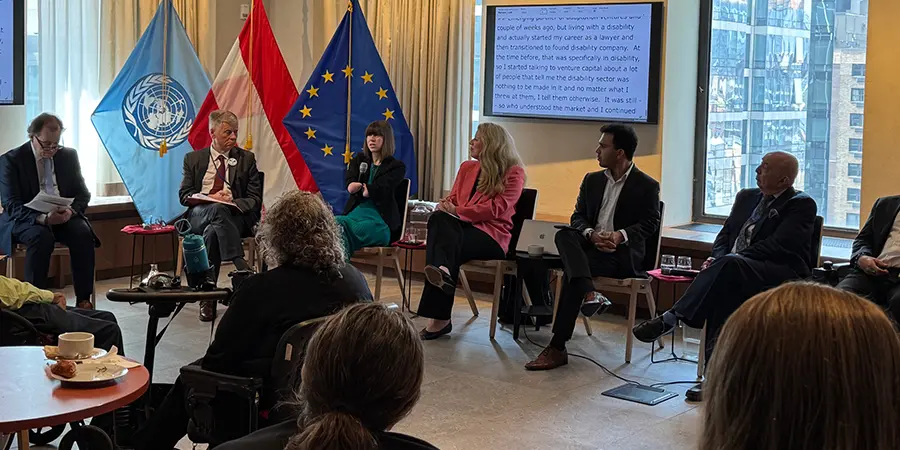
Cooper: And about Adaptation Ventures, your VC firm, you make money if a company succeeds?
Palmer: Yes. With the fund, we take a percentage of what the whole fund makes. So, 100% of our investors have to be paid back before we take any money.
We’re making investments that we believe will make us and our investors money. One of the reasons why we’re doing that is because we very much believe, and have seen, that there’s a lot of money to be spent in these industries: accessible tech, caregiving, age tech and neurodivergent tech. It doesn’t have to be concessionary (having lower market returns). You can make money in this space. A lot of companies in this space have sold for a lot of money, and the more people and investors realize that, the more investments will be made in this space and the more innovation can happen.
There are lots of different aspects of this space. The reason we’re doing what we’re doing is that, in this space, in order for more innovation to happen, investors have to understand that they can make money. Rich and I feel like we’re the best equipped to help push that forward, and that’s why we’re doing what we’re doing. And if we can change the mindsets of some of the most conservative people you can imagine, which we have, that’s a big win.