







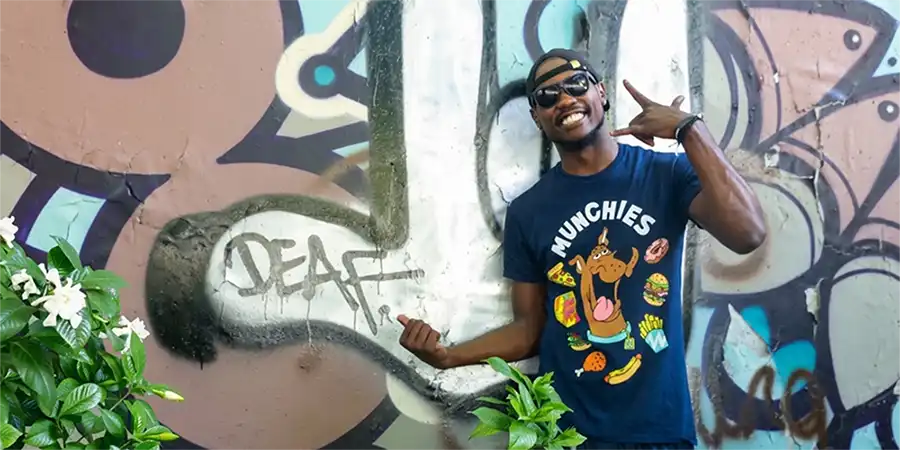
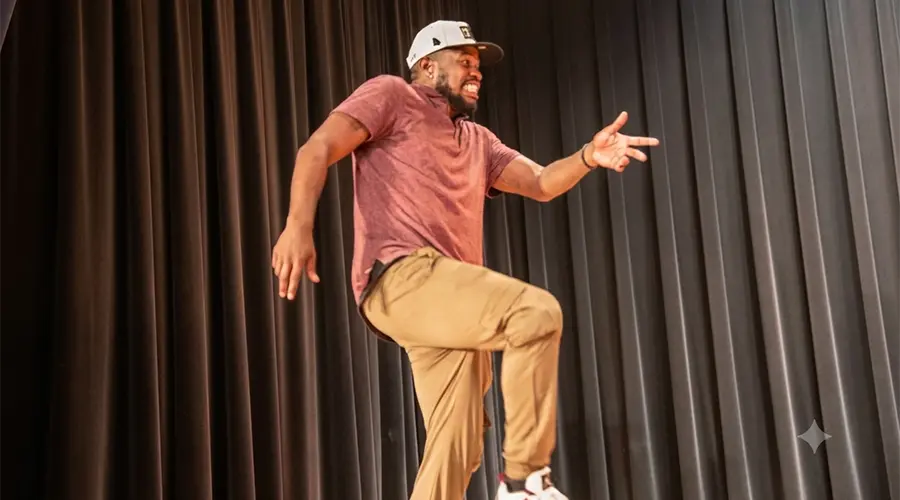
Matt Maxey is a trailblazing sign language interpreter, motivational speaker, panelist and workshop organizer who serves as a powerful advocate for diverse representation. Already known for his unique skill in visually interpreting popular hip-hop songs, Maxey skyrocketed to mainstream popularity when he was selected to tour with Grammy Award-winning artist Chance the Rapper. Bringing music to life with powerful authenticity, Maxey uses Black American Sign Language (BASL), infusing his performances with dynamic facial expressions and rhythmic movements that capture the true grit and emotion of the tracks. As a Black man born with profound hearing loss and the founder of DEAFinitely Dope—an innovative organization dedicated to bridging the gap between the hearing and Deaf communities through music, sign language and accessibility—he continues to use his platform to champion inclusion and push boundaries within both entertainment, popular culture and society.
ABILITY Magazine’s Jennifer Woodall recently sat down with Maxey to talk about his life, his remarkable career as an entertainment interpreter and his current gig working as an artist in residence at a school for the Deaf in New York. Maxey spoke candidly about his early years navigating a mainstream educational system, his initial resistance to learning sign language and his incredible experiences bringing accessibility to major festival stages like Bonnaroo. He also shares his invaluable perspective on the specific needs of deaf young people of color, the complex language challenges found in multilingual households and the ongoing need for representation in this space.
Products & Services


Woodall: Can you share a bit about your history and background?
Maxey: So, I grew up with two hearing aids. I have a very profound hearing loss, so it’s very much similar to trying to hear a conversation underwater. If it’s super loud, you might hear bumps and sounds, but as far as making out words clearly, I couldn’t. I grew up with a lot of speech therapy. I did not know about Deaf culture, Deaf community—nothing. Pretty much went the mainstream route. So, I always had IEP meetings, everything trying to be set up for my success. But it wasn’t until about high school that I started getting exposed to the Deaf culture and community. And I was a little bit resistant because I already was taking speech therapy, so I felt confident. I can talk fine. I don’t need sign language.
But the older I became, the more I became curious about the other side. And that led to going to Gallaudet University where I started learning sign language. And that pretty much completely changed the course and direction that I was planning on going in, once I went there. But I wouldn’t change it for anything. It led to doing music and sign language presentation workshops, sign language interpreting during festivals, collaborating with artists all different kind of things, all for accessibility and inclusion. It’s been a journey.
Woodall: Do you feel like some of the resistance you had to learning sign language was rooted in like stigma or was it more just like, “Nah, I don’t need that”?
Maxey: No, it was more stigma. I didn’t see anybody around me doing it. So, of course I didn’t want to be the odd one out. Like, it wasn’t deemed cool at that time. And it wasn’t the main method of communication, So, of course, I was like, “Nah, we’re good.” And everybody that started doing sign language, I couldn’t relate to. That made it even more easier to just be like, “I’m good. Y’all can keep it. I’d rather go over here.”
Woodall: What made you interested in starting to sign music?
Maxey: I was just trying to learn how to sign. Really, I struggled a lot with the ASL classes and it was putting me to sleep. So, what made it fun was trying to use the vocabulary words that I learned and applying it to music. And I admit, even seeing people who did Sign Language to Song my freshman year of college, I’m like, “Oh, that’s cool. That’s fire. That’s actually pretty dope.” And it was a good way to just kind of connect, but I never knew it would grow into what it is now. I kind of had an idea. Like, it wasn’t a market, it wasn’t a niche, it wasn’t a lane. But I didn’t expect to be this magnitude.
Woodall: So, you’ve gotten to work with a lot of really cool people. Can you talk to me about your journey from beginning?
Maxey: So, it was definitely what you call “get it out there and mud.” So, it was grind. I actually ended up moving to Jacksonville, Florida. And when I moved there, I was working multiple jobs, going to school, just trying to really make things happen. And Jacksonville was the first community that really just uplifted. We did Art Walk. I knew ASL teachers. They invited me to present, perform at their school. So, I pretty much just really connected with the community and was hands-on. So, the more I practiced, the more I did it, the more—Oh, okay, this is what people respond to. Oh wow, that’s so cool, perfect. This will help get people to learn ASL And I just developed, I just always stayed outside interacting just trying to teach as much as possible. But Bonnaroo— I just walked into a gold mine.
I actually had just moved to Houston, Texas, and I didn’t have much. It was really just a gamble. Worked with another interpreter, performer had my Deaf videographer. He’s like, “Hey, let’s just go to Houston and doing the same thing in Houston.” It was just a live video that we put on YouTube.
So, that interpreter invited me to go to Bonnaroo with her as a plus one. I’m like, “Okay, cool.” I have no idea what Bonnaroo is. I got there, I’m like, “Oh, this is cool.” And then later on, the accessibility team was like, “Oh, you’re Matt Maxey. Oh, we know you, we love your videos.” I’m like, “Okay, that’s fine.” And they’re like, “Whatever song you want to do, you can go ahead and interpret.” I’m like, “What?” So, that’s how Bonnaroo ended up happening. But it was always just community, just being outside networking just really being passionate about sharing my love for music and just watching it grow and blossom from there.
Woodall: I went to Bonnaroo in 2004. And yeah, it was a lot of fun, but also I didn’t see that representation there. So, it was really cool to read about you being involved in that and just knowing that they did start having that representation.
Maxey: And that’s what it’s all about. Just how do we grow as a culture, community with inclusion and accessibility. So, that was a big turning point.
Products & Services
Wolford: Another thing that I thought was really cool was your work that you got to do with Chance the Rapper. Can you tell me about that?
Maxey: So, that was the result of Bonnaroo. And even to this day, it’s still kind of surprising because he requested to meet specifically. He asked the access department to meet me specifically. And, of course, that was my first rodeo. I’m like, “This is insane.” But working with Chance was everything. He was definitely all about his community, all about his family, all about just being authentic representation. So, it felt like a good fit when he picked me to go on tour with him.
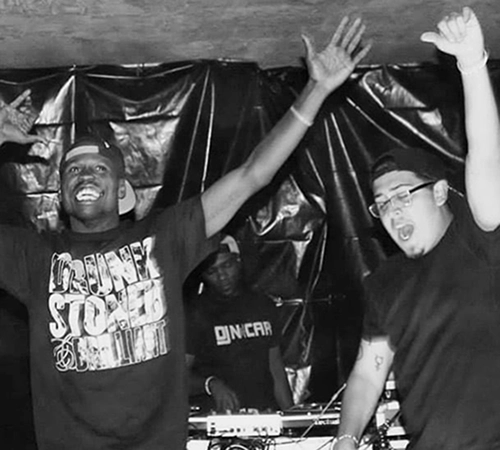
And that experience—we did work with his Chicago community. We did multiple shows all over America, even went over to London. That was crazy. But it was an incredible experience, and I always commend him because no other Deaf interpreter has been picked to perform with a Grammy Award-winning artist. And on top of that, he gave about 50 free tickets for Deaf and hard of hearing for every show. So, that was unheard of. And on top of that, he was willing to be side-by-side in a video teaching how to sign his song “Blessing.” So, that was a lot that he contributed to the visibility of ASL and just seeing how our careers just kind of coincided with each other.
Woodall: I really enjoyed watching the videos that you guys did together. It was really cool to see someone who’s so prominent in the music industry and someone who’s so prominent in the signing community to be able to champion this into the public eye.
Maxey: Anyway, I hope it happens more though.
Woodall: Yeah, for sure. Absolutely. I hope it does too. I love seeing the visual representation of the music. I wish it was everywhere, so hopefully we’ll get there someday.
Maxey: We will. We definitely made a lot of progress compared to 10 years ago. So, a little bit steady.
Woodall: Absolutely. Can you tell me about your process of what it’s like to prepare for a performance?
Maxey: Stuck in my room, no conversation, no phone calls, no texting, no nothing. It’s a long process. I feel because I’m a music interpreter—but I don’t do interpreting like school or courthouse or hospitals. I don’t do that. I like to connect with the music. So, for me, with preparing, I gotta write this down and learn all the lyrics. I break down the lyrics. I try to, without signing, just create a visual in my head. Just what comes to mind when I read these lyrics? What situation can I relate to this lyric? And from there, it just starts adding the sign. How much time do I have to sign this? How much can I spend on it? How much more can I add to it? And then how do they all flow together?
So, I practice, record, mirror. Okay, this looks good. Nah, this, eh. If I was the audience, I would be asleep, too. Let’s liven it up. And it’s just pretty much just critical of every aspect of it until we get to the finished product. That’s what made it hard to do music interpreting because that might be a 1-week, 2-week process for one song.
But when you interpret festival concerts, you’re working as one. You have 20 to 30 songs in one night. So, you’re trying to be artistic, creative for about 2 hours straight, your brain is just like, “Timeout, hold up.” So, I definitely try to stick with the more artistic side where I can do the song justice with the visual representation instead of just interpreting word for word.
Wolford: That sounds rewarding but also exhausting.
Maxey: Oh yeah. It’s the best of both worlds.
Woodall:. Do you have a favorite song to sign?
Maxey: I do.
Woodall: What is it?
Maxey: It’s actually called “I’m Blessed” by Charlie Wilson and T.I. I think that one. Just over the years I performed it in different locations and just resonated with it as I’ve gone along this journey. It’s been up, it’s been down, it’s been happy, it’s been sad, it’s been maddening it’s been joyful. And it’s always just kind of been a baseline of what keeps me even when I hear it and just like, “Hey, what?” I remember when we first started and none of this seemed possible. And now listening to it is just a reminder to be thankful and grateful for the whole journey beforehand.
Woodall: What are you doing when you aren’t touring? What are you up to?
Products & Services


Maxey: So, right now I am an independent contractor working at a Deaf school in New York. I have been here almost 2 years now and I’ve stopped touring because it’s hard to work in the school environment and go on tour and no free time. But once I finish my contract, I would likely be back active again, and that’s usually like, I get booked for workshops and presentations. I travel for interpreting even though I don’t like it, I still do it. Performances, pretty much a jack of all trades, entrepreneur, collaboration partnership. I partner with a few companies like GoNoodle, I work with them to create new content. So, it’s always something that keeps going, especially as people are trying to learn how to navigate the lane of providing sign language and visual representation.
Woodall: Can you talk about the work you’re doing with the school?
Maxey: So, here, I work as an artist in residence, and it’s to work with all ages from pre-K to senior. And what we do is we help them get exposed to language and music. So, a lot of them come from backgrounds where the family don’t sign at home. A lot of them are very shy or haven’t had the opportunity to be involved in the performing arts. So, I work with them throughout the school year to help prepare them for a showcase they have at the end of the school year for their parents, the school community and the general public. So, it’s been rewarding. We’ve done two showcases so far. Both of them were highly successful, got me back here to do it again. I love working with the kids.
It’s been great to see them go from “nah,” and then all of a sudden, they’re just on stage, boom. So, it’s definitely rewarding to be able to teach the kids how to be themselves and be free and comfortable in their own skin.
Woodall:. It kind of mirrors your own journey with sign language, too.
Maxey: I think that’s what kind of helps me be more passionate about it. Like, “I know how you felt. I was in your shoes before.” And so, I showed them like my old videos. Like, “That’s you?” It was bad back then. So, don’t feel bad. I was in the same boat. And it does give them confidence. And just seeing them doing it for the pure joy, not for anything else. That’s the part I love the most.
Woodall: Recently, I was interviewing Millicent Simmons, who is a Deaf actress.
Maxey: Oh yeah.
Woodall: She was in “A Quiet Place.” I learned during that interview that it was something like 95% of parents of Deaf children don’t learn how to sign. And I was amazed by that statistic. Is that sort of like what you’re seeing reflected as well?
Maxey: Yeah, I definitely see that reflected. And to add another layer, a lot of the students here are people of color, so they have more multilingual households in play where Spanish or another language in play. So, if you’re talking, you’re trying to learn Spanish, you’re trying to learn English, you’re trying to learn ASL.
And then you don’t really have much support for it as you navigate because there’s no middle intermediary. It’s even more of a challenge to get them that language aspect and understand just how do you take these lyrics and make a visual representation if you’re not really practicing on it at home, if you’re not really actively getting to use it in your everyday environment outside of school. It’s tough for them. So, I think that’s what makes a lot of the people here even more motivated to try to give them as much as we can in the limited amount of time that we can set them up for.
Woodall: Yeah, that kind of rolls into another question that I wanted to ask you is if you feel like there needs to be more representation of like the Black community and people of color community within the disability space.
Maxey: Yes. I think it needs to be more diverse representation. I think everything that gets showcased is more of like what’s appropriate for TV. And that was part of my rebellion when I first started. There was no music with profanity, there was no hip-hop there was no anything that went against the status quo. And everything was just kind of curated to make it like a pity environment or happy-go-lucky, like, “Look how awesome sign language is!”
Products & Services

It can be rough. It can be gritty. It can be dark. It can be all different aspects. But I don’t think people get to see that as much as they should because not everybody is going through the same thing. Not everybody has the same experiences. Just like music, we all have very different tastes in music, but we have somebody that represents that taste in music. So, with the representation, I think it’s getting better, it’s showing up more, but it’s still hard.
And especially me, as a Black man, in sign language is a unicorn. Like it’s the Black sheep unicorn. We see each other in the wild, we’re like, “Hey, you doing it too? Stay afloat, bro.” But at the same time, it’s hard to really kind of impact as many people as possible when there’s not as much of us or not as much of us being visible. More representation needed for sure.
Woodall: Do you have any like ideas or thoughts on how we can improve that representation? What do you like foresee as like the best first steps that we can take to start getting better at that?
Maxey: That’s a good question. What can we do? Whenever I think of representation and why it’s not really getting shown, I always think of gatekeeping. There’s a lot of gatekeeping in play where everybody knows somebody or this is how it should be. This is the profession that we’re trying to display to everybody. And the less that we gatekeep, the more that it does get out. Unfortunately, that is the main answer I kind of keep in mind.
I think now more people and companies and businesses and organizations are trying to be involved and put it on a platform, but don’t know how. And even though it is difficult to figure out how to include the Deaf community, the signing community people of color, however the case may be, it is difficult to include them. But for example, if you’re working education, you can invite somebody who fits that mold to an educational conference so that way you can have a ripple effect and be able to see. Once you see that, then you think of it and then you think of how to apply it. So, more invites, more open opportunities more opportunity of like collaborating.
Hey, you have 5×5, this person can speak, this person can sign, but they can coexist with each other. So, it goes to the visibility. The more you’re willing to be visible about it, the more people are willing to give it a try.
Woodall: Is there anything else that you would like to add to this that we haven’t covered today?
Maxey: I think you did pretty great with the question. We covered it at a high basis. I definitely wasn’t expecting this good of questions. Normally if I do an interview, it’s just, okay, yeah, wham bam, thank you, ma’am. I actually think we covered a lot of ground. In regards to what you said about Millicent’s comment about 95% of parents don’t sign with their kids, there’s definitely platforms out there that are now catered to that to try to help make it easier. And I can’t emphasize just how impactful it is to be included.
That’s at dinner, that’s at breakfast, that’s in conversation, that’s in family celebrations, that’s at work, that’s at school that’s everywhere because it does do a lot of damage to not be included. And that’s personal, that’s intellectual, that’s in the mental health generation. And as much as we advocate for whatever we like to advocate for, I do think it is a basic human need and desire to be included. I would just recommend people keep that in mind if you come across, “How can we include you if we fear that you’re being excluded?”