






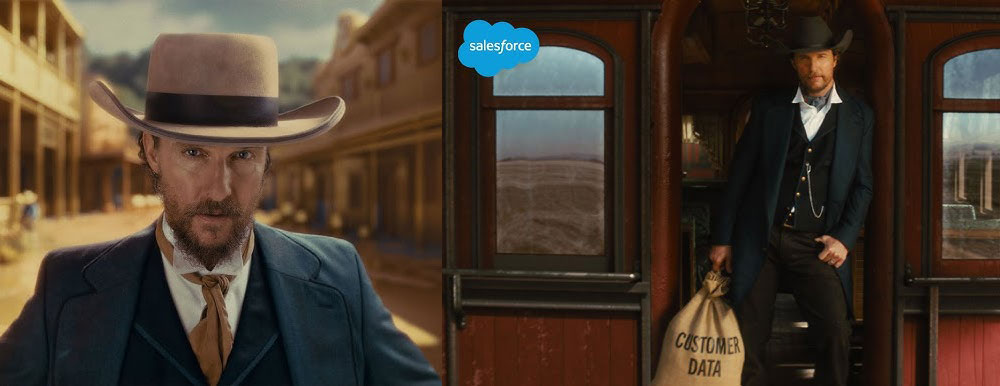
You might recognize Salesforce from its iconic ads featuring Matthew McConaughey and Woody Harrelson, that humorously show how disastrous customer experiences can be when businesses don’t use the platform. Salesforce is not only one of the largest tech companies in the US, but it’s also known for its strong commitment to “trailblazers”, a term used to refer to customers, employees and partners.
One standout trailblazer is Amy Wood. Combining her passion for event planning with her desire to accommodate accessibility needs, Wood has helped transform the event experience for thousands of trailblazers. From transportation and food to wayfinding and event sessions, her work has enhanced all aspects of major B2B events like Dreamforce, which can be the size of a small city.
ABILITY Magazine’s Marge Plasmier and Chet Cooper sat down with Wood, who is deaf, to discuss how her role at Salesforce has broadened her perspective on accessibility beyond her own disability. Wood also describes many of the accommodations adopted for trailblazers, overcoming challenges and the playbooks she developed that are used throughout the company.
Plasmier: What brought you to Salesforce initially?
Wood: I lived in Indianapolis at the time, and this was probably back in 2016. I was working in Indianapolis at a different company, and there were several laws that were passed that were dangerous to the LGBT community and also people with disabilities. The CEO of Salesforce Marc Benioff, spoke out against these laws that went into effect, and he said, “If you leave these laws in effect, I am going to remove the company. I’m going to remove all of the employees and pay for them to move to another state where they won’t be in a harmful area.”
That’s how I first became aware of Salesforce and how Marc Benioff prioritizes the safety and comfort of his employees. Especially as a deaf person, that really resonated with me. I kept my eye on the job openings, and in 2019, I found a job that I really wanted to apply for. I applied for it and got the job, which was the event supervisor in Indianapolis. Previously, I worked in marketing for an insurance and financial services company. So, it was really great to get back to my roots in event planning.
Plasmier: What did you notice about Salesforce that started this process of making changes?
Wood: I noticed that Salesforce was really— There are five values that they work through, that [Salesforce] lives by, which are trust, innovation, customer success, sustainability and equality. I really admired that. It’s like customer success and trust were the two biggest things, and that’s how we operate on our day-to-day work.
In my work, I was organizing events and welcoming customers to the tower. I would work with a Salesforce employee welcoming customers. I noticed that there was no way for customers to request an accommodation, whether they had a dietary restriction, or whether they needed captioning, or whether they needed a sign language interpreter. So, I started working locally with the event host. And I would say, “Okay, do any of your customers have dietary restrictions or peanut allergies?”—That’s really a big one, or gluten-free. So that’s very important. —Or do they need a sign language interpreter? And so, locally, in Indianapolis, I was able to make that change.
Most of my team was based in New York City, so we were spread out all over. We have someone in San Francisco, in Atlanta, Indianapolis, Chicago. So, I tried to work with the New York City team to implement these changes at a higher level and say, going forward, all event supervisors need to ask what accommodations are available.
Products & Services

Then in 2020, we went into the pandemic, and that is when we pivoted 100% to virtual events. So, the need for regulatory restrictions wasn’t as important, but I noticed that there were a lot of meetings in a virtual event that didn’t have captioning or sign language interpreters. At this time, I didn’t really know much about screen readers or keyboard navigation, so that was really fun to learn about.
In fact, my boss got upset with me because I was not engaging in some of the events that were being put on our team or this headquarters. I told her, “I’m having a really difficult time. There’s no captioning available.” And so, my boss said, “Well, we’ll get you a sign language interpreter.” I don’t know sign language. I think that was a really great opportunity for me to educate people on the stereotypes of disability and how disability is a spectrum. I said, “Well, I don’t know sign language, but I would love to see if we can schedule a human captioner.” She said, “Fine, do whatever you need to do.”
I actually took it upon myself to create a playbook on virtual event accessibility. When I tell you, my eyes were opened. I had no idea. I thought I was going to be automatically an expert because I’m deaf. But I started just looking online, how to make virtual events accessible for people with vision disabilities, if you’re blind or low vision, for people who are deaf or hard of hearing, but then also people with mobility disabilities. I never imagined that someone with a mobility disability would need virtual event accessibility. You need keyboard navigation. Or if someone can’t use a mouse, how are we going to create that platform or use a platform that they can navigate? Then I also learned about diversity and how that can be impacted by virtual events, scheduling breaks and publishing the agenda ahead of time and creating an agenda using simplified language so that it’s not overwhelming.
So, I created that playbook and I shared it with my boss. She really liked it. Even though we were still in the pandemic and we weren’t having in-person events, I created an in-person event playbook as well. Then I wanted to get feedback on this. I reached out to the Office of Accessibility, and I presented it to who is my boss now. He said, “This is really great” Later, my boss now, said, “In the spring, we’re going to be hiring for accessible events. I would love for you to apply for this”. And so, I was just very happy about that. I got the job and I loved it. It was exciting.
Plasmier: In your office of accessibility or accessible events, are you the only person in there? Do you have a team around you?
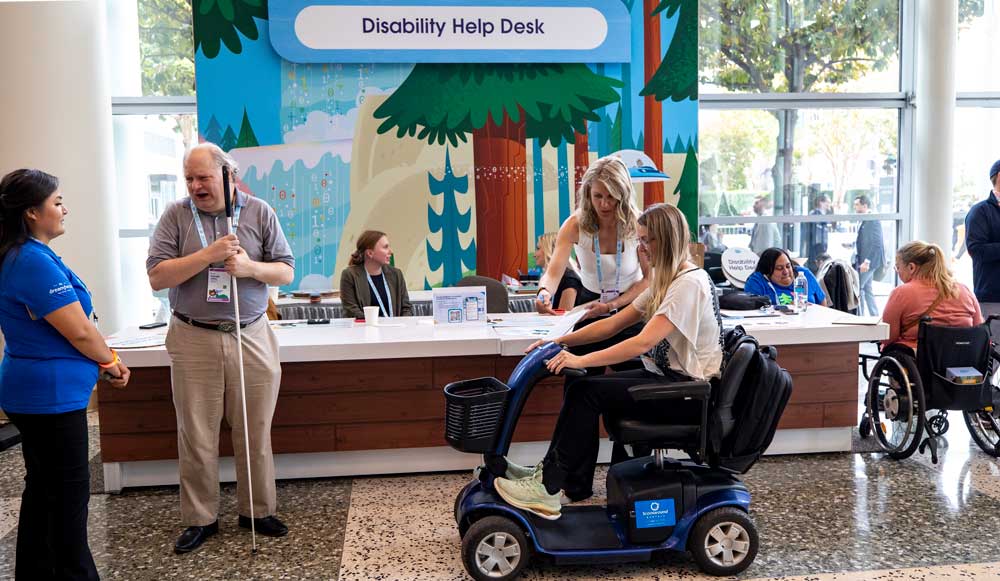
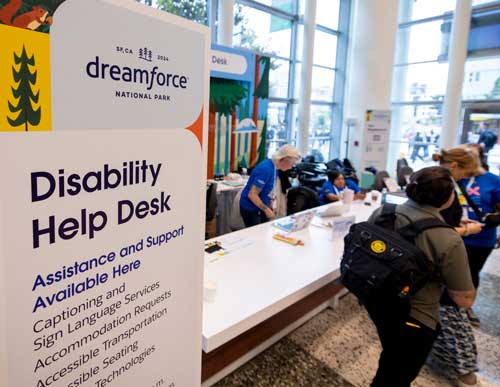
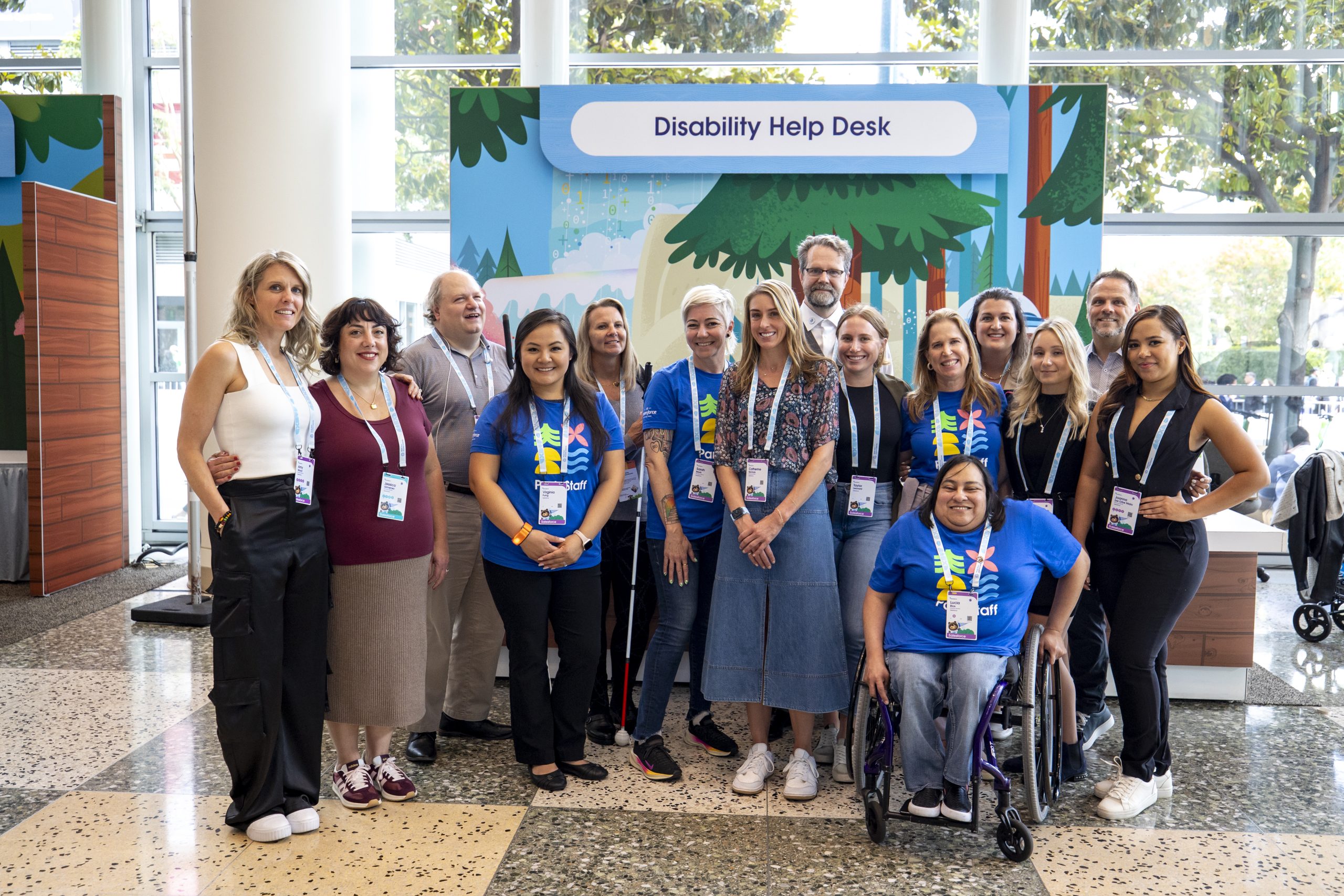
Wood: I have one person that reports to me. Her name is Joanna, and she is helping me with events more now. Now that I’ve been in this job for almost four years, the responsibility that I have has grown so much. I’ll use Dreamforce as an example. Dreamforce is 40 to 100,000 people in one event every September. I am part of the core planning team. Every event has area leads, food and beverage, keynote, security, regulations and all of that, and then I am accessibility. I’m part of the early planning process, and I share guidance and best practices. I review plans, and sometimes I’ll even do site visits and get feedback on removing barriers. So, anytime somebody registers for Dreamforce or any of our events, they can request an accommodation on the registration form. I need a sign language interpreter, I need a sighted escort, I need celiac meals for gluten free. There’s a whole range of accommodations, so I own that. I will communicate that out to the appropriate team and then confirm with the person that requested that accommodation. Then on site, I own the disability help desk.
The most exciting part is we have a physical desk at Dreamforce where people can visit, and it could be a meeting point for their sign language interpreter. They can come and say, “I need an accessible shuttle. Where can I find that information?” Or they can even just come and vent like, “Hey, I had a really rough experience getting in here, and they need to talk to me about that.” I’m sure you know how events can be frustrating for people sometimes. We have world tours all over the world. We have Trailblazer DX. We have Connections. Just so many events, probably 30 to 50 events every year. And so that’s what I do for all of those events. And that’s what Joanna helps me with.

Plasmier: That’s a great overview. What challenges have you faced throughout this process?
Wood: I would say there’re two. The two most common challenges are lack of awareness and lack of budgeting. And lack of awareness where people will say, “Well, the venue is wheelchair accessible. That should be good enough.” Or they will say, “If we have deaf people or people with hearing loss, we’ll create a section for the sign language interpreter, and we’ll have them sit there.” I think there’s a lack of awareness of the spectrum of disabilities that we have. Not everybody knows sign language.
I think, really, just trying to change the mindset of those leads and say, “This is why we need to accommodate.” First of all, accessibility is not a one-size-fits-all solution. This is why we need to have all these accessibility features to meet the needs of those people with disabilities. I think sometimes you get a little bit of resistance with that. Then sometimes you get people who are just like, “Oh, wow, you really opened my eyes to a broader spectrum of disabilities.”
Then budgeting part comes in today. As you can imagine, if I say, “We need to incorporate human captioners in the broadcast”, they will say, “Who’s going to pay for that?”
I always say, “You are.”
Plasmier: Exactly.
Wood: Sometimes it’s okay. They can go back to their leadership and say that we need X amount of dollars for this accessibility feature. Sometimes they’ll get that. Then sometimes they’ll come back to me and say, “instead of using a human captioner, can we use AI captions?” I would tell them,” That’s your choice. If you’re willing to experience the embarrassment of some really poor captioning, maybe mistakes, then go for it. But you’re going to have to be prepared for the feedback. And you’re also going to have to be aware of the poor quality that AI captions can deliver.” I think those are the two biggest challenges that I have, is the lack lack of awareness and lack of budgeting.
Plasmier: What other types of budget issues have you faced. What have people balked at most or thought was just unnecessary?
Wood: That’s a good question. I would say, four years ago, my first year, we had human captives on the keynote stage, and it was great. We got tremendous feedback on that. People really liked it, and it was very visible as well. And when we said, now, we would like to incorporate a captioning in all 45 of our breakout rooms, I think that was probably a bit of a—The leadership was saying, Why? The cost of that was about $95,000. I can understand $95,000. So, this is where we have to, again, the educational part of it comes into play.
First of all, I always say 80 % of people that use captions aren’t even deaf or hard of hearing. If someone is from another country and English isn’t their first language, captions are tremendously beneficial. If someone has ADHD and missed something that was said, that’s really helpful. Or maybe someone dialing in from a noisy location and watching the video on their phone or their personal device. That captioning is going to be really helpful. We want the attendees to have takeaways from all of these breakout sessions.
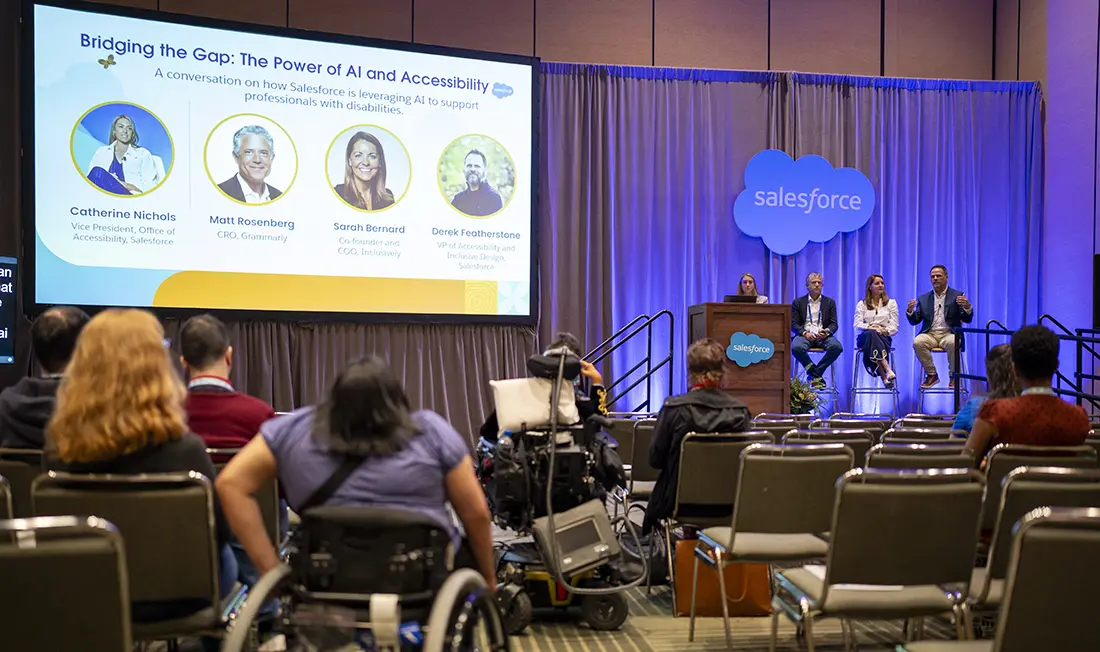
We want them to feel like they were able to understand and retain all of that information. I think that would probably be the biggest expense that we really had to do a lot of convincing on and working with them and negotiate a little bit. We negotiated that we would use AI captions in the breakout sessions. We use Wordly. Have you heard of Wordly before?
Plasmier: Yes.
Wood: And what was really the tipping point, the convincing point for Wordly was that it translates into, I think, 50 languages. So, you can open up the event app and have it translated into Chinese or Japanese, and that would be really beneficial for a lot of people.
And then I would say the other thing that took a lot of convincing for a couple of years wasn’t price-wise, it was space-wise for a quiet zone. We needed quiet zones desperately. If you can imagine a huge conference, lots of people, lots of noise, it can be really overwhelming for people who are neurodiverse or people who are not neurotypical. And for three years, I was asking for a quiet zone, and I was never able to get ahead of space planning in time because rooms are very limited, space is very limited. And it makes sense that they want to maximize every square foot of that conference. Right.
Plasmier: Beyond your experience with events. Have you seen any type of transformation because of the work that you’re doing with events? Has that transferred to the buildings? I know you’re remote, but is there a counterpart like you for the buildings or for the different satellite offices around the world?
Products & Services
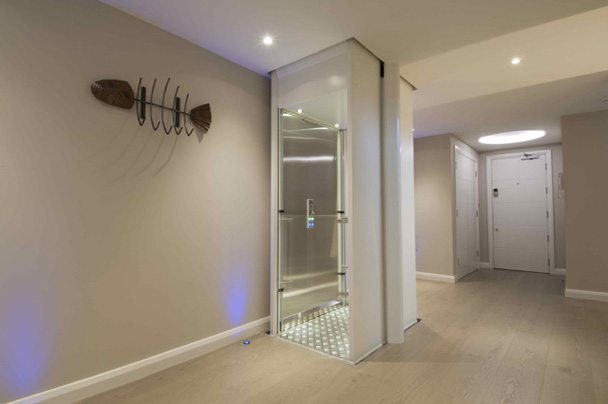
Wood: Absolutely, yes. And yes, we have seen a transformation in the last few years. My counterpart on the real estate design team is extremely passionate about accessibility and following best practices and going above and beyond. As a matter of fact, our Chicago Tower was just built a few years ago, and it is incredibly accessible. So, if you’re ever in Chicago, let me know. I’d love to take you on a tour. And a few things that stand out to me is it’s wheelchair accessible for every square inch. There are some buildings that might make it difficult to navigate if it’s a really narrow hallway or if the push button to open the door is blocked by a plant or something like that.
So, Elaine, my counterpart on the real estate team, has made a point to design new offices that go above and beyond. And so, a few things that stand out to me is there’s different areas that have different degrees of lighting. Some people need brighter light, some people need dimmer light. So there are different areas that you can go to. There are also designated quiet zones. You can work in a quiet area or a working library. And then there’s also desks that are adjustable height, which is really great. People can stand or they can sit or they can adjust if they have a wheelchair that’s a certain height. So really phenomenal. And then there’re also areas that are designed with muted colors as well. I had no idea that colors could really impact somebody’s experience in that environment. We have brightly colored areas, but we also have areas that are more beige and muted colors so that it will be more suitable to someone’s preferences.
Plasmier: That’s great. Chet, do you have any questions while you’re listening in?
Cooper: Salesforce is pretty much B2B (business to business), right? Can you tell the general public what Salesforce does?
Wood: Yeah, absolutely. This is a great way to put me on your spot. Salesforce is a software—Salesforce US is a customer relationship management tool. Basically, that’s a software that a business can use, and it will give you a 360 view of your customer interaction and data. I’m going to back up a little bit, and I’m going to use the Marriott as an example. The Marriott Hotel is one of our biggest customers. So, on the front end, we have the public-facing website. You, as a customer. can say, I’m going to be in Texas on these days. What is the availability? And it will show you all of the options in that area. There might be three or four Marriotts in that specific area. And then on the back end, it will tell the company we have these people coming in on this reservation, and it will track all of that. And so, it’s going to track all the revenue and the data around all of the customers around the world. Then also, it can do really exciting things like keep your date of birth in the system so that it’ll automatically send you Marceting emails for your birthday and tell you, “Hey, we have sales in this area.”
Are you planning to travel? Here are some coupons for this. That’s a very, very basic, watered-down version of my explanation of what Salesforce does. But it’s a customer relationship management software, and it’s used all over the globe. It really helps provide dashboards as well so that you can look at every single area. You can break it all of your dashboards of what your regions to focus on or your specific customer. It really helps you make business decisions and Marceting decisions based on those dashboards. Does that help?
Cooper: We’ve had a relationship with Marriott that goes back decades, specifically with Richard Marriott. So, we’ve stayed at many properties. If I go to Marriott.com, is Salesforce running that? Or is it a piece of Marriott.com, that when you click on something like scheduling or booking or something, then it goes to Salesforce back-end?
Wood: No, it is all Marriott. We use Marriott as an example—The Salesforce architect will build that platform into the Marriott website. If you click on a scheduling page or other pages, it will still remain on Marriott; and all of that information will stay with Marriott. It does not come to us. But the Salesforce architect is the one that’s going to build it according to the wishes that you have. Every business is different, so it’s going to build it differently for what they need for their customer interface, the forward-fasing public websites.
Products & Services


Cooper: You were talking about these global events that you have with these breakout sessions, lots of breakout sessions. What are in the sessions? I know it’s B2B, but can you give some examples of who’s giving the session? These are outside vendors of Salesforce or inhouse?
Wood: It’s a little bit of both. We have internal employees that may host an event, or we may partner with the customer that wants to host a breakout session. Mostly, the breakout sessions are about maximizing how you use Salesforce. There are so many different pages and ways to look at Salesforce and how you use it. Again, like you say, it’s B2B, so there’s a lot of B2B breakout sessions. Knowing how to maximize Maximize the product will allow you to build your websites, allow you to build your Marceting campaigns in a way that’s really effective for you. I think that’s what the breakout sessions are centered around, is maximizing how you’re using the Salesforce product. So that you get a better return, ROI, which is the return on investment.
Cooper: But you’ve been doing this year after year, so things must be changing constantly for you to have content that’s relevant to your audience.
Wood: Very much so. In fact, we are more focused now on AI. AI is taking over the world, artificial intelligence. We just released something called Agentforce last year. I need to study up better on Agent force. But what Agentforce does is if you go in and you type of question, How can I use this dashboard? Agentforce will generate a response for you. It has actually answered 83% of the questions that come into the Salesforce website. The customers say, I just answered my question. Thank you. Then that allows our real-life agents to focus on the questions that weren’t answered by Agentforce. Yes, to your question, the content is changing. It is always evolving to make sure that we are staying on top of trends making sure that we’re looking at what customers need from us the most and building sessions around that.
Cooper: The venues, I would assume, are changing on a regular basis. That’s why you have to keep updating with your team, whether you’re building offices. It’s a moving target with venues, it seems. Am I correct with that?
Wood: Yes and no. Dreamforce, for example, is always in San Francisco at the Moscone Center. And that’s in the heart of Dreamforce. Even though it’s always in the same place, the plans, the floor layout and the floor plans are constantly evolving. And so we always have to make sure that we’re on top of those things to make sure that accessibility is top of mind.
And one example I’ll share is that they decided to change the flow of traffic on one of our streets, and they put a concrete barrier right on the curb cut. That’s why I usually get there about four or five days before the event, and I do a walkthrough of the entire campus and try to look for things like that. And that was a simple fix. We called a bulldozer, and they moved about 10 inches to the left so that the curb cut was not blocked, and they could still have that flow of traffic change. And this last year, we actually expanded two streets. So, we needed to make sure that we were taking into consideration reviewing all of the expanded area that we had, and also communicating out to the San Francisco residents this street is closed and this is going to be the detour. That was an especially sensitive point for people that had disabilities. If they had to take a longer route to go around, how are we going to mitigate that for them?
Cooper: Within a venue, how do you work with people who are blind in terms of the navigation within a building. Do you use beacons that have been placed to identify where they are to map the internal building, are you aware of what I’m talking about?
Wood: The three things that come to mind for people who are blind or have low vision. Number one, we do offer sighted escorts at the disability help desk. So, if someone says, “I am blind”, or have low vision, we will have a sighted escort available for them during conference hours to help them navigate the entire campus, which has been growing in popularity. For the last three years that I’ve been doing it, we’ve had about 12 to 18 sighted escorts requested each year, and every sighted escort just loves it.
Then we also have MazeMaps. MazeMaps is an interactive mapping wayfinding tool that was built with the blind community in mind. MazeMaps is just like Google Maps, where you punch in a point of interest, and it will generate a step-by-step instruction on how to get there from where you are. So, it’s not like you’re just looking at a map and saying, Okay, I’m here, and I got to figure out how to get two blocks away. It’s going to generate the step-by-step directions for you.
Also, it has text-to-speech option. So, someone who’s blind or has no vision, they can read it, they can have it read aloud and follow that map generated by MazeMaps. Then also, we have a partnership with Aira. It is very similar to Be My Eyes, where anybody can connect to a live agent, and a live agent would describe their surroundings to them. It can help them navigate down the street to a restaurant. They can show the camera to a menu or to an agenda, and the Aira agent will read aloud or describe their surroundings to them. So, we’ve got three layers of navigation assistance in our events, and we offer this at all of our events.
Plasmier: And about MazeMaps, is that within the building or just external.
Wood: MazeMaps is for the whole campus. So, for Dreamforce, for example, I think we had eight different buildings across 80 acres of property. The entire 80 acres is built into Maze maps, in all the different levels of each building. I think there’re four levels. So, all of that is included in Maze maps.
Products & Services

Plasmier: So, you can take a person from one building, navigate outside of the building to the next building into the next location inside the building.
Wood: Correct. It is pretty comprehensive. And I thought it was really impressive just because I have a hard time reading maps and trying to figure out where I’m located and then how to get to a place that’s four blocks away. So, it’s really great that it updates in real-time, and it determines where you’re located and then generates that step-by-step map to get to where you need to be.
Plasmier: Sounds like you have a supportive CEO in Marc Benioff.
Wood: Yes, he is a good guy, and I think that he is also committed, being part of the CEOs that signed a commitment to accessibility. This is through the DisabilityIn program. Are you familiar with DisabilityIn?
Cooper: Yes. We’re very aware. We were working with the President’s Committee on Employment of People with Disabilities, which eventually was closed and became the Business Leadership Network, which morphed into DisabilityIn. We hope that all of the companies signing up with them eventually will be create real change within their organizations, real hiring, and showing a significant difference in employment rates of people with disabilities.
Plasmier: It’s interesting to see Benioff’s mix of innovation and social awareness.
Wood: He’s very socially aware. And in fact, with the whole DEI program being cut across the country, he said we are not worried about our roles or worried about targeting, because we have the Office of Accessibility, but we also have the Office of Equality. We are accessibility and compliance, but also influencing. It’s just really good that he doubled down on that commitment to be cognizant of ADA.