













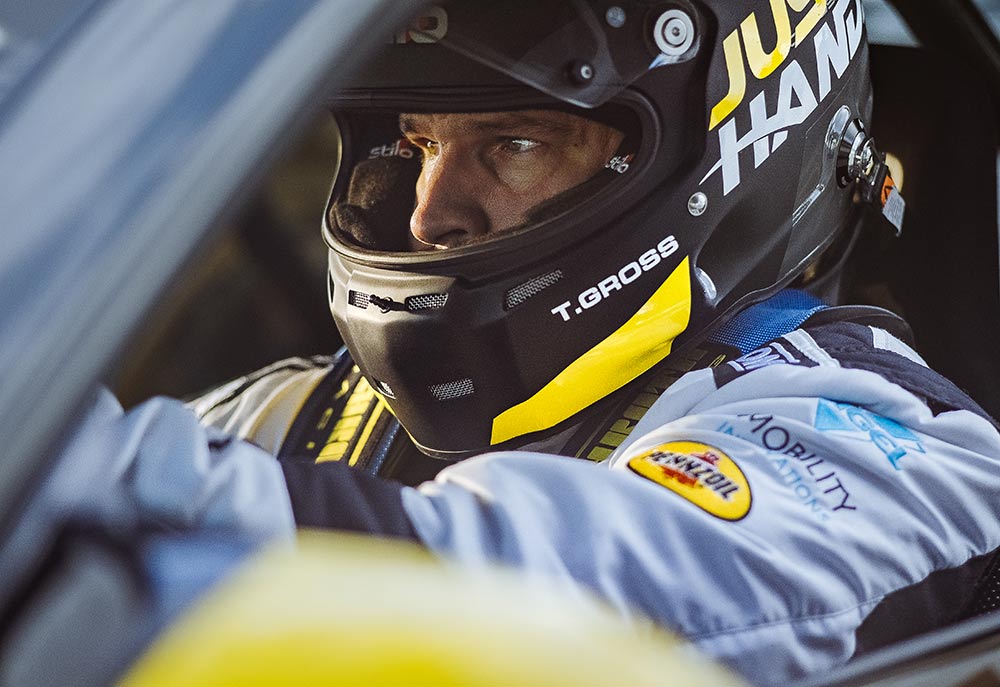
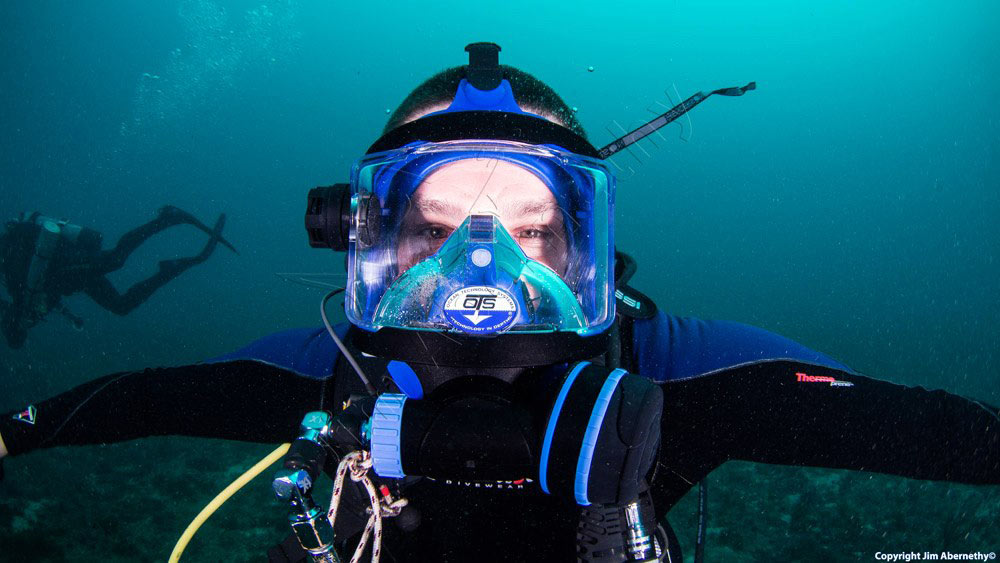
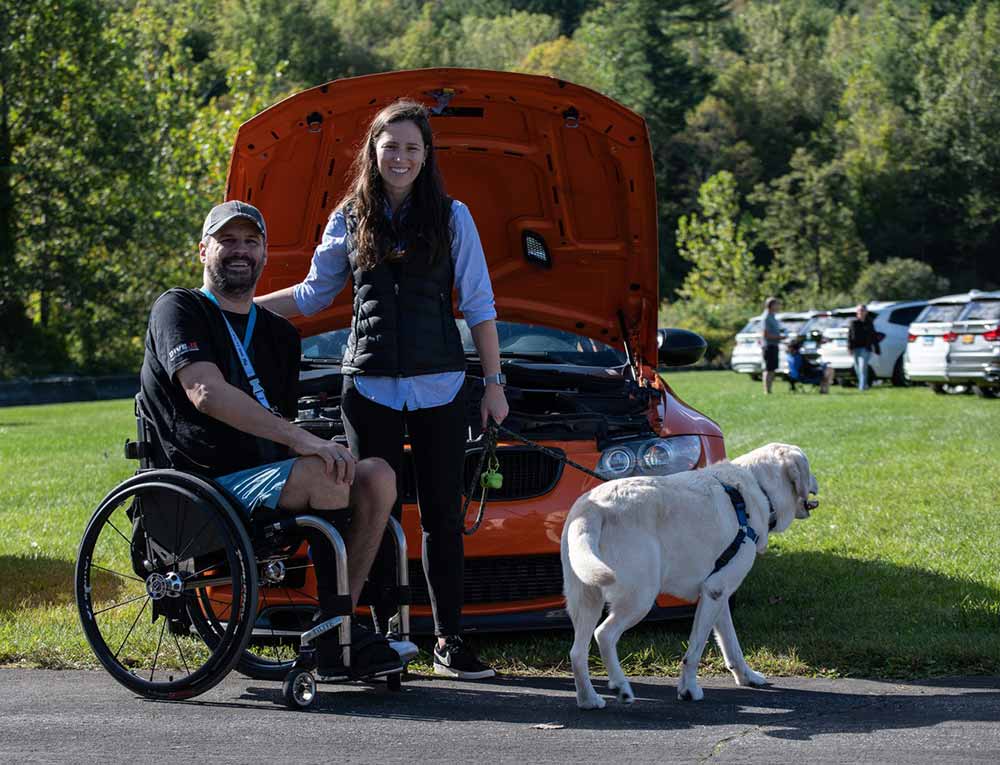
By definition, inspiration sparks fresh ideas. But as Torsten Gross has learned through his years in the corporate world and beyond, what people truly need is motivation—practical steps to turn creative thoughts into action. A self-described “multi-hyphenate,” Gross’s résumé reads like a one-man highlight reel: advertising and marketing executive, competitive race car driver, the world’s only quadriplegic rescue scuba diver, multiple-time marathoner, charity founder, comedian, husband, dog dad, and a person who refuses to accept the limitations placed on those who are C6 quadriplegics like him.
At 15, Gross dove into the ocean, broke his neck, and was clinically dead for two and a half minutes—an experience he calls one of the most pivotal, and possibly best, days of his life. Ever since, he’s been on a mission to help people uncover the “loopholes” that empower them to rise above any perceived limits. After all, as Gross says, we all have our own “wheelchairs,” whether it’s depression, PTSD, being on the spectrum, relationship struggles, or something else. On the surface, they may seem to hold us back, but they can also unlock our true superpowers.
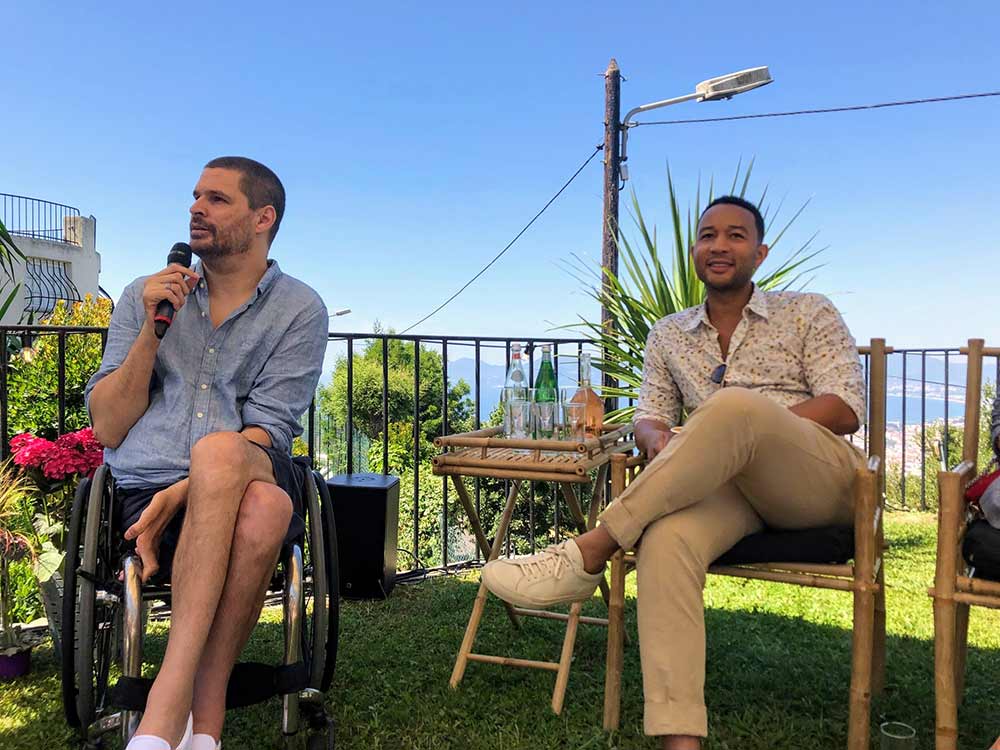
Gross joined Dr. Ed Timke (Assistant Professor at Michigan State University) and ABILITY Magazine’s Brent McMahon (Gold Metal Paralympian) to reflect on everything from life-changing moments to personal reinvention to the drive for real innovation and, most importantly, the action steps to make it happen.
Products & Services

Formative Years
Ed Timke: How did your early life shape who you are today?
Torsten Gross: I’ve always described my younger self as something of a rebel. I was never one to follow a straight line. Whether it was in school or sports or general expectations, I had a habit of pushing back. It’s tough to say if that was “nature” or “nurture.” But looking back, I think I had a strong streak of nonconformity baked into me from the start. Rules—at least the ones that felt arbitrary—never sat well with me.
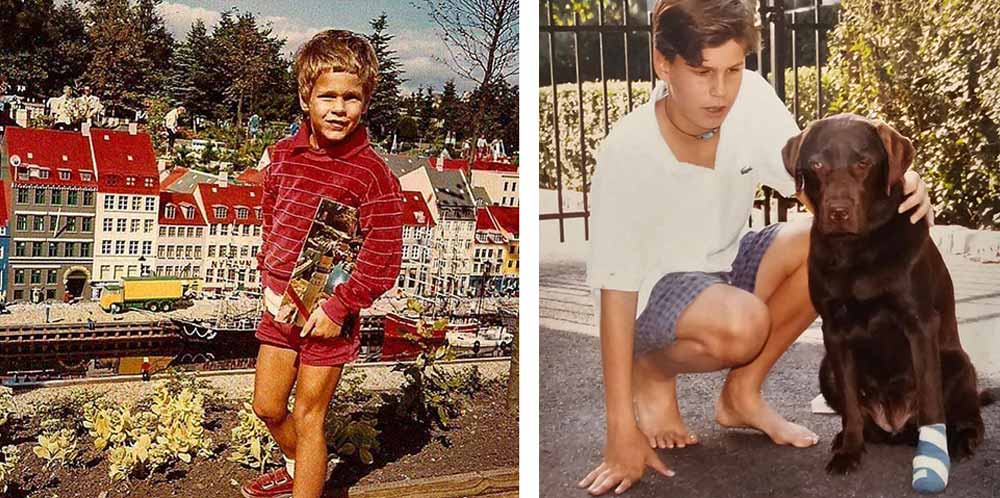
To be totally honest, I was a difficult kid. Teachers, friends, even my family would tell you I wasn’t easy to handle. I had decent intelligence, but for a long time I didn’t feel like applying myself in traditional ways. So, if the assignment was “Get straight A’s,” I’d purposely not study. If my parents wanted me to be polite in company, I’d find ways to quietly push boundaries. A lot of that was typical teenage rebellion multiplied by ten.
When I was 15, I sustained a spinal cord injury in a diving accident. That changed my life in many obvious ways, but it also magnified the rebel in me. Suddenly, doctors were telling me all the things I couldn’t do or wouldn’t be able to do without significant help. To a kid who had already been testing every limit, that just lit a new fire. If anything, being confronted by the so-called “can’t” made me more determined to say, “Actually, I can.” That rebellious nature was channeled toward forging independence as quickly as I could—learning to dress myself, live on my own, and eventually pushing the envelope in areas people said would be off-limits.
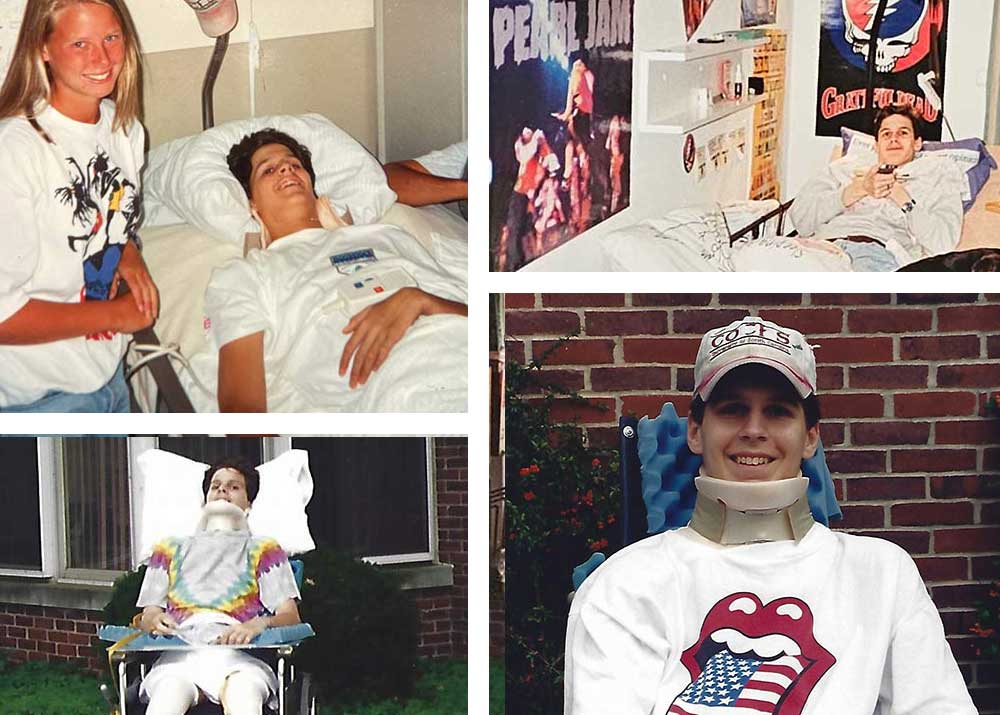
For me, that rebellious streak was less about trying to be “bad” and more about insisting there had to be another way. I kept thinking, “If I’m not allowed to do it the ‘normal’ way, I’ll figure out a new way.” That impulse shaped who I became, not just physically adapting to life in a wheelchair, but mentally insisting I would never let a standard path define my goals, who I am, and what I do.
Just maybe, ironically, being difficult prepared me to do difficult things.
Products & Services
Work in Advertising & Marketing
Timke: You’ve had a successful career in the advertising and marketing world. What drew you into that industry?
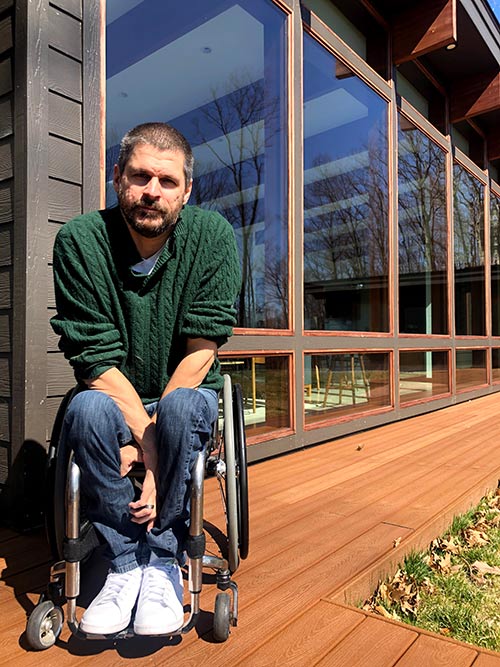
Gross: My path into marketing and advertising was definitely not linear. After my injury, I couldn’t do the usual odd jobs a lot of college students do—things like construction or lifeguarding. So, I needed real internships to survive the summers. My father made a few phone calls to people he knew in the ad business, which is how I got my foot in that door. At first, I thought I wanted to do art direction, but it quickly became clear that my partial color blindness, together with my own restlessness, wasn’t the best fit there.
Eventually, I discovered strategic planning, which changed everything. I read John Steele’s book Truth, Lies & Advertising and got excited by the idea that there is more than one way to solve a problem. Strategy in advertising is about asking “why,” peeling back layers of consumer behavior, and ignoring the notion that there’s only a single right answer. If something is “impossible,” I’ll jump at the opportunity to see how else we can approach it.
From there, I learned to flourish in the agency world—some at large, some I started myself. There was a time in my twenties when I jumped around every couple of years, partly because I’d get bored or because I clashed with people who thought I was “too difficult” or “not ready to change.” But that eventually became my strength. Being restless meant I uncovered solutions in places few other people even looked. Ad agencies can be hierarchical and, ironically, risk-averse, but if you’re willing to be the “rule-breaker,” you’ll often do work that stands out.
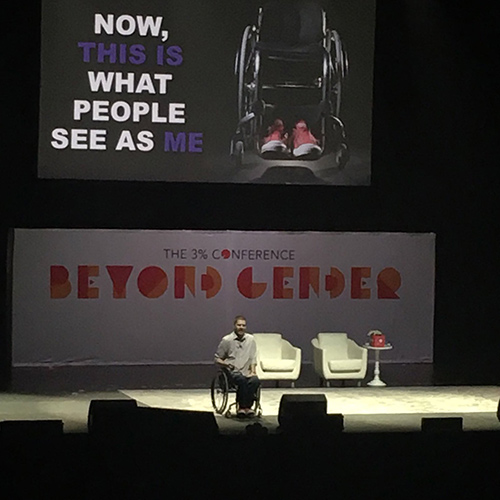
Brent McMahon: That’s a great perspective. How did others in the industry perceive you as a professional who also used a wheelchair?
Gross: You’d think there would be blatant discrimination, but most of what I faced was a silent uncertainty. Many people had no idea if someone who used a wheelchair could travel for meetings or presentations. A big chunk of strategy is flying around the world, visiting focus groups, and consulting with clients. Rather than asking me directly, potential employers would just assume I might not manage that, so they wouldn’t hire me.
Later, when I’d already established myself, I found out a strategy director had rejected me years before because she worried about my travel. She told me that she felt uneasy even asking me about accessibility. She feared it might be illegal or offensive. That was a big aha moment. I gained an understanding: People are rarely malicious. They’re just uninformed and nervous. A straightforward question would have let me clarify that I’m entirely capable of traveling alone. Instead, I lost a job offer.
Thankfully, once you demonstrate success in a high-profile setting, perceptions can shift. The day I started winning pitches, bringing in big clients, or coming up with ideas that generated real buzz, the wheelchair became almost incidental in people’s eyes. They saw what I produced, not just how I got around. But if you’re just starting out, it’s definitely an uphill battle because there is so much fear around even discussing disability—an anxiety that reveals itself as reluctance to hire.
Work in Sports
McMahon: You haven’t just excelled in the marketing world, you’re also an avid participant in sports, especially racing. What’s your journey in sports?
Gross: I’ve always believed in taking physical risks. Even before my injury, I pushed my limits in every sport I touched. Afterward, I wondered whether that avenue was completely closed. Initially, I tried the typical adaptive sports—things like wheelchair marathons. That was fun, but I was still searching for the extremes I craved.
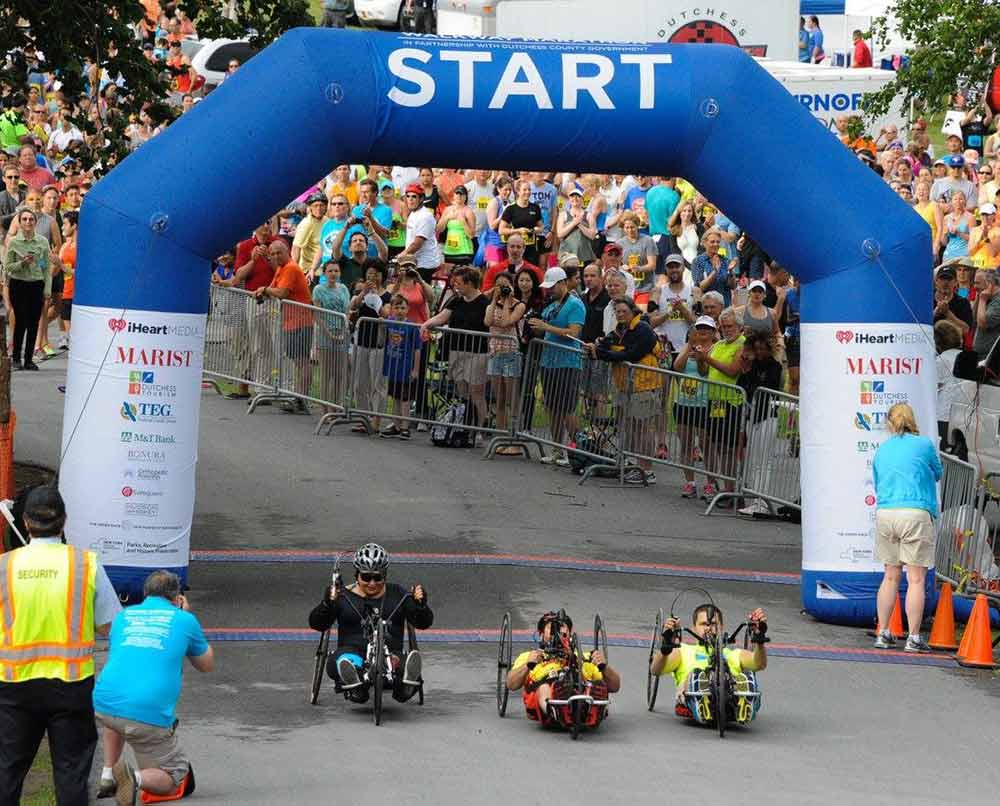
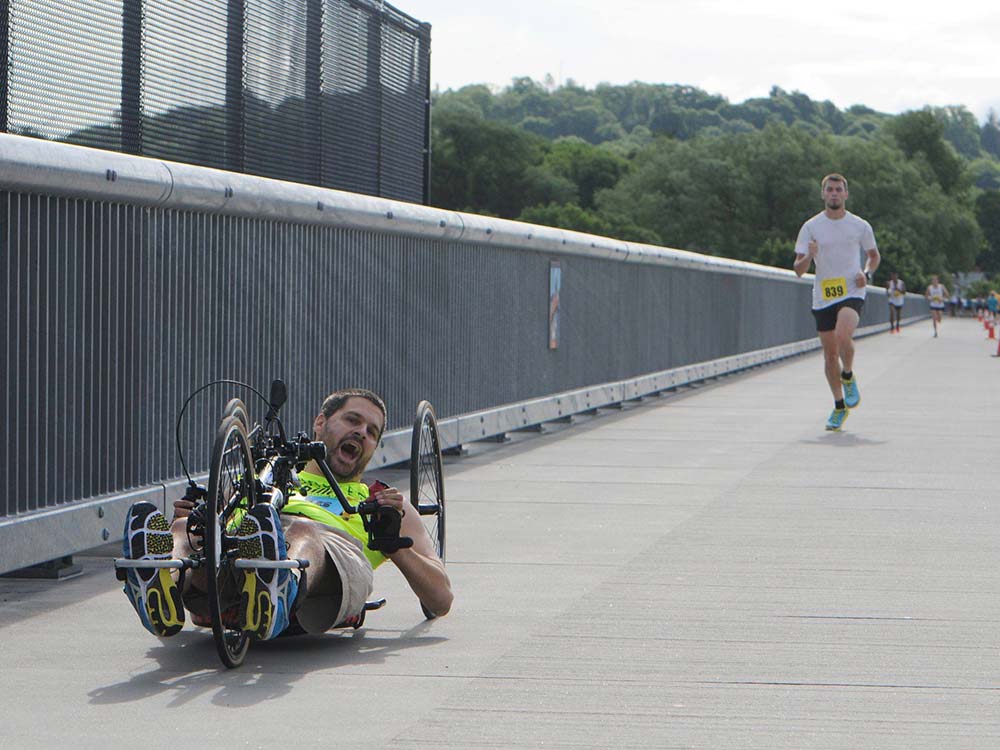
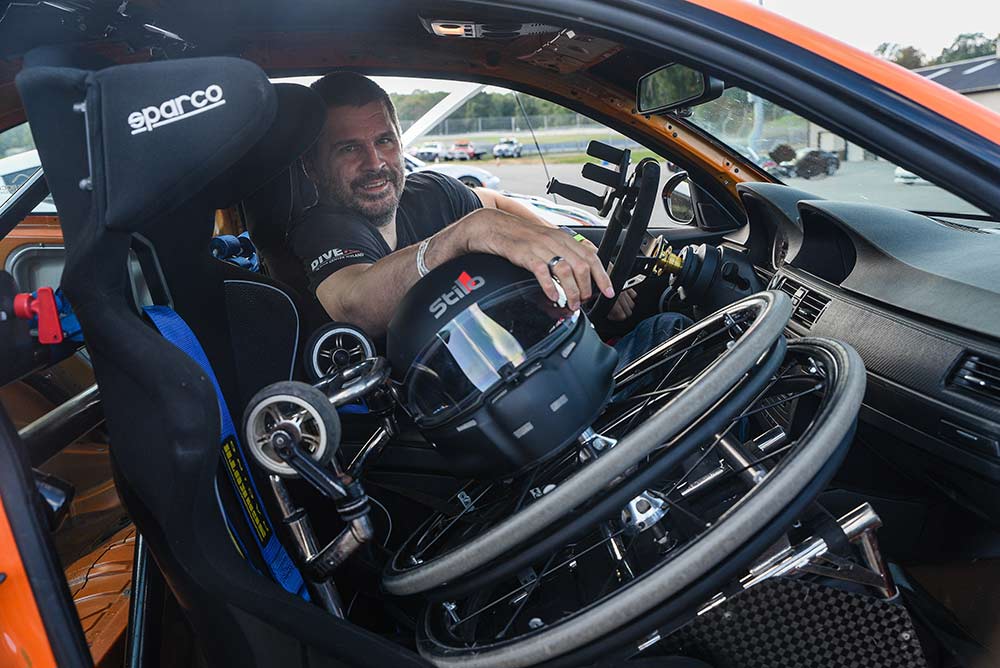
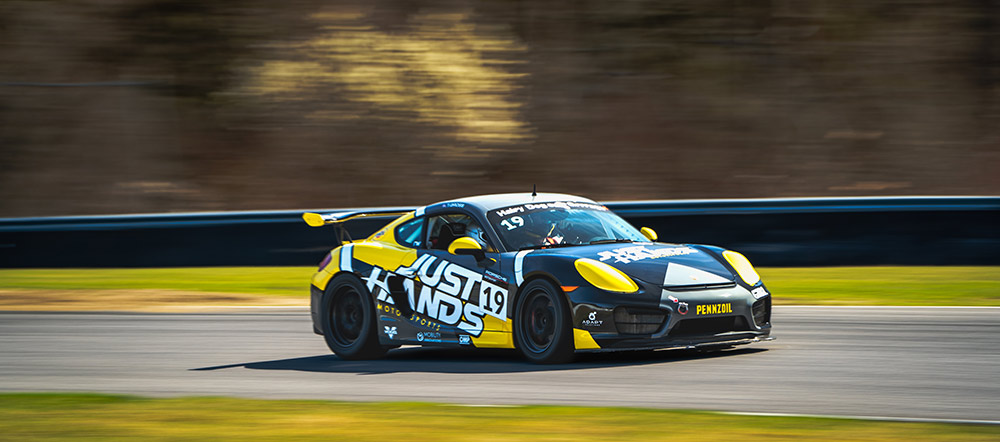
I gravitated toward motorsports for several reasons. First, I have always had a penchant for going fast. I won’t tell you how many times I have been pulled over. Whatever the number you’re thinking, multiply it by at least three times. Second, it became obvious that sitting in a cockpit, hands on the wheel, is an environment where legs matter less than reaction time, technique, and nerve. Yes, I had to figure out custom hand controls and adapt everything to my own body mechanics. But once that was set, I could race wheel-to-wheel against non-disabled drivers. We’re on an equal playing field. Either you’re fast enough or you’re not. That’s it.
There’s also an adrenaline rush you can’t replicate anywhere else. At 150 mph, the last thing on my mind is that I use a wheelchair. I’m fixated on apexes, brake points and outsmarting the driver in front of me. Racing is simultaneously a physical test—how well can I maneuver the car with my upper body?—and a mental puzzle—when do I brake, when do I accelerate, how do I approach this turn? That combination is addictive.
Products & Services


McMahon: How have other drivers treated you?
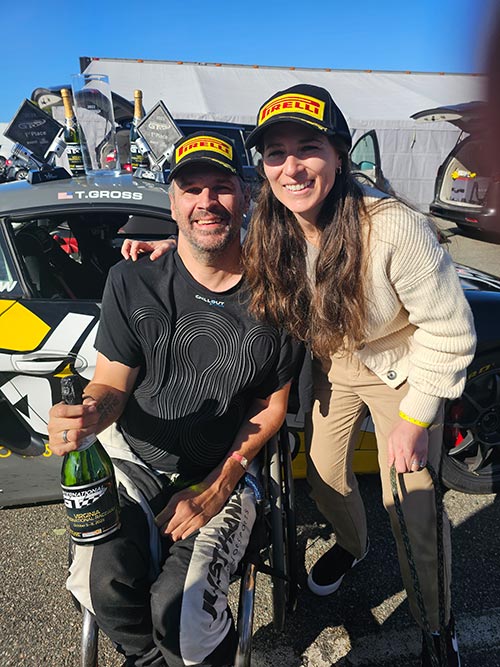
Gross: There are two types of people I encounter on the track. Some come up to me, give me a high-five, and say, “F#ck yeah, that was amazing!” They respect the race, the competition, and the skill. Then there are the others—the ones who are absolutely furious that they got beat by a guy in a wheelchair.
There’s no middle ground. None. I’ve had people really pissed off about it, and I could tell you some fun stories. Some are genuinely angry, while others are just baffled and curious. And I love their curiosity. I get it—I’m just as curious about how other drivers set up their cars. Even though we all technically drive with two hands and two feet, everyone has their own preferences for tuning and positioning. I just happen to do it with hand controls.
But the angry ones? They’re the best. I can’t help myself. I’ll mess with them. I’ll say, “Bro, you’re just a bad driver. That’s the real issue here.” And if I really want to push buttons, I’ll go, “How does it feel getting beat by a cripple? And in a minute, you’re about to get passed by a woman and a Black guy too. That’s really going to crush your ego, isn’t it?”
The Just Hands Foundation
McMahon: You founded the Just Hands Foundation, which focuses on adaptive motorsports. Tell us more about its mission and what sets it apart.
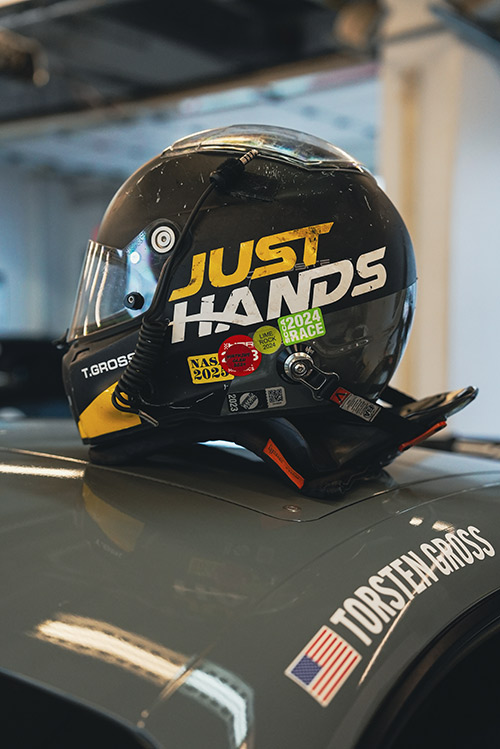
Gross: A lot of people know about adaptive skiing, basketball, marathons, and so on. But very few sports give disabled athletes the chance to compete on equal terms with able-bodied people, too. That’s exactly what we do at Just Hands. We use motorsports to level the playing field, removing the usual barriers so disabled athletes can truly go head-to-head with the rest of the world.
Instead of restricting ourselves to a small circle of adaptive-only competitions, we put disabled drivers on the same track as everyone else. Motorsports has a unique advantage. Once you’re strapped into a car with the proper controls, the focus shifts to skill, strategy and nerve. Whether you use a wheelchair or not becomes less important. It’s all about how fast you can go, how well you can handle the vehicle.
McMahon: That’s fascinating. What does that look like on the ground?
Gross: We organize events that provide track-ready cars with hand controls, so participants can get behind the wheel and learn high-performance driving skills. Some eventually race competitively. Others just fall in love with the thrill of speed and independence. Our guiding principle is that motorsports shouldn’t be off-limits to people with disabilities. it should be wide open, with the same opportunities for everyone. We want to see disabled racers on the same grids, competing for the same checkered flags as able-bodied drivers.
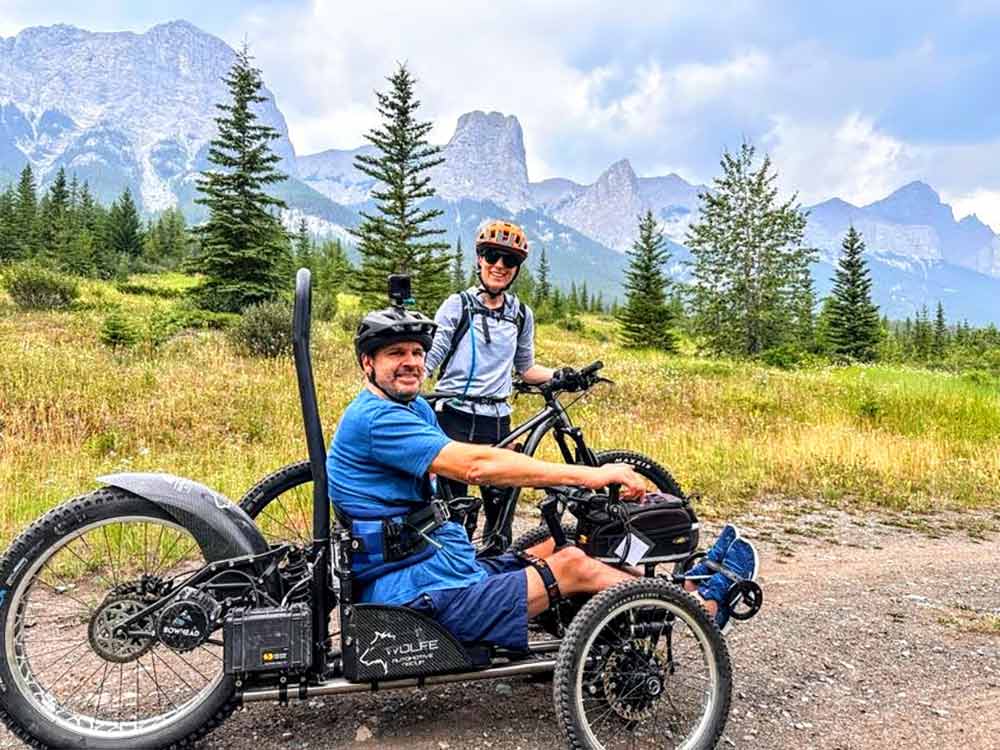
As of this year, off the racetrack, we started offering adaptive mountain biking. We have two Bowhead Reach Mountain Bikes which have an e-assist motor. While the motor helps us on flat or uphills, the downhill is where the thrill is. We hit all the same trails, berms and jumps anyone else does. There’s a lot of interest in adaptive mountain biking, so the sport is poised for a lot of growth.
Development of SIM Controls
McMahon: I saw on the Just Hands website that you’ve been working on simulator controls in collaboration with Veigel/Mobility Innovations. Why is that such a big deal?
Gross: A simulator is meant to replicate the experience of driving on an actual track in a real track car. That includes cockpit positioning, wheel feedback, pedal feedback—every tactile element you’d experience when you’re doing 120 mph into a turn. But for drivers who use hand controls, most of the existing adaptive solutions just don’t feel like the real thing.
So, in partnership with Veigel/Mobility Innovations, we’ve developed a sim control system that mirrors genuine in-car performance. You can shift gears, activate the pit limiter, enable communications—basically everything you’d do in a race car—using just your fingers. And you don’t have to let go of the throttle or brake.
Products & Services

For me, this solves a huge problem. As a race car driver, it was nearly impossible to practice effectively at home. If the sim controls don’t match what I use on the track, I’m not really building muscle memory or reflexes. Now, we’re offering a solution that lets disabled drivers train in a simulator that feels transferable to a real car, so they can refine their skills and confidence without the logistical hurdles of going to a physical track.
McMahon: That’s game-changing, right? Because sim racing has exploded, and now you’re ensuring disabled racers aren’t left behind.
Gross: Exactly. It’s democratizing motorsports even further. Sim racing is already a huge entry point for aspiring drivers because it’s more affordable and safer than jumping straight into a car on a real track. But if adaptive drivers can’t find realistic hand-control solutions, they can’t develop those skills or measure themselves against the rest of the sim racing community. This new control system changes all that. Now you can practice from home, hone your reflexes and then transfer those skills to an actual race car. It’s a big leap toward making motorsports accessible to everyone, which is exactly what Just Hands is all about.
Thoughts on Disability
Timke: You’ve mentioned people’s apprehension about disability. How do you think our society can improve discussions and attitudes about disabilities?
Gross: Step one is simply to be willing to talk about it. We talk openly about race, gender and sexuality—though we still have plenty of room for improvement—but I feel like disability remains in a gray area. It’s an uncomfortable topic for many. Part of that is, unlike race or gender, disability can happen to anyone at any time. It’s a universal possibility that makes people uneasy.
Products & Services


If someone’s worried about “saying the wrong thing” or is unsure whether they can ask about accommodations, a chain reaction of silence sets in. They remain uncertain. I remain invisible. It’s the worst outcome for everyone. I firmly believe we need to remove that taboo so that direct questions and open conversations can take place. Ask me if I can travel for a job. Ask me how I’ll get on stage to give a speech. Ask me if I need assistance. I’d much rather clarify questions than lose an opportunity because you’re afraid to ask.
The second part is representation. Businesses and media are slowly recognizing that disability is not niche. Over a billion people around the globe live with a disability. Whether we’re talking about an ad campaign, product design or HR policies, understanding disability means you’re reaching a huge demographic. More inclusive hiring, more inclusive marketing, and more inclusive everyday thinking isn’t just a moral imperative. It’s a smart business decision. Yet often disability is an afterthought—someone thinks to add a ramp at the last minute, but they don’t plan from the start. That’s what we can change.
Timke: You’ve spoken about “celebrating failure.” Can you explain how that idea relates to disability?
Gross: Sure. A lot of us with disabilities have no choice but to fail and keep adapting. At the start, I had to figure out how to dress myself, how to get into a car, how to travel, how to cook. We do a lot of failing and re-failing before we get it right. That can be frustrating, but it can also be transformative. Once you realize failure is just data—it’s telling you what doesn’t work—you’re free to explore new methods and tools.
I say “celebrate failure” because each stumble is a step toward better outcomes. If you’re terrified of messing up, you won’t push beyond your comfort zone. With a disability, you have to. When we get comfortable celebrating that, we unlock new opportunities, new technologies, new careers. We stop giving so much weight to the word “impossible.” Sure, we can’t do everything the same way as a non-disabled person. But with each attempt, we discover an alternate path that might surprise everyone, including ourselves.
McMahon: You mentioned the need for open conversations, better representation and new technologies. Where do you think disability inclusion stands today, especially given the current political climate?
Gross: We’re at a really important crossroads. In one sense, it feels like disability inclusion has gained momentum—people talk more openly about accessibility, big companies finally introduce inclusive product lines, and we see social media campaigns showcasing adaptive athletes or employees with disabilities. But the political environment is turbulent, and we live in a media environment focused on division and rage.
Products & Services


Changes in policy or shifts in leadership can stall progress if disability rights lose priority. We’ve seen growing debates over healthcare funding and social services. That directly impacts people with disabilities—everything from in-home caregiving to the costs of durable medical equipment. If a political decision cuts essential programs, it can push us back decades. On the other hand, there’s also grassroots energy right now. More people with disabilities are running for office. Nonprofits and advocacy groups use online platforms to organize quicker than ever. So, we’ve got this push and pull.
What I hope is that, even if we are in a moment that seems like the lowest things can get in the United States, we keep building pressure from the ground up. Everyday actions—companies setting inclusive hiring policies, schools teaching about disability history, local governments enforcing accessibility standards—those can survive changes in leadership. Plus, I think the more disability is woven into everyday culture, the harder it becomes for people to ignore. We’re not a fringe population. We’re a massive, diverse group with real power and economic influence. As that reality sinks in, the political environment will have to address us more seriously.
Stand-Up Comedy & Using Humor to Talk About Disability
Timke: Torsten, you’ve also explored stand-up comedy to address disability. How did you get started? What is your approach to comedy?
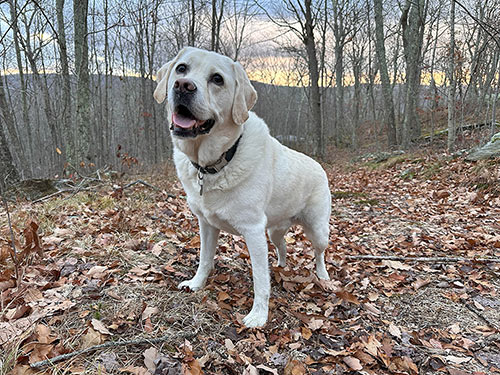
Gross: It happened almost organically. I’ve got a rebel streak and a tendency to say what’s on my mind. I got into stand-up after I bantered with comedian Lisa Lampanelli, “The Queen of Mean,” during one of her shows. She asked me, “What’s up with the wheelchair?” I fired back with an outrageous reply poking fun at my disability and her weight. That sent the audience from shock to laughter. This was an important interaction because it let the audience know: “Hey, disability is part of my reality, but I’m not fragile. Let’s talk about it.” It didn’t treat disability as something that’s untouchable. It helped people realize that it’s just a part of my life, so why not laugh at the absurdities? So, when Lampanelli encouraged me to do open mics, I went for it.
My initial material was self-deprecating, poking fun at everyday wheelchair experiences, like calling myself “the ultimate designated driver,” I quickly saw that humor breaks down barriers. Once you make a witty remark about the chair, people realize it’s okay to engage, to laugh, to ask questions.
Timke: Lampanelli not only encouraged you to do open mics, but she also helped you write your material. What did you learn from working with her?
Gross: Lisa is famous for her no-holds-barred roasts, and her stage persona can be pretty wild. Watching and talking with her taught me that there’s a difference between “punching down” and genuinely bonding with the audience through humor. She could insult somebody’s entire existence in a single sentence, but by the end of the show, that same person was hugging her. It was never about cruelty; it was about letting everyone in on the joke.
She fully encouraged me to own my story onstage. Her support gave me permission to lean into material that might seem taboo and trust that, if it’s authentic and all-in, the audience will come along, too. People can be too uptight about humor, so you have to read the room and hope they understand you’re coming from a place of disarming people against discomfort they often feel about something like disabilities.
Timke: Do you ever worry about crossing a line or making people uncomfortable?
Gross: Sure, there’s always a moment in some crowds where they’re like, “Can we laugh at a ‘cripple joke’? Are we allowed to?” But that’s exactly the tension I want to shatter. If I’m the one cracking the joke, I’m saying it’s okay to respond. Laughter builds a sense of shared experience. It also opens the door for real conversations. If they can laugh with me about accessibility challenges, maybe next time they’ll think about putting in a ramp or how to make events more inclusive.
Timke: So, what’s the biggest payoff from doing stand-up?
Gross: It’s freedom. Comedy lets me address disability head-on in a way that’s disarming rather than confrontational. I’m showing people I’m not fragile and neither is the topic of disability. By turning it into humor, we break that aura of taboo. People realize, “Oh, he’s cool with this. Maybe I can ask questions.” And that’s powerful. Because once we’re all laughing, having an honest discussion about living with a spinal cord injury or dealing with inaccessible spaces doesn’t feel awkward, it feels natural.
Products & Services


Forthcoming Docuseries
McMahon: We hear you have an exciting project in the works, a docuseries set to premiere on Amazon Prime called Just Hands: For the Love of Driving. Can you share some details?
Gross: It’s been in development for a while, and I’m thrilled we’re finally able to talk about it. The series is all about challenging expectations around disability by focusing on my real, raw story. It features the adaptive racing community, including Just Hands. We capture my story of facing countless barriers and how I still show up at the track, determined to compete at full throttle.
The docuseries also gets into the behind-the-scenes development of adaptive technologies being applied differently and how those breakthroughs ripple out into everyday life for folks with disabilities. It’s not just about racing cars. It’s about opening doors—whether that’s in sports, at work, or in personal relationships.
Amazon picked it up because they saw the universal appeal. These aren’t just “disability stories,” they’re human stories. Everyone can connect with facing adversity, seeking community, and discovering new ways to thrive. My hope is that viewers walk away amped to try something they once thought impossible or to build something that helps someone else achieve it.

We All Have Wheelchairs
Timke: Torsten, throughout this conversation, you’ve talked about breaking stereotypes, challenging assumptions, and refusing to be put in a box. I heard you once say something powerful—you don’t want to be a martyr. You don’t want people looking at you and making you a symbol of struggle. Why is that important to you?
Gross: Yeah, I mean, I don’t want to be your martyr, and I sure as hell don’t want to be your hero. I don’t need people looking at me and saying, “Oh wow, look at what he’s overcome.” That’s not the point. I want people to understand that everyone has something they’re carrying—their own version of a wheelchair. Maybe it’s PTSD, depression, a bad childhood, or something people can’t see. The difference is, my wheelchair is just more obvious. And honestly? I’d rather people see my challenge than have one they can’t see, because at least this way, people understand when I hit a barrier.
What I want is for people to recognize that they’re carrying something, too. And instead of letting it hold them back, they should figure out how to work with it, to push forward, to stop being afraid of it. We spend so much energy hiding the things we think will limit us, when really, those are the things that can make us unstoppable. So, if someone looks at me and thinks, “Wow, he’s out there racing, starting companies, doing stand-up, I should stop making excuses for myself,” great. But don’t put me on a pedestal. I’m just doing my thing, finding the loopholes, same as everyone else.