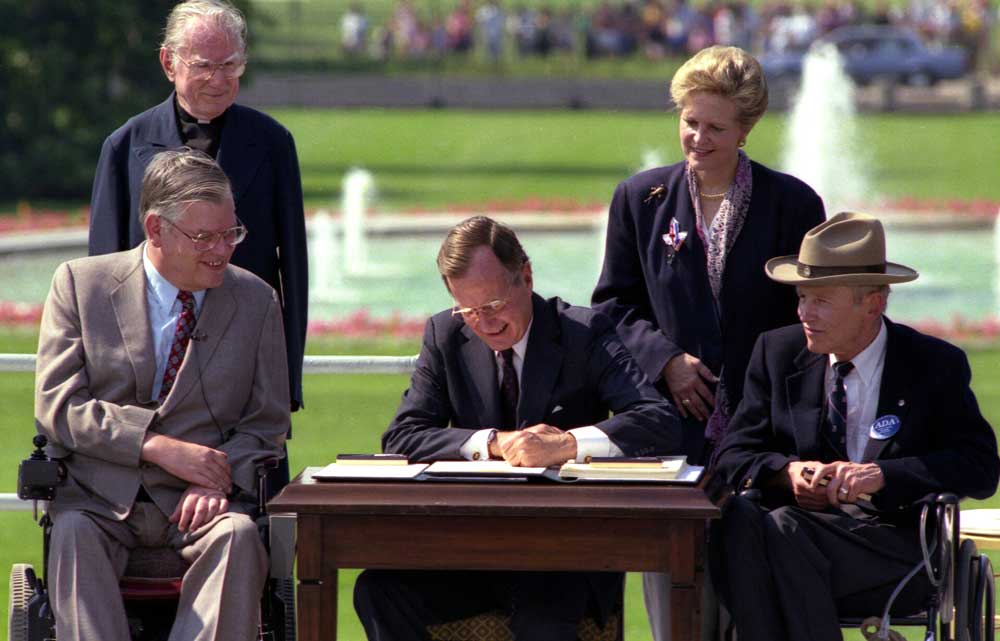







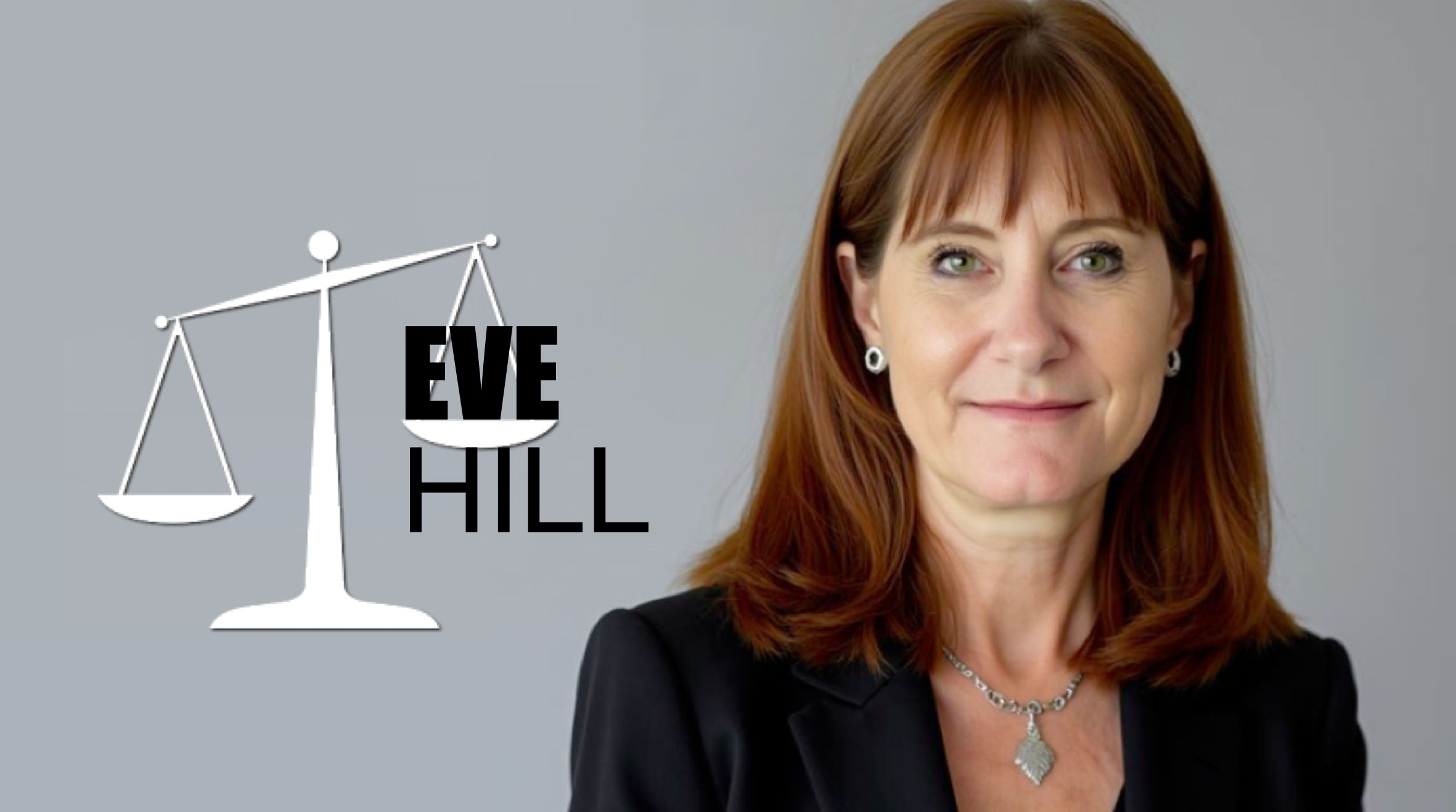
As the Americans with Disabilities Act was signed into law 1990, civil rights lawyer Eve Hill was just beginning her legal career. What followed was a decades-long commitment to advancing the rights of people with disabilities through litigation, public service, education and policy work. With experience spanning the Department of Justice as Deputy Assistant Attorney General, local government, nonprofit advocacy, and now private practice, Hill is one of the nation’s leading civil rights lawyers, known especially for her work with disability and LGBTQ+ justice.
ABILITY Magazine’s Jennifer Woodall met Hill in a virtual interview to discuss two major legal battles that expose systemic failures in federal institutions. One lawsuit focuses on the Department of Veterans Affairs (VA) and its misuse of land in Los Angeles, originally intended to support unhoused veterans with disabilities. The other takes aim at the Maryland prison system’s treatment of transgender women with gender dysphoria, raising serious concerns about access to medical care, housing placement, and constitutional rights behind bars. These cases highlight the deeply entrenched barriers disabled people face, particularly when compounded by homelessness, incarceration, and discrimination and the critical role that legal advocacy continues to play in challenging those systems.
Jennifer Woodall: I’d like to talk about the recent lawsuit against the Department of Veteran Affairs. Can you tell me how you first came to work on the lawsuit?
Eve Hill: Sure. Public Council, a nonprofit in Los Angeles, reached out to me. They had a few years ago, 2011 or so, filed a case against the VA for failing to use the property that had been donated to house veterans. Veterans in LA were still unhoused at a really disproportionate rate in comparison to the rest of the country, and they had all this land available. Public Council had settled that case but had gotten a non-enforceable agreement. So, the VA had not followed through on its commitments under the settlement agreement. They wanted to sue (the VA) again and came to me because I have expertise in both suing the federal government and in the Rehabilitation Act and other disability rights laws. So, I signed on to be their disability rights lawyer
Woodall: Can you tell me the type of work that goes into preparing for a lawsuit like this?
Hill: Well, it’s a lot. It’s like a duck. All the work is happening under the surface before you see anything actually happen on the surface. We did a lot of work talking to homeless people, homeless veterans and homeless advocates about what was going on and really just made sure that there were issues that crossed the whole group—the things that were keeping them from getting housing, and that those housing lacks were interfering with their ability to get VA health services that they are entitled to.
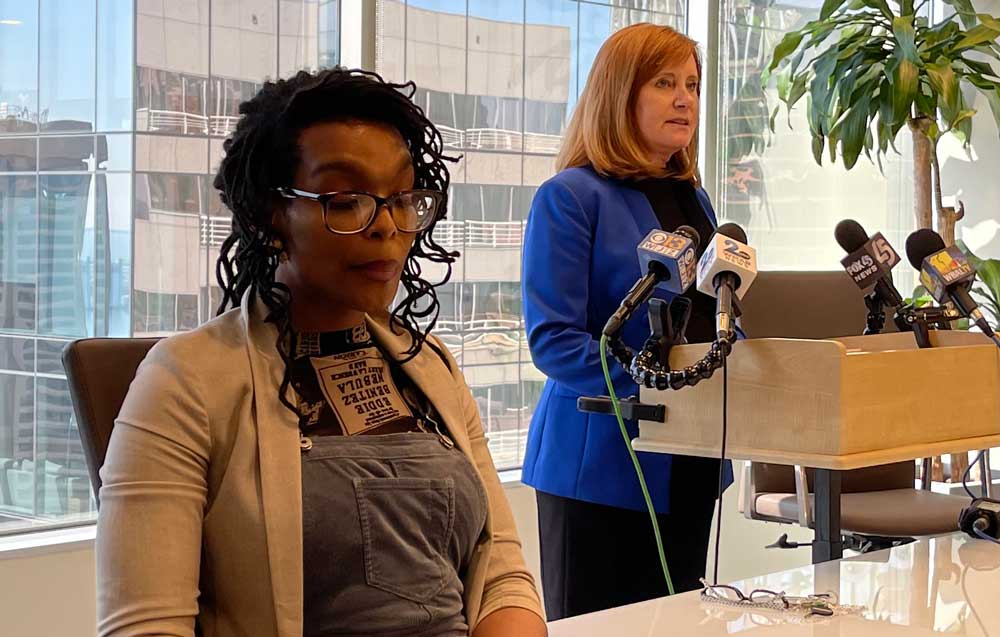
We interviewed a lot of people, came up with our class representatives, came up with our class definition, researched the entire history of the property that the VA had been donated and did thorough research on the law that would apply to it. A lot of the work goes in at the front end before we even file a case. And then we file the case.
Woodall: Can you give me a little bit of a breakdown on the ruling of that and how that went?
Hill: We had a trial that went for about a month in Los Angeles before Judge Carter. At the end of that, Judge Carter made a really in-depth, detailed ruling. He ruled that the VA had violated the Rehabilitation Act by discriminating against homeless veterans with disabilities, both because their failure to provide permanent supportive housing on the VA campus prevented veterans with disabilities from accessing the medical care that was provided on the campus that they’re entitled to and because the failure to provide that housing on the campus or near the campus led to more institutionalization of homeless veterans with disabilities—because they would end up in mental hospitals, in jails, in homeless shelters and so forth, all of which are institutional as opposed to permanent supportive housing, which is community-based. So that was part of the decision.
The other decision was that what’s called the AMI (Area Median Income) calculation, where they decide whether a person has low enough income to qualify for permanent support of housing. That income calculation took into account the VA disability benefits that people received. If you had a higher disability benefit, meaning you were more disabled, you weren’t going to be eligible for the housing that the VA provided. That was another aspect of disability discrimination.
Then the court held that these land use agreements that the VA had entered into with entities like UCLA, the Brentwood School, Bridgeland Oil and Safety Park violated two things. The Administrative Procedure Act because they were in violation of law. And then they also violated their fiduciary duties to the class. Because the property had been given to them in trust and the West Los Angeles Leasing Act had incorporated that trust, the VA was under an obligation to comply with the terms of the trust and had fiduciary duties to the beneficiaries of the trust, which were the homeless veterans with disabilities.
So, (the judge) found that those land use agreements violated the deed, the West Los Angeles Leasing Act, and the fiduciary duty under the deed, and so that those leases had to be avoided. So, he ordered, very specifically, the placement of 700 temporary supportive housing units on the campus within 12 to 18 months. He ordered the VA to come up with a plan to provide 1,800 permanent supportive housing units. The plan had to be within six months, and the completion of the permanent supportive housing units had to be within six years. He required the VA to begin construction on a town center to make sure that this was really community within 18 months.
Then he addressed the root causes of the VA’s problems with housing veterans with disabilities, which included that they were not making enough referrals to the public housing authorities who then placed the people in permanent support of housing. So, he required the VA to increase its staffing there to ensure they made 25 referrals a week. He required them to staff up their voucher program to reduce attrition.
Part of what permanent support of housing does is provide supports around you so you don’t do things like miss the rent or not show up at the unit and so forth, so he required them to increase their staffing to reduce the attrition numbers by 50%. He required them to increase outreach so they could be finding homeless veterans with disabilities and get them into the program. And then banned them from entering into any new land use agreements that didn’t primarily or principally benefit veterans.
Woodall: On a ruling like that, where there’s a time period to get a certain task done, who is the one that follows up to make sure that that actually happens?
Hill: The court appointed a monitor to work with the parties to make sure that they were on track and were doing the right things to get those things done.
Woodall: What do you think is the most difficult part about building a case and lawsuit like this?
Hill: There are a couple of difficult parts. One, it’s always difficult to get a class certified. And then other difficult parts were basically the intransigence of the VA and the fact that their housing voucher program is run by both the VA and the Department of Housing and Urban Development. So, we had to include the Department of Housing and Urban Development. And the fact that people with disabilities who are homeless are not just all located in one place. You can’t find them. You have to do outreach. You have to do referrals. You have to really have a robust program to help them. Then the constant barriers to staffing up a program to make sure that it’s adequately resourced to do the work that it needs to do. Those are the hardest things.
The hard things about doing a case are just the hard things about doing a case. It’s hard to wrangle plaintiffs who are unhoused. They don’t have stable housing, and it’s often difficult to get in contact with them. Then the federal defendants brought a lot of motions, tried to get the case kicked out. So, we had to deal with all those things.
Woodall: If there are other disabled veterans across the country that might be experiencing something similar, do you have any recommendations on where they can start to try and advocate for themselves?
Hill: Well, they can start with their local fair housing organizations. Those are great places to go.—We had really great veteran advocates in LA.— So, they can start with their veterans advocacy groups and reach out to their protection and advocacy organizations, the disability rights organizations, all of whom could take these things on, and bring the issues to the attention of the VA because the VA is not necessarily paying clear attention to what’s happening.
Products & Services


This was a really groundbreaking case. It shouldn’t have been, but it was a really groundbreaking case to hold the federal government responsible for its obligations. It’s hard to sue the federal government. They have a lot of lawyers. We don’t have a lot of lawyers, but this was an egregious case where they had the land to do the right thing, and they are continuing to refuse to do the right thing. In fact, now they have appealed to the Ninth Circuit, and the Ninth Circuit has stayed implementation of the judge’s order. So, nothing is happening right now, which is a real tragedy. Also, as the fires take place in Los Angeles, it’s destroying more and more housing, and the problems are only getting worse.
Woodall: How do you deal with that pause in momentum? Is it just a waiting game?
Hill: Largely a waiting game. Our public interest organization clients and co-council, the inner city law center and public council continue to have to really work to try and get our plaintiffs into housing themselves and keep them in housing. While you deal with the systemic issue, the individual issues are continuing. And you have to deal with those, too. It’s really difficult, especially for them, our local partners, to keep doing the work, not let morale fall, and make sure that our individual plaintiffs get what they need, and that our class gets what they need. It’s very difficult right now because they’re not doing what was required by the district court.
Woodall: I’d like to shift the conversation to the lawsuits related to trans people. The first one I came across that you worked on was with Chelsea Gilliam. Can you give me a rundown of what those lawsuits entailed?
Hill: I’m not the only one doing these lawsuits, and so I can’t really talk to what the others are doing. But in my case in Maryland, we sued the Maryland Department of Corrections for a couple of things, like failing to accommodate people with gender dysphoria, which in the Fourth Circuit is recognized as a disability qualifying under the ADA. So, they’re failing to provide continued hormone replacement, hormone treatment, and other forms of gender-affirming care, like facial hair removal and female clothing and so forth and their housing of transgender women in men’s facilities, often segregated in solitary confinement, basically.
This, we allege, violates the Americans with Disabilities Act, which requires accommodations for people with disabilities, including gender dysphoria, and requires you to follow their treatment recommendations to the extent those necessitate reasonable accommodations. We also allege that it violates the Eighth Amendment, which is cruel and unusual punishment. So, they’re subjecting these women to sexual harassment, sexual assault—just constant torture at the hands of other inmates and guards on the basis of their sex.
That’s cruel and unusual, and we also think it’s a violation of the sex discrimination prohibitions of the Constitution. So, the 14th Amendment is at play here as well. They’re denying them jobs. They’re often keeping them in segregated settings. Solitary confinement is cruel and unusual, especially when it’s not for any legitimate purpose, and it only had the purpose of allegedly protecting them. That’s not the best way to protect transgender women. You protect transgender women by protecting them in general population, and, really, by protecting them in general population with women because they are in fact women. So, those are the allegations there.
Products & Services


We have now survived a motion to dismiss, so our case is going to go into the discovery phase. In fact, two of my clients are out of prison now, so that’s good. One of them is still in prison and still housed at a men’s facility and still denied access to jobs. Her hormones have gotten better because we sought a preliminary injunction requiring them to make sure that her hormones were consistently provided, and it varies week to week, but mostly doing that.
Woodall: You say discovery phase. Can you tell me what that means?
Hill: The discovery phase means we get to ask the Department of Corrections all kinds of questions and take deposition interviews of the people who know what happened and what’s happening and who are in charge. So, we are just starting that process now. That’s a big issue in our case because, often, we have no transparency into who did what and when and why and who was in charge and who made the decisions. That was the one problem in the judge’s motion to dismiss order. He dismissed a bunch of our named defendants because we couldn’t say, “This person did this action.” Say they were supervisors of the actions that happened. So, discovery will be really important for us to find out who did what, and then we can rename the people, the specific people who took the actions.
Woodall: Have you found any roadblocks specifically related to lack of knowledge about the trans space and a disability component like gender dysphoria?
Hill: Well, yes. The roadblocks are attitudinal, really. This assumption that transgender people don’t have disabilities. Now, not all transgender people do have gender dysphoria, but a lot of them do have gender dysphoria. And gender dysphoria is a real medical issue and a real disability. So, not having people understand, particularly the people in leadership. Not having them understand that these are protected characteristics is really difficult and not having them understand that this is a disability is really difficult. But the bigger issue is the flat-out animus against transgender people. The attitude of prison officials and prison staff is appalling. They are in a different century and they are outright opposed to accommodating transgender women in any way. They want them to disappear, but that’s not possible.
Woodall: So, given the current administration’s stance on topics like this, does your strategy on how you approach and present these cases change?
Hill: We have yet to see. Our cases are in court, so we have to count on the courts not being affected by the executive branch’s anti-trans rhetoric and actions. We are hopeful that the judges will remain neutral and not be impacted by this set of actions on the federal level. One thing that does change is we used to have the Department of Justice’s support for cases on behalf of transgender inmates and others.
We obviously will not have that support in the future. In fact, one of the executive orders on transgender issues calls on the Department of Justice to amend the ADA and amend the Prison Rape Elimination Act to take transgender people out of the protections of those statutes. Now, the agencies themselves can’t amend the ADA or the Prison Rape Elimination Act, they have to go to Congress to do that. So, we also are hopeful that Congress will not share in in the administration’s really appalling negative approach to transgender people.
These executive orders don’t quite do this yet, but there’s a possibility that they will revoke federal funding from prisons that do comply with the constitution and laws, and that would be horrendous. That will make it harder for prisons to actually comply with their laws. Or if the executive orders order the Bureau of Prisons to stop accommodating transgender people, we believe that’s a violation of the Constitution and federal law as well, but we will actually have to fight the federal government to make clear in the courts that the law requires accommodation and requires protection and not cruel and unusual punishment of transgender people.
Woodall: Can you tell me about the Judge David L. Bazelon Center for Mental Health Law where you serve as a board member?
Hill: Yes, the Bazelon Center for Mental Health Law is now 50 years old and has been advocating for people with mental health conditions for all that time. They are really smart and really brave and really amazing advocates for people with mental health disabilities. They do a lot of systemic policy and individual work on behalf of folks with mental illness, including criminal justice reform issues. So, making sure that the police are not the ones who show up guns drawn in response to a mental health crisis, where the proper response is mental health services, and trying to make sure that people with disabilities aren’t incarcerated when what they need is treatment—Incarceration isn’t the only place to get treatment.— so making access to crisis care more available. They work on all those issues across the country.
They’re also working a lot in the education space, both in terms of the fact that in K-12 education students with mental illness are disproportionately subject to punishment, discipline, and exclusion from school, and disproportionately recommend it into the justice system. Being kicked out, the school to prison pipeline, is a big issue. Then in higher education, making sure that people with mental health disabilities have the ability to get treatment. Often the college-based health clinics and mental health clinics have a problematic lack of privacy protections. The fact that you’re getting a service at the mental health clinic can be reported to the school who can then take action under the code of conduct or treating you as a direct threat and kick you out of school. This is a huge problem.
Woodall: Is that not a FERPA (Family Educational Rights and Privacy Act) violation?
Hill: No. We contend this, but those clinics argue that they are in fact part of the school, and FERPA doesn’t prevent you from revealing that information within the school. So, people with mental health conditions in college and universities are being subjected to really draconian applications of the code of conduct when it’s not applied to other people and are then being subjected to forced leaves of absence. Or when they take a leave of absence voluntarily, not being allowed back or losing their health coverage and losing their housing and losing the one thing that was stable for them. So, really, they’re using mental health as a cudgel against students in ways that are not fair and that are illegal.
Woodall: How do you go about researching to see if your institution is one that’s following that?

Hill: Find out what privacy protections they offer and whether those privacy protections include keeping information private from the institution. Some students don’t know what privacy protections they’re getting, and they assume that their information is private, but it’s not necessarily.
Woodall: Is there anything else that you would like to talk about that we haven’t covered yet?
Hill: Well, the new DEI executive order is not targeting accessibility, but it is targeting disability inclusion. And we don’t know yet how much it will target disability affirmative action. The executive orders are focusing on the fact that race and gender-based affirmative action is subject to some constitutional challenges. I don’t believe those constitutional challenges are strong or right, but nonetheless, they believe that.
Disability affirmative action, because it’s subject only to rational basis constitutional review, is not subject to those constitutional challenges. There is nothing that prohibits disability affirmative action, and disability affirmative action is required by the various sections of the Rehabilitation Act for the federal government and for federal contractors. So, we don’t know yet how or whether those anti-DEI efforts will be applied to DEIA efforts, whether they’ll be applied to accessibility efforts in the government, and whether they’ll be applied to affirmative action disability programs within and outside the government. Those are extremely concerning.
People with disabilities are disproportionately unemployed due to discrimination and to the failures and lack of efforts to recruit them. So, at the very least, we don’t know if they’ll go after those programs or they’ll just not implement and enforce them anymore. Either way, that puts a tremendous burden on advocates and individuals to try and enforce those laws without much transparency into what the federal government and federal contractors are doing in regard to hiring and employing people with disabilities. That really worries me.