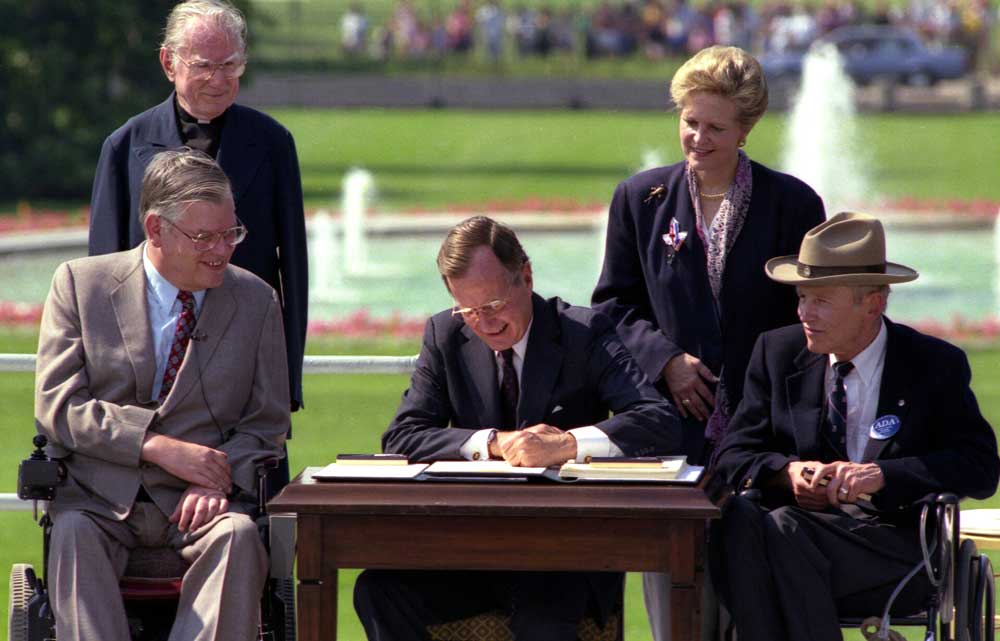








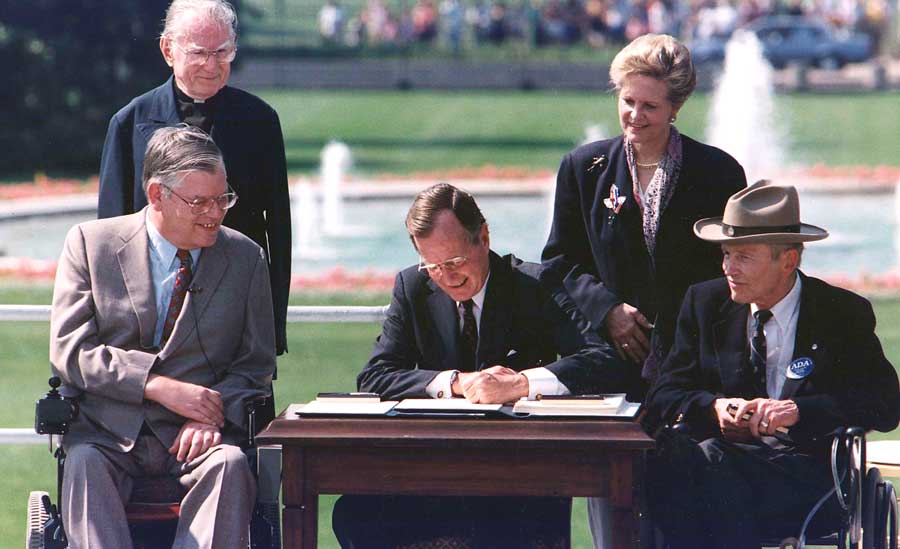
On 7/26/1990 President George Bush signed the Americans with Disabilities Act of 1990 into law on the South Lawn of the White House. Shown sitting from left to right are: Evan Kemp, Chairman of the Equal Employment Opportunity Commission; President Bush; and Justin Dart, Chairman of the President’s Committee on Employment of People with Disabilities. Shown standing from left to right are: Rev. Harold Wilke and Swift Parrino, Chairperson of the National Council on Disability.
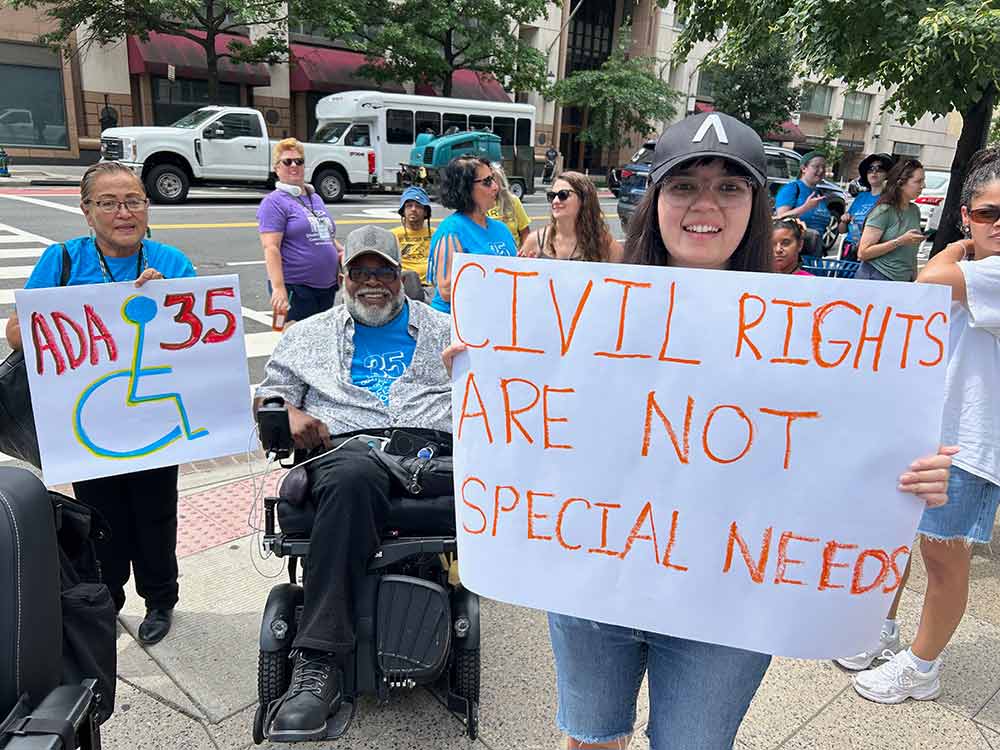
The ADA35 March and Rally
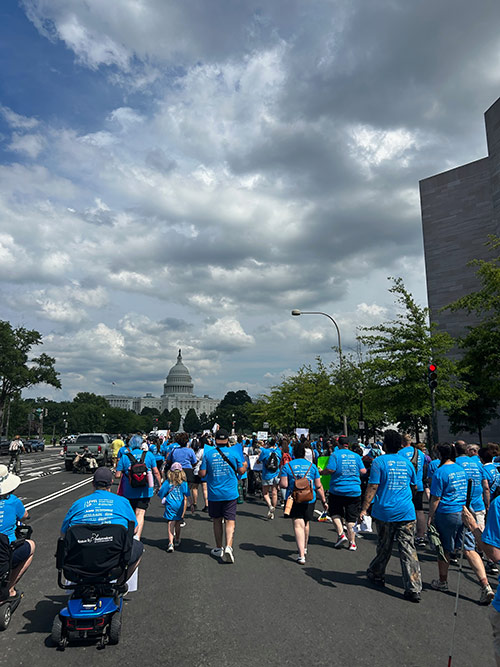
Bright blue beamed from the streets of Washington, DC on Monday July 21st, as disability activists marched in azure t-shirts to celebrate the 35th anniversary of the Americans with Disabilities Act (ADA). As a landmark civil rights law, the ADA was passed to prohibit discrimination against people with disabilities and ensure equal access to employment, education, transportation, telecommunications and public spaces.
Products & Services

Beginning at the Grand Hyatt Washington hotel, two long rows of protesters marched and wheeled, side-by-side, hugging the sidewalk, quickly evolved into passionate chants and a full crowd that covered Pennsylvania Ave NW. The U.S. Capitol stood in perfect view ahead, and the energy honored that of the 1990 Capitol Crawl, a turning point in the passage of the ADA when 60 disabled people of all ages left their wheelchairs and mobility aids behind to crawl up the steps of the U.S. Capitol.
The march and rally, organized by the National Council on Independent Living (NCIL) and the American Association of People with Disabilities (AAPD), spoke to a broader theme—“Our Lives, Our Homes, Our Communities.” The theme resonated on stage with speeches from various disability advocates, including the political voices of Illinois Congressman Danny Davis, California Congresswoman Lateefah Simon and Senator Bernie Sanders.
Throughout the march to the Capitol, signs pointed to the severity of recent threats on disability rights. Phrases like “Disabled Not Disposable” and “Real Inclusion Requires Real Investment,” emblazoned signs that were hoisted above the sea of blue ADA35 t-shirts.
Products & Services


Joining the crowd at the Capitol, Congressman Danny Davis spoke, “It’s good to be here with the National Council for Independent Living, and it’s always good to be here with people who are representing themselves to make sure that individuals with disabilities or with challenges get the attention, respect, and services you deserve.”
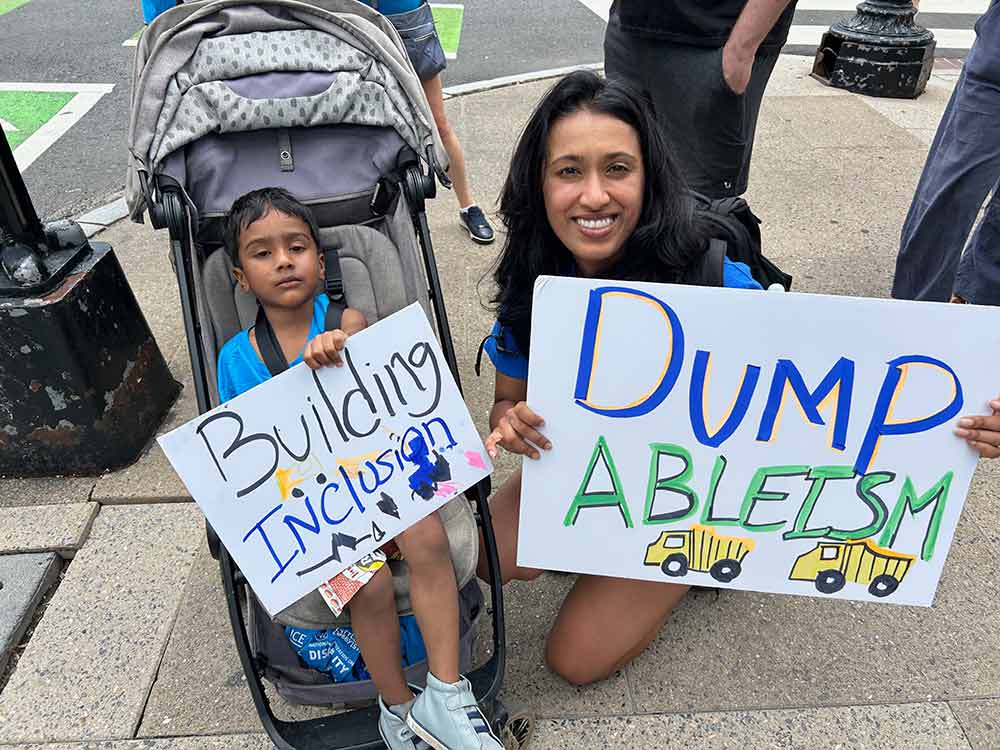
Fiery enthusiasm grew with the heat of the thick DC air throughout the day. Each speaker built on the urgency of the speech before. Congresswoman Lateefah Simon passionately proclaimed, “I will tell you this, there is nothing, nothing we can’t do in this moment that won’t end us in the road to justice, end us up on the road to equity. Center ourselves in every single thing we do. There is no environmental justice without the voices of disabled people. There is no education justice without centering the voice of disabled people. There is no peace movement without centering the voice of disabled people.”
Products & Services


Senator Bernie Sanders—his presence unanticipated by the crowd—exclaimed fervently, “The ADA is not just a piece of legislation. It is, in fact, a value statement about what our country stands for. And it’s a very simple and profound statement. It says, in America, people with disabilities deserve to live the way they choose. It’s not a very radical statement, but a very important statement. It says very clearly that discrimination based on disability is wrong and will not be tolerated. It says that people with disabilities must have the same rights and freedoms and opportunities as everybody else.”
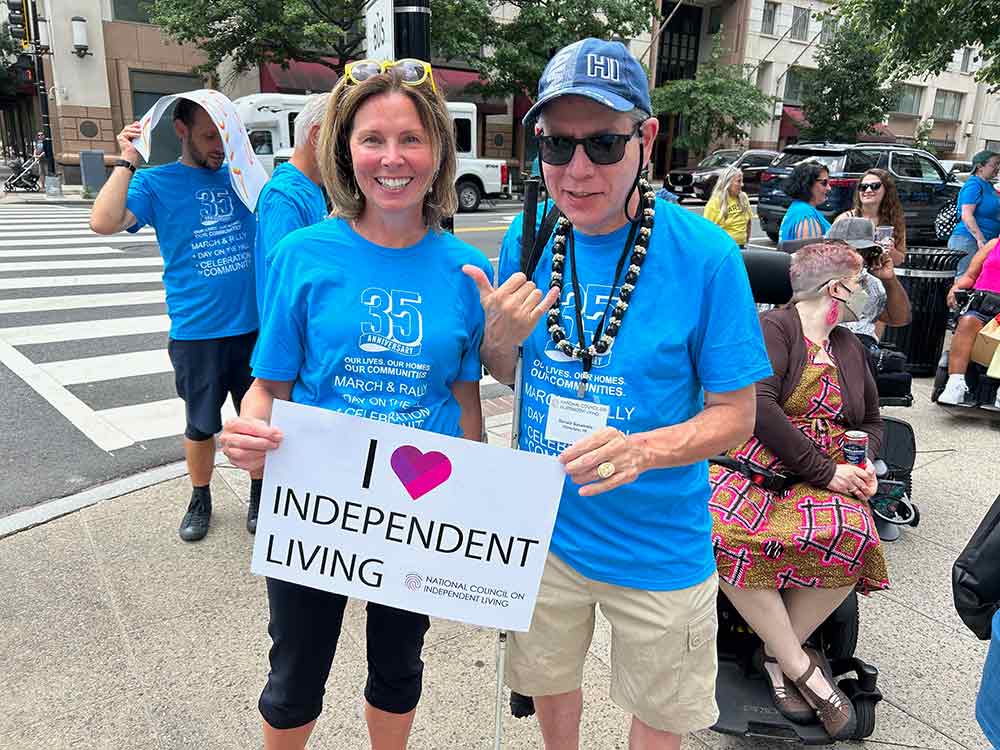
The ADA35 celebration was a passionate day of standing up for disability rights in response to the new administration’s shift in priorities. It was an opportunity for renewed commitment of people, of all abilities, to defend nondiscrimination, accessibility and justice. There was a mix of excitement and purpose. Jenny Sichel, NCIL Director of Operations reflected, “I am probably most excited about the disability community coming together for the march this year and just the unity that we have with the partnerships with all the organizations going on this year and really bringing together our people and our allies.
Advocates and allies alike find this year’s march particularly vital. NCIL Executive Director Theo Braddy affirmed, “It’s needed. We need to be visible. But more than anything else, the community needs to see that we exist. And we contribute. And we participate. And we march. And we do all the things that everybody else does, especially in this time when we’re facing so many devastating cuts and things that are affecting our day-to-day life. That’s what we’re marching for, our homes, our community. And we’re going to continue to do that, to let everybody know that we exist.”
Products & Services

Shifting from celebration to concern, Braddy warned, “Well, this is the thing about disability. It does not discriminate. Eventually, it affects us all. We’re all going to age into limitations, but we still want to participate. We still want to be respected. We still want to contribute. And the ADA has allowed us to do that. And so, we just can’t— Jenny and everybody here—just can’t stand by and let that law be rescinded, to be changed. And that’s what now is trying to be accomplished. The administration is trying to pull back some of the requirements of the ADA. We can’t do that. We can’t go back.”

Disability advocates have raised concerns about recent Trump administration policies that may undermine ADA protections. In July, the “One Big Beautiful Bill” (OBBB) Act was signed into law, reducing federal funding and tightening eligibility for Medicaid, SNAP, and Medicare—programs vital to low-income and disabled Americans.
Since January 2025, executive orders have directed federal agencies to scale back Diversity, Equity, Inclusion, and Accessibility (DEIA) efforts. The Department of Justice also rescinded several longstanding guidance documents—some dating back to the early years of the ADA. These documents had historically provided practical interpretations and compliance advice for businesses, public entities, and individuals with disabilities. Their removal raises broader concerns about federal support for civil rights enforcement and public understanding of accessibility obligations.
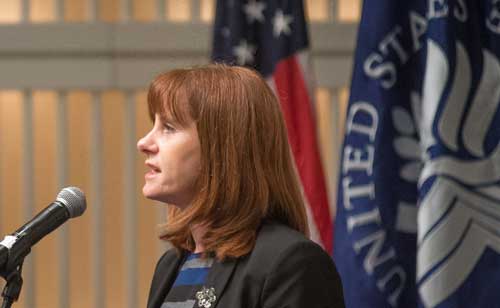
Eve Hill, former Deputy Assistant Attorney General of the U.S. Department of Justice, Civil Rights Division, explained that major layoffs from departments that fight discrimination, such as the DOJ Civil Rights Division and the Department of Education’s Offices for Civil Rights (OCR), leave ADA nondiscrimination laws less enforced and people with disabilities, therefore, less defended.
Efforts to roll back disability rights continue, some even prompted by requests from the private sector. In a letter from the American Council on Education (ACE) to Russell Vaught, Director of the Office of Management and Budget (OMB), ACE takes aim at website accessibility. The letter qualifies undoing a previously established rule, “Nondiscrimination on the Basis of Disability; Accessibility of Web Information and Services of State and Local Government Agencies,” by claiming the cost to implement the rule is “burdensome.”
Products & Services
Clear example of that effort is The Department of Energy’s recently published direct final rule (DFR) to remove regulations that require government funded facilities to be accessible to people with disabilities in their construction. The rule, “Rescinding New Construction Requirements Related to Nondiscrimination in Federally Assisted Programs or Activities”, claims that the cost for private entities to make their buildings accessible is “unnecessary and unduly burdensome.”
“Unduly burdensome” refers to a clause in the ADA that aims to protect private entities in the case they are not financially capable of making their facilities accessible. However, use of the phrase as a tool to rescind government requirements for accessibility, exploits a loophole in the ADA and, arguably, exhibits a choice to deprioritize people with disabilities, accessibility and nondiscrimination.
Initially intended to go into effect July 15th, this new rule garnered an unprecedented amount of backlash. During the rule’s public comment period, over 20,000 disability rights advocates and allies voiced their objections. The rule was put on hold until September 12, 2025. The Acting Chair of The National Council of Disability, David Shawn Kennemer, issued a letter to the Department of Energy, requesting a consultation before DOE’s rule takes effect.
In response to the latest attempts to weaken ADA policies, NCIL’s Braddy stated “Although ADA statutes remain in force, these administrative actions erode the infrastructure that supports enforcement, interpretation, education and funding. Without clear guidance, active enforcement, DEIA (Diversity, Equity, Inclusion, and Accessibility) supports, or independent oversight, disabled individuals may face new barriers accessing public spaces, employment, healthcare, education and government services.”
Decades of advocacy for the ADA have established nondiscrimination and disability rights as fundamental legal principles, but those hard-won gains are now being undermined. The consistent thread across efforts to weaken the ADA is a policy agenda driven by the Trump administration’s commitment to reducing tax burdens, especially for high-income earners, even at the expense of civil rights enforcement.
Products & Services

Bernie Sanders emphasized, “A nation is judged, not by how many nuclear weapons it has or by how many billionaires it has. It is judged by how it responds to the needs of the most vulnerable in our society.”

Disability rights are enshrined in the U.S. Constitution and reinforced through decades of legal precedent, including the Americans with Disabilities Act. The ADA35 March and Rally underscored a critical truth: There is much more work to be done. Advocacy remains a relentless struggle—one that disabled Americans have long been forced to shoulder. Regardless of political leadership or shifting legislative priorities, this community and its allies persist in defending the civil rights to which they are lawfully entitled.
https://www.ncd.gov/letters/2025-06-11-ncd-letter-to-doe-regarding-dfr-on-construction-requirements