














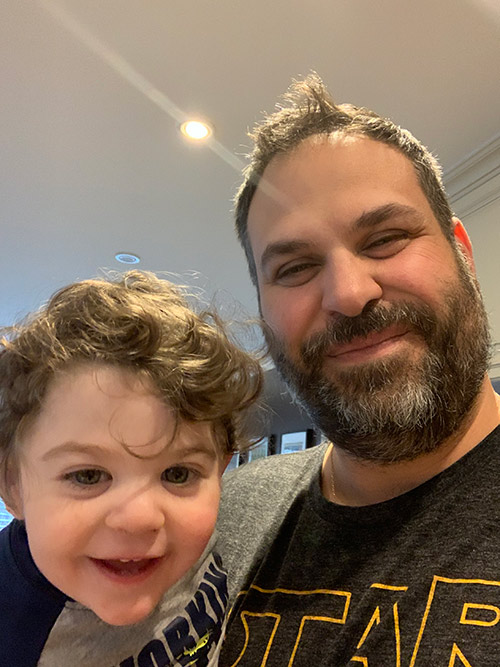
For families facing ultra-rare diseases, the diagnosis is often just the beginning of a much harder story: years of uncertainty, high treatment costs and a race against time for parents. When Terry Pirovolakis’s youngest son, Michael, was diagnosed in 2019 with SPG50 (Spastic Paraplegia Type 50), an ultra-rare, progressive brain disorder that primarily affects children and progresses with loss of muscle control and cognitive function. Pirovolakis and his wife emptied their savings, helped build a gene therapy program from scratch and, ultimately, launched Elpida Therapeutics to bring novel treatments to children far beyond their own son.
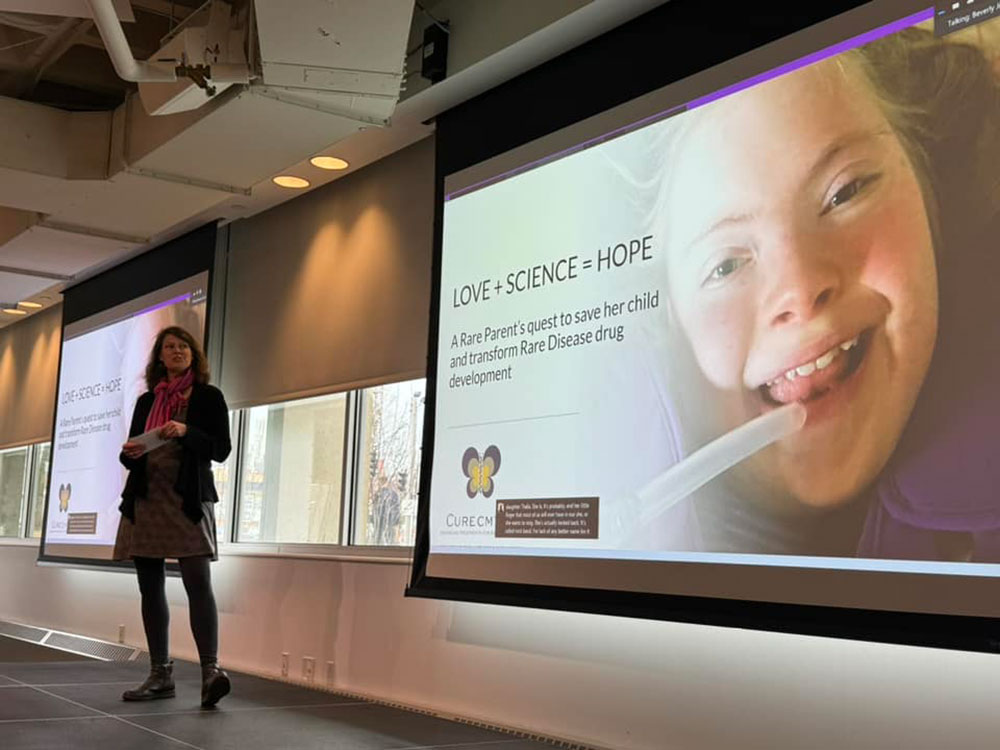
Around the same time, physician assistant Jocelyn Duff founded Cure CMT4J after her daughter, Talia, was diagnosed with CMT4J (Charcot-Marie-Tooth disease Type 4J). What started as a local mobilization in her supportive small town quickly evolved into a global fundraising engine, dedicated to moving promising science out of the lab and into human trials. CMT4J is a rare, inherited condition that affects the nerves responsible for movement and sensation, causing muscles to weaken and affecting movement and breathing over time.
Elpida Therapeutics and CureCMT4J joined forces with the Charcot-Marie-Tooth Research Foundation (CMTRF), where CEO Laura MacNeill and her team work to accelerate treatments for more than 160 known CMT subtypes—Many are so rare and complex that they have never had a single approved therapy. Moving beyond their individual silos, these three organizations united to tackle a monumental hurdle: how to deliver life-changing gene therapies when manufacturing costs are high, drug pipelines are being abandoned, and clinical trial doses are extremely scarce.
In this conversation, ABILITY Magazine’s Chet Cooper, Jennifer Woodall and Lia Martirosyan—who herself lives with an ultra-rare condition linked to the MPV17 gene—sat down with Pirovolakis, Duff and MacNeill to talk about their experience of CMT4J, the challenges of helping people with rare diseases and the fundraising support they received from their communities. They illustrated the process of moving from trials to a “cure on the shelf” and how their research on CMT4J can lead to treatment in other rare diseases.
Lia Martirosyan: If the average person, like me, wants or needs their rare disease looked at by Elpida Therapeutics, how do we bring that up to your crew, and what are the requirements for something to be considered with your team?
Terry Pirovolakis: I’ll give you some background so you have an idea. My youngest son, Michael, was diagnosed in April 2nd, in 2019 with a rare disease. I had nothing to do with the field. I had no idea what even genetics were at the time. We lost our minds, and we decided that we had to do something for our child. We liquidated our life savings. We started a proof of concept in Dallas, Texas. We showed that it worked in animals. We then came out to our community and raised four and a half million dollars—It’s about five and a half million now.—And we were able to make a drug for my son. He got treated in March of 2022. Then we treated two more children, and we tried to give the drug away but no one would take it.
So, we formed Elpida Therapeutics in order for us to take the drug from where we were to approval. Treating two children or eight children is amazing, but it does a disservice to the entire community because all our children deserve that drug. Our initial thoughts were that we were going to take more programs that were stuck in academia, like a scientist that had really good results that just couldn’t get it beyond that. Then we realized that the market was changing, that we were having basically a biotech collapse. Instead of us saving programs, we were rescuing company’s programs that either filed an IDE (Investigational Device Exemption) to the FDA or had drug product available. Right now, the programs we’re taking on are programs that either have drug product made and are ready to go into the clinic or very close to that concept.
Chet Cooper: How did the drug work for your son?
Products & Services


Terry: It’s complicated because my son was on the more severe side of the spectrum. But for example, a month after he was treated, he went from standing on his tippy toes to going flat-footed. About a couple of months later, he started understanding what affection was. He started hugging and kissing my wife and us as a family. He was playing with his trucks. He started playing with his trucks. He never really understood what they did, but he started playing with intent. He started seeing fish in the aquarium, toys on his shirt, TV shows and what they were doing. He started laughing. We were seeing more cognition improvements than anything else. That is consistent with most of the children, or at least almost all the children right now.
Chet: That’s a little bit of a tough one because they’re growing up, they’re young. It’s anecdotal in the whole aspect.
Terry: You hit the nail on the head. Exactly. What we’re seeing is if you were to take something called the Bayley (Bayley Scales of Infant and Toddler Development), which is an endpoint to determine cognition improvements in children, usually you’ll see a plateau or a very slow progression of cognition improvements, whereas our children are increasing every six months. But again, would that be different? It’s hard to tell.
We’re trying to do as best we can, but, on these ultra rare conditions where there’s only 100 people in the world or 100 children in the world and only nine children have been treated, it’s really hard to determine if we’ve changed the course of the disease. If you ask any of the family members and see from where their children were to where they’re at today, I think the majority would say absolutely.
Chet: Is it targeting a specific gene?
Terry: Yeah. So, we took a virus called the adeno-associated virus. It’s the common cold. They took out the cold portion of it and they made a gap. And inside the gap, they put the gene of interest, like Michael’s gene, for example, and they made it non-replicating.
So, the purpose of that is if you put a gene inside a traditional virus and it was replicating, it would go from me to you, to potentially the world and infect everybody with a gene that they don’t necessarily need. What they did was they made it so it was non-replicating, and whatever they put in you goes into the cell and then it dies. It doesn’t replicate anymore. So, whatever goes inside you is forever.
Chet: So, you could drop any gene, you could drop maybe a MPV17 in there?
Terry: It depends on the size of the gene. For example, the Dushan’s Muscular Dystrophy gene was too big, but I would say a large portion of genes do fit into the virus.
Lia: So, how do you nominate patients or individuals?
Terry: What we do is, in our scenario for CMT4J, we ran a natural history study. We brought in the 23 patients we know of. The goal would be that we open a study. We say that there’s six doses or eight doses available. We put an inclusion-exclusion criteria based on safety values and benefit, and then the doctors will choose the best patients to be treated.
Chet: At this point, is it always children?
Terry: Well, I think for CMT4J, it blends into adolescents. But for SPG50, we’re doing five months to six-year-olds. For CMT4J, specifically, I believe it’s 5 to 20 years old. Jocelyn, is that we’re doing?
Jocelyn Duff: Yes, that’s what we have right now.
Terry: Now, CMT4J is very unique. There are children that are born, and they pass away very early in life.
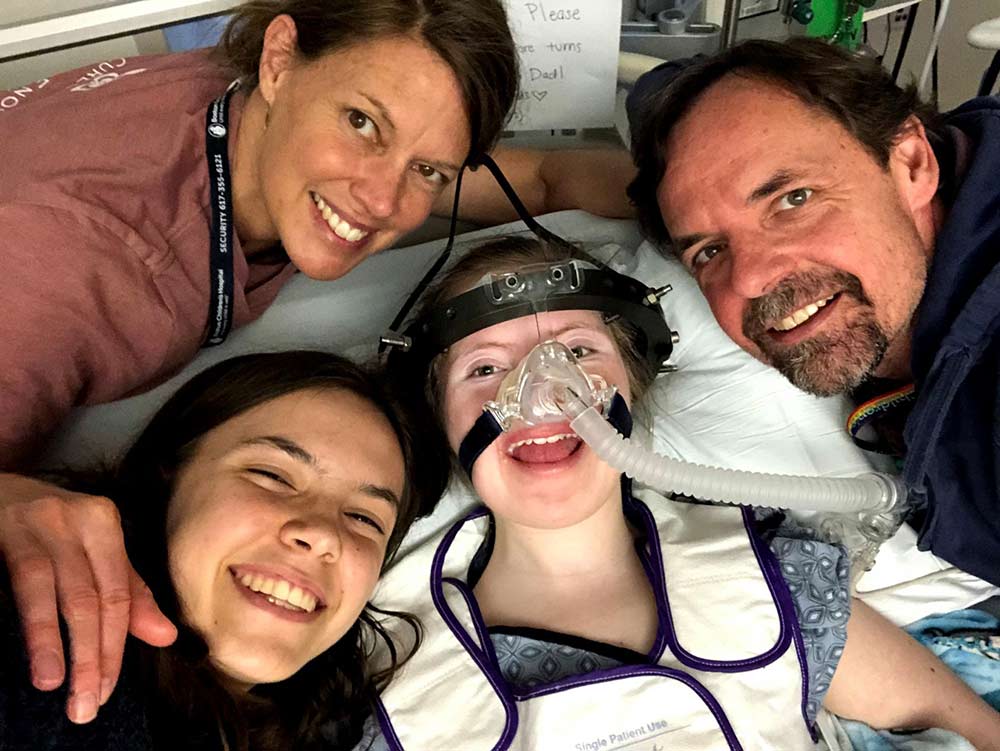
Jocelyn: Most people present in early childhood or adolescence. It’s an ultra-rare disease. It has about a one in a million prevalence. I always say that it’s very much like ALS because it starts with weakness in the limbs, particularly the legs and the feet, and then it progresses to more weakness in the legs and the arms and the hands. Many, many CMT4J patients are wheelchair bound by their teens or early 20s. It can also lead to respiratory muscle weakness, which can lead to respiratory failure. Some of our patients rely on ventilators, either through a trach or noninvasive ventilation.
Laura MacNeill: That is all true for CMT4J, but just for clarification, CMT has over 160 known variants, different subtypes with over 130 different genes that are causing that. So, the prevalence is still considered a rare disease, but it looks very different from subtype to subtype. So, this is specific to 4J, those symptoms.
Chet: It’s not one gene within those large numbers?
Laura: No, it’s 130 genes, and then a whole ton of VUSs (variant of uncertain significance), a whole ton of variants that geneticists are seeing a prevalence of within inherited neuropathies, but they haven’t been able to truly classify because it’s either just too rare or we don’t have a scientific understanding. So, they’re finding new gene causes for CMT all the time.
Jocelyn: And just to be clear, that’s under that larger CMT umbrella I was describing. So, there’s CMT type 1, CMT type 1A, 1B, CMT type 2, 4…So, the subtype of CMT that our nonprofit Cure CMT4J has been working on and driving forward a gene therapy and other treatments for is CMT4J, specifically.
Jennifer: When you’re dealing with a disease that is ultra rare, how difficult is it to find enough participants to go for a clinical trial?
Jocelyn: A clinical trial for gene therapy is very small. It will involve probably about eight patients because the manufacturing for gene therapy is so time consuming and so expensive. So, these gene therapies often have very small clinical trials. We have patients who have been waiting and waiting for a potential therapeutic, particularly, gene therapy for years now as we’ve been trying to push this treatment forward. I don’t think we’ll have any problem finding those patients.
Terry: All of the studies we’ve had and all the programs we have, I’m not worried about enrolling patients. My biggest concern is we don’t have enough drugs to treat all the patients.
Chet: Terry, are you looking for specific cases where it’s just a single gene?
Terry: In these affected individuals, it’s usually that one gene affected. There might be individuals with two or three genes affected, but usually during the trial, it’s the patients with one genetic defect that we’re proposing.
Jocelyn: Yes. These are ultra-rares that are single gene defects. The reason for the disease is because of one single gene where just a little mix up in the letters of the DNA is what causes the disease.
Chet: Eventually, you’ll be able to use the methodology that you’ve figured out to be able to group multiple genes by dropping it into a cell?
Terry: They’ve done it before, but usually the two genes are too big. So, that’s why we’re only doing a single gene at the time right now.
Chet: So, at this moment in time, for all of those types of CMT with that Laura was mentioning, that’s not what you’re able to focus on at this point?
Terry: Yes. For example, you wouldn’t want to dump two genes into one virus and then inject it because you don’t know what’s going to do to the other healthy gene. We don’t know what the effects would be.
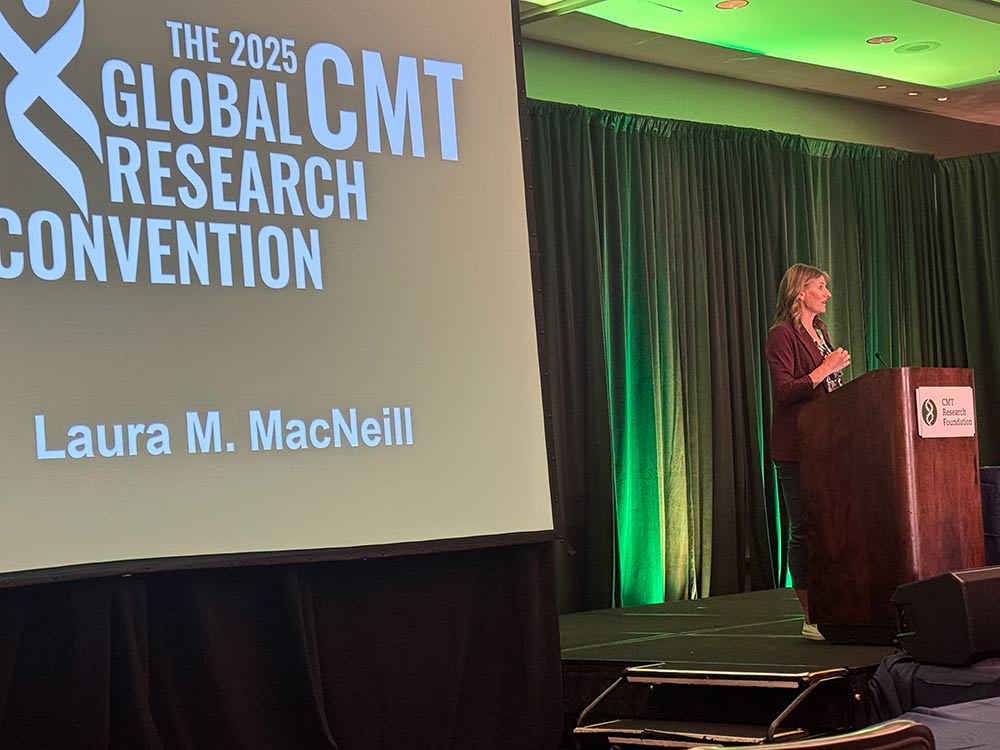
Laura: We do feel that even though this trial is specifically for CMT4J, it will unlock understanding of gene therapy for all of CMT. It’s a pivotal trial for that. Although this particular approach in this particular way is very unique. We are finding some technology that if it works for one, it could be applicable to many. There are going to be cases where it might have to be this individualized, which makes it an extra complication for an already rare disease. It makes it almost like CMT4J is its own standalone rare disease. It’s in this big umbrella, but it is so rare in its presentation in even the CMT community. But the entire CMT field, and more broadly, gene therapy field, are going to learn from this in this trial.
Jocelyn: Something that Terry and I have been talking about for years now this dream of having a rare disease or a gene therapy institute, and to be able to get to a point where we have this assembly line or this plug and play, where you can get a diagnosis and you’re able to determine what the best viral vector is and then attach the healthy copy of the gene that isn’t working in the disease. You make trillions of copies of it, and then you give that back to the patient. I think for the whole entire field of gene therapy, getting something like CMT4J through to a clinical trial to be able to show efficacy will just pave the way for so many other types of CMT and so many other ultra rare diseases as well.
Lia: I’m just sitting here getting emotional at how far we’ve advanced and people like you all, and the work you put into this. It’s so necessary.
Terry: We’re trying. It’s very, very difficult. I’ve quit my job. I changed my career. Jocelyn has given her life just like I have to the children. It’s literally pushing a boulder uphill and gaining inches because the funding is hard, doing the research is hard, convincing people to help you. It’s been very, very difficult. That’s why we’re so extremely grateful to have the benefit of receiving this amazing fund to help us move another few inches forward to get the treatment, to get into the clinic, to treat these kids and show a difference.
Then hopefully, if it does make a difference in the lives and companies will take these on and make next generation vectors and much better products than what we did. Because again, we were at the infancy of this technology, and it’s growing so quickly that there’ll be something way better in five years from now, but the lessons learned will continue forever.
Lia: Absolutely. Those inches you’re talking about, I’m sure, as you know, are miles for families who are going through these sorts of illnesses. My journey started when I was about nine and a half years old. I’m 40 now. I didn’t get my diagnosis until maybe 30 years later. Actually, one of my first misdiagnoses were Charcot-Marie Tooth.
Products & Services


Laura: That’s only the second that I heard the CMT was the wrong diagnosis. Usually, it takes a while to get to CMT.
Lia: Without any testing, they looked at my symptoms. But because of being able to see all the genes, and fine-tooth-comb through all the genes, that’s when I got my diagnosis. My brother presented different symptoms at different ages. So, it was hard to pinpoint what was going on with us. I’m definitely in the ultra-rare category. So, that’s where all the interest is in how do we sign up, basically. I would love for my daughter to eventually see me walk.
Terry: What condition do you have Lia?
Lia: So, it’s on the MPV17 gene. It’s Mitochondrial Depletion Syndrome.
Terry: Yeah, the gene is tiny.
Lia: Yes, it’s on the nuclear DNA. This is why I actually had a child because they found out that I wouldn’t pass it down because it’s not maternally passed down, even though both my parents presented an issue with a gene but no physical symptoms. They came together in wonderful chaos where my brother and I got it. It’s an extremely rare situation. They say [there are] less than 100, but we don’t know of any other patients who have had any illness with this mutation of this gene.
Terry: These are the groups that are working on it right now. There’s a team at UC Davis that’s working on it. They’ve actually two mice for it. Allen Bradley is, I guess, the investigator. Then there’s been a few other mice that have been ordered over the years. This is how you can tell if things are working, if people are doing research on this disease, by how many mice are made. So, these mice have been engineered to show the disease. The gene is 176 amino acids. So, it’s small. It could fit into a virus. The problem is it comes down to funding, right? These things cost on average four and a half million right about now to get from zero to first human treated.
Jocelyn: It’s good to have you as an ultra-rare ally, Lia. My daughter Talia’s story is similar to yours. She was misdiagnosed for six years before we landed on her CMT4J diagnosis. My belief is so strong that ultimately, when a drug is approved and we have the chance to treat every patient, that we can meet them where they are on the spectrum of where they progress since we might see patients who are still walking or patients who are in a wheelchair or on a ventilator.
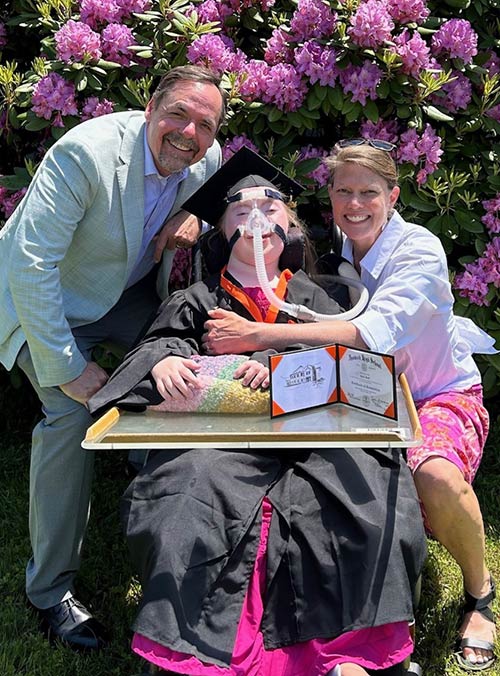
I think that the earlier we can intervene, the better, but quality of life is just incredible. For my daughter, who is now quadriplegic and on a BiPAP ventilator, I feel so strongly right now that if we could intervene, that we could: A. save her life and B. save the quality of life that she has right now, which is just incredible. She takes college classes, she sings in a rock band, she does adaptive skiing and hiking and swimming.
Lia: Oh, my goodness.
Jocelyn: That’s the potential for these therapeutics, I feel, is to just save lives, improve quality of lives, and keep quality of life for people.
Lia: That’s beautiful. I’m happy for your family.
Laura: It really does take a village, too. It’s a lot of people fighting. Jocelyn is a great example of stepping up and saying, “No more.” We got to do something different. She can represent many families who don’t have maybe the same ability or skillset to do it. This is such a beautiful story in that CMTRF, which is a foundation that funds research that will advance treatments and potentially cures for all CMTs, could meet this moment for Jocelyn and her team and her family who have been working with Terry and fighting for this particular compound to get to market right at this time.
When you zoom out, it takes so much to line up, and Jocelyn, you have a great story of all the times this has failed. I just think so many times the success stories begin in this long marathon road of just not taking no for an answer. Any gene therapy that’s on the market today was long and hard fought, and this whole approach is still fighting for validation and acceptance. We’re just part of that story overall, but if you’re going to appeal to your community, it takes quite a lot of grit.
Terry: If you were not a nonprofit and we were not here to save kids, these programs would never see the light of day. That’s the reality of it. Takeda dropped their gene therapy pipeline yesterday. All these organizations are just dropping these programs left and right. And, funny enough, I’m getting called every couple of weeks saying, “Hey, we have a program. Do you want it?” It’s like you’re a 120,000 person organization. We’re five. It’s crazy. But this is the reality of things. And unless you’re absolutely committed to seeing these things through…
I mean, Jocelyn has been so patient with us. For her to see us take this program on, fill one grant after another, trying to apply for things. It’s hard. It’s very hard. And unless you have someone that’s there in the war zone with you saying that it’s not okay, that we’re trying, things are not going to move along, right?
Chet: Terry, I saw the video on your website that was produced, and I was surprised at the end, it was produced by Al Jazeera. How did you pull that off?
Terry: I was so thankful. My sister was a journalist at the time. She was working for BBC, CBC, and a bunch of stations in Qatar, and she had a ton of connections. When Michael was diagnosed, she basically called all of her friends, and everybody took it on, including Al Jazeera. It was 3 million views on that video. It’s crazy.
Chet: It was done well. Al Jazeera does a great job.
Terry: Yeah. They flew out a guy from Qatar, I think it was. We sat in our home, He videotaped us. Really good. CBC TV did a three-part story. Again, it’s about getting out there, getting to the community. Recently, in the last two weeks, there’s an amazing mother from Juneau, Alaska. The entire community—every coffee company, gas station, realtor—came together over two weeks and raised almost $700,000. She was in People magazine, NBC News, posted about her yesterday. They’re just kicking butt, right? And that’s what it takes. It takes a community.
Chet: A community with good connections.
Terry: Yeah. Well, for me, it was good connections for sure. And 20,000 individual people that I had no idea who we were. I think that came down to our video. If you go to our GoFundMe and you watch our video, we were very raw and emotional. It was like a week and a half after Michael’s diagnosis. I think people saw that rawness and that we would never give up. And we’re very lucky, just like Jocelyn will probably tell you, it really takes a whole community to get the funds and then a team of 100 to even get you beyond that.
Jocelyn: Yeah, we had a similar story. So, when we first started Cure CMT4J after Talia’s diagnosis, I was practicing medicine as a physician assistant, and I just couldn’t believe that we were in this world of rare diseases. You just don’t really learn that much about rare disease in school. I couldn’t watch my kid lose all of her abilities and just do nothing. I had to do something. So, we created our nonprofit. We live in a town of about 13,000, about an hour north of Boston. They just lifted us up. Talia’s classmates had a bake sale on the first day of summer vacation for our nonprofit and within three weeks, we raised enough money to host the world’s first summit on CMT4J.
Our community and surrounding communities hosted hundreds and hundreds of fundraisers, from lemonade stands to bake sales to galas and road races and everything in between. We met with our scientific team, and we all decided that gene therapy had the most promise for anything closest to a cure. We moved forward, and within 18 months, we had rock solid proof of concept with our mouse models, and we had raised more than a million dollars. That was really because of our community.
Talia’s classmates and teachers made this video about her, and it went viral and went around the world. We had donations from more than 6,000 donors worldwide in more than six countries. We were on ABC World News tonight with David Muir three times. That’s how you do it. It’s just crazy. It is a horribly stressful life and the burden and the weight of moving these therapeutics forward. It shouldn’t rest on the shoulders of the parents and the patients.
Terry: I remember it was probably week two that we came out and I know it sounds crazy now, but I was an introvert. We had very few friends. We were very “keep to ourselves and our community.” Our story went viral, and I was still working. I worked for the full four years while we did the therapy. I woke up in the morning and they said, “Can you come at 5 AM to this one radio station?” I went to three radio stations in the morning. I did an interview at work in the office, then I came home and I did two more TV interviews in one day. It broke me. It broke the shell off me. It was no more this introverted person anymore. And that’s what you have to do for your child. You have to put yourself out there and do anything.
Jocelyn: Same. It’s exhausting.
Products & Services


Chet: It’s more than a full-time job because you’re living it. You go home, you go to bed, you’re thinking about it all the time.
Jocelyn: Then you’re taking care of your child all that time as well, many times, children with significant challenges and physical needs.
Chet: Terry, where are you based?
Terry: I’m based in Toronto. The company Elpida Therapeutics is based in California.
Chet: Any problems happening at the moment with the tariffs?
Terry: No, but there’s always a fire to fight somewhere. There’s always something. I mean, this is not for the faint of heart, for sure. There’s manufacturing doesn’t go 100% every time. We’re dealing with some ethical problems where it makes sense if, for example, you’re running a nonprofit and you need to treat children and to run a study and run a clinical trial, but clinical trials are not meant for foundations to raise money and give to the hospital.
We have to then put in our form of consent and have all these legal agreements so that we can actually fund from a patient organization the treatment of children. It sounds crazy, but even such small things as that took four hours of legal work today to close off.
Chet: Yeah, you definitely need a legal team with the stuff you are doing.
Terry: We have three lawyers that are on retainer right now for different things. It’s crazy.
Chet: When I was reading about what you all put together, I’m just thinking of just the complexity of it all.
Jocelyn: Yeah. This program has been stuck since the pandemic. We were ready to go. We had a hope for a clinical trial in 2020, and then the pandemic hit. The investor economy in the biotech and pharma world just collapsed, and we’ve just been scrambling ever since then to move it forward. I mean, it literally feels like a cure sitting on a shelf, and you can’t get it to your kiddo or others with CMT4J.
I mean, imagine what that must feel like. Talia asks me about it constantly. How is the research? Where is everything at? The fact that CMTRF stepped up and recognized the power of our science, we just couldn’t do this without them to be able to reach this enormous milestone and hopefully move on towards a clinical trial just can’t be understated how powerful this milestone is.
Laura: Thank you. For just a brief overview of CMTRF, we can’t do this without our donors who really trust us. Our foundation is only seven years old and really borne out of the frustration that although we got this super bizarre name, Charcot-Marie-Tooth, from the three last names of the pretty prominent neurologists in 1886, we still don’t have a single treatment.
We are an independent nonprofit. We gain all of our support from families, friends, individuals, sometimes companies in forms of sponsorship, but no government funding for us. We can only do what we do because the donors that believe in and support us and understand the difference that that could make. We are very fortunate to be able to say “yes” to this project. There are worlds where we could have wanted to and not had the revenue ready. This was all very serendipitous that we could say “yes” to this, and we all wanted to and we could. So, it was just a beautiful, beautiful moment. Our foundation focuses on all CMTs.
We actually feel that if we picked a specific subtype, we probably wouldn’t get to the answer fast enough. We just need to let the science lead us. We have a wonderful group of research experts that come. Some study CMT, but the prevalence is so rare that a lot of them come from ALS or other disease backgrounds. Even our VP of Research and Drug Development comes from inherited deafness. That’s the world she lives in.
But we feel that we’re going to unlock the answer to CMT so much faster if we collaborate and branch out and include our core experts with these other folks that have drugs on the market and more advanced understanding. Our foundation is also a venture philanthropy foundation, which is kind of a bad word in some places, especially if you’re a biotech. But what’s great is we’ve actually returned almost $800,000 in revenue in just the short seven years we’ve been around. That feeds right back into the mission. Everything was set up for this moment. It just feels so much like that. I just can’t stress enough how wonderful this whole situation is, this whole gift.
Jennifer Woodall: Since CMT is genetic, would the gene therapy affect its ability to be passed down to offspring?
Terry: In this scenario, it wouldn’t because it doesn’t integrate into the cell. So, it’s not passed down from sperm or embryos down to the next person. Gene editing would, but not gene replacement therapy.
Jocelyn: The other part to that question, is many of these single gene diseases are autosomal recessive, and so you actually need both parents to carry a bad copy of the gene involved in order to make someone who has the disease.
Terry: In the case of my son, I’m a carrier, my wife was a carrier, and Michael got the genetic condition. Unfortunately, these are crazy things. One in a billion chance of meeting, getting together and having a baby and having this experience.
Jocelyn: We call it genetic lightning in the rare disease environment.
Terry: Then they have beautiful genetic siblings, right?
Chet: That was what Lia was saying earlier, both she and her brother have the disease.
Lia: Yeah, both parents are carriers, and then both offsprings actually had the mutation.
Laura: Terry, this won’t carry on to offsprings, but if it works, the answer would be able to be delivered sooner in a child that’s identified. That’s really probably the goal for a therapy like this is if the trial proves that it works, we won’t be giving it to teenagers. We’ll be introducing it much sooner.
Terry: Absolutely. Here’s an example, if we get the drug approved and insurers pay for it, then it gets on the newborn screening panel, and by being on the newborn screening panel, we’re able to treat children not at five months, seven months, five years. We’re treating children at one month, two weeks, five weeks, with lower doses, smaller injections, and changing the course of their lives forever, more towards a cure than a treatment.
Jocelyn: The (Spinal Muscular Atrophy) SMA community is a perfect example of this.
Terry: And even with SPG50, we started off treating 2-6 year olds, and now every child that’s been under two for the last two years, we’ve treated. Unfortunately, we’re not catching them early enough because we’re not on the newborn screening panel, but we’re catching siblings or hospitals or governments that really are on board of diagnosing children earlier through genetic screening. More and more, this is going to be a bigger, bigger thing.
Jennifer: Can you highlight some other hurdles that you might have to overcome when you’re trying to establish a clinical trial or even past the establishment and when you’re actually in the depths of the clinical trial?
Laura: I think a huge component is it’s sometimes hard to convince our regulatory folks the importance of these trials or the risk benefit, the risk reward. For 4J, it’s pretty severe. That’s another reason why this trial is really important because a less severe presentation of CMT might not get trial approval if it’s a gene therapy, because the regulatory folks might feel like that the risk would be too much greater than the disease itself, which, of course, is a hard thing for someone else to decide when you’re living with it every day. So that’s an initial hurdle.
Terry: Going from proof of concept to the clinical trial, there are a lot of pitfalls. Is the disease going to work? Is the mouse going to show a disease? When you do toxicology, is it going to be toxic? Are you going to have animals in your toxicology study that are sick already? So, before you even get to the clinic, you have your own challenges, but then when you’re in the clinic, did you choose the right endpoints? Did you choose children that are going to show the most benefit or are able to show the most benefit depending on the endpoints you chose? Is there enough drug product? Can the drug product be shipped to those countries?
Chet: Can you quickly explain endpoint to the layperson?
Terry: An example would be the 10 meter walk test. What they do is they start you off and they would time you to see how quickly and how far you can get on a 10 meter walk test. As you progress in the disease, you might have been able to do 10 meters in 10 minutes, and now you only could do one meter, and not even that. The goal is to show that before the gene therapy, through a natural history study, that patients between the age of, say, 5 and 10, were able to go 10 meters and continue walking 10 meters or not, as an example. Then after treatment they were able to do the same or better as an example.
Laura: Yeah, it’s essentially like the preselected data that that trial is going to use to show efficacy of the drug. It becomes complicated. Like the 10 Meter Walk test is applicable to a ton of CMTs, but not 4J, and certainly not for Jocelyn’s daughter, who has full body paralysis at this point. So, what can we use? The muscle fat fraction MRI that Terry mentioned at the top of the interview is another endpoint data that is much more measurable. It has less subjectivity to it. The more your disease progresses, the more fat you’re going to have in your foot or your leg for CMT, for example, versus a healthy leg, which is going to have more muscle because of the muscle atrophy from the disease progression. And you can measure that muscle ratio as the disease degenerates.
Terry: I think the endpoints are so critical. They’re so hard to do, especially if a disease is going to take 15 years to show a meaningful output and change. That’s why those biomarkers and surrogate endpoints like neurofilament light chain and muscle fat fraction and these other things where we can show that the disease has made a difference in some marker so that we can get there sooner. Because the reality is we can’t wait 15 years for a drug to get approved. It’s going to be obsolete by the time that happens.
elpidatx.com — Elpida Therapeutics
curecmt4j.org — Cure CMT4J
cmtrf.org — Charcot-Marie-Tooth Research Foundation