














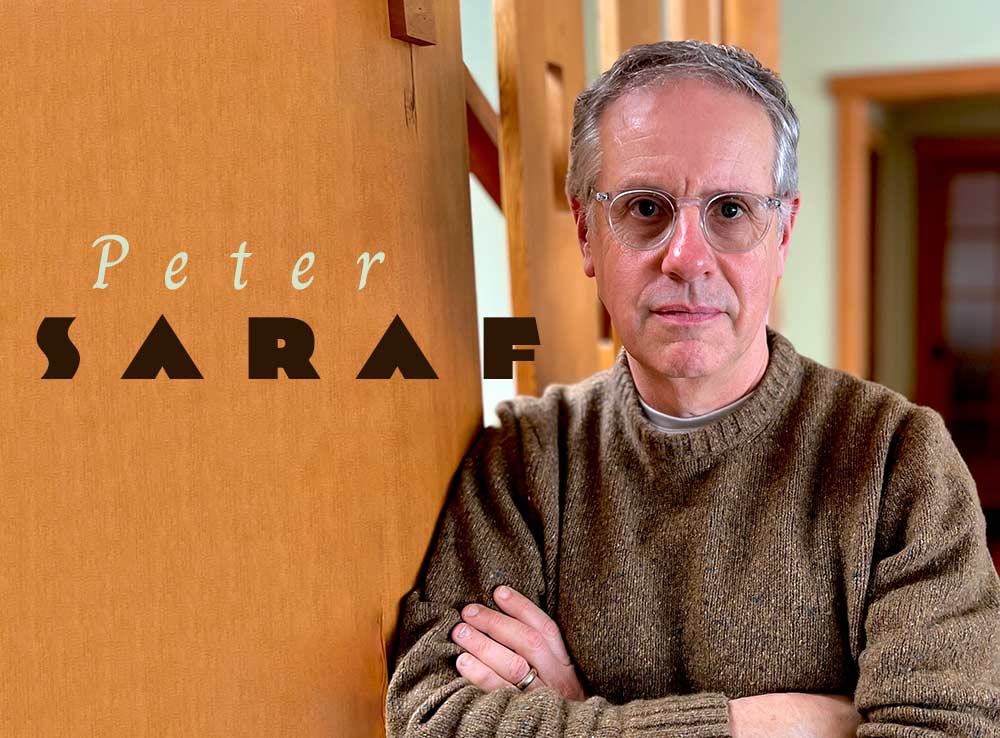
For over 30 years, Peter Saraf has been at the heart of storytelling in the film industry. As a producer, his role goes far beyond budgets and logistics—he is a champion of stories that challenge perceptions and celebrate the richness of human experience. His producer credits include Little Miss Sunshine, A Beautiful Day in the Neighborhood, and Loving. Saraf’s latest project, Out of My Mind, streaming on Disney+, is a testament to that mission. Adapted from Sharon M. Draper’s bestselling novel, the film follows Melody, a sixth grader with cerebral palsy who is determined to be seen for her intellect rather than her disability.
ABILITY Magazine’s Jennifer Woodall met with Saraf in a virtual interview to discuss the challenges of getting Out of My Mind made, the importance of authentic casting, and the need for greater inclusion of people with disabilities in Hollywood. From a decade-long struggle to secure financing to accessibility efforts on set, his insights offer a candid look at both the progress and roadblocks in the industry. As Saraf explains, inclusion isn’t just a moral imperative—it’s a creative necessity.
Woodall: Can you go a bit in to what a film producer does?
Saraf: Sure. One way to think about it is a producer is the CEO of a movie or a TV show. But producers, at least the producing that I do, take responsibility for the genesis of an idea. Sometimes, it’s just an idea, sometimes, it’s a book, as in the case of Out of My Mind. Sometimes, it’s a magazine article or a podcast, or sometimes, it’s an existing script, but all of those are just ideas for what a movie or a TV show—Or sometimes I even do a little bit of theater.—what those can be. The producer puts all the pieces together. The director, the actors, the crew, finding the financing, managing the production, making sure that all of the creative elements are aligned and working together to achieve the best version of what the project possibly can be. Then it’s helping it get distribution, and then working on the marketing, and then working on the theatrical release or working on the home video. So, managing the creative, the logistical, the financial, the marketing, it’s a little bit of everything.
Products & Services


Woodall: Recently, you produced a film called Out of My Mind for Disney Plus. Can you talk about that film?
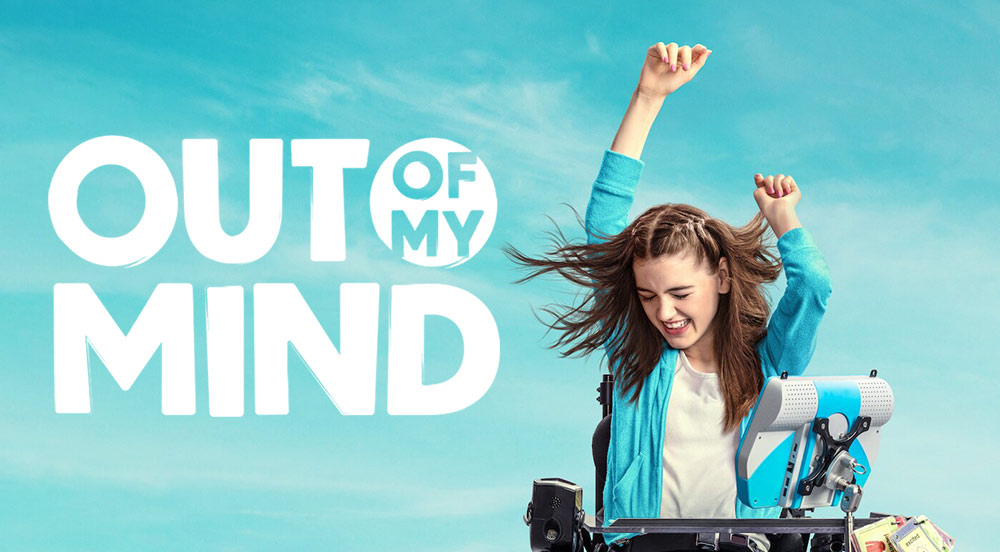
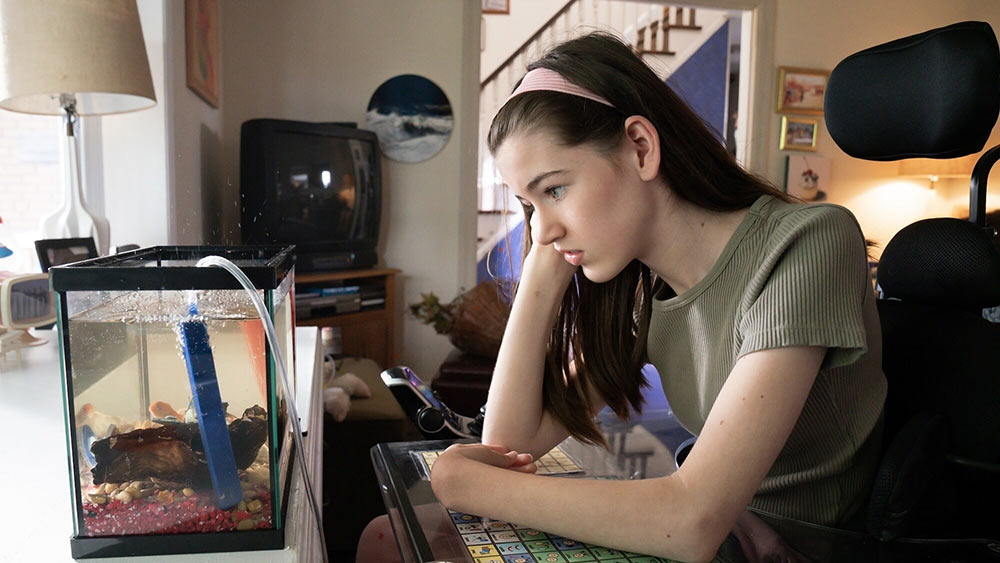
Saraf: Sure. Out of My Mind is based on a novel called Out of My Mind by Sharon M. Draper, which was published about 12-13 years ago and has been wildly popular, largely in the grade school age group. It’s on the curriculum of a lot of grade schools, so it’s based on this novel. It tells the story of a sixth grader named Melody, who is eager to learn, eager to make friends, eager to explore the world, have fun; and she’s also somebody who uses a wheelchair and is nonverbal. She has cerebral palsy. And the story is about the challenges that she faces of being somebody who is underestimated and assumed to have intellectual disabilities, when she doesn’t, and assumed to have less competence than she does, and the fight to not only get the education she deserves, but to get the place in her school and in her world that she is able to participate in and thrive in.
Woodall: Can you go a bit deeper in to the topic of underestimating people with disabilities as it comes up in Out of My Mind?
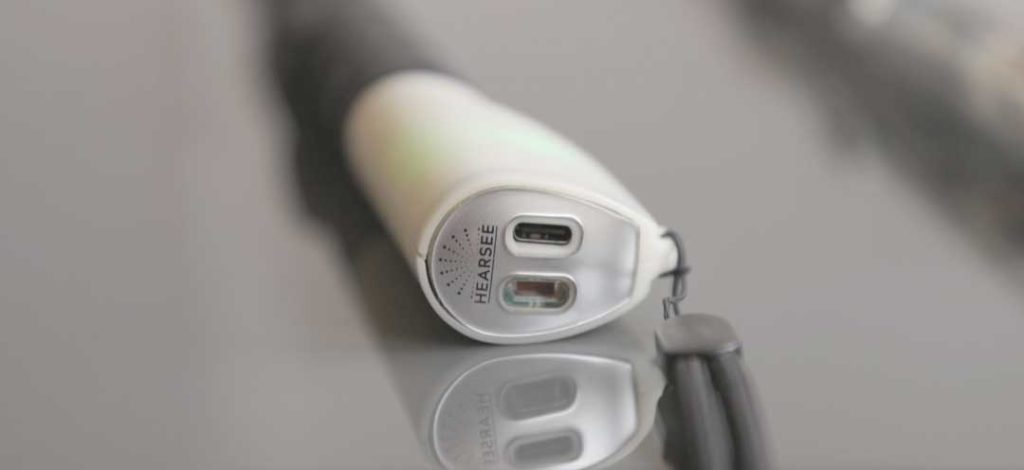
Saraf: In this case, this is a story that takes place in the early 2000s, since 2003. And there’s a specific reason for that, which is that, like I said, Melody is nonverbal. And one of the plot points is about her getting an AAC device, an Augmentative and Alternative Communication device, which at the time was a stand-alone device that was really prohibitively expensive and very hard to get insurance to pay for. Once iPads and other tablets became ubiquitous, it became software that can be used on other devices, and while it’s still not a cheap thing, it’s exponentially cheaper and more accessible than it was back then. So that’s part of it.
Woodall: In the film, it’s $17,000. And that’s a lot to afford.
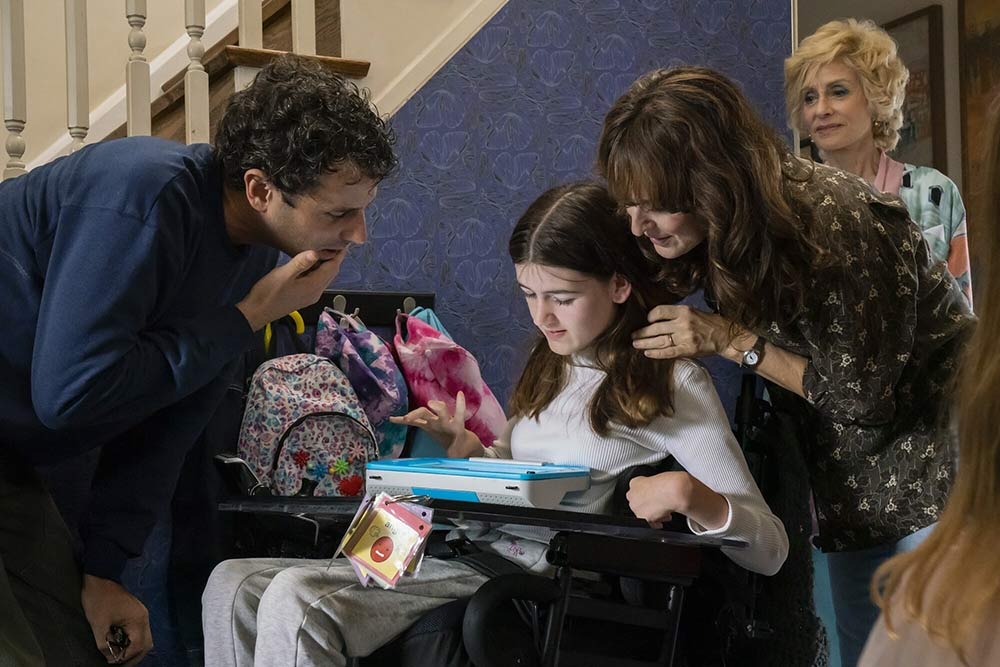
Saraf: It is a lot to afford. And again, like I said, it’s really hard to get insurance to pay for it. There’s a lot of things that families need to understand and know about the resources they need in order to access those benefits and things like that. So that’s one of the parts of the story. But in terms of being underestimated, Melody is in a class for kids with all sorts of different abilities in her school. And it’s a range of grades for kids with different intellectual disabilities, different physical abilities, and all sorts of a range of abilities that are put in their own classroom separate from the rest of the school. While some of the kids’ needs are being met on an educational basis, many of the kids there are just falling into the pot of, “Well, we just don’t see you fitting into our narrow definition of what’s typical, so we’re just going to put you here.” And in Melody’s case, she is capable of more than is being presented to her in her classroom. It’s not until she can get into one of those typical classrooms that she’s able to engage fully intellectually at the level that she’s capable of.
Woodall: One of the things that we’re passionate about here at ABILITY is authentic casting. I was so happy to see authentic casting in this film. Can you talk a little bit about the casting process for those roles and also on set accommodations?
Saraf: The first thing we did was adapt the novel into a screenplay, then the next thing we did is started thinking about, “Okay, how are we going to make this movie?” We realized that we had to find somebody who could play Melody. We had to find somebody who had CP to play her. That in order to portray that part, you needed to have the lived experience of living with CP in order to play that part authentically. Also, we felt that all too often people who have disabilities are overlooked in the casting process, and those roles end up being cast with typically abled people who are acting the disability. We wanted to shift that paradigm, so we did a worldwide search to find our Melody.
Basically, we put out a call on all social media platforms through all casting directors, theater groups, school groups, parent groups. We put out a call saying, “Hey, we’re making this movie. If you’re interested, please send us an audition video.” and we gave the parameters for the audition video, the scenes that we wanted to be done, and we got somewhere between 150 and 200 auditions, which was fantastic. So many great kids that tried out for this movie, it was just wonderful to go through them all. We narrowed them down and found Phoebe Ray Taylor.
Casting is more of an art than a science, and it really involves a lot of instinct and a lot of taste and opinions, so there’s certainly nothing objective about it, but we all felt very passionately that she was the onem and, in fact, cast her two years before we made the movie. It took that long to put the rest of the pieces together, so that’s where we started. Then we built her family around her in terms of casting, and we cast the other characters. So in the classroom that she starts out in, she’s with a lot of people with a range of abilities, so we filmed in Toronto, and we wanted to cast those roles authentically as well. We put out a call to all sorts of groups locally and found this amazing group of kids, and then for the other classroom, we needed to cast all those kids so we did that as well. All through the process, we tried our hardest to cast people with lived experience in the roles. It was great to do that with all these kids, and in most cases, giving them their first opportunity to be in a movie.
About making accommodations to the production and the set, from the very beginning of working on the screenplay, of developing it, we worked with a lot of people who have CP, a lot of wheelchair users, a lot of nonverbal communicators, people who are AAC experts, all sorts of people who gave input and help and even contributed to the writing of the screenplay. We tried to incorporate that from the very beginning. And then once we went into production—meaning once we started preparing to film and once we filmed—we put together what we called our All Access team, which is where we brought together a group of accessibility coordinators to make sure that everybody’s needs were being met on the on the production. That started in the office, where we’re just working at desks, and then it extended to all the transportation and every location and every set where we made sure that not only was there accessibility for people who might use wheelchairs or other forms of locomotion, but for everybody to have all the needs that they had met. That team made sure that people’s emotional needs were met, that their stimulation needs were met, that their dietary needs were met, that their accessibility needs were met, that bathrooms were accessible, that dressing rooms were accessible, and also trained the crew so that everybody was conditioned to be aware and to be accommodating of everybody’s needs.
What I learned from this is that it’s not that hard, it’s not that expensive, and it really is something that should be done on every production. I’m very, very pleased that there’s a growing movement within the entertainment industry to employ accessibility coordinators on all productions. I think that’s really critical and something that I will certainly be doing. You never know who on a crew may need some accommodation. Maybe somebody in the office is on the autism spectrum and needs a certain amount of accommodation in terms of how they communicate, or what their workspace is like or what their hours are, and you just need to find out what people’s needs are and try to meet them. I don’t think it’s that hard.
Products & Services

Woodall: When you think about accessibility and inclusion in Hollywood, particularly within the disability space, where do you think it excels and where do you think it can improve?
Saraf: Well, I’ll give you an example. It took us 10 years to get this movie made, and the main reason that it took that long was it was very hard to get the financing. Most of the industry looked at our project, and even though it’s based on a best-selling book—So, literally millions of copies that’s being read by tens of thousands of kids every year in their families and continues to be a best seller so there’s a built-in audience for it.—the industry is conditioned to not diverge from what they considered to be typical or “normal.”
We’ve seen it in terms of who’s allowed access to be storytellers. It’s been dominantly white men. Who’s allowed access to be a movie star? How are women portrayed? How are people of color portrayed? And society keeps evolving and changing and adapting and growing, and the movie and television industry does as well, but there’s more work to do. Thankfully, we found our champions at the Disney Company who not only finance the film, but back the film passionately and are promoting the film passionately and have been incredible partners and couldn’t be better partners for this story. It took a long time to find that, so I think there needs to be growth in terms of people being willing to tell these kinds of stories.
You probably know better than I what the current percentage of stories in the film and TV business are that are in the last few years that are centered on somebody with a disability. It’s pretty darn small, and we need to see more of that. We need to see a lot more of that. I think we can safely say that a good amount of the American population lives with some disability, and that means that a lot more people than that have somebody in their lives who has a disability. Pretty much everybody, at some point, is going to encounter some disability in their own lives, so these stories are important and they are ubiquitous within our society. So, they shouldn’t be reflected in such a small percentage of the stories that we tell. I’m going on and on, but we can talk about the authenticity in casting. I think that’s changing, and it’s starting to change, and it’s getting better, but a lot more work needs to be done so that actors with disabilities have the same opportunities that everybody has.
Woodall: Wholeheartedly agree with that for sure. You said it took 10 years for you to get this film made. Can you tell me 10 years ago, what was the inspiration to make this movie?
Saraf: It was my daughter. My daughter read the book when she was in the fourth grade, and she just absolutely loved it. It was her favorite book. It was one of a couple of books that really sparked her passion for the literature and drew her to become an avid reader. She was telling me about the book and she told me why she thought it would make a great movie. So I read it, and I thought she was right. So, I optioned the book. That was the beginning of it.
Woodall: What does your daughter think of the film?
Saraf: She’s seen it a few times, and she’s very, very pleased with it. To put the 10 years in a little bit of context, I told you she read it in the fourth grade. We wrapped production on the film the day before I dropped her off for her first day of college. So, that’ll tell you what 10 years is. Like I said, it sparked her passion for literature, and she’s now a junior in college where she’s studying creative writing because that passion really stuck.
One other impetus and spark to this project is that I live in New York, and our local public school is a place called Manhattan School for Children. It’s the first public school in New York City to have classes where kids with physical disabilities and neurodivergent ability were integrated into what are typically called mainstream classrooms. So, my kids went to school there, and they were in classes with a lot of kids with a whole array of abilities. That was new to us, and it was a great experience for us to learn about how to overcome our own inhibitions and our own fears. How do I communicate with somebody who’s nonverbal? How am I supposed to? How do I communicate with somebody who uses a wheelchair? How do I accommodate their needs? I think that the default for so many people whenever they encounter anybody who’s a little different from them is to react with a little bit of apprehension, with a little bit of fear, and maybe to try to avoid interaction as opposed to engaging with people fully. Our whole family is immersed in our community, and we became great friends with one family in particular whose son, Thomas, was the impetus for creating this program. His family pushed really hard with the New York City School System to create a program for him, and they became great friends. That all contributed to me being very open to this story.
Products & Services

Woodall: So, you having 30 years of experience in this industry, what advice do you have for new producers or new filmmakers that are wanting to have a more inclusive space?
Saraf: Well, my advice for people who want to have a more inclusive space would be the same as it would be for anybody—find stories that you’re passionate about telling. Find the collaborators who believe in that story as well, and be relentless and passionate and patient and tenacious and optimistic about what you’re doing until you can get it made. Art is always hard to create, and especially art like film and television, which requires more resources than other forms of art, is even harder. But modern technology has made it a lot easier to make things of technical quality so just keep making, keep pushing, keep making. The more stories that we have that are inclusive, the better. So just keep doing the work. I don’t know if it’s the right advice, but it’s the one I really believe.