






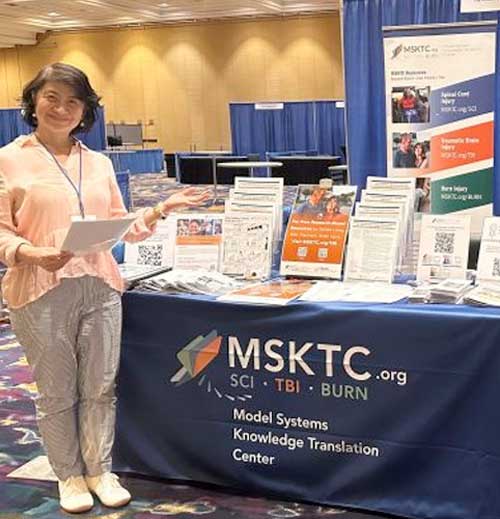
In the vast and often complex landscape of rehabilitation and life after injury, navigating the scientific jargon and understanding the nuances of ongoing care can be a daunting challenge for individuals with disabilities and their families. Enter Dr. Cindy Cai, principle researcher, and the Model Systems Knowledge Translation Center (MSKTC) who are on a mission to disseminate critical medical and research information.
Funded by the National Institute on Disability, Independent Living, and Rehabilitation Research (NIDILRR), the MSKTC plays a vital role in supporting those living with spinal cord injury (SCI), traumatic brain injury (TBI), and burn injuries. While the name might sound technical, Cai’s work is profoundly human-centered. She spearheads efforts to transform complex medical research from “benchside” scientific discovery into “bedside” practical, patient-friendly resources. Along with its numerous medical resource centers, NIDILRR ensures that the wealth of knowledge generated by Model Systems research centers genuinely serves the needs of individuals on their long-term rehabilitation journey.
ABILITY’s Dr. Tom Chappell and Chet Cooper met with Cindy Cai, PhD to delve into the workings of the MSKTC and how they are making essential health information more accessible.
Tom Chappell: How would you describe what it is you’re doing?
Cindy Cai: I’m with the Model Systems Knowledge Translation Center. The name has “model systems” and “knowledge translation,” and the “center” is self-explanatory. Model systems are competitive grants funded by the National Institute on Disability, Independent Living, and Rehabilitation Research within the Department of Health and Human Services. NIDILRR, which is the funding agency, funds three model systems programs, one in spinal cord injury, SCI, another one is in traumatic brain injury, and the third one is burn injury. The Model Systems Knowledge Translation Center is set up to work with the medical researchers from these model systems centers to develop patient-friendly resources, to support their rehabilitation process.
Tom Chappell: So, the term was created by the National Institutes of Health, that subdivision, I guess that’s their term for the programs that they fund?
Cindy Cai: Mm-hmm, model systems.
Tom Chappell: So, is most of what you’re doing the translation work? Are you doing other things?
Cindy Cai: The translation work, the translation aspect is so interesting, it’s a funny story. I grew up in China and was a translator there, and I never thought I would be working for a translation center. (laughs) The translations were different than what I did from English into Chinese and Chinese to English.
Probably you have heard that this knowledge translation is a framework that was first coined by, the Canadian Institute of Health. Don’t quote me on that. (laughs) But the Canadians, our colleagues, our neighbors. It is a dynamic process to make research more relevant for end users. Their goal is to shorten the distance between the bench side, where the scientists develop the intervention, and the bed side, where they implement the new discoveries in clinical practice.
Products & Services

Cindy Cai: So, knowledge translation is a whole very interesting scientific-based process to engage the stakeholders from the beginning to the very end, to make the resources more relevant for the end users. We’re here to support the model system researchers in their knowledge translation, in their research process, to apply the knowledge translation framework or principles in their process and then to develop resources that are more relevant to the stakeholders. So “translation” is a different term than just simply language translation. (laughs)
Tom Chappell: We gathered that, and it kind of makes sense, because, as I’m sure you’ll agree, in science and medicine we actually are mostly speaking another language, and that’s what you’re talking about, translating more technical and scientific language into language that lay people can understand. Is that correct?
Cindy Cai: That’s correct. And we also use their input to develop resources. It’s just like marketing. I actually was trained as a researcher, on the other hand, my father was a businessman, and he always wanted to know the markets. And I didn’t know that until—I didn’t learn how to appreciate them until I went into knowledge translation, that we have to understand what our patients’ needs are. What are some of the topic that they’re very interested in? What kinds of formats do they want to receive information in? And then we do all of these called market research, to use assessment results to identify topics and then packaging the way that would be useful to them. We also test our resources with the end users before we publish them to ensure that they’re really user-friendly.
Tom Chappell: This probably covers a broad spectrum of the end markets, both inpatient, outpatient, anything and everything, right?
Cindy Cai: The National Institute on Disability, Independent Living, and Rehabilitation Research, NIDILRR, is different from NIH or other agencies. They focus more on rehabilitation. As you know, it’s a very long process. It’s chronic illness. They’re being discharged from the hospital is a really long recovery process. So we focus on rehabilitation.
Tom Chappell: Inpatient and outpatient, though, I presume?
Cindy Cai: Uh-huh. And community.
Tom Chappell: So, long after the injuries typically and dealing with more chronic impairment and needs. Give me some specifics as to how it might go for a particular patient with a particular set of needs. Are you coming to them with different types of therapists, with different expertise? Are you providing literature? I assume that’s some of it. And maybe other types of resources? How would it work for a typical spinal cord injury patient?
Cindy Cai: I was being incorrect when I said “patient.” Some of them have been discharged and have been living in a community for a long time, and they’re not patients anymore. So, let me just use the broader term of “individuals living with a spinal cord injury, SCI, TBI, and burn.” We have developed many resources on spinal cord injury, for example, autonomic dysreflexia, driving after a spinal cord injury, adaptive sports, exercise and through exercise enjoy life. We have about 24 topics on various aspects of rehabilitation for people with spinal cord injury. We use our survey results. Those are basically collected from individuals living with spinal cord injury and also their caregivers because we understand the caregivers play a very important role in their rehabilitation process. We’ve developed resources for both the individuals living with the injury and also the caregivers.
Cindy Cai: We identified those topics that are really critical to them, which include psychological, like depression, mental health issues and also some medical issues like wheelchair use, safe transfer. Those are important topics for them, also bowel and bladders, that’s another important topic. Sexuality, we focus also—we want to make sure that people still live well with all these conditions. We identified those topics and worked with medical researchers to develop the contact, and then we packaged them in a way that’s engaging, using plain language when we write those. We also use cartoons, comics, to develop those resources to communicate to people who may be interested in learning—have different learning styles.
Cindy Cai: We also have video format as well. So we developed the content and we also test the content with consumers and then we disseminate, we post everything on our website. If you like, I’d be happy to give you a tour of the website and show you some of the resources that we have.
Tom Chappell: Sure. I was going to ask you to name a few of the more esoteric issues off that list of 24, but why don’t you do it with a tour of the website?
Cindy Cai: OK. Let me just share my screen with you. This is our website, Model Systems Knowledge Translation Center [msktc.org]. We’ve organized our resources your injury area, SCI [spinal cord injury], TBI [traumatic brain injury], Burn, and also just the knowledge translation tool kit, with tools to support scientists to apply knowledge translation process to better help patients and families. And also if you want to learn more about model systems, we have resources about model systems, and also there’s the database that they’ve created, which is the world’s largest database in SCI, TMI, Burn.
Cindy Cai: We’re organized by different types of resources as well, so “Living with SCI” and “Research Opportunities.” We have an ambassador’s program to try to engage people to help us spread the word. And we have factsheets, narrative slide shows, and useful comics. Others are storytelling to communicate health information. We have videos and hot topics, which are topics that people are interested in where we compile the resources, create a suite of resources in each of the topics, online course and quick review are the plain-language summary of model system publications. We have a research database, we have systematic reviews, and the model systems directory with all the resources we have.
Cindy Cai: We have “Adaptive Sports,” “Adjusting to Life,” “Aging & SCI,” “Depression,” Bladder Management,” “Autonomic Dysreflexia,” “Driving,” “Employment,” “Exercise & Fitness,” “Gait Training,” “Bowel Management,” “Pain Management,” “Opioid Use” for people with SCI,” “Personal Care Attendants,” “Pregnancy,” “Respiratory Health,” “Safe Transfer,” “Sexuality,” “Skin Care,” this is one of the popular ones,” “Pressure Sore,” pressure injury,” “Spasticity,” “Surgical & Reconstructive Treatment,” it’s also for people with pressure injury,” “Understanding SCI,” there are two parts in that, “Urinary Tract Infection,” and “Wheelchair Information.”
Products & Services

Cindy Cai: Those are the 24 topics we have. We’re developing more.
Chet Cooper: Where are you getting those outside resources to provide to people.
Cindy Cai: Our main vehicle is the website. We have a vibrant website, with 22,000 links from 3,000 unique websites across the world linked to our website. Our main vehicle is the website. And then we also work with United Spinal Association to disseminate their networks. Many of the resources are on the United Spinal Association’s website. We also work with the local chapter systems as well.
Chet Cooper: If I was a person with SCI who was looking for employment and wanted to find a resource, where would I go on your website right now?
Cindy Cai: Oh, how to find a job? That’s such a good question. It’s more of a factsheet about some of the things people need to know after a spinal cord injury about engaging to get back to work. “How the law can protect you,” and how you can get started. I think our resources focus more on the resources that are available to people and they can use.
Cindy Cai: We also provide some tips for people to use as well. I think that you’re probably asking the questions of how people can do it, right?
Chet Cooper: No, resources to find a job. I’m seeing a lot of language there that talks about like you said, law, and other resources, but it’s like resource to resource, but where does the rubber hit the road where I could actually find a job?
Cindy Cai: That’s just such a good point. That should be included when we update this factsheet. This one was developed before we had the Center.
Chet Cooper: I see you have a link to AskJAN.org. That does have resources for people, but it’s taking them to another place to find another resource. Ask Jan is a great resource, of course
Cindy Cai: Uh-huh. I think I see what you mean, more resources where they don’t have to go to another place for it. That’s a good point. Thank you.
Chet Cooper: You do this with TBI and Burn as well?
Cindy Cai: Mm-hmm. It’s the same organization for people with TBI, I think we have about 27 topics. I really love the one about “Voting Tips.” We just developed that last year. It would be applicable to a lot of people with disabilities. We also have Spanish resources too. And I understand there are a lot of people using mobile phones, so we have a web page for people that’s mobile-responsive, and we also have PDFs. We talk about “Why vote?,” “What’s Your Responsibility?,” “What’s Your Right?,” “How do I prepare to vote?,” “Where to Register?,” lots of practical things.
Tom Chappell: Is much of that very specific to the impaired, but is it more what you might tell anybody about voting?
Cindy Cai: I think it’s taking brain injury into consideration because a lot of times they need a ride to get to their place. If they can’t go, they need to know. And also being informed of certain topics and where to get help.
Chet Cooper: It’s not just accessibility issues; you also are talking specifically to TBI?
Cindy Cai: Mm-hmm, yes.
Tom Chappell: Cognitive dysfunction as well?
Cindy Cai: Mm-hmm. And also, with burn as well. We have about 20 topics on burn injury. We focus more on the moderate to severe burn injury, like the severity of the brain injury. Exercise, how you can get back to exercising, healthy eating. We developed a whole series, just recently published, on sexuality and intimacy after a burn injury. It’s a factsheet with a suite of videos. We won five Telly awards for our videos.
Chet Cooper: You produced the videos?
Cindy Cai: We do. We work with local and state TV and radio stations on videos. We have one video on couple’s relationships after TBI that won a Telly award as well. We focus on hot topics. We have a main story typically, and then we have little video clips of the story. We engage real people with brain injury, consumers, their families, and we engage with clinicians as well in short video clips to go with them. The sexuality after burn injury is the most recent one. We have employment after burn injury, exercise, and this is the sexuality and intimacy after a burn injury, which won the Telly award.
Tom Chappell: You just mentioned systematic reviews. What do you mean by “systematic reviews”?
Cindy Cai: They are scientific. —It’s a systematic process to conduct literature reviews. We have worked with the model system researchers to develop systemic reviews. Sometimes we do scoping reviews, depending on the topic. And then to focus on more TBI, SCI, and Burn injury. Those are systematic reviews.
We publish in peer-reviewed journals and then also we use the results from the systematic reviews to develop consumer products. For example, the sexuality and intimacy after burn injury video is based on a systematic review on the topic by the Burn model system researchers.
Chet Cooper: You’re creating consumer products that you’re marketing? How does that work?
Cindy Cai: All of these resources are consumer products. To clarify, we call our individuals living with all the injuries and their family members the consumers.
Tom Chappell: You’re calling them “products,” but you mean a production of your work, really?
Cindy Cai: Mm-hmm, that’s correct.
Chet Cooper: On the knowledge translation, how does the input of the knowledge come to you? How do you vet that knowledge?
Cindy Cai: You’re asking about our knowledge translation process, not necessarily the knowledge translation tool kit?
Products & Services
Chet Cooper: Let’s say I created a product that can help SCI. How do you know that I’ve created that product? How do you vet that product to disseminate it into your model system to let people know that it exists?
Cindy Cai: That’s a good question. It’s basically the process. We first work with the model system researchers to conduct needs assessment, to see what some of the topics people who are living with SCI, TBI, and Burn are really interested in. Then, we work with medical experts to develop content into fact sheet format, typically. The factsheet is basically the bedrock product we have. Then, we translate the factsheet into other information, such as comics and narrative slideshows. We use the fact sheets in developing the information.
For example, one factsheet we’ve worked on is the loss of smell and taste after TBI. Lots of doctors out there try to save their patients’ lives and work very hard. After they get discharged, the loss of taste and smell may not be their top priority when they’re trying to save patients’ lives. Later on, during rehabilitation, it’s truly a very important quality of life indicator.
Based on consumer input and clinician input, we know this is really important, so we developed a factsheet on the loss of taste and smell after TBI.
The content is based on research and expert consensus because there’s not a whole lot of research to be found. And still, we need to provide some guidance for people living with the injury. So, we use the consensus from the model system researchers, their project directors, medical doctors, and medical researchers to develop the content, and then we test it with consumers. We test it with the end users, that would be people living with SCI, TBI, and Burn, and their families, and we ask whether the information is presented in a way that is easy for them to understand and whether the information is presented in a way that is appropriate, sensitive, and empowering.
Cindy Cai: Our goal here is to develop a resource to empower people living with these injuries and their families because they have to know how to make medical decisions. They have to be informed consumers. You have to make them understand what this condition is, what it means and what typically presents as this condition. Then we talk about why this happens. We present tips for them to try and we present tips and strategies for their caregivers to try. Finally, we provide additional resources for them to try.
During the interviews, we don’t just ask them, “What are some topics you’re interested in?” We also ask them, “How would you like to receive the information? In what kind of format would you like to receive the information?” That is also part of the marketing research as well. We have to know the format they want to receive the information in and what types of information. Lots of people are still interested in the print resources because, based on our needs survey results, I think still close to 70% of people still want print resources. About 40% want video resources and about 20% want to have podcasts and other resources.
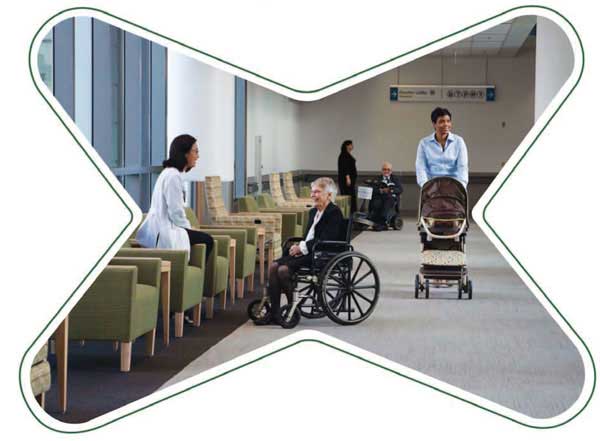
Based on their needs, we package these resources for them. Lots of people say, “Oh, we wanted to hear from our doctors.” So, we work with rehab hospitals to include our resources in their discharge packages. There are displays in patient waiting rooms. We also work with—lots of times they receive just from word of mouth—their support groups, so we recruited people to serve as ambassadors for us. We work with associations that have local chapters to share our resources. I spoke with the United Spinal Association’s chapter leaders about resources. I go to conferences to show our resources. I go to local conferences as well, like the chapter conferences. Lots of people can’t afford to go to national conferences. So, we bring our resources to them.
We understand that a lot of people from low-income families don’t have a high-powered Internet connection. We make sure our resources on the website are not only accessible but also mobile-responsive. People are using smartphones to receive health information. So all of these factsheets, the PDFs are for them to print it out, but we’ve created a web page for each factsheet, for each product, so it’s all mobile-responsive. That’s how we disseminate. We also have the Spanish portion of the website as well. People from Spanish-speaking communities can have access.
Chet Cooper: We got a press release from a company called LoopPlus.com. It’s a new company with a system set up for wheelchair users to monitor their pressure. For example, if you’re sitting too long in a wheelchair, it will give you this data. My question is, how does that company get into your system so that people who need something like that can find it? It’s definitely of value. Is that outside of your wheelhouse?
Cindy Cai: We’re funded by the National Institute on Disability, Independent Living, and Rehabilitation Research (NIDLRR). It’s the federal government. We are here to basically promote the work, working with model systems, and to promote the work of model systems. We don’t promote the work of commercial products. We typically do not promote or endorse any products.
Chet Cooper: How does that work? Even though a consumer product is helpful to the consumer becauseit’s a business, are you not able to include it?
Cindy Cai: That’s such a good question! I wish we could be a hub for all of the resources on SCI, TBI, and Burn. We also have a set of scope of work here as well. I think that our goal here is to develop resources that can help people. We provide general strategies to help people.
We have limited budgets, and we have also a limited scope of work that we focus on.
Chet Cooper: So, you’re trying your best while still in the silo?
Cindy Cai: I think we’re trying our very best within the scope of work that is set for us by the funding agency.
Chet Cooper: Your work seems to be more with the different centers, communicating and bringing data from those different centers into a readable format for your consumers?
Cindy Cai: I think that’s an accurate description. I also want to clarify that what we do here is not driven by the work of model systems so far. I think it’s a two-way communication. We communicate with our consumers, and we bring the needs of consumers to our model systems, and then the model systems researchers and resources.
And also, if they want to develop resources, we’ll make sure there’s a need, that it’s not just a scientifically good idea from scientists’ perspective, that there’s a real need of consumers.
Tom Chappell: Does a lot of the work fall under the purview of social science research? You go out and you poll a population of people? Do you have a population of consumers you have access to through these centers and you’re collecting and some of that’s sort of a social science sort of approach?
Cindy Cai: The work we do here is social science, a part of social science, that’s correct. The model system researchers do medical research and psychological research as well.
Tom Chappell: Are there existing standing databases into which hordes of various types of information are fed and can then be harvested or examined later for compiling and maybe even publishing?
Cindy Cai: What kind of data are you referring to?
Tom Chappell: I would think a lot of it would be what these consumers are demanding, what they’re getting, how it’s helping them or not? Is anything like that going on?
Cindy Cai: Oh, yes, absolutely. We do ongoing consumer needs surveys and assessments. We constantly have this on our website, and we just started a new cycle where we’re revisiting our survey instruments. We’re also working with our partners to develop and disseminate our surveys. We periodically analyze the data to use the information to guide our work.

Since you’ve brought up data, there’s another interesting fact about the model systems centers. There are 14 in the SCI program and 16 in TBI and 4 in Burn, who also collect data from patients with SCI, TBI, and Burn. They’ve created the world largest comprehensive database in these three injury areas.
Tom Chappell: Are these centers that you’re calling them typically based in a brick-and-mortar facility? Can they be more diffuse than that?
Cindy Cai: They are medical schools and medical facilities. The University of Alabama Medical School has a TBI one, and Craig Hospital: Neurorehabilitation Center Colorado. Indiana, Massachusetts, University of Michigan. In Minnesota, we have the Mayo Clinic.
JFK University Medical Center in New Jersey, TBI model system, at Taffler [?]. In New York we have Mount Sinai, in Ohio State University, Baylor in Texas. Virginia Commonwealth University has a TBI model system as well, and the University of Washington Medical School. Those are hospitals and medical schools.
Tom Chappell: So, these centers are compilations of multi-modality involvement at each of those institutions? For TBI, neurosurgery would be involved, neurology would be involved, psychology would be involved, rehabilitational medicine, etc.?
Cindy Cai: That’s correct. The model system was created in the 1970s. Instead of a fragmented rehabilitation, the model system centers are designed to provide comprehensive rehabilitation from acute, post-acute, into community living through a multidisciplinary team.
Tom Chappell: So, it is still for the consumer, we’re calling them, institution-based and it sounds to a great extent, although at the beginning we kind of got away from that a little bit, it’s not medical care per se maybe, but it tends to be medically-based and accessible through physicians and nurses and therapists, am I correct?
Cindy Cai: They do provide inpatient rehabilitation. Meanwhile, they provide inpatient rehabilitation model system centers, and they also conduct research.
Tom Chappell: And outpatient, of course, too?
Cindy Cai: Mm-hmm. Outpatient as well.
Tom Chappell: I guess it’s sort of a two-way street. Many of your clients, your consumers, get to you via having been cared for in one of these centers, but do they get to you in other ways?
Do you have outreach as well beyond just having the website available?
Cindy Cai: That’s correct. The model system patients at model systems do reach out to us. We’ve been receiving a lot of inquiries through our website each day. They leave comments for us, and we respond to them with our resources. They want to be part of our work; we talk to them to see how they may engage with us and how we can help them.
Tom Chappell: It sounds like someone at each of these institutions, for example, has decided they want to apply for one of these grants? Is that how it works? It comes from within the institution?
Cindy Cai: That’s correct.
Tom Chappell: More than likely, in most instances, they would be from the department of rehabilitative medicine? It’s through medical center research-based applications, just like one of the labs might apply for NIH funding?
Cindy Cai: That’s totally true as you described it. It’s a great description of how the grant works. You submit a grant, it’s a competitive process, every five years. It’s a five-year grant, typically.
Tom Chappell: Are you part of more an umbrella of organizations that oversees this and provides resources to each of the centers? Is that what you do mostly?
Cindy Cai: I work for the American Institutes for Research. It is a nonprofit, nonpartisan research organization in the Washington DC area. I want to say nonpartisan and nonprofit becausewe’re in the DC area. (laughs)
This is a grant that I applied for with my team of researchers from the principal investigator on this grant of Model Systems Knowledge Translation Center. It is a grant that the funding agencies set up to work with model systems, to reach out to the stakeholders to support model systems in their work and then to develop resources to help the end users, people with injuries.