







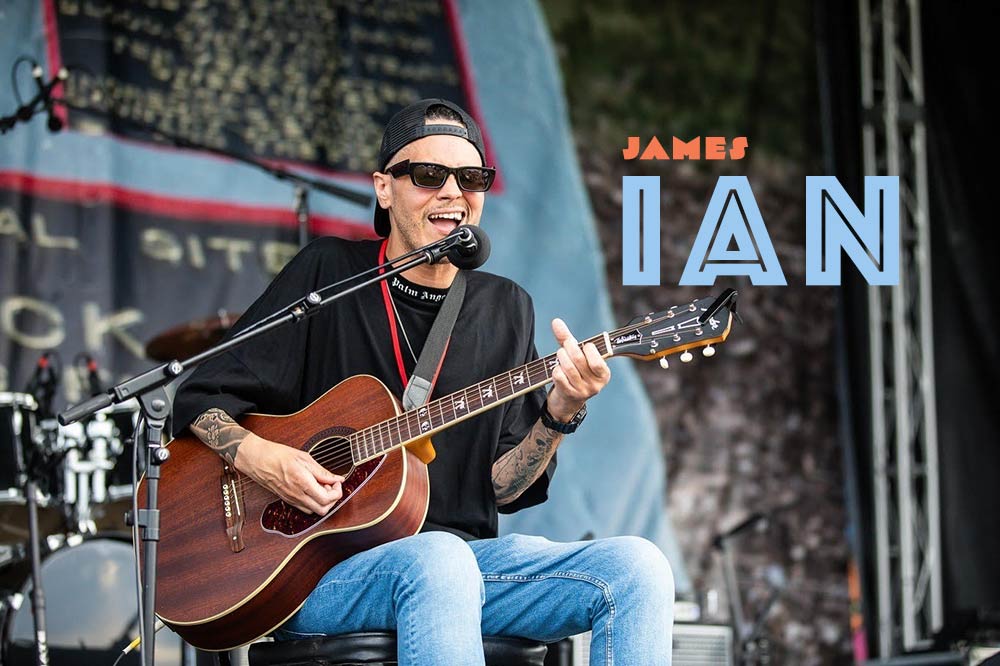
Throughout history, music has served as a means of cultural expression, storytelling and an avenue for emotional expression and healing. Music can also serve as a platform for advocacy and awareness for marginalized communities. James Ian had this in mind when he co-wrote the award winning song “SPACES”, a melodic testament to disability awareness and inclusion.
ABILITY Magazine’s Jennifer Woodall met with James Ian in a virtual interview to discuss “SPACES”, performing at the White House, what disability pride means to him and how we can all advocate for disability awareness and inclusion.
Jennifer Woodall: Hello James, can you give us a little bit of background of yourself and how you became involved in the performing arts?
Ian: Sure. So, I really loved music from a very, very young age and my parents noticed that. My dad’s a musician as well. I love to sing, really, then they were like, “Well, would you want to learn how to play piano?” I did. That was the start of my journey. I took piano lessons, and then I also really fell in love with television, and I wanted to be an actor. So then a few years later, my mom was like, “Hey, would you want to take acting classes and things of that nature?” So I found an agent, and I was taking acting classes, and then I landed a role on a TV show and then several commercials. The artistic side of me was always there, and my parents, thankfully, really, really nurtured that. As far back as I can remember, I always loved music, acting, in any way of creative expression.
Products & Services
Woodall: You got to collaborate on an award-winning song called “SPACES”. Can you give me a rundown of what the song is about and the message that it’s conveying?
Ian: Often, because of ableism in society, we’re not really given the chance to show who we are. People don’t really consider us. People often will look away from us if they see someone in a wheelchair. We get denied access in many, many ways, and so the song is really about showing the beauty within the SMA (spinal muscular atrophy) community and the larger disability community. Also, when I was younger, I did not see any representation of disability in media growing up, and if I did, it was really, really negative, so the song is also not only to highlight and show the beauty within the community and our talents, but that we have these very fulfilling lives, and that we’re doing the things we want. We love people. We have people who love us. It’s also like a look back in a love letter to our younger selves saying that despite ableism and all the negativity that we encounter regarding access and things of that nature, we will go on to lead the lives that we want. We will go on to achieve our dreams because one thing in the disability community, the SMA community, we’re very resilient and we persevere, and that’s not really a choice that we have. We pretty much have to do that because of ableism. I think “SPACES” is definitely sending that message.
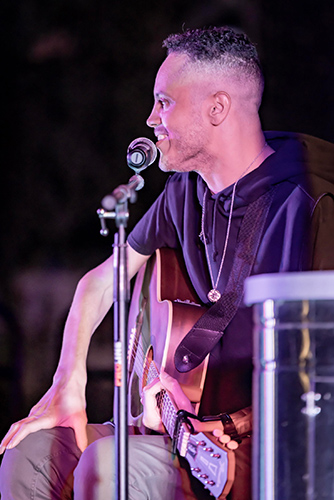
Woodall: Great. So, you were given the opportunity to perform “SPACES” at the White House as part of an event to celebrate Disability Pride Month. Tell me about that experience.
Ian: That was one of the most incredible experiences I’ve been able to enjoy. Very grateful for that. I grew up in the D.C. area. I grew up in Maryland, but I went to college and law school at Georgetown. Georgetown is right in the heart of D.C. and so that is pretty much the political epicenter of the world. When I was in school and doing all those things, that was not lost on me–that I was in this very remarkable city, in this political capital. We would see motorcades drive by with the President or you would see Congress people, senators. We had professors on my campus that were very prominent political figures.
I was always in all of that, and that felt like celebrity to me as well, so being able to go home and perform at the White House, which is the most powerful–arguably–political institution in the United States, to have that upbringing, to have grown up in the backdrop of that, it just felt very, very surreal. It felt like a huge, huge honor to do that, because I have considered a political career before. I still sometimes consider that. Just to do it at that venue, I was pretty much at a loss for words, but it was great. The performance, I thought, went well, and it was just–I think in the moment as I was singing–I definitely had those thoughts of going through my head of like, “This is a big deal.” It was just beautiful. It was so, so meaningful due to my upbringing and my ambitions and my law school. It was phenomenal.
Woodall: What was it like to prepare for that performance? Was it a little bit different than your regular stage performance preparations?
Ian: Oh, that’s a great question. So, in terms of preparation, it wasn’t any different. I pretty much treat every gig, every show as it being very, very important. I want to perform well and give the audience a great show no matter what the show is. But because it was the White House, like I said, I have all these very strong, positive feelings about it, and the lead up to playing at the White House, all my friends that are in the disabled community and very prominent disabled figures, they were so excited for me, and they were like, “I can’t believe this is happening. This is so, so fantastic.” I didn’t want to let people down. I definitely put a level of importance on it. My thought process was just like–I added a level of seriousness to it and being like, “Don’t mess up.” essentially. I prepped the same way, but I just did not want to mess up or let anyone down because I felt like the community also knew the importance of this, and I wanted to represent the community well. And then you’re at the White House, and who wants to make a mistake at the White House?
Woodall: So this opportunity was during Disability Pride Month, and when we talk about disability pride in general, it can be a polarizing topic for a lot of people. I’d love to hear what disability pride means to you.
Products & Services

Ian: Yes, and thank you for bringing that up, Jennifer. People have mixed feelings about it, and people land on either end of the spectrum or somewhere in between. But disability–I don’t want to trivialize it because everyone’s experience is different. I have my days where if I’m feeling really run down or really fatigued or exhausted, I get very, very frustrated. I get angry, and it’s not a pleasant feeling. I am like, “Why does my body not do what I tell it to do?” It can be very, very hard.
On the other side for me, and a lot of folks–disabled people too, the barriers that we face, we don’t attribute that to actually being whatever our medical diagnosis is with a disability. We attribute it to inaccessibility within society. That’s why that creates a lot of difficulty, too. The frustration can bubble up from that. So, for me, I am personally proud to be a part of the SMA community. I’m personally proud to be a part of the disabled community because I have fantastic, wonderful folks in that community who are just good people, number one, and then many of them are doing really, really great things to create a more accessible world and to highlight disability visibility.
That’s my mission as well. So, for Disability Pride Month, for me, it’s a time I do feel very proud, and I almost feel like it’s amplified disability visibility, because there is a month that’s dedicated to it. I feel like we are getting more non-disabled eyes on folks with disabilities. Organizations, corporations, what have you, they’re taking notice a little bit more in July. So, I want to put out a lot of content and be very active because I feel like we can do greater good because it’s like our efforts are maximized because there is this focus on the disability community. That’s what it means to me. Like I said, no one asks for their medical conditions or whatever it is, but if there’s a community that you have to be thrown into, this community is great and beautiful. I’m happy to be doing this work alongside some really incredible people that are disabled.
Woodall: What do you think that members of the disability community can do, and really just anybody in general, to increase disability inclusion within the entertainment industry?
Ian: That’s a great question, and thank you for that. As a disabled person, I think it’s a little tricky in some ways because I’m an actor, a musician, and so my disabled peers who are actors and things, we always talk about when we do face barriers on sets or in casting or whatever it might be, there is a fear of speaking up and advocating for yourself because then you don’t want to get blacklisted. You don’t want the casting folks or the production or whoever it is to say, “Oh, this person is problematic because they’re asking for a ramp into the trailer.” or “they’re asking for a ramp on set” or “they need ASL” or whatever it might be, and those are basic human rights, we should be advocating for that, but like I said, people are afraid because it is so hard to book roles because the stats are horrible.
The percentage of people who are actually disabled and actually get cast in a disabled role, it’s like 1% to 3%, so I understand that. But I would say if you don’t have that fear and you are comfortable doing that, I would say speak up for yourself and advocate and really fight for your rights, because I think over time, going forward, that will make it easier for other disabled people to feel empowered, to advocate for themselves.
I think it will also help to create standards with disabled talent and say, “Here’s what we need. We’ve worked with disabled actors before. We need these sorts of things.” So I think that’s one thing that disabled people can do in that space. I think also, too, disabled people can just follow their dreams and really be who they are and really go out for the things that they want, because I think we are told not to do that, and we are told that we can’t. Our value is not shown to us in the media. I think if you want to be an actor, you want to be a musician, you want to be a model, really go out there and really give it your best effort to do that. Once more disabled people are in these roles, we are going to raise the profile of disability visibility. We are going to do it accurately. We are going to do it authentically.
The more people that do that, it sets the standard and it sets the tone. Then we will get to a point where one day it’s no longer acceptable to hire a person that’s not disabled and play in a disabled role. I think just being yourself, being authentic, following your dreams, and really speaking up and just being true to who you are, that’s how the visibility is raised because I’m not going about my day in a fake way. I do everything in my life as the real me as I would do it authentically. That’s what people want, that is the representation, that is the visibility, and we just exist as we are.
Products & Services


For the side of allies and non-disabled folks, I think I always talk about people opening up the doors for putting disabled people in positions of power–in productions, in media, whatever it is–so that they can make decisions based on their lives and experiences and really include disability in those ways. If you have disabled decision makers, I think that’s a huge positive thing to make that to happen. I think allies and non-disabled people, too, can just also really do more to be proactive in learning about the disability community, so then they start to think about “How can we represent disabled people? What roles can we do? How can we include disabled people in storytelling from the outset and really build that in?”
So, they can start being proactive in terms of not only the representation and putting us in positions to tell our stories and be highlighted, but then also they can start to think about what kinds of things will help with access on this production or this performance when they’re doing this musical show or whatever, and really start thinking about those types of things like having a disabled singer perform at the Super Bowl or whatever. It needs to be very, very proactive and forward-thinking, and we’re not there. A lot of this stuff is a reaction to a reaction to disability. “Oh, they need this and that.” and it’s like we need to get to that proactive space, then once that happens, more disabled voices can also jump in and steer the ship and then really, really advance things.
Woodall: On the subject of advice, if there is someone that identifies as having a disability that’s wanting to break into the entertainment industry and may not know where to start, maybe feeling apprehensive about it, do you have any advice for someone who’s wanting to get started?
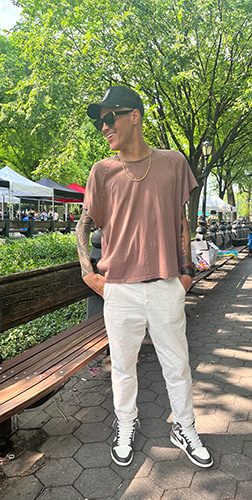
Ian: Yeah, to be honest, go to the disabled community. That has been a huge, huge benefit. As time has gone on, I have formed relationships with more disabled creators and artists here in LA and beyond. That community is really, really cool. I have had opportunities pop up just from my disabled peers doing this, but there’s a great network here, and luckily this year, I’ve been really active in that space because there have been a lot of events surrounding some of the work that I’ve done and whatnot. I’m encountering these people over and over again and in building the relationships, you hear about more opportunities. It’s just really cool.
The community does really lift each other up, and they’ll think of you because there are not only disabled actors, we have disabled writers, we have directors, we have disabled producers–and so my friends are like, “Oh, yeah, I’m doing this project. I’m thinking of you for this.” or “Hey, I know someone.” so I would start really there, form friendships with disabled people that are doing what you want to do. Then I would also say, too, to really, really take it seriously and train, take your classes on whatever you’re doing. I take classes in everything that I do weekly because I want to be the best that I can.
It’s a really tough industry. It’s a really tough industry without being disabled. It’s really, really, really, really, really tough being disabled. I think you need all the tools that you can, and then I would also say, too, try to find managers and agents that will represent you. It doesn’t have to be an agency that specializes in disabled talent, there are those out there, but I think that really also accelerates things for you and it gets you in doors that otherwise you’d not be able to enter. Those are the really three big things.
I would say start with the community first and then create your own stuff, create your own content, find other folks that you can do work with cheaply or for zero budget, and collaborate with them because it really now is a content creator’s market. I hear everyone talk about that. All the studio folks are like, “We’re finding people making their own stuff on YouTube,” so you really have to do that. I would say those are the big things. It’s a constantly changing landscape. It’s changed a lot since I’ve entered it. I mean, I entered it as a kid, but even since adulthood, it’s changed a ton in the last five years. You really do need that community support to help you navigate.
Woodall: So, this question I like to ask to the musicians that I interview, who is your dream collaboration? If you could collaborate with any musician, band, group, whatever, who’s your dream to do that?
Ian: That’s such a good one. I’m going to say I’m going to say Beyoncé. I think that would be a super cool duet. That’d be awesome.
Products & Services


Woodall: Yeah, for sure. I think Beyoncé is amazing.
Ian: I really loved her Cowboy Carter album. She does pretty much whatever genre she jumps into. It’s really good. I love that album. She is very versatile. She’s a powerhouse. She’s got to be my big collab right now.
Woodall: Is there anything else that you would like to talk about that we haven’t heard?
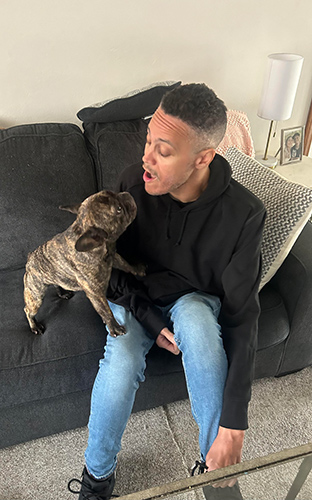
Ian: Just that SMA Awareness Month is in August. SMA Awareness Month comes right after Disability Pride Month, and so I’m very proud, as I mentioned, to have that. I think SMA Awareness Month is really, really cool because it’s all a focused effort to really talk about SMA and highlight people living with it. It’s a really fun, exciting time personally, and we’re putting out a lot of content and doing lots of social media posts and all those things. I just wanted to highlight that. It was really cool to do the White House performance leading into SMA Awareness Month.
I did a TV interview in DC the day after my White House performance, which was on July 30th, 2024. I got to talk about SMA Awareness Month, so it’s like a double whammy. We get Disability Pride in July and SMA Awareness Month in August, then we have National Disability Employment Awareness Month in October, so I feel like a lot of disabled creatives get really busy between those few months from July to October. I would love to see that busyness and those opportunities expand throughout the full year. I think I just want to make the comment that I love these months exist because they do call attention to our SMA community and our disability community, but I would like to see that go beyond and see disability celebrated all throughout the year and those opportunities become more and more with time.
I just want to say thanks to Genentech for sponsoring these really cool projects–“SPACES”, Most Likely Not To–I would not have performed at the White House if it was not for Genentech and “SPACES”. I just want to call that out and say thank you because I feel like they really try to help raise the profile and visibility of folks living with SMA, which there’s not a lot of organizations are doing that. It’s a really, really beautiful thing, and it’s very much appreciated.