














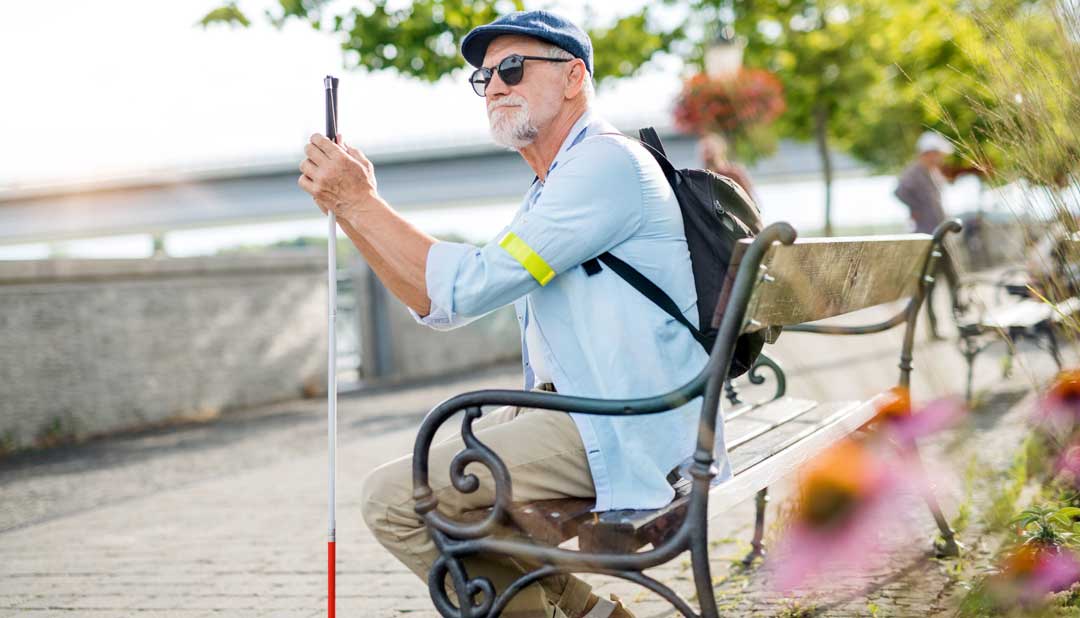
Independent navigation is an ability so second-nature that most don’t recognize it as a privilege. The general population doesn’t think twice throughout the day about leaving their home without assistance, finding their way to the grocery store, or taking a walk alone in a public park. A nonprofit founded in 2019, called Hearsee Mobility, has observed that nearly a third of the blind population would prefer to stay home rather than face the frustration of maneuvering through an inaccessible environment. The organization’s mission is centered on alleviating what its founders perceived as an epidemic of isolation within the blind community.
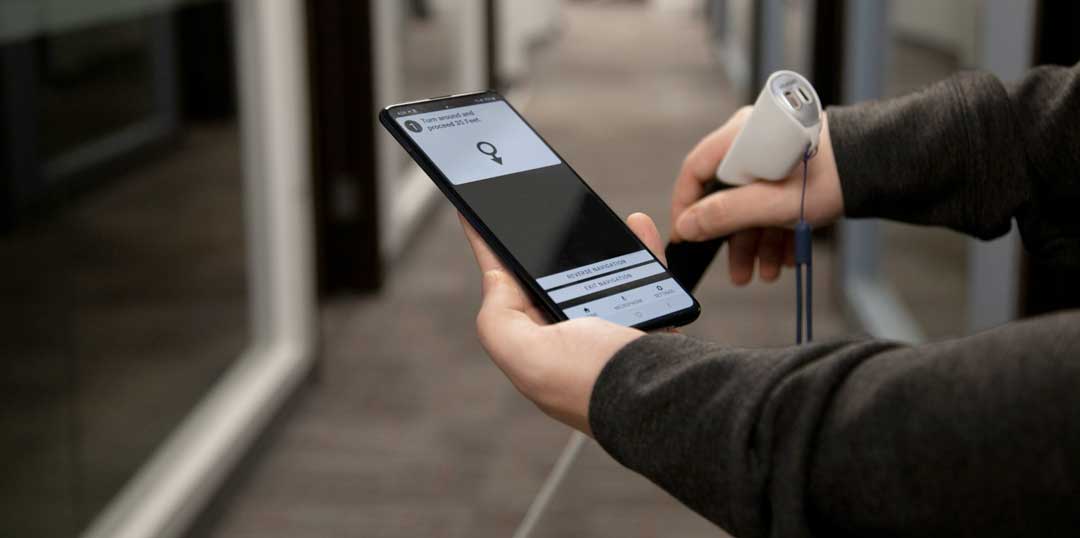
Global positioning systems have been around for years, but companies like Hearsee have taken the concept to a more versatile level by incorporating helpful audio descriptions and cues into their technology. Audio descriptor apps like Hearsee’s allow people with blindness and low vision to independently traverse public spaces with safety and precision. While the innovative tech is a huge step toward equity, financial barriers to entry are a concern.
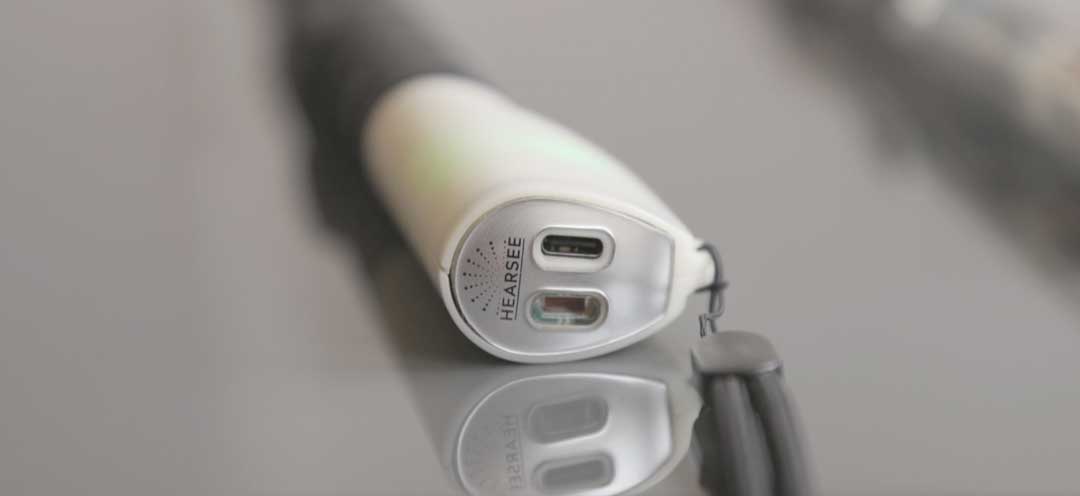
Hearsee has prioritized the inclusion of the traditional walking cane into its navigation system to preserve the comfortability of familiar tools and make its system as tailored to people with blindness as possible. Each indoor or outdoor location registered with the organization is also thoroughly tested by a local person with blindness or low vision who would potentially be navigating the space themself.
ABILITY Magazine’s Isabella Wisinger met with Susannah O’Brien, Director of Development at Hearsee Mobility, in a virtual interview to learn more about the organization’s indoor-outdoor navigation system and discuss the implications of Hearsee’s model on the next generation of people with blindness.

Wisinger: When I was reading the materials you sent over, the understanding I came to is that Hearsee is developing an app that helps people who have blindness or low vision to navigate indoor spaces step by step. This is happening through the use of an app and a smart walking cane. Is that right?
O’Brien: Yes. There’s a third component, too. But those are two of the three.
Wisinger: How does the cane work with the app?
O’Brien: So that’s the third piece. It’s the bridge between the two. A building that wants to participate, or even an outdoor space or park, we upload a map of that space. It can be a Google map, a top-down visual, blueprints of a building, anything like that. We host that map on an off-site website. And then the person who is controlling that site will go into the digital map of the space, and they’ll drop in little nodes to say, “This is conference room B. This is Jenny Smith’s office. This is the painting of a sunset.” They’ll go into their digital map to type in all the details of where things are located. That all gets uploaded and stored to the cloud online. That’s when it becomes available on the app. Then a blind person will be able to know about all the buildings that have been added, all of the buildings that have that map downloaded.
Now, the other piece that bridges the two, where the smart cane comes in, is this piece right here. I happen to have one with me. This is an RFID sticker. There’s this little computer chip behind the number in the middle. You can see it popping in in the middle there. This little computer chip houses the descriptions from the website. So someone puts in their blueprint, they say, “This is Jenny Smith’s office”, and then they put this flat sticker on Jenny Smith’s office door. As the walking cane passes the sticker, it’s going to input this information from the internet. The app will play the audio, “Jenny Smith’s office. Jenny Smith is the head of 123, and specializes in XYZ.” It’s the app and the walking cane, and then this RFID piece, working in tandem.
Wisinger: And it’s the coordination of the people who are in the space that’s being certified to correctly put those chips up in the right spot?
O’Brien: It’s customizable to the building, which means that if Jenny Smith ever leaves that office and it turns into Bob Jones’ office, then whoever runs that building just logs into the website and updates the information. Or if the stairs are out of order, or the elevator stops working, or they add a wing to the hospital, then they have control to edit anything that changes in the building. We have this whole system organized to teach the building owner how to type all this in on their own. It can be done in a day. It’s really simple. All they’re responsible for is uploading the map about their building, and then dropping in these pins to specify descriptions of different locations in the space. Then they just put a sticker in that location. The computer chip is activated by an antenna in the walking cane. It doesn’t have a power source. It doesn’t have a battery. It’s not electric.
Wisinger: So the walking cane has an antenna inside that wakes up the computer chip when it approaches. I’m loving that this can be updated in real-time, depending on changes to the location, which is so important because places will have new features or undergo renovation like you said. As far as the cane goes, how does that work? Do people own these? Do people who sign up for the app receive a cane in the mail and then use it at different locations? Or is it that participating locations have these canes available?
O’Brien: So for now, it’s the second one. The bigger vision is that enough buildings have the system in place that it would make sense for individual people to own their own walking cane. We’ve begun conversations with the ADA and other government agencies to see if the cost of a cane could be covered by insurance or some flexible spending account. But at this point, it’s not necessary for everybody to have their own, because not enough places have this installed. So the current plan is that buildings that want to participate will purchase the system. They’ll receive all the materials to make that happen, including a set number of canes. We’ll do an analysis of the area to say, “This is how many people might reasonably be in your area at one time.” So if it’s five, you’re going to have five canes. If it’s 12, you’re going to have 12 canes. And then they can distribute them at their will.
What we suggest is similar to a museum checkout service. Have you been to a museum where you have to put your backpack behind a counter? They’ll give you a ticket or a coat check? We propose something like that. The front desk has a couple of canes, and somebody walks in and says, I want to check out one of your canes, and they do an exchange, and then the blind person can use it in that area.
Wisinger: That seems like a good way to go about it for the time being. I love the bigger vision- hopefully this technology permeates more and more spaces, and it becomes feasible for people to own a cane because the system becomes so widespread that they can use it at a multitude of places that are a part of their daily life. So, it’s a perpetually ongoing project that’s expanding as new buildings and the locations are added into the app.
Products & Services


O’Brien: Any business that wants to install a system, we have a training course with them on how to install their map, and how to place the stickers. There will be a training process on our end to make sure they understand all of that and do everything correctly. And then once they feel like their map is complete, part of the cost of installing the system will include a certification from a member of the blind community. It’s creating jobs at the same time. We already have a waiting list of blind participants who want to be certifiers. What we’ll do is contact somebody in that region and have them walk exhaustive paths in that building to make sure everything was set up correctly. Once they have a good report, it’ll be released to the app.
Wisinger: You answered my next question, too, with that. I was going to ask, who are the community members that are approving these spaces and what’s their process? People who would be going to those places anyway and utilizing the tech, it sounds like.
O’Brien: We’re all about supporting the blind, and this is just one way of doing that. 54% of the blind population is unemployed, and more than that are living below the poverty line. And it’s because life is so frustrating that they’re either not very able to take advantage of education and skills training opportunities, or they can’t find employers who are willing to take a chance. One of our initiatives is to get them feeling more comfortable and feeling more welcome in their general communities for a higher quality of life, but to also change public perception and try and create jobs if we can. It’s part of that mentality of once you understand a problem, you’re responsible for working on a solution. And this goes way beyond people deserving the right to explore their communities. This goes back to being able to receive an education, being well qualified for jobs, and then enjoying your communities. If we can incorporate some employment through all of this, that’s one of our big goals.
Wisinger: I love that you’re incorporating the employment aspect. And the stat is what? It’s 40 % of people who are blind or have low vision are living at or below the poverty line? And then Hearsee’s data says 30% rarely leave their home, which is the driving statistic behind this your mission, which is that people deserve to enjoy their lives and explore.
O’Brien: This all started between 2018 and 2019. That’s when the idea came up, but it was an idea from a sighted person. It was an independent philanthropist who was traveling to China, and he was going by train from city to city in China. He went to this multi-story train center, and all of the directions were in Mandarin, and all the people speak Mandarin. He said he felt figuratively blind. He had just no idea what was going on. He comes home from this trip and says, “I want to serve the blind population with my money.” And so he spent two years hiring a team and talking directly to the blind community to say, “This is our idea, but we’re sighted. What do you want? What will work for you?” A lot of people say they want to help, and then they don’t follow through. The blind people they worked with said, “This is what we want, and this is how we want it to sound, and this is what we want it to do, and this is how it should feel.”
And they [the blind community] really designed the whole thing. I spent two months during the COVID phase living in a foreign country where I wasn’t allowed to leave my house. I was within an apartment for 60 days. And I know how I suffered in that experience, and how my family was affected. To understand how many hundreds of thousands of blind people have felt like that, their whole lives, is really upsetting.
Wisinger: Yeah, that’s tough on so many levels, psychologically and socially. I know that social support is one of the most integral, foundational things that people with disabilities need to have a better quality of life. And not being able to leave your house independently is a huge barrier to that. When I was reading about this, I was amazed by the thoughtfulness that’s been put into this idea. And I like to hear that the man who founded this company, brought it directly to the community and asked them, what do you need? How will it work for you? Because I think so many people are very well intentioned. But if you don’t include the people from the communities that you want to serve, that’s when things tend to fail or go wrong.
O’Brien: It’s really important to us that we are working directly with the blind community instead of trying to tell somebody what to do.
Let me add a little bit of a complication. I’m not sure if this came through in the materials, that we are operating as a nonprofit. It’s because through that initial research and realizing how many are living at or below the poverty line, there’s a big hesitancy in the blind community to accept new technology because it’s expensive, it may not work properly, you’ve put in all this money for something that you can’t always rely on. If it breaks, you have to replace it. It was paramount that we developed this in a way that was not a financial burden on the blind population themselves. That’s why we were organized as a nonprofit and have set up all of these procedures so that the blind will not have the direct burden of having to purchase the cane, of having to subscribe to any service, because there are a few out there that are subscription-based off how many minutes a month you can call up and ask somebody to describe your surroundings.
There are a few services like that, but they’re cost prohibitive to the majority of the population. It was important that we find a workaround for that.
Products & Services
Wisinger: For those who want to be a part of what you’re doing, what are the actions that people can take?
O’Brien: Sign up for our email list. We’re also building our social media presence. I can send you some of those links if anybody wanted to just help us spread the word. That’s really the best thing. We do need to raise money, but we mostly need to raise awareness, too, and support for the blind. So what our newsletters generally do is teach a little, bit by little bit, about blindness and about interacting with someone who’s blind so we can create a more inclusive environment at the same time.
That’s one of the big initiatives of this overarching project. If we can serve the blind and empower them to enter their communities in higher numbers, then the ripple effect is that the general population becomes more exposed to those with disabilities. Then it becomes normal and it becomes fun. You can build these bridges for respect and dialogue. Then who knows, the next generation is going to be more comfortable with blindness, and maybe they’ll be inspired to do something even better. But it all comes from that exposure and respect. That’s what I found is that many people don’t understand blindness. And the blind are the ones suffering because there’s a huge lack of support. So I’m personally dedicated to just raising the exposure of blindness so that we can all, as idealistic and cliché as it might sound, we really can have a better society if we’re exposed to differences and learn to respect and love each other. I know I’m preaching to the choir.
Wisinger: What are some of the most popular location requests that you’re receiving at Hearsee for the app?
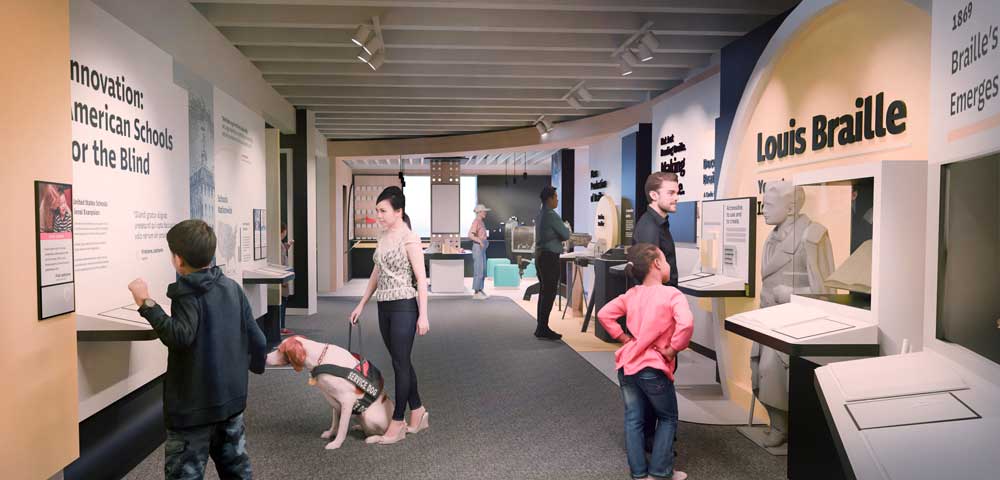
O’Brien: The one that surprises me the most is museums. I hear a lot of blind people saying that they want this service in all sorts of museum settings. They’ve been stretching their minds for years to memorize things, to do mental mapping. They have to pick up on all sorts of social cues that most of us take for granted. And they want more. They want even more opportunities to learn and grow as people. And they really have a deep appreciation for art and 3D museums, dioramas. One of our big priorities is getting buildings set up that are art-related and museum-related, like a public learning garden, because this could be placed outdoors as well. You just need a hard surface, one of those description placards to put the RFID sticker on. We’re even working with a charter school right now, that’s an arts-based charter school, whose building is full of artwork.
We’re tagging all… We’re describing all of the art on the walls as well as the classrooms, and the chalkboard in the classrooms, and that stuff. I have one blind friend who’s a young mother. She’s 27 years old, I believe. She’s been blind since she was a child, and she’s a stay-at-home mom of two little girls. She said she wants to go to the museum and hear a description of the dioramas so that she can teach her children and learn more.
Wisinger: On social media, we have alternative text and everything to describe images and content. This is like an advancement of that concept, putting that into the real world so that people can have the same accessibility in real life, not just digitally.
O’Brien: Exactly. And something that we incorporated because the blind asked for it is a feature of the Hearsee Network that we call “tour mode”. So there’s navigation mode where someone can say, “I’m in the lobby of a hotel, and I need to get to hotel room 307.” And it’ll say, “10 feet straight, turn left, take the elevator.” And it’ll give them the step-by-step directions to get from one spot to another spot. But there’s this optional feature where someone can choose tour mode, either by itself or with navigation, so that as they’re walking, they’ll also hear, “To your right is a baby grand piano, to your left is a painting of such and such. You’re walking on floor that’s Calcutta marble,” whatever it is that the place wants to describe. And someone can choose the description service so that as they’re walking somewhere, they’re understanding the environment for the first time because we take for granted how we feel based on what a place looks like. Architecture and interior design, they’re all very intentional art disciplines to elicit a connection from people. So being able to get where you’re going is one huge barrier, but being able to enjoy where you are in that process is just another level of human experience, and it’s another level of someone’s quality of life.
Wisinger: That’s a different take on cultural integration. Enjoying things together is such a human instinct and mode of connection.
O’Brien: It’s not all about navigation. It’s more about the environment. If I couldn’t see the flowers around me, if I couldn’t see the artwork on the walls, how would I be reacting to this experience?
A testimonial I love is from my friend Everett, who is a Cowboys fan, and he wants to go to the stadium. A lot of people are like, why would you care? This is so visual. Well, it is a visual experience, but there’s multiple ways to experience.
Wisinger: The audio is half the atmosphere. I’ve never been to that stadium. I imagine it’s much bigger than what we have in Little Rock, but I’ve been to a Traveler’s game here in town, and hearing the announcers narrate the game, hearing the crack of the bats, all these little elements, the crunch of people eating popcorn, there are many things that are immersing you in the moment. So being able to comfortably move around that environment, you’re still getting so much pleasure and enrichment just from being there and listening.
O’Brien: Well, it’s like you said. It’s being able to connect with other people and having that shared experience. And that’s huge for sporting events or concerts. And so him saying that he just wants to get to a seat, go buy a hot dog, get back to a seat by himself. I’m like, there is so much that I have taken for granted. And he’s been saying this for years. He just wants to go buy a hot dog by himself. I’m like, AT&T Stadium, are you listening to this? This is your marketing opportunity.
Products & Services

Wisinger: My last question I had for you is more of a personal one. What brought you to this role?
O’Brien: I wish I had a better story. I really I do, but I don’t. To be honest, I’ve worked on and off in the nonprofit field and then in private marketing for years. And one of my first positions was within the deaf community and learning sign language to represent the deaf. This was in New York City, where they had one of the top five clusters of deaf populations in the country. For years, that was a huge focus of mine. And deafness and blindness are often put in the same box. They’re not necessarily medically related, although you do have deaf-blind. But the general public doesn’t understand the difference between a hearing impairment and a visual impairment. It’s through that world that I fell into an opportunity to represent somebody new. Partly it’s because I live in Utah, I’m in Southern Utah, and Utah is one of the other top five clusters of the deaf community in the US.
I was doing my research, and there’s not a single other nonprofit that’s dedicated to the blind in our state. There are a few others that are dedicated to disabilities in general. We have some that are again, the school for the deaf and blind, things like that, but there’s nobody else who’s just advocating for the blind. And it’s a shame. I wanted to help. And that’s really where it came from. I started learning more and more, and I’ve become really passionate just through personal research.
We all have different challenges and different strengths. I’m so grateful for what I’ve been able to learn and experience by surrounding myself with people who are different than I am. I know many people are not comfortable doing that, but until they are, nothing’s going to change. It’s really exposure that will change the world for the better.
I have a little boy. And when I learned about Hearsee I was like, that’s what I, as a mother, want for my son. I want my son to see thousands of people served at one time. Because if I can facilitate a way for my son to develop respect and kindness toward people who are different, then I’ll have done my job as a mom to make the world a better place for my child. So it’s a little selfish in that way.
Wisinger: I wouldn’t say so, but it is that intergenerational focus, focusing on leaving things better than you found it. That’s awesome. Thank you Susannah.
O’Brien: Thank you so much for saying so. Well, this was great. Thank you. Bye.